Kirjojen hintavertailu. Mukana 11 244 527 kirjaa ja 12 kauppaa.

Kirjahaku

Etsi kirjoja tekijän nimen, kirjan nimen tai ISBN:n perusteella.

1000 tulosta hakusanalla Raymond Bellock

Raymond Klibansky

Raymond Klibansky

Raymond Klibansky; Georges Leroux; Alberto Manguel

MCGILL-QUEEN'S UNIVERSITY PRESS
2025
sidottu
Born in Paris in 1905 to a German-Jewish family from Frankfurt and dying a century later in Montreal, Raymond Klibansky lived a life indelibly coloured by the history of the twentieth century. His thought shaped and was shaped by intellectual currents both European and American, and his scholarly work entailed an intellectual reckoning with tradition that was unique in its scope and ambition, long before talk of academic interdisciplinarity.Klibansky, a student of Karl Jaspers and Ernst Cassirer, was educated in the liberal milieu of the Weimar Republic. Forced to emigrate from Germany in 1933, Klibansky spent the war years in London, where he participated in the British war effort. Working in the tradition established by Aby Warburg and the Warburg Library, he completed with Erwin Panofsky and Fritz Saxl the German text of Saturn and Melancholy. The book’s cast metal type was reclaimed for the war effort before it could be printed, but it was eventually published in English in 1964 and has deeply influenced understandings of the interrelations between humanities disciplines ever since. After the war Klibansky came to McGill University, where he enjoyed a brilliant career as a scholar of platonic studies and the history of ideas, mainly in the works of Locke and Hume. Over twelve chapters, each devoted to questions that were dear to Klibansky during his long life, Georges Leroux presents dialogues with his mentor selected from decades of conversation, exploring themes including philosophical traditions, melancholy, tolerance, peace, and the role of philosophy in international relations. Scholarship, interlinked with the events of a turbulent century, is at the centre of these fascinating conversations between student and teacher.A richly illustrated autobiography through dialogue, Raymond Klibanskyis a portrait of a heroic figure in twentieth-century philosophy, a model for a younger generation who can find in his scholarship an admirable example of virtue in the service of peace.
Raymond Stories

Raymond Stories

Raymond Griffin

Tellwell Talent
2022
sidottu
The Innocence of youth, contrasted with critical world events unfolding beyond their little town, occurs in the simple and sometimes frightening daily occurrences in the life of Raymond and his brother Allan. Living in Boston Bar, a Canadian railroad town, during World War Two, the boys get into adventures, adjusting to the environment in which they find themselves.Through experiences involving mischievous friends, soldiers in need, unexpected jobs, and unforeseen heroes shaped by that time and place, they learn about fairness, pride, good decisions, and setting personal boundaries.
Raymond Stories

Raymond Stories

Raymond Griffin

Tellwell Talent
2022
pokkari
The Innocence of youth, contrasted with critical world events unfolding beyond their little town, occurs in the simple and sometimes frightening daily occurrences in the life of Raymond and his brother Allan. Living in Boston Bar, a Canadian railroad town, during World War Two, the boys get into adventures, adjusting to the environment in which they find themselves.Through experiences involving mischievous friends, soldiers in need, unexpected jobs, and unforeseen heroes shaped by that time and place, they learn about fairness, pride, good decisions, and setting personal boundaries.
Raymond Williams’s Sociology of Culture
This detailed study of Williams unlocks his late sociology of culture. It covers previously overlooked aspects, such as his critique of Birmingham cultural studies, his use of an Adorno-like approach to 'cultural production', his 'social formalist' alternative to structuralism and post-structuralism and his approach to 'the media'.
Raymond Williams Now

Raymond Williams Now

Palgrave Macmillan
1997
sidottu
The work of Raymond Williams continues to exercise a powerful hold over the minds of contemporary cultural analysts and social commentators. This collection responds to the challenge of Williams's thinking in discussions of topics of current interest and concern. The essays embrace a widely-divergent field of enquiry, from the study of language, dramaturgical theory, the theory of human needs and approaches to sociology, cultural studies and television, to issues of history, temporality and the future in relation to modernity and the postmodern.
Raymond Williams’s Sociology of Culture
This detailed study of Williams unlocks his late sociology of culture. It covers previously overlooked aspects, such as his critique of Birmingham cultural studies, his use of an Adorno-like approach to 'cultural production', his 'social formalist' alternative to structuralism and post-structuralism and his approach to 'the media'.
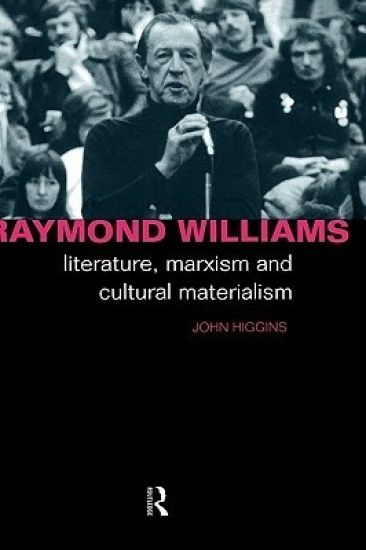
Raymond Williams

Raymond Williams

John Higgins

Routledge
1999
sidottu
Raymond Williams' prolific output is increasingly recognised as the most influential body of work on literary and cultural studies in the past fifty years. This book provides the most comprehensive study to date of the theoretical and historical context of Williams' thinking on literature, politics and culture. John Higgins traces: * Williams' intellectual development * the related growth of a New Left cultural politics * the origins of the theory and practice of cultural materialism.Raymond Williams is an astonishing achievement and will challenge many received ideas about Williams' work.
Raymond Williams

Raymond Williams

John Higgins

Routledge
1999
nidottu
Raymond Williams' prolific output is increasingly recognised as the most influential body of work on literary and cultural studies in the past fifty years. This book provides the most comprehensive study to date of the theoretical and historical context of Williams' thinking on literature, politics and culture. John Higgins traces: * Williams' intellectual development * the related growth of a New Left cultural politics * the origins of the theory and practice of cultural materialism.Raymond Williams is an astonishing achievement and will challenge many received ideas about Williams' work.
Raymond Williams

Raymond Williams

Elizabeth Eldridge; John Eldridge

Routledge
1994
nidottu
This book provides a critical introduction to the full range of Williams' work - fiction and non-fiction. It assesses the significance of his contribution in understanding culture, politics and society. Fair-minded, accurate and sensitive, the book makes crucial connections between the different aspects of Williams' work and the underlying concern for a democratic polity which informed it.
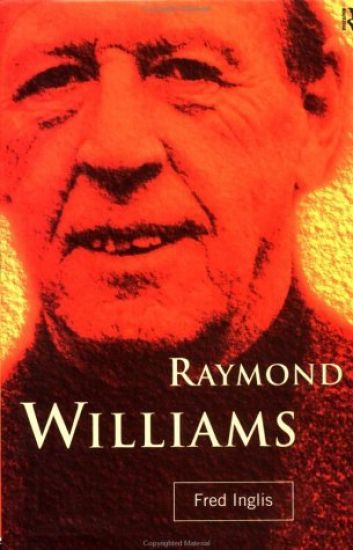
Raymond Williams

Raymond Williams

Fred Inglis

Routledge
1995
sidottu
In his life, Raymond Williams played many parts: child of the Black Mountains, inspirational adult lecturer, Cambridge professor, folk hero and guru of the left. After his death, he has remained a symbolic figure and his classic works, Culture and Society, The Long Revolution, The Country and the City continue to inspire new generations all over the world. In this first major biography, Fred Inglis has spoken to those who knew this complex and charismatic man at every stage of his life, from his boyhood in the Welsh border country to his brief years of retirement. Through their voices and his own passionate stories and at times combative engagement with his subject, he tells of a story of a life not just for its time but for our own. After Thatcher and Reagan and the Cold War, Williams still has much to teach us about the nature of a good and just society and about the constant struggle to attain it.
Raymond Williams

Raymond Williams

Fred Inglis

Routledge
1998
nidottu
In his life, Raymond Williams played many parts: child of the Black Mountains, inspirational adult lecturer, Cambridge professor, folk hero and guru of the left. After his death, he has remained a symbolic figure and his classic works, Culture and Society, The Long Revolution, The Country and the City continue to inspire new generations all over the world. In this first major biography, Fred Inglis has spoken to those who knew this complex and charismatic man at every stage of his life, from his boyhood in the Welsh border country to his brief years of retirement. Through their voices and his own passionate stories and at times combative engagement with his subject, he tells of a story of a life not just for its time but for our own. After Thatcher and Reagan and the Cold War, Williams still has much to teach us about the nature of a good and just society and about the constant struggle to attain it.
Raymond Williams on Television (Routledge Revivals)
First Published in 1989, this work is based around a monthly TV column which Raymond Williams wrote for The Listener between 1968 and 1972. Those were the years of the Prague Spring, of anti-Vietnam war demonstrations, of fighting in Cambodia and Northern Ireland, of hope for McGovern in the United States and attacks on the Wilson Labour Government in Britain. In The Listener articles Williams comments on all of these events, providing a rare glimpse not only into the events of his daily life but also into the continuing development of a personal sociology of culture. The articles also discuss such television forms as detective series, science programmes and sports, travelogue, education, gardening, and children’s programming. The book also includes Williams’ key lecture "Drama in a Dramatised Society", which sets a framework for his analysis; a London Review of Books piece on the Falklands/Malvinas adventure as a "tele-war"; and an interview with Williams on television and teaching. Cited by The Guardian as "The foremost political thinker of his generation", Williams’ writing amounts to a primer on ways of watching television and of critiquing its profound social and political impact.
Raymond Williams on Television (Routledge Revivals)
First Published in 1989, this work is based around a monthly TV column which Raymond Williams wrote for The Listener between 1968 and 1972. Those were the years of the Prague Spring, of anti-Vietnam war demonstrations, of fighting in Cambodia and Northern Ireland, of hope for McGovern in the United States and attacks on the Wilson Labour Government in Britain. In The Listener articles Williams comments on all of these events, providing a rare glimpse not only into the events of his daily life but also into the continuing development of a personal sociology of culture. The articles also discuss such television forms as detective series, science programmes and sports, travelogue, education, gardening, and children’s programming. The book also includes Williams’ key lecture "Drama in a Dramatised Society", which sets a framework for his analysis; a London Review of Books piece on the Falklands/Malvinas adventure as a "tele-war"; and an interview with Williams on television and teaching. Cited by The Guardian as "The foremost political thinker of his generation", Williams’ writing amounts to a primer on ways of watching television and of critiquing its profound social and political impact.
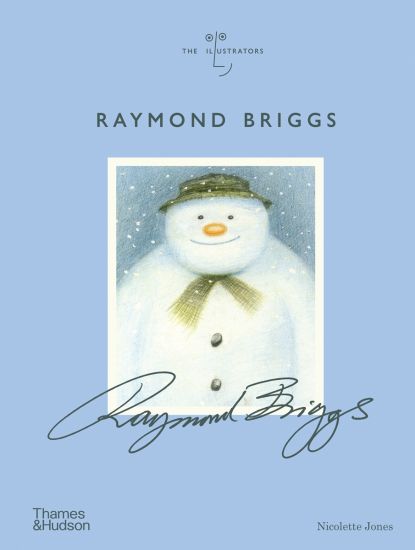
Raymond Briggs

Raymond Briggs

Nicolette Jones

Thames Hudson Ltd
2020
sidottu
Raymond Briggs has changed the face of children’s picture books, with his innovations of both form and subject. Stylistically versatile, he has illustrated some sixty books, twenty of them with his own text, and first became a household name in the late 1970s and early 1980s with a handful of books – Father Christmas, Fungus the Bogeyman, The Snowman, When the Wind Blows – that were entertaining and subversive and appealed to both children and adults. The refrains of his work are class, family, love and loss. Nevertheless, his default mode of expression is humour. Briggs is always funny, and the balance between this and melancholy is his defining characteristic, though his style ranges from the romantic to the grotesque, from the fanciful to the direct. Encompassing sixty years of Raymond Briggs’s work, from political picturebooks to children’s classics, this study explores his themes of class, family and loss, and how he demonstrates both emotional power and great technical skill.
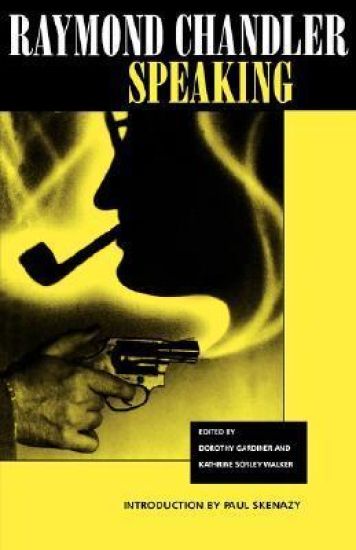
Raymond Chandler Speaking

Raymond Chandler Speaking

Raymond Chandler

University of California Press
1997
pokkari
Tough-minded and typically idiosyncratic, here is Chandler on Chandler, the mystery novel, writing, Hollywood, TV, publishing, cats, and famous crimes. This skillfully edited selection of letters, articles, and notes also includes the short story "A Couple of Writers" and the first chapters of Chandler's last Philip Marlowe novel, "The Poodle Springs Story", left unfinished at his death. Paul Skenazy has provided a new introduction for this edition as well as a new selected bibliography.
Raymond Poincaré

Raymond Poincaré

J. F. V. Keiger

Cambridge University Press
1997
sidottu
This study is a scholarly biography of one of France's foremost political leaders. In a career which ran from the 1880s to the 1930s, one of the most formative periods of modern French history, Poincaré held the principal offices of state. He played crucial roles in France's entry into the Great War, the organisation of the war effort, the peace settlement, the reparations question, the occupation of the Ruhr and the reorganisation of French finances in the 1920s. His life and work is surrounded by controversy and myth, from 'Poincaré-la-guerre' to 'Poincaré-le-franc', which this book dissects. Using a host of new archival material, Professor Keiger explores the historiography of the man and his times and reveals, somewhat surprisingly, how animal rights and feminism could be as important to him as party politics and public finance.