

Kirjahaku
Etsi kirjoja tekijän nimen, kirjan nimen tai ISBN:n perusteella.
1000 tulosta hakusanalla Raymond F. Betts

Cosmological Effects of Scattering in the Intergalactic Medium
Raymond F Bonn
Vaughan Publishing
2011
pokkari
The Pastoral Epistles present difficult questions for the modern interpreter, including such matters as their authorship, literary characteristics, and social orientations. Raymond Collins carefully leads the reader through the texts of these three documents, attending to the flow of the Pastor's thought and locating it within the Jewish and Hellenistic culture of his day.The New Testament Library offers authoritative commentary on every book and major aspect of the New Testament, as well as classic volumes of scholarship. The commentaries in this series provide fresh translations based on the best available ancient manuscripts, offer critical portrayals of the historical world in which the books were created, pay careful attention to their literary design, and present a theologically perceptive exposition of the text.

PCT, Spin and Statistics, and All That
Raymond F. Streater; Arthur S. Wightman
Princeton University Press
2000
pokkari
PCT, Spin and Statistics, and All That is the classic summary of and introduction to the achievements of Axiomatic Quantum Field Theory. This theory gives precise mathematical responses to questions like: What is a quantized field? What are the physically indispensable attributes of a quantized field? Furthermore, Axiomatic Field Theory shows that a number of physically important predictions of quantum field theory are mathematical consequences of the axioms. Here Raymond Streater and Arthur Wightman treat only results that can be rigorously proved, and these are presented in an elegant style that makes them available to a broad range of physics and theoretical mathematics.
Introduction to the Intertestamental Period
Raymond F Surburg
Concordia Publishing House
1975
pokkari
As people finish the last book of the Old Testament they realize when turning to the New Testament that there is a gap of time not addressed by the books in most English Bibles. This period of time, known commonly as the "Intertestamental Period" covers four centuries and the changes and influences of the culture and people throughout the known world was very influential on the setting of the books of the New Testament. In this volume, Dr. Raymond Surburg, long time professor of the Bible and the languages of the Old Testament, presents the history of the Jewish people from Persian times to the fall of Jerusalam in A.D. He offers a survey of the various writings from this period, including the Apocrypha, which was always included in the Bible until the Lutheran Church moved from German to English. He also covers the Greek translation of the Old Testament, the Septuagint, as well as the Pseudepigrapha. While not exhaustive in its treatment, this volume offers a good overview for pastors, teachers and serious students of the Bible who want to understand during the time between Old and New Testament.



The story of Hanns Scharff, the German master interrogator of the Luftwaffe who questioned captured American fighter pilots of the USAAF Eighth and Ninth Air Forces in World War II. German Intelligence Officer Hanns Scharff gained the reputation as the man who could magically get all the answers he needed from the prisoners of war in World War 2. In most cases, the POWs being interrogated never realized that their words, small talk or otherwise, were important pieces of the mosaic Hanns Scharff was constructing for the benefit of Germany’s war effort. In the words of one former POW, "What did Scharff get from me? Nothing, yet there is no doubt he got something. If you talked about the weather or anything else, he no doubt got some information or confirmation from it. His technique was psychic, not physical." Another POW commented, "Hanns Scharff could probably get a confession of infidelity from a Nun!" To this day, ex-POWs fret and worry over what they said or even might have implied during their interrogations, and over what use Scharff may have made of their slip-ups. This book delves into the question: What was this magic spell or formula used by Scharff which made prisoners drop their guard and converse with him even though they are conditioned to remain silent? Hanns Scharff’s methods broke down barriers so effectively that the USAF invited him to speak about his methods to military audiences in the United States after World War II.
Second Corinthians
Raymond F. Collins; Mikeal Parsons; Charles Talbert
Baker Academic, Div of Baker Publishing Group
2013
nidottu
In this addition to the well-received Paideia series, a respected senior New Testament scholar examines cultural context and theological meaning in Second Corinthians. Paideia commentaries explore how New Testament texts form Christian readers by· attending to the ancient narrative and rhetorical strategies the text employs· showing how the text shapes theological convictions and moral habits· commenting on the final, canonical form of each New Testament book· focusing on the cultural, literary, and theological settings of the text· making judicious use of maps, photos, and sidebars in a reader-friendly formatStudents, pastors, and other readers will appreciate the historical, literary, and theological insight offered in this practical commentary.
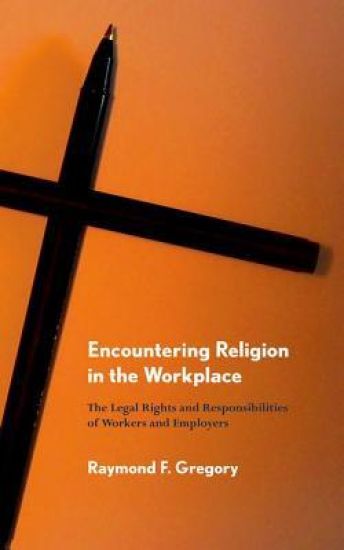
In a recent survey, 20 percent of the workers interviewed reported that they had either experienced religious prejudice while at work or knew of a coworker who had been subjected to some form of discriminatory conduct. Indeed, according to the Equal Employment Opportunity Commission, the filing of religious discrimination charges under Title VII of the Civil Rights Act of 1964 (which prohibits discrimination in employment based on race, color, national origin, sex, and religion) increased 75 percent between 1997 and 2008. The growing desire on the part of some religious groups to openly express their faith while at work has forced their employers and coworkers to reconsider the appropriateness of certain aspects of devotional conduct. Religion in the workplace does not sit well with all workers, and, from the employer's perspective, the presence of religious practice during the workday may be distracting and, at times, divisive. A thin line separates religious self-expression—by employees and employers—from unlawful proselytizing. In Encountering Religion in the Workplace, Raymond F. Gregory presents specific cases that cast light on the legal ramifications of mixing religion and work—in the office, on the factory floor, even within religious organizations. Court cases arising under Title VII and the First Amendment must be closely studied, Gregory argues, if we are to fully understand the difficulties that arise for employers and employees alike when they become involved in workplace disputes involving religion, and his book is an ideal resource for anyone hoping to understand this issue.

In a recent survey, 20 percent of the workers interviewed reported that they had either experienced religious prejudice while at work or knew of a coworker who had been subjected to some form of discriminatory conduct. Indeed, according to the Equal Employment Opportunity Commission, the filing of religious discrimination charges under Title VII of the Civil Rights Act of 1964 (which prohibits discrimination in employment based on race, color, national origin, sex, and religion) increased 75 percent between 1997 and 2008. The growing desire on the part of some religious groups to openly express their faith while at work has forced their employers and coworkers to reconsider the appropriateness of certain aspects of devotional conduct. Religion in the workplace does not sit well with all workers, and, from the employer's perspective, the presence of religious practice during the workday may be distracting and, at times, divisive. A thin line separates religious self-expression—by employees and employers—from unlawful proselytizing. In Encountering Religion in the Workplace, Raymond F. Gregory presents specific cases that cast light on the legal ramifications of mixing religion and work—in the office, on the factory floor, even within religious organizations. Court cases arising under Title VII and the First Amendment must be closely studied, Gregory argues, if we are to fully understand the difficulties that arise for employers and employees alike when they become involved in workplace disputes involving religion, and his book is an ideal resource for anyone hoping to understand this issue.

Nearly every American woman will, at some point during her working life, be sexually harassed, according to Raymond F. Gregory, a lawyer specializing in employment and discrimination law. Unwelcome and Unlawful provides information for those victims as well as for those suffering same-sex harassment and for male victims of sexual harassment. Gregory analyzes sexual harassment from the perspective of existing federal law and describes the legal rights that may be asserted by victims of harassment to obtain either injunctive or monetary relief. Conduct of a sexual nature that occurs in normal workplace socialization is generally not unlawful, but it will be considered to have crossed the line of legality if it is unwelcome and is sufficiently severe or pervasive to undermine an employee's work life. Questions typically arising in a sexual harassment case include: *What types of workplace conduct are classified as sexually harassing? *When is sexual conduct considered unwelcome? *When is sexual conduct perceived as severe or pervasive? *What are the obligations of an employee to report acts of sexual harassment? *If sexual harassment is proven, what monetary damages and other relief may the victim expect to be awarded? *When is an employer liable for acts of sexual harassment committed by its workers and supervisors? *What privacy rights does an employee claiming sexual harassment have? By clarifying little-understood aspects of the law barring sexual harassment, the author presents an indispensable resource for victims seeking to learn what to expect from the legal system if they contest the actions of their harassers in the courts.
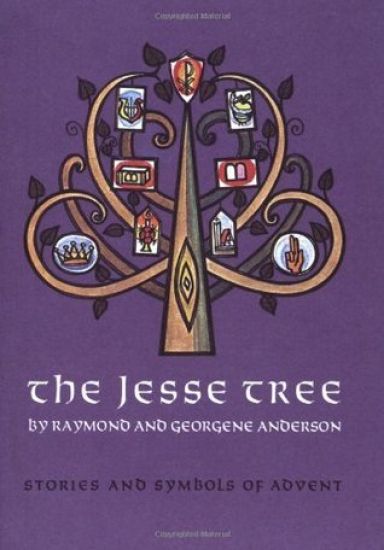
Depicts symbols of Advent that can be cut out and hung on a special tree during that season to illustrate and celebrate the spiritual heritage of Jesus. Includes appropriate devotional readings.

Attorney Raymond F. Gregory addresses the millions of women who think they might be facing sexual discrimination and explains federal measures enacted to assist workers in contesting unlawful employer conduct. He presents actual court cases to demonstrate the ways that women have challenged their employers. The cases illustrate legal principles in real-life experiences. Many of the cases relate compelling stories of workers caught up in a web of employer discriminatory conduct. Gregory has eliminated legal jargon, ensuring that all concepts are clear to his readers. Individuals will turn to this book again and again to obtain authoritative background on this important topic.Topics covered include:The increasing incidence of sexual harassment in the workplaceCommon forms of sex discriminationDiscrimination against older womenDiscrimination against women of colorDiscrimination against women in the professionsDiscrimination against pregnant womenDiscrimination against women with childrenSex discrimination in hiring, promotion, terminationEmployer liability for workplace sexual harassmentEmployer retaliation against workersProving sex discrimination in the courtroomCompensatory and punitive damagesBack pay, front pay, and other remedies
Few New Testament texts have had their meaning debated so vigorously as those in which Jesus discusses divorce: Matthew 5:32, Matthew 19:6, 9; Mark 10:9-12; Luke 16:18; and 1 Cor 7:11. From the early Church, through there formation, and into the present day, they have continued to rouse debate within the Churches and among believers.This work focuses on one aspect of that debate; namely, what Jesus has to say regarding divorce when his sayings are interpreted in their literary and historical context. To aid in this contextual understanding, the sayings are studied in the order in which they were written down in ancient times. Not every aspect of the debate therefore is addressed - nor could it be on an issue of such personal and pastoral complexity. Yet it is the challenge of biblical scholars to study the Word of God - in all its complexity - and to try to make that Word understandable. This work is offered to scholars and believers alike in the hope of adding to that understanding.
2000 Catholic Press Association Award Winner!One of the most exciting of Paul's letters, 1 Corinthians offers a vantage point from which modern readers can reflect on diverseness in Christian Churches today. In First Corinthians, Raymond Collins explores that vantage point as well as the challenge Paul posed to the people of his time - and continues to pose in ours - to allow the gospel message to engage them in their daily lives.Paul introduces us to a flesh-and-blood community whose humanness was all too apparent. Sex, death, and money were among the issues they had to face. Social conflicts and tension within their Christian community were part of their daily lives. Paul uses all of his diplomacy, rhetorical skill, and authority to exhort the Corinthian community to be as one in Christ.In examining Paul's message and method, Collins approaches 1 Corinthians as a Hellenistic letter written to people dealing with real issues in the Hellenistic world. He cites existing Hellenistic letters to show that Paul was truly a letter writer of his own times. Collins makes frequent references to the writings of the philosophic moralists to help clarify the way in which Paul spoke to his beloved Corinthians. He also comments on some aspects of the social circumstances in which the Christians of Corinth actually lived.
In his letters to the early Christian communities, the apostle Paul left for Christians of all time an array of powerful images: from the pain of a thorn in the flesh to the tenderness of a nursing mother for her children, from the competition on an athletic field to the growth of an agricultural field. In The Power of Images in Paul, Raymond Collins explores how Paul uses the ordinary to describe what is extraordinary, how Paul skillfully uses a wide range of metaphors as a means of both persuasion and clarification. But this book is more than an analysis of Paul’s images themselves. Collins also examines how Paul deliberately draws from secular as well as religious and biblical themes in order to draw a culturally diverse audience into relationship with Christ. Entering Paul’s world with Collins, readers will better appreciate Paul’s use of metaphor and, more important, be persuaded as was Paul’s original audience of God’s unfailing love in Christ.
2000 Catholic Press Association Award Winner!One of the most exciting of Paul's letters, 1 Corinthians offers a vantage point from which modern readers can reflect on diverseness in Christian Churches today. In First Corinthians, Raymond Collins explores that vantage point as well as the challenge Paul posed to the people of his time - and continues to pose in ours - to allow the gospel message to engage them in their daily lives.Paul introduces us to a flesh-and-blood community whose humanness was all too apparent. Sex, death, and money were among the issues they had to face. Social conflicts and tension within their Christian community were part of their daily lives. Paul uses all of his diplomacy, rhetorical skill, and authority to exhort the Corinthian community to be as one in Christ.In examining Paul's message and method, Collins approaches 1 Corinthians as a Hellenistic letter written to people dealing with real issues in the Hellenistic world. He cites existing Hellenistic letters to show that Paul was truly a letter writer of his own times. Collins makes frequent references to the writings of the philosophic moralists to help clarify the way in which Paul spoke to his beloved Corinthians. He also comments on some aspects of the social circumstances in which the Christians of Corinth actually lived.
Fulfilling what he has called a “grave responsibility,” Pope Francis has often addressed the issue of economic inequality and the use of personal, corporate, and national wealth. Francis’s teaching is rooted in the teaching of Jesus, preserved in the pages of the New Testament. The Bible has more to say about the use of wealth than it does about other moral issues of our day, yet this teaching seldom enters into the conscience of believers. In Wealth, Wages, and the Wealthy: New Testament Insight for Preachers and Teachers Fr. Raymond F. Collins redresses this issue and provides the reader with a careful examination not only of what Jesus said about wealth but also of what each of the New Testament authors wrote about the topic.