

Kirjahaku
Etsi kirjoja tekijän nimen, kirjan nimen tai ISBN:n perusteella.
1000 tulosta hakusanalla Raymond Faure
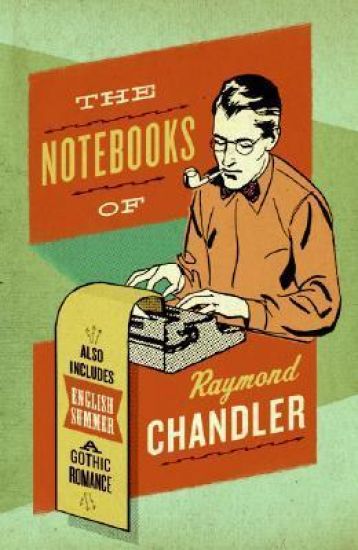
A collection of public and private writings by the late author of The Big Sleep and other classic crime novels provides a fascinating glimpse of the writer at work as it brings together early anecdotes, ideas, and descriptions that later appeared in his works, as well as his reflections on Hollywood, the mystery story, prison slang, and American and British writing. Reprint. 15,000 first printing.
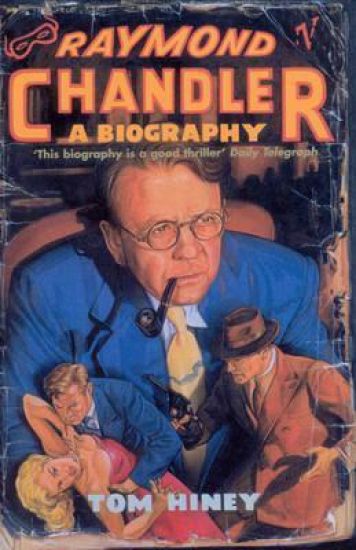
Born in Nabraska of Irish Quaker parents, educated at Dulwich College, and in the `mean streets' of Los Angeles about which he wrote, Raymond Chandler-writer, oil executive, poet, recluse, charmer, gentlman, drunk-was full of contradictions as his origins. His seven Philip Marlowe stories had sold 5 million copies by the time of his death in1059. Since the first authorised biography 20 years ago, much new material can be revealed about the man and his life. For this major new biography, Tom Hiney has had some access to unseen personal papers, as well as previously unrecorded reminiscences by those who knew him well and he vividly evokes the strange early years, brings alive the danerous glamour of the Hollywood era, and puts Chandler`s writing in the context of the crime and corruption in Prohibition LA. He gives illuminating details of friendships with Ian Fleming, Somerset Maugham, the Spenders, Alfred Hitchcock and fully records for the first time his relationship with Cissy, his wife of 30 years, 17 years his senior, and his paradoxical relations with other women.

Raymond D. Adams: A Life of Mind and Muscle is a contribution to the history of neurology and the history of American medicine. Adams, one of the greats of neurology, advanced the fields of neurology, neuropathology, internal medicine, psychiatry, pediatrics, and psychology. Drawing on 50 interviews with Raymond D. Adams and on interviews with 50 other professionals and family members, this book documents his contributions to knowledge, his expansion of the realm of neurology, and his vast impact as an educator and author. Following an introductory chapter, "The Phenomenon of Raymond Adams," the book deals chronologically with the phases of his life, education, and professional work. Another section of the book is arranged by disease categories and related topics, explaining his investigative work and ideas. There is a chapter of summation, analyzing the accomplishment and legacy of Dr. Adams. Numerous appendices include letters of correspondence, a letter of nomination, and extracts of interviews with other neurologists. These documents provide further insight into Adam's personality and work patterns. This book convincingly demonstrates Dr. Adam's seminal role in the completion of the 19th century task of clinicopathologic analysis of neurological diseases, the opening of the study of muscle pathology, the systematic study of cerebrovascular diseases, and emergence of the modern field of pediatric neurology, along with demonstrating the extent to which he educated generations of leaders in neurology and to which he guided neurologists everywhere with his great synthesis, Principles of Neurology.
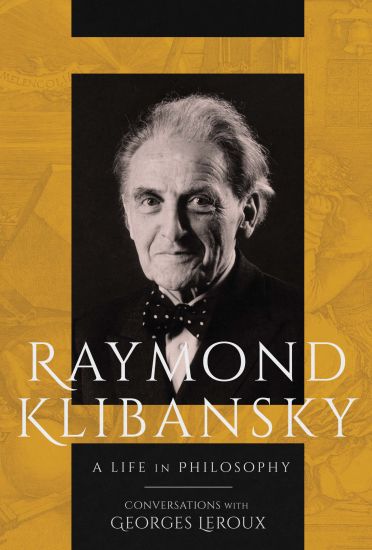
Raymond Klibansky
Raymond Klibansky; Georges Leroux; Alberto Manguel
MCGILL-QUEEN'S UNIVERSITY PRESS
2025
sidottu
Born in Paris in 1905 to a German-Jewish family from Frankfurt and dying a century later in Montreal, Raymond Klibansky lived a life indelibly coloured by the history of the twentieth century. His thought shaped and was shaped by intellectual currents both European and American, and his scholarly work entailed an intellectual reckoning with tradition that was unique in its scope and ambition, long before talk of academic interdisciplinarity.Klibansky, a student of Karl Jaspers and Ernst Cassirer, was educated in the liberal milieu of the Weimar Republic. Forced to emigrate from Germany in 1933, Klibansky spent the war years in London, where he participated in the British war effort. Working in the tradition established by Aby Warburg and the Warburg Library, he completed with Erwin Panofsky and Fritz Saxl the German text of Saturn and Melancholy. The book’s cast metal type was reclaimed for the war effort before it could be printed, but it was eventually published in English in 1964 and has deeply influenced understandings of the interrelations between humanities disciplines ever since. After the war Klibansky came to McGill University, where he enjoyed a brilliant career as a scholar of platonic studies and the history of ideas, mainly in the works of Locke and Hume. Over twelve chapters, each devoted to questions that were dear to Klibansky during his long life, Georges Leroux presents dialogues with his mentor selected from decades of conversation, exploring themes including philosophical traditions, melancholy, tolerance, peace, and the role of philosophy in international relations. Scholarship, interlinked with the events of a turbulent century, is at the centre of these fascinating conversations between student and teacher.A richly illustrated autobiography through dialogue, Raymond Klibanskyis a portrait of a heroic figure in twentieth-century philosophy, a model for a younger generation who can find in his scholarship an admirable example of virtue in the service of peace.

The Innocence of youth, contrasted with critical world events unfolding beyond their little town, occurs in the simple and sometimes frightening daily occurrences in the life of Raymond and his brother Allan. Living in Boston Bar, a Canadian railroad town, during World War Two, the boys get into adventures, adjusting to the environment in which they find themselves.Through experiences involving mischievous friends, soldiers in need, unexpected jobs, and unforeseen heroes shaped by that time and place, they learn about fairness, pride, good decisions, and setting personal boundaries.

The Innocence of youth, contrasted with critical world events unfolding beyond their little town, occurs in the simple and sometimes frightening daily occurrences in the life of Raymond and his brother Allan. Living in Boston Bar, a Canadian railroad town, during World War Two, the boys get into adventures, adjusting to the environment in which they find themselves.Through experiences involving mischievous friends, soldiers in need, unexpected jobs, and unforeseen heroes shaped by that time and place, they learn about fairness, pride, good decisions, and setting personal boundaries.
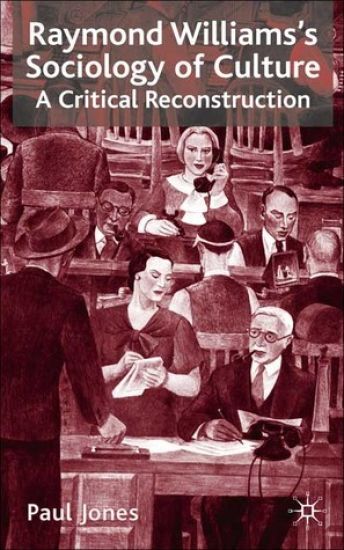
This detailed study of Williams unlocks his late sociology of culture. It covers previously overlooked aspects, such as his critique of Birmingham cultural studies, his use of an Adorno-like approach to 'cultural production', his 'social formalist' alternative to structuralism and post-structuralism and his approach to 'the media'.
Raymond Williams: Politics, Education, Letters
W John Morgan; Peter Preston
Palgrave Macmillan
1993
sidottu
The specially commissioned essays collected in this volume reflect the full range of Raymond Williams's interests and concentrate not only on the exposition and evaluation of his ideas, but also on how they have influenced teachers, writers, and other thinkers.

Raymond Williams Now
Palgrave Macmillan
1997
sidottu
The work of Raymond Williams continues to exercise a powerful hold over the minds of contemporary cultural analysts and social commentators. This collection responds to the challenge of Williams's thinking in discussions of topics of current interest and concern. The essays embrace a widely-divergent field of enquiry, from the study of language, dramaturgical theory, the theory of human needs and approaches to sociology, cultural studies and television, to issues of history, temporality and the future in relation to modernity and the postmodern.
This detailed study of Williams unlocks his late sociology of culture. It covers previously overlooked aspects, such as his critique of Birmingham cultural studies, his use of an Adorno-like approach to 'cultural production', his 'social formalist' alternative to structuralism and post-structuralism and his approach to 'the media'.

Raymond Bonilla: Epílogos Privados/Private Epilogues
Mark Strong; Jamie DiSarno
Lulu.com
2019
nidottu
Raymond Bonilla: Epilogos Privados/Private Epilogues. Printed for the Solo Exhibition, November 1-30,2019, at Meibohm Fine Arts, East Aurora, NY.
Collected Stories of Raymond Chandler: Introduction by John Bayley
Raymond Chandler
Everyman's Library
2002
sidottu
A complete collection of short fiction by the creator of Philip Marlowe includes stories from two prior anthologies--Trouble Is My Business and The Simple Art of Murder--as well as "Blackmailers Don't Shoot," "The Pencil," "English Summer," and more. 35,000 first printing.

Raymond Williams' prolific output is increasingly recognised as the most influential body of work on literary and cultural studies in the past fifty years. This book provides the most comprehensive study to date of the theoretical and historical context of Williams' thinking on literature, politics and culture. John Higgins traces: * Williams' intellectual development * the related growth of a New Left cultural politics * the origins of the theory and practice of cultural materialism.Raymond Williams is an astonishing achievement and will challenge many received ideas about Williams' work.
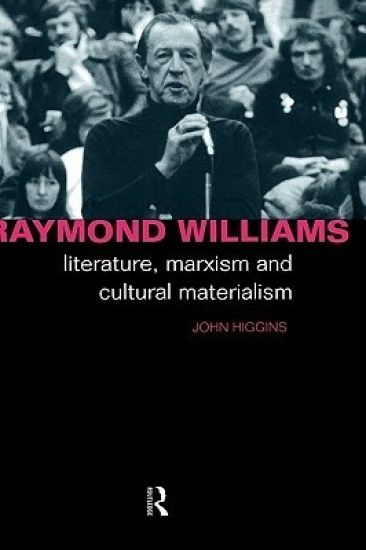
Raymond Williams' prolific output is increasingly recognised as the most influential body of work on literary and cultural studies in the past fifty years. This book provides the most comprehensive study to date of the theoretical and historical context of Williams' thinking on literature, politics and culture. John Higgins traces: * Williams' intellectual development * the related growth of a New Left cultural politics * the origins of the theory and practice of cultural materialism.Raymond Williams is an astonishing achievement and will challenge many received ideas about Williams' work.

This book provides a critical introduction to the full range of Williams' work - fiction and non-fiction. It assesses the significance of his contribution in understanding culture, politics and society. Fair-minded, accurate and sensitive, the book makes crucial connections between the different aspects of Williams' work and the underlying concern for a democratic polity which informed it.
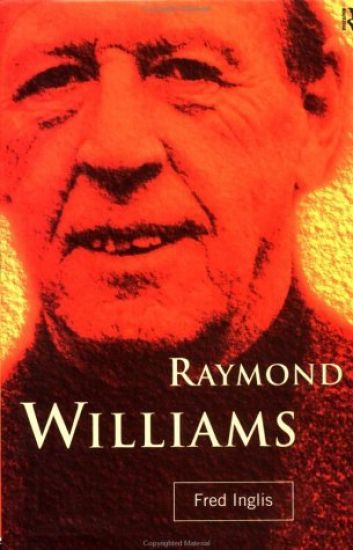
In his life, Raymond Williams played many parts: child of the Black Mountains, inspirational adult lecturer, Cambridge professor, folk hero and guru of the left. After his death, he has remained a symbolic figure and his classic works, Culture and Society, The Long Revolution, The Country and the City continue to inspire new generations all over the world. In this first major biography, Fred Inglis has spoken to those who knew this complex and charismatic man at every stage of his life, from his boyhood in the Welsh border country to his brief years of retirement. Through their voices and his own passionate stories and at times combative engagement with his subject, he tells of a story of a life not just for its time but for our own. After Thatcher and Reagan and the Cold War, Williams still has much to teach us about the nature of a good and just society and about the constant struggle to attain it.
In his life, Raymond Williams played many parts: child of the Black Mountains, inspirational adult lecturer, Cambridge professor, folk hero and guru of the left. After his death, he has remained a symbolic figure and his classic works, Culture and Society, The Long Revolution, The Country and the City continue to inspire new generations all over the world. In this first major biography, Fred Inglis has spoken to those who knew this complex and charismatic man at every stage of his life, from his boyhood in the Welsh border country to his brief years of retirement. Through their voices and his own passionate stories and at times combative engagement with his subject, he tells of a story of a life not just for its time but for our own. After Thatcher and Reagan and the Cold War, Williams still has much to teach us about the nature of a good and just society and about the constant struggle to attain it.
First Published in 1989, this work is based around a monthly TV column which Raymond Williams wrote for The Listener between 1968 and 1972. Those were the years of the Prague Spring, of anti-Vietnam war demonstrations, of fighting in Cambodia and Northern Ireland, of hope for McGovern in the United States and attacks on the Wilson Labour Government in Britain. In The Listener articles Williams comments on all of these events, providing a rare glimpse not only into the events of his daily life but also into the continuing development of a personal sociology of culture. The articles also discuss such television forms as detective series, science programmes and sports, travelogue, education, gardening, and children’s programming. The book also includes Williams’ key lecture "Drama in a Dramatised Society", which sets a framework for his analysis; a London Review of Books piece on the Falklands/Malvinas adventure as a "tele-war"; and an interview with Williams on television and teaching. Cited by The Guardian as "The foremost political thinker of his generation", Williams’ writing amounts to a primer on ways of watching television and of critiquing its profound social and political impact.