Kirjojen hintavertailu. Mukana 12 390 323 kirjaa ja 12 kauppaa.

Kirjahaku

Etsi kirjoja tekijän nimen, kirjan nimen tai ISBN:n perusteella.

1000 tulosta hakusanalla Raymond Williams

Raymond Williams and Education

Raymond Williams and Education

Ian Menter

BLOOMSBURY PUBLISHING PLC
2023
nidottu
Raymond Williams' major contributions to intellectual progress are usually categorised within cultural theory, media studies or neo-Marxist studies. Serious analysis of his contributions to education as a field of practice as well as a field of study have been relatively neglected. This is the first book to redress that omission, focusing on how his writing and thought have helped us to understand education in Britain and also provide analytical tools that have helped to shape educational studies in the USA and internationally. Ian Menter draws on Williams' several novels, including Border Country, as well as on his seminal contributions to cultural theory, including Culture and Society, The Long Revolution, Keywords and Marxism and Literature. Menter also examines how Williams' life shaped his understanding of education including his early involvement in adult education and his deeply ambivalent relationship with the academy. Public education is positioned as a key arena of social struggle where decisions shaping the nature of our futures and crucial to creating a democratic and just society. The book includes a foreword by Michael Apple who is John Boscom Professor Emeritus of Curriculum and Instruction at the University of Wisconsin–Madison, USA, which makes reference to the importance of Williams' work in relation to education in the USA.
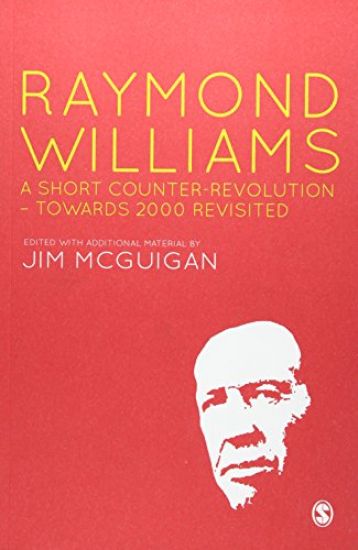
Raymond Williams: A Short Counter Revolution
Raymond Williams: A Short Counter-Revolution amply demonstrates the continuing relevance of Williams’s analysis, from the early 1980s, to our current situation. After thirty years of neoliberalism his insights still read as freshly and as incisively as they first did. Jim McGuigan’s new chapter explicitly extends the lines of continuity from then to now, in a persuasive and at times appropriately critical way. Williams’s concluding chapter, Resources for a Journey of Hope remains as inspiring, and as necessary, as ever. - Simon Dentith, University of Reading "It's great that Towards 2000 is revisited. Jim McGuigan's preface to this edition and his remarkable up-dating chapter A Short Counter Revolution draw upon a formidable range of references to illustrate why this work is as fresh and insightful today as it was 30 years ago." - Derek Tatton, 'Culture,' wrote Raymond Williams, ‘is one of the most complicated words in the English language.’ Ironically, the most important British writer on culture in the post-war period is also one of the most poorly digested among today’s readers. Originally conceived as the sequel to his 1961 The Long Revolution, Williams' 1983 title Towards 2000 has been unfairly classified as a period piece. With the permission of the Williams Estate, the book has been re-entitled A Short Counter-Revolution – Towards 2000 Revisited, with noted Williams expert Jim McGuigan adding a chapter that updates the original with a survey of developments since its publication, par­ticularly concerning the impact of neoliberalism, a phenomenon sighted early by Raymond Williams and named ‘Plan X’. In this new edition, Jim McGuigan makes a totally convincing case to read the book as a contemporary classic. It remains an indispensable guide to: Power and inequalityClass politicsPost-industrial societyGlobalizationThe crisis in democracy
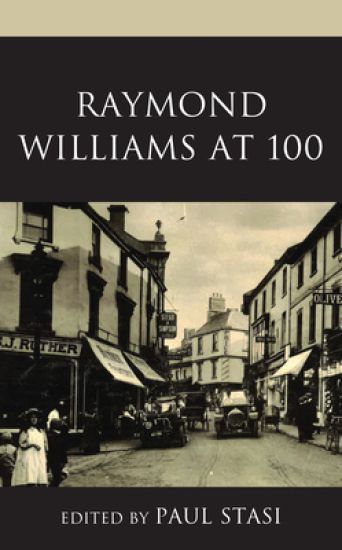
Raymond Williams at 100

Raymond Williams at 100

Rowman Littlefield
2021
sidottu
Raymond Williams as “by common consent” one of the “two most commanding intellectual figures in the New Left that emerged in Britain at the turn of the sixties,” the other being Edward Thompson. Williams published in 1961 a text entitled “The Future of Marxism.” In that essay, Williams has some remarkable things to say about imperialism, the successes of actually existing socialism, balanced against its failures, and the continued relevance of socialism as the horizon of human liberation. He also makes a characteristic methodological point: “the relation between systems of thought and actual history is both complex and surprising.” The future of Marxism, that is to say, will not depend on dogma, but will instead rest on historical developments, on how well are able to actualize Marx’s ideals in our own unique conjuncture. This volume takes up the challenge of reading and extending Williams’s thought in light of the actual history that has occurred since his passing but with the same ideal of socialism as its guiding horizon. If there is one thread visible throughout all of Williams’s work, it is the felt presence of a living, thinking individual, of a person continually testing ideas in experience in order to see whether they fit the world they are meant to describe. The aim of this volume, timed to coincide with what would have been Williams’s 100th birthday, is to test his ideas in our own experience and to engage Williams’s work in ways that move past the familiar terrain that has grown around it. We now know that “experience” is a dangerous category, that “community” can be hijacked by the right as much as the left, and that “tradition” contains as much conflict as commonality. Those committed to Williams’s work can easily find textual arguments or developments across his career to answer these charges, and they have. What our volume offers is a set of arguments by younger scholars influenced by Williams’s writings that moves past some of these debates, extending Williams’s work into the 21st century, testing and weighing his ideas in light of recent developments and contemporary intellectual culture. In doing so, we treat Williams’s thought as one of those “resources of hope,” which he famously suggested would sustain us.At a time of deepening inequality and austerity and growing rightward reaction, and yet simultaneously, and with seeming dialectical necessity, a renewed investment in socialism, Williams might be exactly the kind of figure we need.
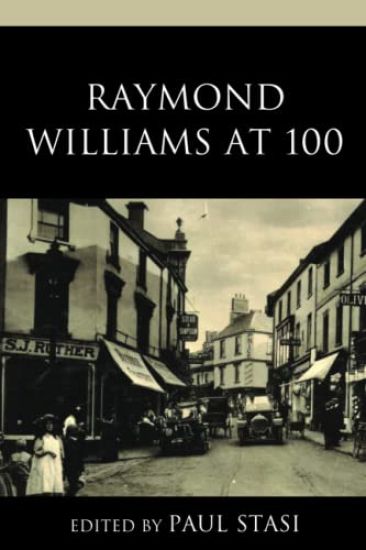
Raymond Williams at 100

Raymond Williams at 100

BLOOMSBURY PUBLISHING PLC
2022
nidottu
Raymond Williams was “by common consent” one of the “two most commanding intellectual figures in the New Left that emerged in Britain at the turn of the sixties,” the other being Edward Thompson. Williams published in 1961 a text entitled “The Future of Marxism.” In that essay, Williams has some remarkable things to say about imperialism, the successes of actually existing socialism, balanced against its failures, and the continued relevance of socialism as the horizon of human liberation. He also makes a characteristic methodological point: “the relation between systems of thought and actual history is both complex and surprising.” The future of Marxism, that is to say, will not depend on dogma, but will instead rest on historical developments, on how well are able to actualize Marx’s ideals in our own unique conjuncture. This volume takes up the challenge of reading and extending Williams’s thought in light of the actual history that has occurred since his passing but with the same ideal of socialism as its guiding horizon. If there is one thread visible throughout all of Williams’s work, it is the felt presence of a living, thinking individual, of a person continually testing ideas in experience in order to see whether they fit the world they are meant to describe. The aim of this volume, timed to coincide with what would have been Williams’s 100th birthday, is to test his ideas in our own experience and to engage Williams’s work in ways that move past the familiar terrain that has grown around it. We now know that “experience” is a dangerous category, that “community” can be hijacked by the right as much as the left, and that “tradition” contains as much conflict as commonality. Those committed to Williams’s work can easily find textual arguments or developments across his career to answer these charges, and they have. What our volume offers is a set of arguments by younger scholars influenced by Williams’s writings that moves past some of these debates, extending Williams’s work into the 21st century, testing and weighing his ideas in light of recent developments and contemporary intellectual culture. In doing so, we treat Williams’s thought as one of those “resources of hope,” which he famously suggested would sustain us.At a time of deepening inequality and austerity and growing rightward reaction, and yet simultaneously, and with seeming dialectical necessity, a renewed investment in socialism, Williams might be exactly the kind of figure we need.
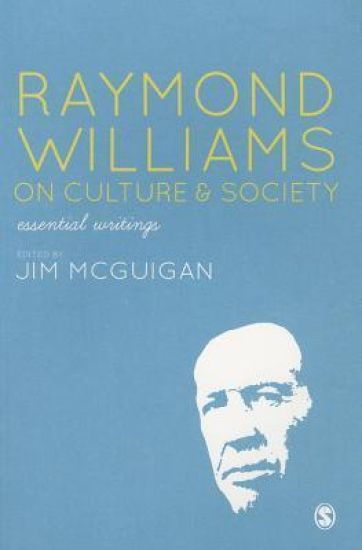
Raymond Williams on Culture and Society
"The most important Marxist cultural theorist after Gramsci, Williams' contributions go well beyond the critical tradition, supplying insights of great significance for cultural sociology today... I have never read Williams without finding something worthwhile, something subtle, some idea of great importance" - Jeffrey C. Alexander, Professor of Sociology, Yale University Celebrating the significant intellectual legacy and enduring influence of Raymond Williams, this exciting collection introduces a whole new generation to his work. Jim McGuigan reasserts and rebalances Williams' reputation within the social sciences by collecting and introducing key pieces of his work. Providing context and clarity he powerfully evokes the major contribution Williams has made to sociology, media and communication and cultural studies. Powerfully asserting the on-going relevance of Williams within our contemporary neoliberal and digital age, the book: Includes texts which have never been anthologised before Situates Williams' work both biographically and historically Provides a comprehensive introduction to Williams' social-scientific work Demonstrates the enduring relevance of cultural materialism. Original and persuasive this book will be of interest to anyone involved in theoretical and methodological modules within sociology, media and communication studies and cultural studies.
Raymond Williams on Culture and Society
"The most important Marxist cultural theorist after Gramsci, Williams' contributions go well beyond the critical tradition, supplying insights of great significance for cultural sociology today... I have never read Williams without finding something worthwhile, something subtle, some idea of great importance" - Jeffrey C. Alexander, Professor of Sociology, Yale University Celebrating the significant intellectual legacy and enduring influence of Raymond Williams, this exciting collection introduces a whole new generation to his work. Jim McGuigan reasserts and rebalances Williams' reputation within the social sciences by collecting and introducing key pieces of his work. Providing context and clarity he powerfully evokes the major contribution Williams has made to sociology, media and communication and cultural studies. Powerfully asserting the on-going relevance of Williams within our contemporary neoliberal and digital age, the book: Includes texts which have never been anthologised before Situates Williams' work both biographically and historically Provides a comprehensive introduction to Williams' social-scientific work Demonstrates the enduring relevance of cultural materialism. Original and persuasive this book will be of interest to anyone involved in theoretical and methodological modules within sociology, media and communication studies and cultural studies.
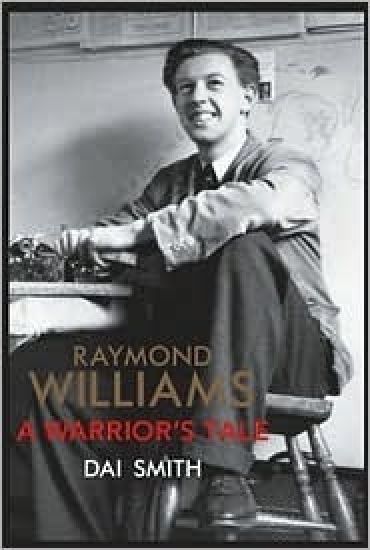
Raymond Williams: A Warrior's Tale

Raymond Williams: A Warrior's Tale

Dai Smith

Parthian Books
2021
nidottu
This edition celebrates the centenary of Williams's birth. RAYMOND WILLIAMS (1921-1998) was the most influential socialist writer and thinker in post-war Britain. Now, for the first time, making full use of Williams's private and unpublished papers and by placing him in a wide social and cultural landscape, Dai Smith, in this highly original and much praised biography, uncovers how Williams's life to 1961 is an explanation of his immense intellectual achievement. "It is Smith's ambition to set out the lonely, almost monastic path Raymond took through childhood, army and adult education towards his deserved eminence. But the biographer's greatest achievement is to find his own discerning route through what often seems to be a jungle of contradiction... This is a worthwhile book and a very good one." - David Hare, The Guardian "It is a remarkable piece of work and will henceforth be essential to the understanding of the making of Raymond Williams." - Eric Hobsbawm "Becomes at once the authoritative account... Smith has done all that we can ask the historian as biographer to do." - Stefan Collini, London Review of Books "Carrying an impressive deal of intensive research lightly... the portraiture throughout is graphic, richly detailed and subtly shaded... in these packed, lucidly written pages..." - Terry Eagleton, New Welsh Review
Raymond Williams: From Wales to the World
Raymond Williams came from Wales, and was brought up in a working-class family. This fact of place and class has to be considered as the start point for a thread which runs through his life and his work. In Raymond Williams: From Wales to the World this reality is considered as his life and work are traced out across borders, to people and places he could yet bring understanding and engagement. Throughout the book, Williams’ writing, whether theoretical, historical, critical or as fiction has been treated as a single whole, recognising that his ideas were interwoven as a literary and intellectual re-engagement with Wales over several decades. In this collection of essays edited by Stephen Woodhams, Raymond Williams: From Wales to the World serves to further engage and extend his ideas of class and society.
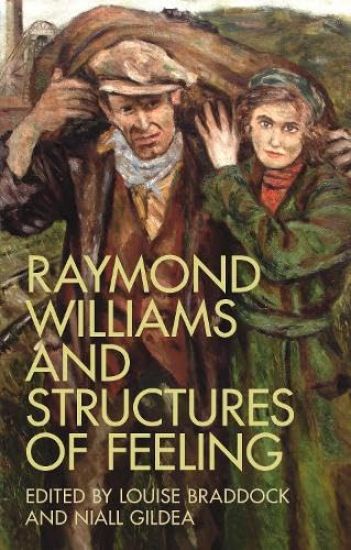
Raymond Williams and Structures of Feeling
Raymond Williams is one of the most important anglophone cultural critics of the twentieth century. In a distinguished career, his readings of the British literary canon offered radical new ways of looking at British society as it developed from the Romantic period into the modern age. Central to this reevaluation was the idea of ‘structures of feeling’, which Williams shaped in order to explain the ways in which members of societies felt about one another, and how they changed over time. The authors of the present volume examine the idea of structures of feeling, and its value for ongoing contemporary debates about relationships of human feeling in areas such as anthropology, economics, law, literary studies, philosophy, psychology and social geography.
About Raymond Williams
About Raymond Williams represents the overdue critical acclaim of Williams’ lasting influence and unbroken repercussions in critical thought. His writings have effectively shaped the ways in which people understand the complexity of the notion of 'culture' and many of the ways it has been taken up in scholarly practice.
About Raymond Williams
About Raymond Williams represents the overdue critical acclaim of Williams’ lasting influence and unbroken repercussions in critical thought. His writings have effectively shaped the ways in which people understand the complexity of the notion of 'culture' and many of the ways it has been taken up in scholarly practice.
The Raymond Williams Reader

The Raymond Williams Reader

John Higgins

Blackwell Publishers
2000
sidottu
This carefully-structured reader presents a survey of the whole body of Williams' existing work, providing existing readers with a new perspective on his writings, and new readers with the opportunity to explore his ideas in depth.
The Raymond Williams Reader

The Raymond Williams Reader

John Higgins

JOHN WILEY AND SONS LTD
2000
nidottu
This carefully-structured reader presents a survey of the whole body of Williams' existing work, providing existing readers with a new perspective on his writings, and new readers with the opportunity to explore his ideas in depth.
After Raymond Williams

After Raymond Williams

Hywel Dix

University of Wales Press
2013
nidottu
After Raymond Williams: Cultural Materialism and the Break-Up of Britain has two broad aims. The first is to re-examine the concept of cultural materialism, the term used by Raymond Williams to describe his theory of how writing and other cultural forms relate to general social and historical processes. Using this theory, the second objective is to explore the material ways in which contemporary British writing participates in one particular political process - that of the break-up of Britain. The general trajectory of the book is a matter of superseding Williams: the early chapters are devoted to extrapolating Williams's materialist theory of cultural forms, while later chapters are concerned with applying this theoretical material to a series of readings of books and films produced in the years since his death in 1988. This volume provides a detailed account of some of the writing produced in Scotland and Wales in the years surrounding political devolution, and also considers the ways in which different subcultural communities use fiction to renegotiate their relationships with the British whole.
The Warrior's Tale - Raymond Williams' Biography
Using a rich array of material from Raymond Williams' hitherto unused personal papers, diaries, letters, unpublished novels and stories, notebooks, work drafts and fragments, this title takes us through the formative years on the Welsh Border as the son of a railway signalman and his wife, on to Cambridge in 1939 and War service in Normandy. Hardcover.
Marxism and Literature

Marxism and Literature

Raymond Williams

Oxford University Press
1977
nidottu
This book extends the theme of Raymond Williams's earlier work in literary and cultural analysis. He analyses previous contributions to a Marxist theory of literature from Marx himself to Lukacs, Althusser, and Goldmann, and develops his own approach by outlining a theory of `cultural materialism' which integrates Marxist theories of language with Marxist theories of literature. Williams moves from a review of the growth of the concepts of literature and idealogy to a redefinition of `determinism' and `hegemony'. His incisive discussion of the 'social material process' of cultural activity culminates in a re-examination of the problems of alignment and commitment and of the creative practice in individual authors and wider social groups.
Keywords: A Vocabulary of Culture and Society

Keywords: A Vocabulary of Culture and Society

Raymond Williams

Oxford University Press
2014
nidottu
First published in 1976, Raymond Williams' highly acclaimed Keywords: A Vocabulary of Culture and Society is a collection of lively essays on words that are critical to understanding the modern world. In these essays, Williams, a renowned cultural critic, demonstrates how these key words take on new meanings and how these changes reflect the political bent and values of our past and current society. He chose words both essential and intangible--words like nature, underprivileged, industry, liberal, violence, to name a few--and, by tracing their etymology and evolution, grounds them in a wider political and cultural framework. The result is an illuminating account of the central vocabulary of ideological debate in English in the modern period. This edition features a new original foreword by Colin MacCabe, Distinguished Professor of English and Literature, University of Pittsburgh, that reflects on the significance of Williams' life and work. Keywords remains as relevant today as it was over thirty years ago, offering a provocative study of our language and an insightful look at the society in which we live.