Kirjojen hintavertailu. Mukana 11 372 059 kirjaa ja 12 kauppaa.

Kirjahaku

Etsi kirjoja tekijän nimen, kirjan nimen tai ISBN:n perusteella.

1000 tulosta hakusanalla Reena

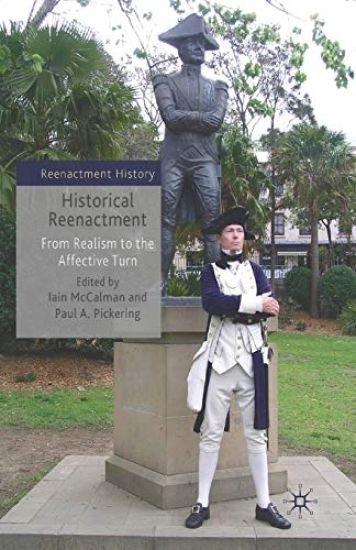
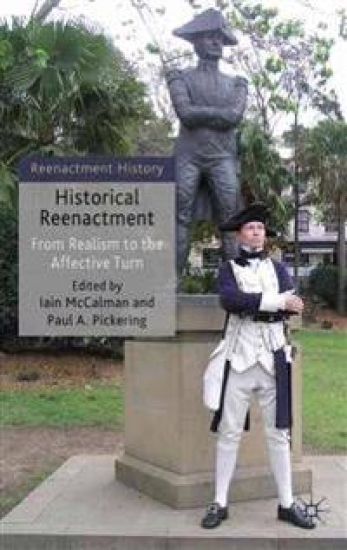
Historical Reenactment

Historical Reenactment

Iain McCalman

Palgrave Macmillan
2010
sidottu
Since the late 1700s new forms of visual entertainment have tried to simulate the details of nature: reenactment has now become the most widely-consumed form of popular history. This book engages with the quest for definition and appropriate delimitation of reenactment as well as questions about the relationship between realism and affect.
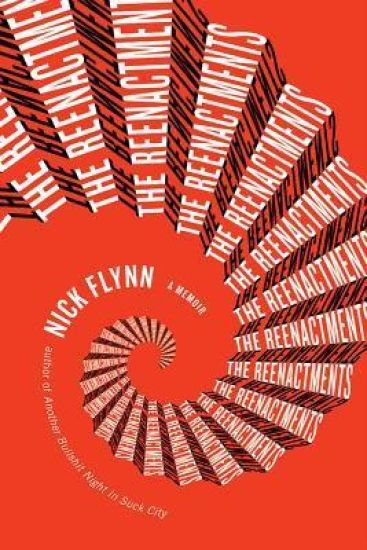
The Reenactments

The Reenactments

WW Norton Co
2013
pokkari
For Nick Flynn, that game we all play the who-would-play-you-in-the-movie-of-your-life game has been resolved. The Reenactments chronicles the surreal experience of being on set during the making of the film Being Flynn, from his best-selling memoir Another Bullshit Night in Suck City, and watching the central events of his life reenacted: his father's long run of homelessness and his mother's suicide. Flynn tells the story of Robert De Niro's first meeting with his real father in Boston and of watching Julianne Moore attempt to throw herself into the sea. The result is a mesmerizingly sharp-edged and kaleidoscopic literary tour de force as well as a compelling argument about consciousness, representation, and grief."
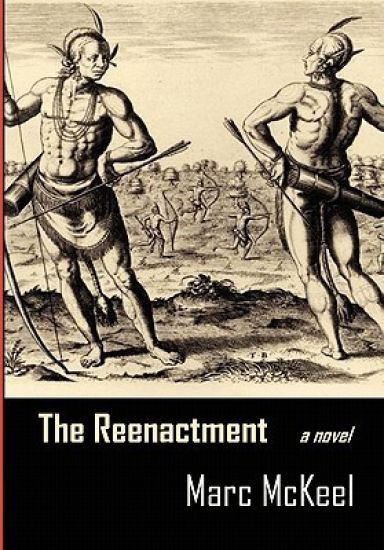
The Reenactment

The Reenactment

Marc McKeel

Lulu.com
2011
sidottu
When worldly, no-nonsense travel agent Pius Bird attends a reenactment of the 1622 massacres near Williamsburg, Virginia, he gets an event far more realistic than he expects. The actors pull the observers into the assault, and as far as Pius can tell, it's not an act. The violence forces him and a woman he saves into the woods where they stay hidden through the night. When they return the next morning they expect to find police cars and ambulances. Instead, they come upon a new, pristine world, the year 1622, where all signs of the 21st century have disappeared. They come to believe that they have gone back in time and would have to find a way back to their old world. What follows is an adventure of escape, of staying out of Indian wars, of avoiding battles between vengeful Englishmen and Powhatans. Eventually Pius Bird learns that not all things are as they appear.
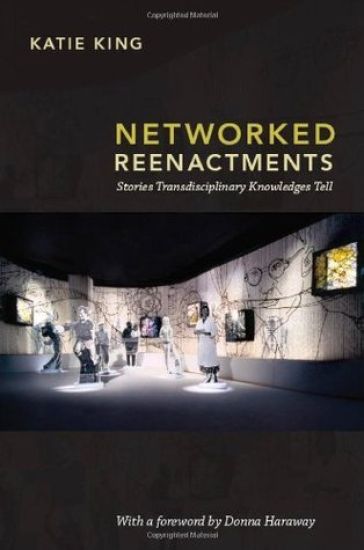
Networked Reenactments

Networked Reenactments

Katie King

Duke University Press
2012
sidottu
Since the 1990s, the knowledge, culture, and entertainment industries have found themselves experimenting, not altogether voluntarily, with communicating complex information across multiple media platforms. Against a backdrop of competing national priorities, changing technologies, globalization, and academic capitalism, these industries have sought to reach increasingly differentiated local audiences, even as distributed production practices have made the lack of authorial control increasingly obvious. As Katie King describes in Networked Reenactments, science-styled television-such as the Secrets of Lost Empires series shown on the PBS program Nova-demonstrates how new technical and collaborative skills are honed by television producers, curators, hobbyists, fans, and even scholars. Examining how transmedia storytelling is produced across platforms such as television and the web, she analyzes what this all means for the humanities. What sort of knowledge projects take up these skills, attending to grain of detail, evoking affective intensities, and zooming in and out, representing multiple scales, as well as many different perspectives? And what might this mean for feminist transdisciplinary work, or something sometimes called the posthumanities?
Networked Reenactments

Networked Reenactments

Katie King

Duke University Press
2012
pokkari
Since the 1990s, the knowledge, culture, and entertainment industries have found themselves experimenting, not altogether voluntarily, with communicating complex information across multiple media platforms. Against a backdrop of competing national priorities, changing technologies, globalization, and academic capitalism, these industries have sought to reach increasingly differentiated local audiences, even as distributed production practices have made the lack of authorial control increasingly obvious. As Katie King describes in Networked Reenactments, science-styled television-such as the Secrets of Lost Empires series shown on the PBS program Nova-demonstrates how new technical and collaborative skills are honed by television producers, curators, hobbyists, fans, and even scholars. Examining how transmedia storytelling is produced across platforms such as television and the web, she analyzes what this all means for the humanities. What sort of knowledge projects take up these skills, attending to grain of detail, evoking affective intensities, and zooming in and out, representing multiple scales, as well as many different perspectives? And what might this mean for feminist transdisciplinary work, or something sometimes called the posthumanities?
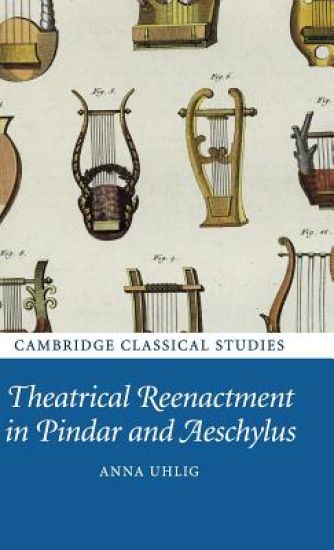
Theatrical Reenactment in Pindar and Aeschylus

Theatrical Reenactment in Pindar and Aeschylus

Anna Uhlig

Cambridge University Press
2019
sidottu
What would Pindar and Aeschylus have talked about had they met at some point during their overlapping poetic careers? How do we map the space shared by these two fifth-century choral poets? In the first book-length comparative study of Pindar and Aeschylus in over six decades, Anna S. Uhlig pushes back against the prevailing tendency to privilege interpretive frames that highlight the differences in their works. Instead, she adopts a more inclusive category of choral performance, one in which both poets are shown to be grappling to understand how the vivid here and now of their compositions are in fact a reenactment of voices and bodies from elsewhere. Pairing close readings of the ancient texts with insights from modern performance studies, Uhlig offers a novel perspective on the 'song culture' of early fifth-century BC Greece.
Historical Reenactment

Historical Reenactment

Iain McCalman

Palgrave Macmillan
2010
nidottu
Since the late 1700s new forms of visual entertainment have tried to simulate the details of nature: reenactment has now become the most widely-consumed form of popular history. This book engages with the quest for definition and appropriate delimitation of reenactment as well as questions about the relationship between realism and affect.
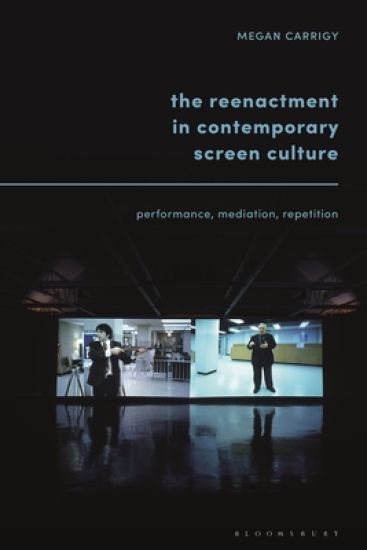
The Reenactment in Contemporary Screen Culture

The Reenactment in Contemporary Screen Culture

Megan Carrigy

Bloomsbury Academic USA
2021
sidottu
During the first decades of the 21st century, a critical re-assessment of the reenactment as a form of historical representation has taken place in the disciplines of history, art history and performance studies. Engagement with the reenactment in film and media studies has come almost entirely from the field of documentary studies and has focused almost exclusively on non-fiction, even though reenactments are being employed across fiction and non-fiction film and television genres. Working with an eclectic collection of case studies from Milk, Monster, Boys Don’t Cry, and The Battle of Orgreave to CSI and the video of police assaulting Rodney King, this book examines the relationship between the status of theatricality in the reenactment and the ways in which its relationships to reference are performed. Carrigy shows that while the practice of reenactment predates technically reproducible media, and continues to exist in both live and mediated forms, it has been thoroughly transformed through its incorporation within forms of technical media.
The Reenactment in Contemporary Screen Culture

The Reenactment in Contemporary Screen Culture

Megan Carrigy

BLOOMSBURY PUBLISHING PLC
2022
nidottu
During the first decades of the 21st century, a critical re-assessment of the reenactment as a form of historical representation has taken place in the disciplines of history, art history and performance studies. Engagement with the reenactment in film and media studies has come almost entirely from the field of documentary studies and has focused almost exclusively on non-fiction, even though reenactments are being employed across fiction and non-fiction film and television genres. Working with an eclectic collection of case studies from Milk, Monster, Boys Don’t Cry, and The Battle of Orgreave to CSI and the video of police assaulting Rodney King, this book examines the relationship between the status of theatricality in the reenactment and the ways in which its relationships to reference are performed. Carrigy shows that while the practice of reenactment predates technically reproducible media, and continues to exist in both live and mediated forms, it has been thoroughly transformed through its incorporation within forms of technical media.
Autobiographical Reenactment in French and Belgian Film
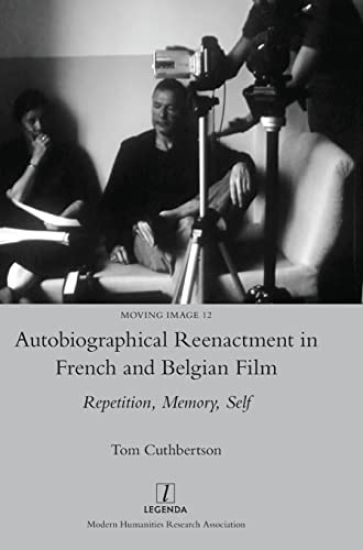
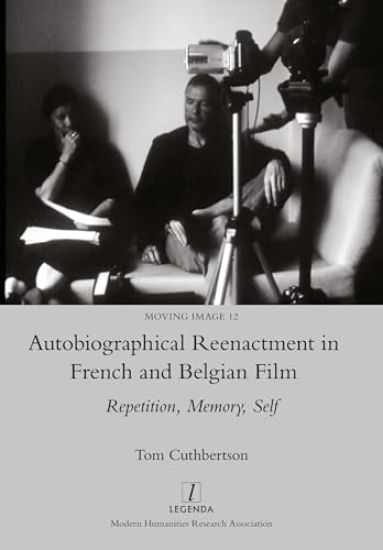
We live in 'reenactive times'. Recent decades have witnessed a marked proliferation of various forms of reenactment across numerous cultural contexts and domains to the point that it is today seemingly impossible to enter museums, heritage sites, art galleries or even to turn on the television without encountering at least some elements of this veritable boom. In such a way, reenactment has become a ubiquitous cultural means of representing, commemorating and investigating the past, called upon for a variety of reasons, by a variety of practitioners and with a variety of effects. By bringing the autobiographical work of four experimental filmmakers from France and Belgium - Chantal Akerman (1950-2015), Vincent Dieutre (1960-), Boris Lehman (1944-), Agn s Varda (1928-2019) - into dialogue, Autobiographical Reenactment in French and Belgian Film: Repetition, Memory, Self considers them in relation to this broad cultural shift and explores the various forms of 'autobiographical reenactment' that their films contain. In the work of these four filmmakers, auto-biographical reenactment offers a radical and varied tech-nique of self-investigation and self-representation that sustains often challenging engagements with identity, subjectivity, memory, knowledge, time, feeling, loss, truth, reality and history, whilst leading us to continually rethink our under-standing of what autobiography can be and can do.Tom Cuthbertson is a Leverhulme Trust Early Career Research Fellow in the School of Modern Languages at Newcastle University.
Autobiographical Reenactment in French and Belgian Film
We live in 'reenactive times'. Recent decades have witnessed a marked proliferation of various forms of reenactment across numerous cultural contexts and domains to the point that it is today seemingly impossible to enter museums, heritage sites, art galleries or even to turn on the television without encountering at least some elements of this veritable boom. In such a way, reenactment has become a ubiquitous cultural means of representing, commemorating and investigating the past, called upon for a variety of reasons, by a variety of practitioners and with a variety of effects. By bringing the autobiographical work of four experimental filmmakers from France and Belgium - Chantal Akerman (1950-2015), Vincent Dieutre (1960-), Boris Lehman (1944-), Agn s Varda (1928-2019) - into dialogue, Autobiographical Reenactment in French and Belgian Film: Repetition, Memory, Self considers them in relation to this broad cultural shift and explores the various forms of 'autobiographical reenactment' that their films contain. In the work of these four filmmakers, autobiographical reenactment offers a radical and varied technique of self-investigation and self-representation that sustains often challenging engagements with identity, subjectivity, memory, knowledge, time, feeling, loss, truth, reality and history, whilst leading us to continually rethink our understanding of what autobiography can be and can do.Tom Cuthbertson is a Leverhulme Early Career Research Fellow in the School of Modern Languages at Newcastle University.
Historical Reenactment
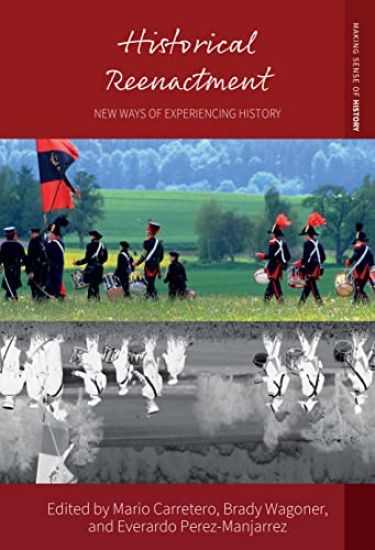
Long dismissed as the domain of hobbyists and obsessives, historical reenactment—the dramatization of past events using costumed actors and historical props—has only in recent years attracted serious attention from scholars. Drawing on examples from around the world, Historical Reenactment offers a fascinating, interdisciplinary exploration of this cultural phenomenon. With particular attention to reenactment’s social and pedagogical dimensions, it develops a robust definition of what the practice constitutes, considers what methodological approaches are most appropriate, and places it alongside museums and memorial sites as an object of analysis.
Historisches Reenactment

Historisches Reenactment

de Gruyter Oldenbourg
2021
sidottu
Geschichte, so scheint es, wird im historischen Reenactment nicht nur k rperlich erleb- und damit erfahrbar, sondern auch breit vermittelbar. Aus analytischer Sicht wirft die verk rperte Wiederkehr der Vergangenheit deshalb zahlreiche Fragen auf. Wie l sst sich das komplexe Ph nomen Reenactment erforschen? Welche Begriffe, Konzepte und Methoden stehen hierf r in den unterschiedlichen Disziplinen zur Verf gung? W hrend diese Probleme im englischsprachigen Diskurs bereits viel diskutiert wurden, stellt dieser Band erstmals systematisch Ans tze der Reenactment-Forschung f r ein deutschsprachiges Zielpublikum vor. Anhand von Fallstudien aus den USA, Polen und Deutschland sowie durch unterschiedliche disziplin re Zugriffe gibt der Band einen Einblick in das breite Spektrum aktueller Forschungsans tze aus den geschichts- und kulturwissenschaftlichen Disziplinen.
Historisches Reenactment

Historisches Reenactment

de Gruyter Oldenbourg
2023
pokkari
Geschichte, so scheint es, wird im historischen Reenactment nicht nur k rperlich erleb- und damit erfahrbar, sondern auch breit vermittelbar. Aus analytischer Sicht wirft die verk rperte Wiederkehr der Vergangenheit deshalb zahlreiche Fragen auf. Wie l sst sich das komplexe Ph nomen Reenactment erforschen? Welche Begriffe, Konzepte und Methoden stehen hierf r in den unterschiedlichen Disziplinen zur Verf gung? W hrend diese Probleme im englischsprachigen Diskurs bereits viel diskutiert wurden, stellt dieser Band erstmals systematisch Ans tze der Reenactment-Forschung f r ein deutschsprachiges Zielpublikum vor. Anhand von Fallstudien aus den USA, Polen und Deutschland sowie durch unterschiedliche disziplin re Zugriffe gibt der Band einen Einblick in das breite Spektrum aktueller Forschungsans tze aus den geschichts- und kulturwissenschaftlichen Disziplinen.
Settler and Creole Reenactment
Explores the uncalculated and incalculable elements in historical re-enactment - unexpected emotions, unplanned developments - and locates them in countries where settlers were trying to establish national identities derived from metropolitan cultures inevitably affected by the land itself and the people who had been there before them.
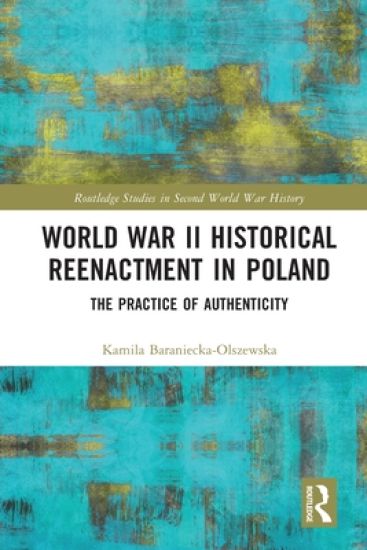
World War II Historical Reenactment in Poland

World War II Historical Reenactment in Poland

Kamila Baraniecka-Olszewska

Routledge
2021
sidottu
This book explores the consequences of the latest political shifts in Central Eastern Europe: the rise of right-wing parties and, among other things, politics becoming more invested in history. These phenomena coincide and overlap with the democratisation of history by turning the past into a hot topic, persistently present in the public sphere and often evoking strong emotions. Ethnographic research (conducted in 2012-2016) focusing on how World War II reenactors experience the past serves as the basis to analyse the ways in which the group uses the widespread, often institutionalised interest in history to – on the one hand – become involved in debates on World War II and the remembrance thereof, and – on the other – to authentically experience this past. The volume therefore analyses how physical the process of creating and experiencing grassroots visions of the past is, and how these visions interact with the public discourse about the past. Reenactors’ ability to marry the often-contradictory orders of historical truth, authenticity, and representation is explored. Moreover, Baraniecka-Olszewska analyses how the reenactors overcome various obstacles on their way towards authentic experiences, performing history through their bodies.
World War II Historical Reenactment in Poland

World War II Historical Reenactment in Poland

Kamila Baraniecka-Olszewska

TAYLOR FRANCIS LTD
2023
nidottu
This book explores the consequences of the latest political shifts in Central Eastern Europe: the rise of right-wing parties and, among other things, politics becoming more invested in history. These phenomena coincide and overlap with the democratisation of history by turning the past into a hot topic, persistently present in the public sphere and often evoking strong emotions. Ethnographic research (conducted in 2012-2016) focusing on how World War II reenactors experience the past serves as the basis to analyse the ways in which the group uses the widespread, often institutionalised interest in history to – on the one hand – become involved in debates on World War II and the remembrance thereof, and – on the other – to authentically experience this past. The volume therefore analyses how physical the process of creating and experiencing grassroots visions of the past is, and how these visions interact with the public discourse about the past. Reenactors’ ability to marry the often-contradictory orders of historical truth, authenticity, and representation is explored. Moreover, Baraniecka-Olszewska analyses how the reenactors overcome various obstacles on their way towards authentic experiences, performing history through their bodies.