Kirjojen hintavertailu. Mukana 11 244 527 kirjaa ja 12 kauppaa.

Kirjahaku

Etsi kirjoja tekijän nimen, kirjan nimen tai ISBN:n perusteella.

1000 tulosta hakusanalla Reiko Ueda

Elegant Embroidery

Elegant Embroidery

Reiko Mori

Stitch Publications
2023
pokkari
Welcome to the artful world of Japanese master embroiderer Reiko Mori, a place where embroidery embodies charm, grace, and true elegance. Choose from more than 40 picturesque motifs, many grouped into enchanting vignettes to mix and match; then use the motifs in 11 projects, including totes, fabric-covered boxes, and more. Learn 16 embroidery stitches to create designs for holidays (a wreath and tiny ornaments); seasons (chubby bees buzzing around dimensional daisies); and everyday occasions (an antique sewing machine and scissors). Themed chapters include flower, marine, and Christmas collections, as well as an assortment of Ms. Mori's signature black-on-linen designs. Embroidery enthusiasts will love re-creating this captivating collection.
Floral Motifs to Embroider

Floral Motifs to Embroider

Reiko Mori

Stitch Publications
2018
pokkari
Visit an exquisite embroidered garden in this awe-inspiring volume from Japanese master embroidery artist Reiko Mori. In seven chapters, Ms. Mori shares an abundance of motifs inspired by flowers, from delicate sprigs and bouquets to climbing vines and perching birds. Blossoms as showy as roses and as modest as dandelions become masterpieces under Ms. Mori's hand. Themes within each chapter showcase each embroidered bloom. Delicate bridal accessories, precious teapots and teacups, a ballet slipper, and an astonishing floral alphabet are just a few of the elements embellished with elaborate floral embroidery. A guide to embroidery-floss colors, essential notions and tools, basic techniques, and a how-to library of embroidery stitches will help aspiring embroidery artists find success.
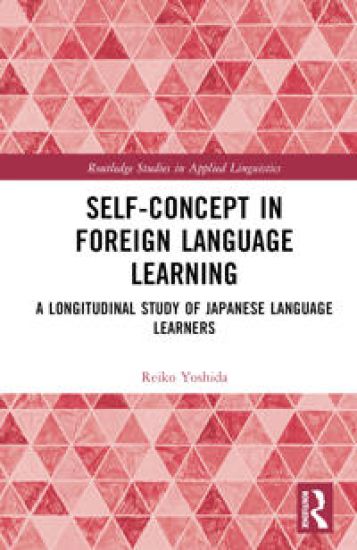
Self-Concept in Foreign Language Learning

Self-Concept in Foreign Language Learning

Reiko Yoshida

TAYLOR FRANCIS LTD
2024
sidottu
This book explores self-concept in foreign language (FL) learning, tracing the trajectories of a group of Japanese language learners at an Australian university to illuminate new insights about the factors impacting positive self-concept and implications for language learning more broadly.The volume calls attention to the ways in which learners’ perception of themselves as FL learners plays a fundamental role in FL learning. Drawing on data from a longitudinal study, including student diaries, interviews and classroom observations, Yoshida outlines shifts in self-concept as learners progress from secondary school to university courses to study abroad and beyond. The book demonstrates how the learner journey is marked by a growing recognition of the importance of practice for achievement but also a greater sense of self-consciousness, with learners’ agency in creating opportunities for themselves to practice their FL as a key factor in improving self-concept over time. This work offers unique observations about self-concept for learners who already ‘have’ global English as a first language, inspiring ways forward for future research and language teaching in other under-studied languages.The book will appeal to students and researchers in applied linguistics, SLA and foreign language learning, as well as stakeholders in Japanese language programs.
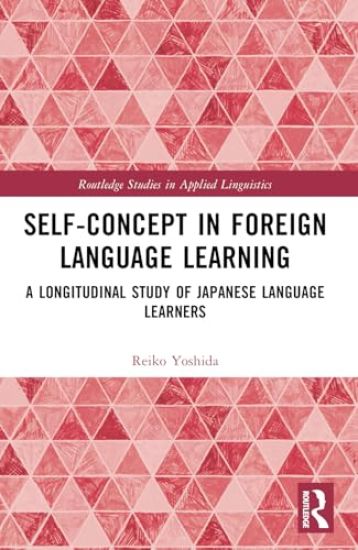
Self-Concept in Foreign Language Learning

Self-Concept in Foreign Language Learning

Reiko Yoshida

TAYLOR FRANCIS LTD
2025
nidottu
This book explores self-concept in foreign language (FL) learning, tracing the trajectories of a group of Japanese language learners at an Australian university to illuminate new insights about the factors impacting positive self-concept and implications for language learning more broadly. The volume calls attention to the ways in which learners’ perception of themselves as FL learners plays a fundamental role in FL learning. Drawing on data from a longitudinal study, including student diaries, interviews and classroom observations, Yoshida outlines shifts in self-concept as learners progress from secondary school to university courses to study abroad and beyond. The book demonstrates how the learner journey is marked by a growing recognition of the importance of practice for achievement but also a greater sense of self-consciousness, with learners’ agency in creating opportunities for themselves to practice their FL as a key factor in improving self-concept over time. This work offers unique observations about self-concept for learners who already ‘have’ global English as a first language, inspiring ways forward for future research and language teaching in other under-studied languages. The book will appeal to students and researchers in applied linguistics, SLA and foreign language learning, as well as stakeholders in Japanese language programs.
Affect, Emotion and Sensibility in Modern Japanese Literature
This book takes the unique approach of combining cognitive approaches with more established close-reading methods in analysing a selection of Japanese novels and a film.They are by four well-known male authors and a director (Natsume Sôseki, Shiga Naoya, Ôe Kenzaburô, Ibuse Masuji and Imamura Shôhei) and five female authors (Kirino Natsuo, Kawakami Mieko, Murata Sayaka, Tsushima Yûko, and Ishimure Michiko) from the early twentieth century up to the early millennium. It approaches the different artistic strategies that oscillate between emotional immersion and critical reflection. Inspired by new developments in cognitive theory and neuroscience, the book seeks to put a spotlight on the aspects of modern Japanese novels that were not fully appreciated earlier; the eclectic and fluid nature of the novel as a form, and the vital roles played by affects and emotions often complicated under the impact of trauma.Rejuvenating previously established cultural theories through a cognitive and emotional lens (narratology, genre theory, historicism, cultural study, gender theory, and ecocriticism), this book will appeal to students and scholars of modern literature and Japanese literature.
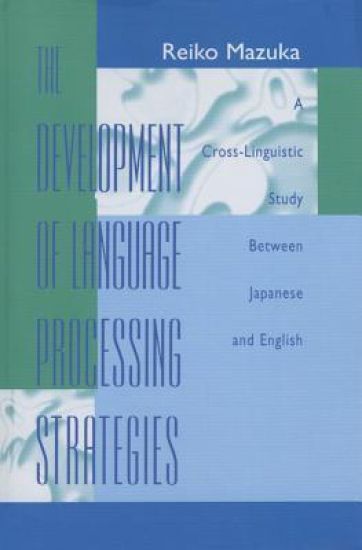
The Development of Language Processing Strategies

The Development of Language Processing Strategies

Reiko Mazuka

Psychology Press Ltd
2014
nidottu
Ever since the notion of explanatory adequacy was promoted by Chomsky in his 1965 Aspects, linguists and psycholinguists have been in pursuit of a psychologically valid theory of grammar. To be explanatorily adequate, a theory of grammar can not only describe the general characteristics of a language but can also account for the underlying psychological processes of acquiring and processing that language. To be considered psychologically valid, a grammar must be learnable by ordinary children (the problem of acquisition) and must generate sentences that are parsable by ordinary people (the problem of processing). Ultimately, the fields of language acquisition and processing are concerned with the same goal: to build a theory that accounts for grammar as it is acquired by children; accessed in comprehension and production of speech; and represented within the human mind. Unfortunately, these two fields developed independently and have rarely been well-informed about each other's concerns. Both have experienced past difficulties as a result. Recently, new models have been developed with full consideration to cross-linguistic diversity. Gone are many of the basic assumptions of conventional models, and in their place a variety of innovative and more flexible assumptions have emerged. However, in their attempt to address cross-linguistic issues, these processing models have yet to fully address the developmental challenge: How can a child without a stable grammar process language and still manage to acquire new grammar? This book attempts to develop a model of language processing that addresses both cross-linguistic and developmental challenges. It proposes to link the setting of a basic configurational parameter during language acquisition to the different organization of processing strategies in left- and right-branching languages. Based primarily on Mazuka's doctoral dissertation, this volume incorporates various responses to the original proposal as well as the author's responses to the comments.
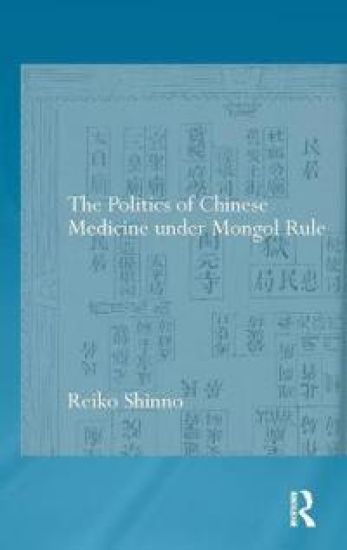
The Politics of Chinese Medicine Under Mongol Rule
Under the rule of the descendants of Chinggis Khan (1167-1227), China saw the development of a new culture in which medical practice came to be considered a highly respected occupation for elite men. During this period, further major steps were also taken towards the codification of medical knowledge and promotion of physicians’ social status.This book traces the history of the politics, institutions, and culture of medicine of China under Mongol rule, through the eyes of a successful South Chinese official Yuan Jue (1266-1327). As the first comprehensive monograph on history of medicine in China under the Mongols, it argues that this period was a separate moment in Chinese history, when a configuration of power different from that of previous and succeeding periods created its own medical culture. The Politics of Chinese Medicine under Mongol Rule emphasizes the impact of the political and institutional changes caused by the Mongols and their collaborators on the social and cultural history of medicine, which culminated in the medical theory of Zhu Zhenheng (1282–1358), still influential in East Asian medicine. Using a variety of Chinese-language sources including gazetteers, legal texts, biographies, poems, and medical texts, it analyses the roles of the Mongols and West and Central Asians as cultural brokers and also as unifiers of China. Further, it views North and South Chinese elites as agents of historical change rather than as victims of Mongol oppression.Underlining the complexity of the history of China under the Mongols and the significance of time and geography for the study of this history, this book will be of great interest to students and scholars of Chinese medical history, Chinese social and cultural history, and medieval global history.
The Politics of Chinese Medicine Under Mongol Rule
Under the rule of the descendants of Chinggis Khan (1167-1227), China saw the development of a new culture in which medical practice came to be considered a highly respected occupation for elite men. During this period, further major steps were also taken towards the codification of medical knowledge and promotion of physicians’ social status.This book traces the history of the politics, institutions, and culture of medicine of China under Mongol rule, through the eyes of a successful South Chinese official Yuan Jue (1266-1327). As the first comprehensive monograph on history of medicine in China under the Mongols, it argues that this period was a separate moment in Chinese history, when a configuration of power different from that of previous and succeeding periods created its own medical culture. The Politics of Chinese Medicine under Mongol Rule emphasizes the impact of the political and institutional changes caused by the Mongols and their collaborators on the social and cultural history of medicine, which culminated in the medical theory of Zhu Zhenheng (1282–1358), still influential in East Asian medicine. Using a variety of Chinese-language sources including gazetteers, legal texts, biographies, poems, and medical texts, it analyses the roles of the Mongols and West and Central Asians as cultural brokers and also as unifiers of China. Further, it views North and South Chinese elites as agents of historical change rather than as victims of Mongol oppression.Underlining the complexity of the history of China under the Mongols and the significance of time and geography for the study of this history, this book will be of great interest to students and scholars of Chinese medical history, Chinese social and cultural history, and medieval global history.
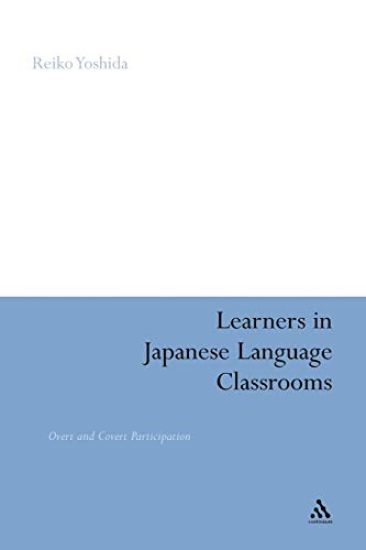
Learners in Japanese Language Classrooms

Learners in Japanese Language Classrooms

Reiko Yoshida

Continuum Publishing Corporation
2011
nidottu
The verbal participation of learners in language classrooms offers a rich seam of data to the applied linguist. Overt and covert participation, when examined, can reveal both the structures of a classroom and elicit privileged information on participant's self-perceptions. It examines the verbal participation of learners in Japanese as a Foreign Language classrooms. Verbal interactions with teachers and classmates and 'private' speech acts are examined in relation to the classroom context and also sociocultural factors such as the learner's motivation and the teacher's belief in their own methods. The examination of corrective feedback episodes and learners' private speech uses recorded speech and stimulated recall interviews recorded over the period of a year. The main focus is on Corrective Feedback episodes, and explains not only the language used in class but also teacher's and learner's own perceptions. It will be of interest to researchers in applied linguistics and second language acquisition, especially those involved with Japanese as a second or other language.
Japan: The World Vegetarian

Japan: The World Vegetarian

Reiko Hashimoto

Bloomsbury Absolute
2020
sidottu
One of the first books in a brand-new series, Reiko Hashimoto introduces the incredibly varied world of vegetarian Japanese food.Vegetarianism has long been a feature of the Japanese diet, and in this book Reiko walks us through the history of vegetarianism in the country, as well as providing tips on the key ingredients – such as miso, tofu and seaweed – that are most used in Japanese vegetarian cooking to help you create a mouth-watering Japanese vegetarian feast at home.. Alongside this, Reiko offers 70 delectable recipes including traditional sushi and noodle dishes, such as gyoza dumplings, fried tofu yakitori, nigiri zushi, tempura, tofu katsu curry and aubergine and padron pepper with somen noodles. All recipes are accompanied by stunning photography.Also in the series: India, Mexico and Italy
A Wall Is Just a Wall

A Wall Is Just a Wall

Reiko Hillyer

DUKE UNIVERSITY PRESS
2024
sidottu
Throughout the twentieth century, even the harshest prison systems in the United States were rather porous. Incarcerated people were regularly released from prison for Christmas holidays; the wives of incarcerated men could visit for seventy-two hours relatively unsupervised; and governors routinely commuted the sentences of people convicted of murder. By the 1990s, these practices had become rarer as politicians and the media-in contrast to corrections officials-described the public as potential victims who required constant protection against the threat of violence. In A Wall Is Just a Wall Reiko Hillyer focuses on gubernatorial clemency, furlough, and conjugal visits to examine the origins and decline of practices that allowed incarcerated people to transcend prison boundaries. Illuminating prisoners’ lived experiences as they suffered, critiqued, survived, and resisted changing penal practices, she shows that the current impermeability of the prison is a recent, uneven, and contested phenomenon. By tracking the “thickening” of prison walls, Hillyer historicizes changing ideas of risk, the growing bipartisan acceptance of permanent exile and fixing the convicted at the moment of their crime as a form of punishment, and prisoners’ efforts to resist.
A Wall Is Just a Wall

A Wall Is Just a Wall

Reiko Hillyer

DUKE UNIVERSITY PRESS
2024
pokkari
Throughout the twentieth century, even the harshest prison systems in the United States were rather porous. Incarcerated people were regularly released from prison for Christmas holidays; the wives of incarcerated men could visit for seventy-two hours relatively unsupervised; and governors routinely commuted the sentences of people convicted of murder. By the 1990s, these practices had become rarer as politicians and the media-in contrast to corrections officials-described the public as potential victims who required constant protection against the threat of violence. In A Wall Is Just a Wall Reiko Hillyer focuses on gubernatorial clemency, furlough, and conjugal visits to examine the origins and decline of practices that allowed incarcerated people to transcend prison boundaries. Illuminating prisoners’ lived experiences as they suffered, critiqued, survived, and resisted changing penal practices, she shows that the current impermeability of the prison is a recent, uneven, and contested phenomenon. By tracking the “thickening” of prison walls, Hillyer historicizes changing ideas of risk, the growing bipartisan acceptance of permanent exile and fixing the convicted at the moment of their crime as a form of punishment, and prisoners’ efforts to resist.
Belonging in Translation

Belonging in Translation

Reiko Shindo

Bristol University Press
2019
sidottu
This is the first book to investigate how migrants and migrant rights activists work together to generate new forms of citizenship identities through the use of language. Shindo's book is an original take on citizenship and community from the perspective of translation, and an alluring amalgamation of theory and detailed empirical analysis based on ethnographic case studies of Japan.
Cognition, Empathy & Interaction

Cognition, Empathy & Interaction

Reiko Hayashi

Praeger Publishers Inc
1996
sidottu
Conversational analysis is an interdisciplinary field that draws on cognitive science, social psychology, sociology, pragmatics, and the ethnography of communication. These various disciplines provide both qualitative and quantitative foundations for conversational analysis. The ultimate goal of this study is to investigate what communication is: what its goals are, why people talk, and how conversational goals are achieved. The primary concerns of this study are to investigate the interactions among cognition, emotion, and social norms, using the floor model proposed by Edelsky (1981) and Schultz, Florio, and Erickson (1982), and to further develop their model for the analysis of conversational interaction.
Cognition, Empathy & Interaction

Cognition, Empathy & Interaction

Reiko Hayashi

Praeger Publishers Inc
1996
nidottu
Conversational analysis is an interdisciplinary field that draws on cognitive science, social psychology, sociology, pragmatics, and the ethnography of communication. These various disciplines provide both qualitative and quantitative foundations for conversational analysis. The ultimate goal of this study is to investigate what communication is: what its goals are, why people talk, and how conversational goals are achieved. The primary concerns of this study are to investigate the interactions among cognition, emotion, and social norms, using the floor model proposed by Edelsky (1981) and Schultz, Florio, and Erickson (1982), and to further develop their model for the analysis of conversational interaction.