Kirjojen hintavertailu. Mukana 11 213 693 kirjaa ja 12 kauppaa.

Kirjahaku

Etsi kirjoja tekijän nimen, kirjan nimen tai ISBN:n perusteella.

1000 tulosta hakusanalla Reinhard Bendix

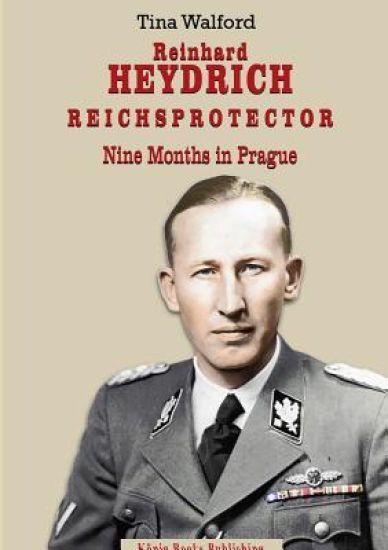
Reinhard Heydrich Nine Months Riechsprotector
Since his assassination in June 1942, the former Reich Protector, Chief of the Secret State Police and Security Service has been responsible for every outrage. In the so-called war crimes trials, the defendants blamed him for everything and everything. The man could not fight back. The author has made extensive trips to the sites of Heydrich's activities for this brilliantly written biography. She spoke to surviving contemporary witnesses in Prague and Germany, conducted historical fieldwork and has viewed and interpreted hitherto unpublished British secret documents as well as private records of Heydrich. Due to her extensive research, she draws a completely new picture of this mysterious man.English journalists in their literary works are often said to have a pronounced narrative talent combined with a striking profession. This biography is an eloquent example of brilliant historiography without ifs and buts.
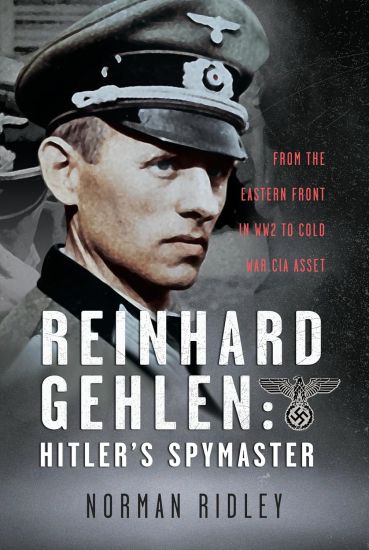
Reinhard Gehlen: Hitler’s Spymaster

Reinhard Gehlen: Hitler’s Spymaster

Norman Ridley

PEN SWORD BOOKS LTD
2025
sidottu
Eleven years after Reinhard Gehlen, the head of Adolf Hitler’s Eastern Front military intelligence unit, emerged from hiding to hand himself over to US forces, he had, with the help of the American CIA, created a legend for himself as founder and first president of the West German Secret Service. In this role he employed many of the same Wehrmacht and SS officers he had served with during the Second World War. All through the steady progression of his career before and during the Second World War, Gehlen had been far too industrious and committed to court the limelight. Then after the defeat of Germany, when he transferred his allegiance to the CIA and later became head of the Bundesnachrichtendienst, he became a man whom Hugh Trevor Roper’s described as someone who ‘always moved in the shadows’. For some, the German intelligence network that Gehlen had controlled since 1942, was part of an unbroken tradition going back to the days of Bismarck. For a great many in Gehlen’s organisation the Cold War was merely an extension of an anti-Soviet campaign that had begun on 22 June 1941, when Hitler launched Operation Barbarossa. After the war, Gehlen had emerged unscathed from Hitler’s bunker and no war crimes charges were ever brought against him. His name, and those of 350 of his Wehrmacht command, were redacted from the official lists of German prisoners of war. Gehlen protected and employed men like Heinrich Schmitz who had been part of Einsatzgruppe A, the murder squad that massacred so many, including communist functionaries and Jewish women, men and children, in the Baltic States. Though Gehlen had remained loyal to Hitler right to the end, once state authority collapsed he wasted little time in making contact with the Americans and offered to place his vast intelligence resources at their disposal in the new fight against Soviet communism. While German generals Heinz Guderian and Franz Halder placed great store by Gehlen’s reports on the tactical level, Hitler called them ‘defeatist’ and gave them barely a glance when making his disastrous strategic decisions. Allen Dulles, head of the CIA, did not repeat Hitler’s mistake, but Gehlen deeply resented the way that his reports to Dulles were mishandled. It became Gehlen’s ambition initially to head up a completely independent West German foreign intelligence service. However, it was not until 1951 that talks to establish a West German intelligence service at federal level began. In the immediate post-war years, Gehlen tirelessly made his case to defend the harbouring of former Wehrmacht and SS personnel in his organisation and battled to prove his worth to the Americans. This book looks at Gehlen’s life from his early career in the chaos of Weimar, through his elevation to General Staff intelligence officer on the Russian Front. It describes how he survived the defeat of the Third Reich and offered himself to the Americans as a foil against the Soviet Union in the Cold War. In doing so it closely examines Gehlen’s record to separate fact from his self-serving fictions.
Reinhard Heydrich: Hangman of the Third Reich

Reinhard Heydrich: Hangman of the Third Reich

Fred Ramen

ROSEN PUBLISHING GROUP
2001
nidottu
100+ Page Biographies That Help Students Grasp the Enormity of the Holocaust The history of the Holocaust is in many ways the story of individuals. These biographies examine the key figures during this shameful time in human history. Focusing both on the victims and the perpetrators of evil, these titles recount the depravity, suffering, and courage that took place during the Holocaust. These gripping and affecting books help teens understand the heroic, infamous, and little-known people of the Holocaust. They will inspire teens to understand the meaning of moral commitment and to say "never again." An excellent supplement to the history and social studies curricula.
Reinhard Pfennig

Reinhard Pfennig

Anna Pfeilsticker

Grin Publishing
2009
nidottu
1959 ver ffentlichte Reinhard Pfennig seine kunstp dagogische Konzeption von Kunstunterricht in dem Buch Bildende Kunst in der Gegenwart - Analyse und Methode." 1964 erschien eine zweite Fassung unter dem Titel Gegenwart der bildenden Kunst. Erziehung zum bildnerischen Denken." Dieses Buch war nicht nur eine zweite Fassung des 1959 erschienen Werkes, sondern enthielt v llig neue berlegungen. Diese berlegungen beschreibt Pfennig in seinem Vorwort zur vierten Auflage aus dem Jahr 1970. So war zum einen die Frage neu, welche kunstp dagogische Relevanz die bildende Kunst der Gegenwart hat, wobei der Weg von der Analyse zur Methode ging. Es ging also darum zu untersuchen, welche p dagogische Bedeutung die Gegenwartskunst f r die Erziehung zum bildnerischen Denken hat. Zum zweiten forderte Pfennig einen verbindlichen Kunstunterricht mit kontrollierbaren Lernleistungen, wobei die Einheit von Machen, Sehen und Sagen im Zentrum des Lerngeschehens stand. Die dritte neue berlegung war die Zielvorstellung. Denn Ziel des Kunstunterrichts war es nun die Sch lerinnen und Sch ler zum bildnerischen Denken zu bef higen. Sie so an die Kunst heranzuf hren, dass sie selbst k nstlerisch t tig sein konnten und zum anderen sich ber Kunst u ern k nnen.