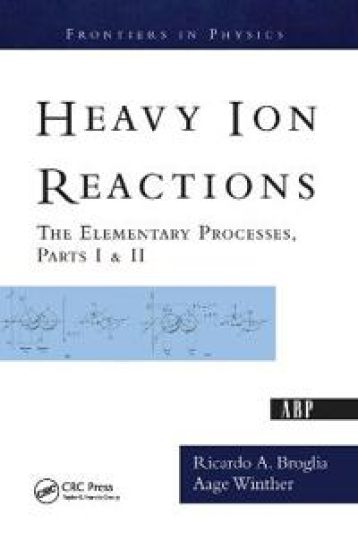
Combining elastic and inelastic processes with transfer reactions, this two-part volume explores how these events affect heavy ion collisions. Special attention is given to processes involving the transfer of two nucleons, which are specific for probing pairing correlations in nuclei. This novel treatment provides, together with the description of surface vibration and rotations, a unified picture of heavy ion reactions in terms of the elementary modes of nuclear excitation. Heavy Ion Reactions is essential reading for beginning graduate students as well as experienced researchers.
Bringing together concepts from psychoanalysis with an attentive eye and the author's popular wisdom, Sports on the Couch explores the psychology of athletes and those around them. As a product of our culture, sport enables a break for our minds, since it allows us to disconnect from internal as well as external realities. We immerse ourse
This book contains the papers that have been presented at the ninth Very Large Scale Integrated Systems conference VLSI'97 that is organized biannually by IFIP Working Group 10.5. It took place at Hotel Serra Azul, in Gramado Brazil from 26-30 August 1997. Previous conferences have taken place in Edinburgh, Trondheim, Vancouver, Munich, Grenoble and Tokyo. The papers in this book report on all aspects of importance to the design of the current and future integrated systems. The current trend towards the realization of versatile Systems-on-a-Chip require attention of embedded hardware/software systems, dedicated ASIC hardware, sensors and actuators, mixed analog/digital design, video and image processing, low power battery operation and wireless communication. The papers as presented in Jhis book have been organized in two tracks, where one is dealing with VLSI System Design and Applications and the other presents VLSI Design Methods and CAD. The following topics are addressed: VLSI System Design and Applications Track • VLSI for Video and Image Processing. • Microsystem and Mixed-mode design. • Communication And Memory System Design • Cow-voltage & Low-power Analog Circuits. • High Speed Circuit Techniques • Application Specific DSP Architectures. VLSI Design Methods and CAD Track • Specification and Simulation at System Level. • Synthesis and Technology Mapping. • CAD Techniques for Low-Power Design. • Physical Design Issues in Sub-micron Technologies. • Architectural Design and Synthesis. • Testing in Complex Mixed Analog and Digital Systems.
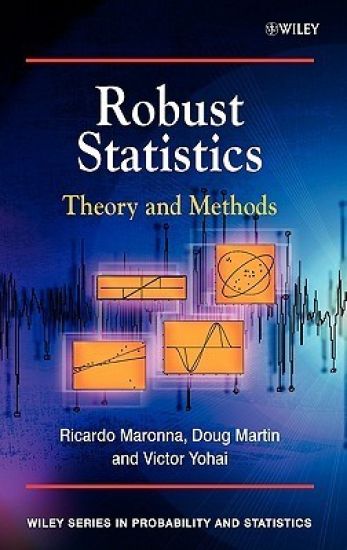
Classical statistical techniques fail to cope well with deviations from a standard distribution. Robust statistical methods take into account these deviations while estimating the parameters of parametric models, thus increasing the accuracy of the inference. Research into robust methods is flourishing, with new methods being developed and different applications considered. Robust Statistics sets out to explain the use of robust methods and their theoretical justification. It provides an up-to-date overview of the theory and practical application of the robust statistical methods in regression, multivariate analysis, generalized linear models and time series. This unique book: Enables the reader to select and use the most appropriate robust method for their particular statistical model.Features computational algorithms for the core methods.Covers regression methods for data mining applications.Includes examples with real data and applications using the S-Plus robust statistics library.Describes the theoretical and operational aspects of robust methods separately, so the reader can choose to focus on one or the other.Supported by a supplementary website featuring time-limited S-Plus download, along with datasets and S-Plus code to allow the reader to reproduce the examples given in the book. Robust Statistics aims to stimulate the use of robust methods as a powerful tool to increase the reliability and accuracy of statistical modelling and data analysis. It is ideal for researchers, practitioners and graduate students of statistics, electrical, chemical and biochemical engineering, and computer vision. There is also much to benefit researchers from other sciences, such as biotechnology, who need to use robust statistical methods in their work.
Un pa s de culpas es un texto esencial para comprender la naturaleza de las autocracias que en el siglo XXI someten a buena parte de Am rica Latina, con especial nfasis en el caso venezolano que, por razones obvias, el autor maneja con gran conocimiento y destreza en el uso del lenguaje. Desde su ascenso a la Presidencia de Venezuela en 1999, Hugo Ch vez Fr as se esmer en crear una cofrad a de gobernantes del mismo g nero, interesados todos en perpetuarse en usufructuar el poder para beneficio propio y de las cortes que los acompa an. Y el experimentado periodista Ricardo Escalante los deja al descubierto en Un pa s de culpas, una obra de periodismo narrativo con momentos de suspenso que mantienen en vilo al lector y le quitan el sue o.
Engineers and earth scientists are increasingly interested in quantitative methods for the analysis, interpretation, and modeling of data that imperfectly describe natural processes or attributes measured at geographical locations. Inference from imperfect knowledge is the realm of classical statistics. In the case of many natural phenomena, auto- and cross- correlation preclude the use of classical statistics. The appropriate choice in such circumstances is geostatistics, a collection of numerical techniques for the characterization of spatial attributes similar to the treatment in time series analysis of auto-correlated temporal data. As in time series analysis, most geostatistical techniques employ random variables to model the uncertainty that goes with the assessments. The applicability of the methods is not limited by the physical nature of the attributes. Geostatistics for Engineers and Earth Scientists presents a concise introduction to geostatistics with an emphasis on detailed explanations of methods that are parsimonious, nonredundant, and through the test of time have proved to work satisfactorily for a variety of attributes and sampling schemes. Most of these methods are various forms of kriging and stochastic simulation. The presentation follows a modular approach making each chapter as self-contained as possible, thereby allowing for reading of individual chapters, reducing excessive cross-referencing to previous results and offering possibilities for reviewing similar derivations under slightly different circumstances. Guidelines and rules are offered wherever possible to help choose from among alternative methods and to select parameters, thus relieving the user from making subjective calls based on an experience that has yet to be acquired. Geostatistics for Engineers and Earth Scientists is intended to assist in the formal teaching of geostatistics or as a self tutorial for anybody who ismotivated to employ geostatistics for sampling design, data analysis, or natural resource characterization. Real data sets are used to illustrate the application of the methodology.
Despite New Spain’s significant participation in the early transatlantic slave trade, the collective imagination of the Mexican nation evolved in the nineteenth and twentieth centuries to understand itself as devoid of a black presence. In The Nigrescent Beyond, Ricardo Wilson proposes a framework for understanding this psychic vanishing of blackness and thinks through how it can be used both to productively unsettle contemporary multicultural and postracial discourses within the United States and to further the interrogations of being and blackness within the larger field of black studies. Wilson models a practice of reading that honors the disruptive possibilities offered by an ever-present awareness of that which lies, irretrievable, beyond the horizon of vanishing itself. In doing so, he engages with historical accounts detailing maroon activities in early New Spain, contemporary coverage of the push to make legible Afro-Mexican identities, the electronic archives of the Obama presidency, and the work of Carlos de SigÜenza y GÓngora, Octavio Paz, Ivan Van Sertima, Miguel Covarrubias, Steven Spielberg, and Colson Whitehead, among others.
Combining elastic and inelastic processes with transfer reactions, this two-part volume explores how these events affect heavy ion collisions. Special attention is given to processes involving the transfer of two nucleons, which are specific for probing pairing correlations in nuclei. This novel treatment provides, together with the description of surface vibration and rotations, a unified picture of heavy ion reactions in terms of the elementary modes of nuclear excitation. Heavy Ion Reactions is essential reading for beginning graduate students as well as experienced researchers.
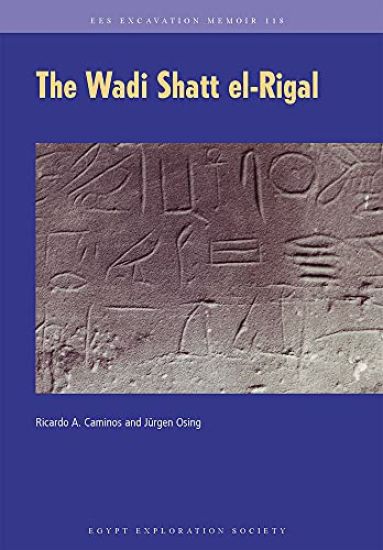
This volume, part of the wider EES publications on the site of Gebel el-Silsila, covers the results of the 1983 season at nearby Wadi Shatt el-Rigal, famous for its abundance of epigraphic records from the late Eleventh Dynasty. The reason for their presence in this remote site has remained an intriguing problem that has been much debated. Besides the three well-known royal reliefs of Mentuhotep II and Mentuhotep III, the mission under Ricardo Caminos and assisted by Jurgen Osing documented more than 800 inscriptions and rock-drawings, which until now have remained only partially published. Follow-up work in 2004 has allowed for checks on the previous work, which can now be made fully accessible.
"Alvarez drives home the point that for buildings and communities located in hurricane-prone regions, it is not a question of whether the area will be impacted, but when it will be impacted. The book makes a strong case for taking responsibility to understand the vulnerabilities of buildings and structures to hurricane impacts."—Timothy Reinhold, PhD, from the ForewordFocusing on coastal regions affected by tropical cyclones, Hurricane Mitigation for the Built Environment highlights vulnerability, natural hazards, risk, damage, emergency management, and hazard mitigation as they relate to the threat and occurrence of hurricanes. The product of more than 25 years of the author’s experiences with post-event assessments and studies of hurricane damage, it looks particularly at common sequences of failures and oversights in planning for a hurricane that amplify the damage caused by storms.This book combines observations of actual damage to the built environment in coastal regions caused by hurricanes with applied research and testing. It uses case studies and imagery from recent storms to show some of the strengths and weaknesses of infrastructure, landscaping, and city planning. The case studies also illustrate, in great detail, what community planning efforts have worked and those that have failed.The book also goes beyond analyzing immediately visible structural damages following a hurricane. It addresses long-term issues such as beach erosion and struggling tourism economies. It also describes specific, realistic, and essential mitigation measures for reducing the damage potential of future hurricanes and urges developers, designers, and owners to incorporate new knowledge into the design of new buildings or into the retrofitting of existing buildings. By applying the information presented in this book, communities susceptible to recurring hurricanes can reduce storm damage as well as the potential for extended losses that frequently follow a hurricane.
Separados por eventos de car cter extraordinarios, padre e hijo recorren un mismo camino sin saber los lazos de sangre que los atan; cada uno enfocado en su propio objetivo: uno quiere regresar junto a sus enfermos hijos y el otro ha dedicado toda su vida a una noble causa: salvar al mundo de una inminente hecatombe de proporciones universales que amenaza con acabar la vida en la tierra, y retornarla a una nueva edad jur sica. Tambi n se cierne sobre ellos la amenaza del m s infrahumano individuo que jam s halla existido, y todo parece indicar que sigue vivo. Y juzgar por los eventos ocurridos, tiene una gran ventaja sobre los buenos individuos que han dedicado sus vidas a contrarrestar la expansi n de esa mala energ a y a evitar que l se apodere de esa mala energia, pues con ella puede conquistar la barrera del tiempo y transformar los eventos que ya ocurrieron o est n por ocurrir. La mano oculta de otro perverso individuo con buenas apariencias, pero con ansias de ser amo y se or del mundo ha fraguado un macabro plan a largo plazo, y ahora ya es tiempo de recoger los frutos de su inversi n y por fin obtener el control absoluto de la singular energ a que ha estado floreciendo y transformando a las criaturas y el ambiente en esa parte donde se ha radicado, pero antes; el tambien tiene que vencer los obst culos y las dificultades que lo separan del triunfo, pero los efectos que ya ha causado la extranjera energ a no son f ciles de vencer. Su poder transformador ya ha provocado cambios en la naturaleza de esa regi n, creando nuevas y raras criaturas con singulares caracter sticas: los Elastizarios y otras en forma de plantas con auto-conciencias: las Florifaunicas que sin duda representan un verdadero reto. Todo comenz el 1ro de Septiembre de 1859: el d a mas largo de la historia.
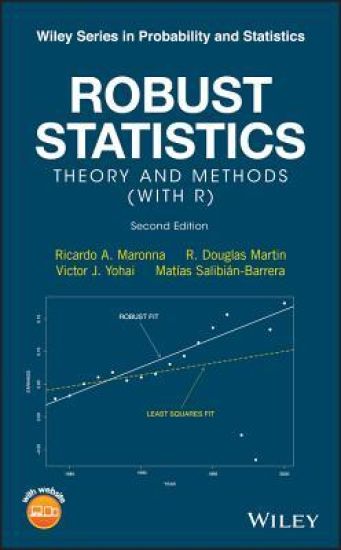
A new edition of this popular text on robust statistics, thoroughly updated to include new and improved methods and focus on implementation of methodology using the increasingly popular open-source software R. Classical statistics fail to cope well with outliers associated with deviations from standard distributions. Robust statistical methods take into account these deviations when estimating the parameters of parametric models, thus increasing the reliability of fitted models and associated inference. This new, second edition of Robust Statistics: Theory and Methods (with R) presents a broad coverage of the theory of robust statistics that is integrated with computing methods and applications. Updated to include important new research results of the last decade and focus on the use of the popular software package R, it features in-depth coverage of the key methodology, including regression, multivariate analysis, and time series modeling. The book is illustrated throughout by a range of examples and applications that are supported by a companion website featuring data sets and R code that allow the reader to reproduce the examples given in the book. Unlike other books on the market, Robust Statistics: Theory and Methods (with R) offers the most comprehensive, definitive, and up-to-date treatment of the subject. It features chapters on estimating location and scale; measuring robustness; linear regression with fixed and with random predictors; multivariate analysis; generalized linear models; time series; numerical algorithms; and asymptotic theory of M-estimates. Explains both the use and theoretical justification of robust methodsGuides readers in selecting and using the most appropriate robust methods for their problemsFeatures computational algorithms for the core methods Robust statistics research results of the last decade included in this 2nd edition include: fast deterministic robust regression, finite-sample robustness, robust regularized regression, robust location and scatter estimation with missing data, robust estimation with independent outliers in variables, and robust mixed linear models. Robust Statistics aims to stimulate the use of robust methods as a powerful tool to increase the reliability and accuracy of statistical modelling and data analysis. It is an ideal resource for researchers, practitioners, and graduate students in statistics, engineering, computer science, and physical and social sciences.
Engineers and earth scientists are increasingly interested in quantitative methods for the analysis, interpretation, and modeling of data that imperfectly describe natural processes or attributes measured at geographical locations. Inference from imperfect knowledge is the realm of classical statistics. In the case of many natural phenomena, auto- and cross- correlation preclude the use of classical statistics. The appropriate choice in such circumstances is geostatistics, a collection of numerical techniques for the characterization of spatial attributes similar to the treatment in time series analysis of auto-correlated temporal data. As in time series analysis, most geostatistical techniques employ random variables to model the uncertainty that goes with the assessments. The applicability of the methods is not limited by the physical nature of the attributes. Geostatistics for Engineers and Earth Scientists presents a concise introduction to geostatistics with an emphasis on detailed explanations of methods that are parsimonious, nonredundant, and through the test of time have proved to work satisfactorily for a variety of attributes and sampling schemes. Most of these methods are various forms of kriging and stochastic simulation. The presentation follows a modular approach making each chapter as self-contained as possible, thereby allowing for reading of individual chapters, reducing excessive cross-referencing to previous results and offering possibilities for reviewing similar derivations under slightly different circumstances. Guidelines and rules are offered wherever possible to help choose from among alternative methods and to select parameters, thus relieving the user from making subjective calls based on an experience that has yet to be acquired. Geostatistics for Engineers and Earth Scientists is intended to assist in the formal teaching of geostatistics or as a self tutorial for anybody who ismotivated to employ geostatistics for sampling design, data analysis, or natural resource characterization. Real data sets are used to illustrate the application of the methodology.