Kirjojen hintavertailu. Mukana 11 627 373 kirjaa ja 12 kauppaa.

Kirjahaku

Etsi kirjoja tekijän nimen, kirjan nimen tai ISBN:n perusteella.

1000 tulosta hakusanalla Riccardo Viale

Riccardo Freda

Riccardo Freda

Roberto Curti

McFarland Co Inc
2017
pokkari
In an eclectic career spanning four decades, Italian director Riccardo Freda (1909-1999) produced films of remarkable technical skill and powerful visual style, including the swashbuckler Black Eagle (1946), an adaptation of Les Miserables (1947), the peplum Theodora, Slave Empress (1954) and a number of cult-favorite Gothic and horror films such as I Vampiri (1957), The Horrible Dr. Hichcock (1962) and The Ghost (1963). Freda was first championed in the 1960s by French critics who labeled him "the European Raoul Walsh," and enjoyed growing critical esteem over the years. This book covers his life and career for the first time in English, with detailed analyses of his films and exclusive interviews with his collaborators and family.
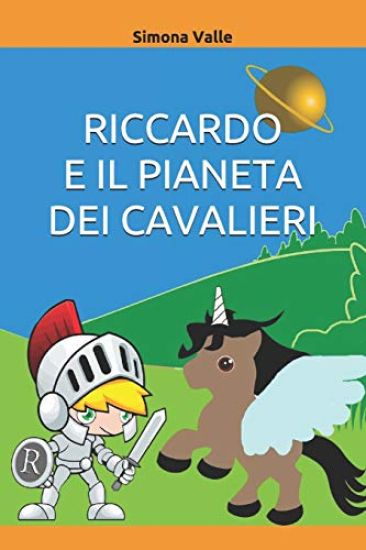
Riccardo E Il Pianeta Dei Cavalieri

Riccardo E Il Pianeta Dei Cavalieri

Simona Valle

Independently Published
2019
nidottu
Che succede quando si fa buio e d'improvviso si illumina la stellina che Riccardo ha sulla mano ed il cavallo Stellino sul muso? Semplice: Riccardo si trasforma nel Cavaliere Senza Paura, Stellino nel Maestoso Unicorno ed insieme fanno rotta per il Pianeta dei Cavalieri. Ad attenderli ogni volta trovano re Arturo che affida loro le pi disparate missioni da compiere: un pinguino tropicale da far ragionare, uno Stregone malvagio da sconfiggere, una pietra preziosa da recuperare... Otto brevi storie per fare sognare e sorridere grandi e piccini.
Riccardo - A Wife and the Return of Her Old Boy-Friend: The Evolution of Relationships Between Couples, Between Sex and Intrigue, Passion and Sensuali
A consolidated couple, an old youthful flame of her, reappears by chance from the past, from there a series of events and circumstances that will lead the couple, together with that of the old juvenile love, to discover a world made of intrigue, passion, fires are lit that brood under the skin of each of us. The dark side is revealed and nothing will be more like before. But all this does not generate damage, but consolidates relationships by cementing them with new sensations. There are unexplored places that you will discover by reading this story, the only danger is that you also want to go to the discovery of the paths traveled by the protagonists of this novel. We are far from the infancy of the 50 shades, boredom will never be a companion reading these pages, each chapter will be a door wide open on the next, take all the time necessary when you begin to read it.
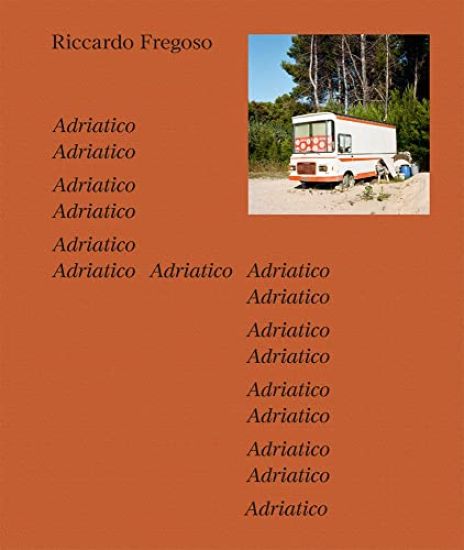
Riccardo Fregoso

Riccardo Fregoso

Kerber Verlag
2022
sidottu
In Adriatico, the photographer Riccardo Fregoso (*1981) seeks out places where he spent vacations in his childhood and youth. For this, he travelled the coasts of the Abruzzo and the Molise, to then focus his gaze northwards to the Marche and southwards to Apulia. The Adriatic coast, which is an almost heavenly place in Fregoso’s memories, consists in reality of an endless stringing together of concrete buildings, which were hastily erected during the economic boom in Italy. In his photos, Fregoso captures the region shaped by mass tourism, with all its contradictions and its particular light. Adriatico is a homage to summer, the vacation atmosphere, and the photographs of Luigi Ghirri. Text in English and Italian.
Il mio nome è Riccardo: Il tuo libro da colorare personale, in modo che tutti conoscano il tuo nome - Quaderno - Libro per ragazzi - Blocco da
Il mio nome RiccardoLibro da colorare personalizzato per persone speciali. Con un design dolce gatto che sorprendono il vostro bambino con certezza. I libri da colorare sono un'idea regalo molto folle e non diventano mai noiosi, rimane un pezzo di memoria per l'eternit .I nostri bellissimi quaderni disposti sono ideali per appunti, con l'apprendimento nella scuola o in un'universit per riempire il pensiero. Scrivi i tuoi pensieri, esperienze, escursioni o impressioni personali in modo da poterle cercare in seguito. Cos i momenti belli non rimangono solo ricordi, ma sono scritti con fermezza e possono essere rivisitati e rivisti pi volte. Adatto per uso personale o come regalo per il riconoscimento. Sul lavoro o nello sport come attivit da fare o per essere in grado di misurare i propri progressi. Pu essere utilizzato per molti scopi e quindi qualcosa di molto speciale Fatto con amore.Dettagli: Formato: 15,24 x 22,86 cm (6x9 pollici)100 pagine bianche numerate, utilizzo versatile (scrivere, disegnare o scarabocchiare)Carta bianca, piacevole da scrivere e disegnareCopertina morbida opacaVi auguriamo tanta gioia Non hai trovato il tuo nome? Basta inserire "Il mio nome + nome" nella maschera di ricerca di Amazon e selezionare.
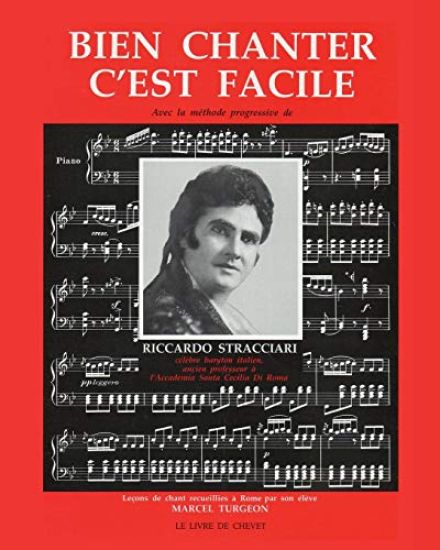
Bien chanter c'est facile: Avec la méthode progressive de Riccardo Stracciari

Bien chanter c'est facile: Avec la méthode progressive de Riccardo Stracciari

Marcel Turgeon

Createspace Independent Publishing Platform
2012
nidottu
Cette m thode a permis l'illustre baryton italien Riccardo Stracciari de chanter les plus grands r les de l'op ra pendant plus de cinquante ans, un record absolu. Si vous chantez mal, cette m thode vous dira pourquoi. Si vous chantez bien, cette m thode vous dira aussi pourquoi. Cette m thode vous expliquera ce qu'est le beau chant et quels sont les moyens de le produire. Gr ce cette m thode progressive, vous obtiendrez s rement et rapidement la pose de votre voix. Tout le monde a int r t chanter, mais condition de bien mettre le son. Le chant est un sport id al pour les hommes, les femmes et les enfants. Cette m thode courte mais compl te, r dig e dans un style clair et pr cis, vous r v le tous les secrets de l' cole italienne.
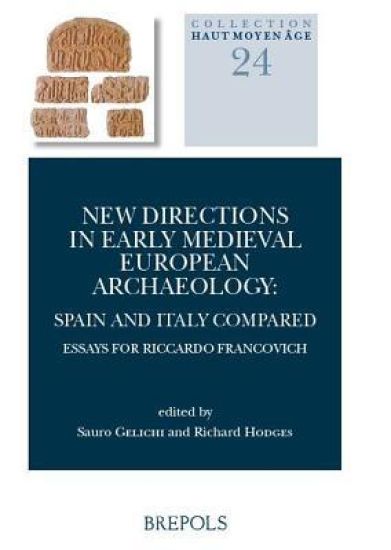
New Directions in Early Medieval European Archaeology: Spain and Italy Compared: Essays for Riccardo Francovich
On 30 March 2007 Riccardo Francovich died suddenly and Europe lost one of its greatest archaeologists. The impact of Francovich's teaching had on the birth and development of medieval archaeology has been very strong, especially in the country where he worked (Italy), and on the archaeologists of his 'adopted' country, namely Spain. If medieval archaeology has grown over the last thirty years in these two countries, it is certainly thanks to him. For this reason, on 11 June, 2011, some of his closest colleagues and family gathered in Rome at the British School of Rome, in order to remember him and to open a serious discussion on issues that were central to his interests as well as those pertinent to any understanding Italian and Spanish historiography in the second half of the 20th century. Discussing together on this occasion in Rome, there emerged perspectives of analysis, interpretative paradigms and models of reading the original, that recent research has strongly renewed and that often possessed a shared commonality. All this showed that, even with the obvious differences of the national 'stories', not only might one recognize similar conjunctures (the impact of new 'barbarian' aristocracies on the social structures of the Roman world, the modalities of Islamization, for example), but also find parallel evolutions in terms of macrostructures (in the lives of urban and rural communities, for example). Hence the idea of comparing two different worldviews after the end of antiquity, through the identification of specific topics, made possible by archaeological research that had developed with great effect (and with good results) in recent decades . The optical analysis of these processes is essentially an archaeological one. The focus is primarily the study of social structures and on how these structures show and represent themselves. While there is no perfect symmetry between the analyses of the two countries, the contributions to this collection make it possible to trace and to compare two different types of processes that have led to different types of 'fragmentation'. A book like this is new in the publishing context of archaeological European Union. It is aimed at an audience of specialists and university researchers. The issues that are addressed are new or are being addressed through new paradigms. In addition, the book written in English should attract a much wider audience to key research topics in significant European medieval studies, but which have been hitherto confined to the local context. Much of the debate that has developed in recent decades, as Francovich himself believed, will inhabit a new intellectual space and will then spread. The volume is not only a fitting tribute to an original and innovative scholar, but also an attempt to compare the 'archaeology' of two different countries, with the aim of reading their histories in parallel.