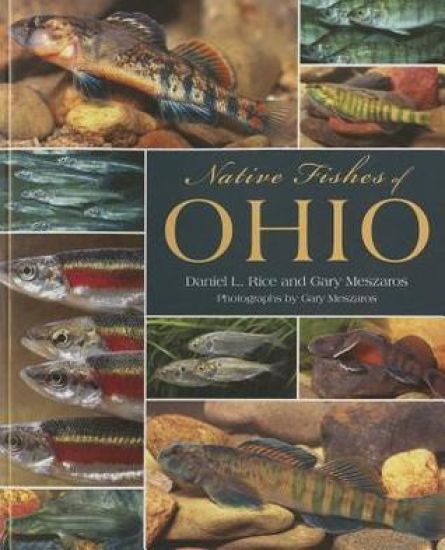
Ohio’s original heavily forested landscape included glacial lakes, large rivers, and streams that teemed with an abundant variety of fish, most of which remain resident today. Native Fishes of Ohio documents the more than 130 species originally found in the state and describes how their aquatic habitats have evolved as a result of agriculture and industrial development.Naturalist Dan Rice and photographer Gary Meszaros draw upon more than 40 years of fieldwork and recent hands-on experience to detail the natural history of each species of Ohio fish. The authors provide field identification characteristics and describe each fish’s habitat, ecology, and distribution. The book is profusely illustrated with Gary Meszaros’s spectacular color photographs of live specimens in their natural environment, a resource unique to this volume. The range of shapes and vivid colors will give the reader insight into the fascinating world of the state’s native fishes.An ideal resource for the non-specialist, Native Fishes of Ohio will interest nature lovers, teachers, and anglers and is a must for every Ohio school and public library.
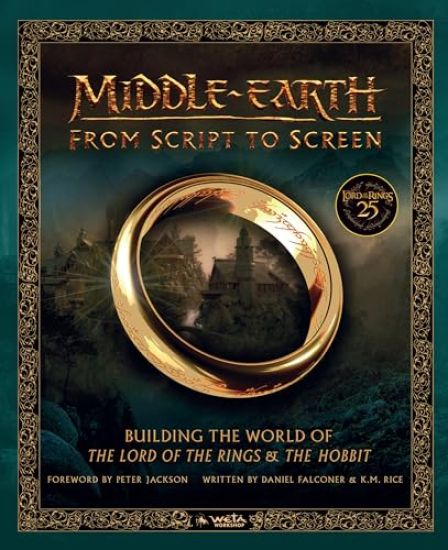
For the first time ever, the epic, in-depth story of the creation of one of the most famous fantasy worlds ever imagined, a richly illustrated compendium that reveals the breathtaking craftsmanship, artistry, and technology behind the magical Middle-earth of The Lord of the Rings and The Hobbit Motion Picture Trilogies, directed by Peter Jackson.
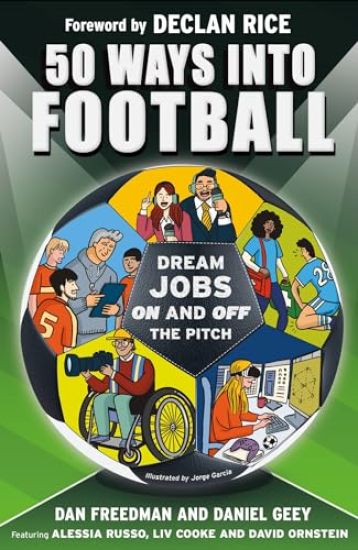
*** With a foreword from England superstar, Declan Rice.***Are you obsessed with football and want to know how to make it your future? Well, now you can!Football isn't just about becoming a pro. In fact, there are hundreds of people who help make magic on the pitch, whether it's the architect who designed the stadium, the coder who created your favourite game or the physio who got the star player fighting fit again. 50 Ways into Football gives you access to 50 leading experts who have made a career out of the beautiful game, from footballing legends to top-flight sports commentators and the people behind the scenes that ensure the smooth-running of the sport. This fantastic guide to the beautiful game will help you get excited about your future, so you can eventually score your dream job on or off the pitch.Contributors include:Declan RiceAlessia RussoLiv CookeSeb HutchinsonTekkz Reshmin ChoudhuryWill StillDavid Ornstein SmokeyChris Kavangah Flo Lloyd HughesThis is the ultimate playbook to dream jobs on and off the pitch, with inspiring stories from football legends and hidden heroes for football fans aged 9+.
How can the example of Morehouse School of Medicine help other health-oriented universities create ideal collaborations between faculty and community-based organizations?Among the 154 medical schools in the United States, Morehouse School of Medicine stands out for its formidable success in improving its surrounding communities. Over its history, Morehouse has become known as an institution committed to community engagement with an interest in closing the health equity gap between people of color and the white majority population. In The Morehouse Model, Ronald L. Braithwaite and his coauthors reveal the lessons learned over the decades since the school's founding—lessons that other medical schools and health systems will be eager to learn in the hope of replicating Morehouse's success. Describing the philosophical, cultural, and contextual grounding of the Morehouse Model, they give concrete examples of it in action before explaining how to foster the collaboration between community-based organizations and university faculty that is essential to making this model of care and research work. Arguing that establishing ongoing collaborative projects requires genuineness, transparency, and trust from everyone involved, the authors offer a theory of citizen participation as a critical element for facilitating behavioral change. Drawing on case studies, exploratory research, surveys, interventions, and secondary analysis, they extrapolate lessons to advance the field of community-based participatory research alongside community health.Written by well-respected leaders in the effort to reduce health inequities, The Morehouse Model is rooted in social action and social justice constructs. It will be a touchstone for anyone conducting community-based participatory research, as well as any institution that wants to have a positive effect on its local community.
When former Indiana governor Mitch Daniels was named Purdue University's twelfth president, he became one of a small handful of nationally renowned figures to lead an institution of higher education. In an era when university presidents had largely abandoned the role of public intellectual, Daniels immediately captured broad attention for his willingness to take a thoughtful stand on America's most pressing challenges—in academia and far beyond.Boiler Up: A University President in the Public Square offers readers a fascinating compendium of commencement addresses, published columns, and transcripts of speeches and hosted events spanning ten years of insights and insightful interactions that put Mitch Daniels front and center among American thought leaders. Throughout the book, Daniels's sharp intellect, incisive analysis, and delightful sense of humor reign supreme. Via embedded QR codes, readers can "attend" recorded content, including evenings with Condoleezza Rice, Garry Kasparov, Walter Isaacson, and other fascinating people. Whether the reader seeks lessons on leadership or immersion in engaging ideas, Boiler Up is a tour de force of transformative thinking.
With threats to global biodiversity growing, it is increasingly necessary to examine the frameworks we employ to ensure conservation is successful and effective. Conservation of the ocean and its biodiversity can thus take many forms and area-based fisheries management has been used for centuries to improve the performance of fisheries and reduce their ecological impact. Such measures have also developed and in 2010 the Convention on Biological Diversity (CBD) recognized the importance of protected areas and Other Effective Area-based Conservation Measures (OECMs) in reversing biodiversity loss. Other Effective Area-based Conservation Measures (OECMs) are thus geographically defined sites outside of protected areas that can achieve the sustained long-term conservation of biodiversity and they can be managed by government organisations, indigenous peoples or local communities. The book is an updated version of a report prepared by members of the IUCN Fisheries Expert Group in 2021, following their close involvement in the elaboration and adoption of the concept of OECMs, and subsequent developments at international and national levels. This book focuses on OECMs as applied in marine capture fisheries, referred to as "fishery-OECMs". Included in the book are: A detailed description of this new instrument for managing fisheries and conservation. A complete account of the background and development of the OECM concept. Identification of how OECMs can be used to further economic and conservation goals. This book describes the OECM concept in the context of marine capture fisheries to inform those working, interested or involved in fisheries, conservation and the environment. It also reviews the opportunities and challenges presented when identifying, using and maintaining effective long-term fishery-OECMs, thus ensuring the effective management of fisheries and the conservation of marine biodiversity.
Rice Chemistry and Technology, Fourth Edition, is a new, fully revised update on the very popular previous edition published by the AACC International Press. The book covers rice growth, development, breeding, grain structure, phylogenetics, rice starch, proteins and lipids. Additional sections cover rice as a food product, health aspects, and quality analysis from a cooking and sensory science perspective. Final chapters discuss advances in the technology of rice, with extensive coverage of post-harvest technology, biotechnology and genomic research for rice grain quality. With a new, internationally recognized editor, this new edition will be of interest to academics researching all aspects of rice, from breeding, to usage. The book is essential reading for those tasked with the development of new products.
During the last nine millennia or so, man has improved the rice plant, increased its productivity and has found various uses of its parts. The story of rice differs from region to region and has been different in different periods of time. There was a time when tax was collected in the form of rice in Japan, the Southeast Asian kingdoms created hydraulic feats for its cultivation and Ottoman armies advanced with rice as their ration. In recent years, there have been riots due to scarcity of rice and also international efforts to produce enough rice to avoid hunger. The book provides an interesting reading of all such events in the course of its 9000 years long history.
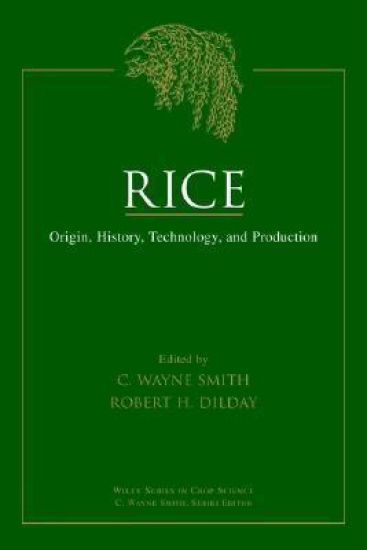
Thorough coverage of rice, from cultivar development to marketing Rice: Evolution, History, Production, and Technology, the third book in the Wiley Series in Crop Science, provides unique, single-source coverage of rice, from cultivar development techniques and soil characteristics to harvesting, storage, and germplasm resources. Rice covers the plants origins and history, physiology and genetics, production and production hazards, harvesting, processing, and products. Comprehensive coverage includes: *Color plates of diseases, insects, and other production hazards *The latest information on pest control *Up-to-date material on marketing *A worldwide perspective of the rice industry Rice provides detailed information in an easy-to-use format, making it valuable to scientists and researchers as well as growers, processors, and grain merchants and shippers.
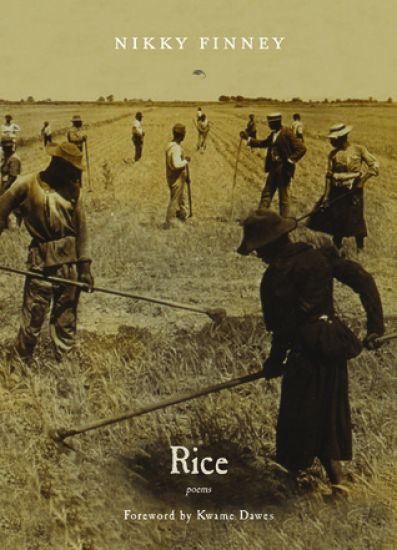
In Rice, her second volume of poetry, Nikky Finney explores the complexity of rice as central to the culture, economy, and mystique of the coastal South Carolina region where she was born and raised. The prized Carolina Gold rice paradoxically made South Carolina one of the most oppressive states for slaves and also created the remarkable Gullah culture on the coastal islands. The poems in Rice compose a profound and unflinching journey connecting family and the paradoxes of American history, from the tragic times when African slaves disembarked on the South Carolina coast to the triumphant day when Judge Ernest A. Finney Jr., Nikky's father, was sworn in as South Carolina's first African American chief justice. Images from the Finney family archive illustrate and punctuate this collection. Rice showcases Finney's hungry intellect, her regional awareness and pride, and her sensitivity to how cultures are built and threatened.
A glorious celebration of rice with 80 delicious recipes and text that explores preparing, cooking and storing this magnificent hero ingredient.Affordable, versatile, delicious and satisfying, rice is a staple in Asian cuisine, a favourite ingredient that forms the backbone of tasty recipes enjoyed the world over. Building on the success of her first book Ramen, this second collaboration with author Makiko Sano follows her winning formula, celebrating Japan's deep connection with rice with of 80 delicious Asian recipes. Featuring gorgeous colour recipe and step by step photographs, chapters include Kake Gohan, Donburi, Rice Noodles, Onigiri, Rice Cooker Dishes, Rice Flour, Savoury Rice and Rice Paper, with gluten-free meal ideas in each section. Along with expert advice on how to cook the perfect rice, how to make a meal in a rice cooker and how to overcome the many challenges faced when cooking rice, this is the go-to rice cookbook.
This volume aims to be a comprehensive guide to the field of rice molecular biology, encompassing both time-honored techniques and state-of-the-art methodologies. Chapters detail sample preparation, temporal and spatial analysis of RNA, protein expression, transformation and precise genome editing, scalable transcriptome analysis, epigenome analysis, and gene regulatory network analysis. Written in the highly successful Methods in Molecular Biology series format, chapters include introductions to their respective topics, lists of the necessary materials and reagents, step-by-step, readily reproducible laboratory protocols, and key tips on troubleshooting and avoiding known pitfalls. Authoritative and cutting-edge, Rice: Methods and Protocols aims to ensure successful results in the further study of this vital field.
Rice today is food to half the world's population. Its history is inextricably entangled with the emergence of colonialism, the global networks of industrial capitalism, and the modern world economy. The history of rice is currently a vital and innovative field of research attracting serious attention, but no attempt has yet been made to write a history of rice and its place in the rise of capitalism from a global and comparative perspective. Rice is a first step toward such a history. The fifteen chapters, written by specialists on Africa, the Americas, and Asia, are premised on the utility of a truly international approach to history. Each brings a new approach that unsettles prevailing narratives and suggests new connections. Together they cast new light on the significant roles of rice as crop, food, and commodity, and shape historical trajectories and interregional linkages in Africa, the Americas, Europe, and Asia.
Among the staple foods most welcomed on southern tables-and on tables around the world-rice is without question the most versatile. As Michael Twitty observes, depending on regional tastes, rice may be enjoyed at breakfast, lunch, and dinner; as main dish, side dish, and snack; in dishes savory and sweet. Filling and delicious, rice comes in numerous botanical varieties and offers a vast range of scents, tastes, and textures depending on how it is cooked. In some dishes, it is crunchingly crispy; in others, soothingly smooth; in still others, somewhere right in between. Commingled or paired with other foods, rice is indispensable to the foodways of the South. As Twitty's fifty-one recipes deliciously demonstrate, rice stars in Creole, Acadian, soul food, Low Country, and Gulf Coast kitchens, as well as in the kitchens of cooks from around the world who are now at home in the South. Exploring rice's culinary history and African diasporic identity, Twitty shows how to make the southern classics as well as international dishes-everything from Savannah Rice Waffles to Ghananian Crab Stew. As Twitty gratefully sums up, "Rice connects me to every other person, southern and global, who is nourished by rice's traditions and customs.