Kirjojen hintavertailu. Mukana 12 390 323 kirjaa ja 12 kauppaa.

Kirjahaku

Etsi kirjoja tekijän nimen, kirjan nimen tai ISBN:n perusteella.

1000 tulosta hakusanalla Rich Bergman

RICH JOHNSON'S GUIDE TO WILDERNESS SURVIVAL

RICH JOHNSON'S GUIDE TO WILDERNESS SURVIVAL

Rich Johnson

Ragged Mountain Press
2008
nidottu
Expert advice on staying safe in the outdoors from one of America’s best-known survival writersThe best way to survive an extreme situation in the wilderness is to avoid it in the first place, says Rich Johnson in this refreshing new guide to outdoor survival skills. Avoiding both the rigid "primitive skills" ideology and macho, military/survivalist posturing, Johnson focuses on proven, easily implemented methods to handle emergency situations in an easy, low-stress manner.
Rich House

Rich House

Stella Gibbons

Vintage
2011
pokkari
Set on the eve of World War II in a resort on the east coast of England, The Rich House follows the love affairs of six young people and their intertwined adorations. These three tip the balance, and relationships shift, but even war cannot halt the passions of the young.
Rich in Love

Rich in Love

Josephine Humphreys

Penguin Adult Hc/Tr
2000
nidottu
At the age of seventeen, Lucille Odom finds herself in the middle of an unexpected domestic crisis. As she helps guide her family through its discontent, Lucille discovers in herself a woman rich in wisdom, rich in humor, and rich in love.
Rich Russians

Rich Russians

Elisabeth Schimpfössl

Oxford University Press Inc
2018
sidottu
The lives of wealthy people have long held an allure to many, but the lives of wealthy Russians pose a particular fascination. Having achieved their riches over the course of a single generation, the top 0.1 percent of Russian society have become known for ostentatious lifestyles and tastes. Nevertheless, as Elisabeth Schimpfössl shows in this book, their stories reveal a bourgeois existence that is distinct in its circumstances and self-definition, and far more complex than the caricatures suggest. Rich Russians takes a deep and unprecedented look at this group: their personal stories, trajectories, ideas about life and how they see their role and position both on top of Russian society as well as globally. These people grew up and lived through a historically unique period of economic turmoil and social change following the collapse of the Soviet Union. But when taken in a wider historical context, their lives follow a familiar path, from new money to respectable money; parvenus becoming part of Society. Based on interviews with millionaires, billionaires, their spouses and children, Rich Russians concludes that, as a class, they have acquired all sorts of cultural and social resources which help consolidate their personal power. They have developed distinguished and refined tastes, rediscovered their family history, and begun actively engaging in philanthropy. Most importantly, they have worked out a narrative to justify why they deserve their elitist position in society - because of who they are and their superior qualities - and why they should be treated as equals by the West. This is a group whose social, cultural and political influence is likely to outlast any regime change. As the first book to examine the transformation of Russia's former "robber barons" into a new social class, Rich Russians provides insight into how this nation's newly wealthy tick.
Rich Democracies, Poor People

Rich Democracies, Poor People

David Brady

Oxford University Press Inc
2009
sidottu
Poverty is not an individual's choice. Nor, as David Brady demonstrates, is it necessary. Building on the latest scholarship in poverty studies, this book points out that among affluent Western societies, there is immense cross-national and historical variation in poverty. Brady seeks to determine what makes poverty so entrenched in some affluent democracies whereas it is a solvable problem in others. He illustrates that, among these democracies, the United States is in the worst shape, with three times as much poverty as some West European countries. In the U.S., nearly 20% of the population is poor, as are almost a fourth of U.S. children and elderly. Searching for the causes of this dilemma, Brady puts forth a sweeping new theory to explain that the fundamental cause of poverty is politics, starting from the simple claim that the distribution of resources in states and markets is inherently political. Societies make collective choices about how to divide their resources, and these choices are institutionalized. Brady points out that where poverty is low, equality has been institutionalized, and where poverty is widespread, as most visibly demonstrated by the US, there has been a failure to institutionalize equality. Hence, it is a society that collectively decides how much of the population will be economically secure. Countries with a relatively low level of poverty in fact socialize the responsibility of preventing citizens from being poor. This book effectively tackles the issue of how this collective responsibility is conceived and institutionalized, by defining the mechanisms that shape this ideology, or prevent it from coming into being. David Brady offers promising new directions for understanding the politics of social equality, and takes an ambitious step forward in the struggle against poverty.
Rich Democracies, Poor People

Rich Democracies, Poor People

David Brady

Oxford University Press Inc
2009
nidottu
Poverty is not simply the result of an individual's characteristics, behaviors or abilities. Rather, as David Brady demonstrates, poverty is the result of politics. In Rich Democracies, Poor People, Brady investigates why poverty is so entrenched in some affluent democracies whereas it is a solvable problem in others. Drawing on over thirty years of data from eighteen countries, Brady argues that cross-national and historical variations in poverty are principally driven by differences in the generosity of the welfare state. An explicit challenge to mainstream views of poverty as an inescapable outcome of individual failings or a society's labor markets and demography, this book offers institutionalized power relations theory as an alternative explanation. The power of coalitions for egalitarianism, Leftist political groups and parties, and the social policies they are able to institutionalize shape the amount of poverty in society. Where poverty is low, equality has been institutionalized. Where poverty is widespread, exemplified by the U.S., there has been a failure to institutionalize equality. A comprehensive and state-of-the-art study, Rich Democracies, Poor People places the inherently political choices over resources and the political organization of states, markets, and societies at the center of the study of poverty and social inequality.
Rich Russians

Rich Russians

Elisabeth Schimpfössl

Oxford University Press Inc
2020
nidottu
The lives of wealthy people have long held an allure to many, but the lives of wealthy Russians pose a particular fascination. Having achieved their riches over the course of a single generation, the top 0.1 percent of Russian society have become known for ostentatious lifestyles and tastes. Nevertheless, as Elisabeth Schimpfössl shows in this book, their stories reveal a bourgeois existence that is distinct in its circumstances and self-definition, and far more complex than the caricatures suggest. Rich Russians takes a deep and unprecedented look at this group: their personal stories, trajectories, ideas about life, and how they see their role and position both on top of Russian society as well as globally. These people grew up and lived through a historically unique period of economic turmoil and social change following the collapse of the Soviet Union. But when taken in a wider historical context, their lives follow a familiar path, from new money to respectable money; parvenus becoming part of Society. Based on interviews with millionaires, billionaires, their spouses and children, Rich Russians concludes that, as a class, they have acquired all sorts of cultural and social resources which help consolidate their personal power. They have developed distinguished and refined tastes, rediscovered their family history, and begun actively engaging in philanthropy. Most importantly, they have worked out a narrative to justify why they deserve their elitist position in society--because of who they are and their superior qualities--and why they should be treated as equals by the West. This is a group whose social, cultural, and political influence is likely to outlast any regime change. As the first book to examine the transformation of Russia's former "robber barons" into a new social class, Rich Russians provides insight into how this nation's newly wealthy tick.
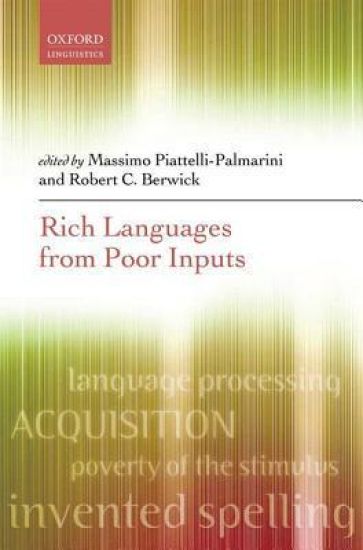
Rich Languages From Poor Inputs

Rich Languages From Poor Inputs

Oxford University Press
2015
nidottu
This book addresses one of the most famous and controversial arguments in the study of language and mind, the Poverty of the Stimulus. Presented by Chomsky in 1968, the argument holds that children do not receive enough evidence to infer the existence of core aspects of language, such as the dependence of linguistic rules on hierarchical phrase structure. The argument strikes against empiricist accounts of language acquisition and supports the conclusion that knowledge of some aspects of grammar must be innate. In the first part of Rich Languages from Poor Inputs, contributors consider the general issues around the Poverty of the Stimulus argument, review the empirical data, and offer new and plausible explanations. This is followed by a discussion of the processes of language acquisition, and observed 'gaps' between adult and child grammar, concentrating on the late spontaneous acqquisition by children of some key syntactic principles, mainly, though not exclusively, between the ages of 5 and 9. The last part of the book widens the horizon beyond language acquisition in the narrow sense, examining the natural development of reading and writing and of the child's growing sensitivity for the fine arts.
Rich Descriptions and Simple Explanations in Morphosyntax and Language Acquisition
This volume offers new perspectives on the tension between the rich patterns of language variation that emerge from comparative studies and the quest for simple theoretical primitives. The chapters explore the debate between Cartography and Minimalism: on the one hand, the need for detailed and articulated descriptions of the clausal architecture, and on the other, the endeavor to reduce the theoretical apparatus to fundamental computational mechanisms. The first part of the book begins with a reflection on the goals of modern linguistic theory, and investigates the principles of human language, in an effort to subsume the regularities of particular grammars under a small set of morphosyntactic and semantic primitives. The second part examines the clausal structure - both the CP-layer and the IP-layer - from a comparative perspective, which directly relates to the fundamental questions of universality, linguistic variation, and learnability addressed in the first part of the book. With chapters written by world-leading linguists who analyze a wide range of old and new phenomena, the volume will be a valuable resource for researchers and students interested in theoretical linguistics and language development.
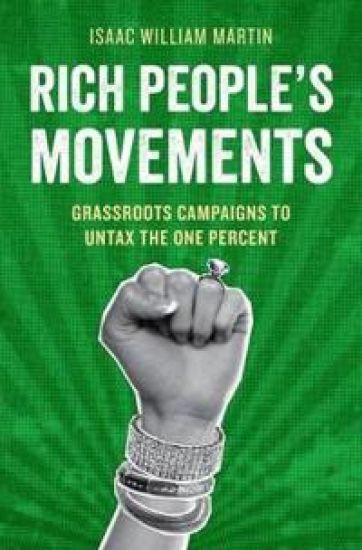
Rich People's Movements

Rich People's Movements

Isaac Martin

Oxford University Press Inc
2015
nidottu
On tax day, April 15, 2010, hundreds of thousands of Americans took to the streets with signs demanding lower taxes on the richest one percent. But why? Rich people have plenty of political influence. Why would they need to publicly demonstrate for lower taxes-and why would anyone who wasn't rich join the protest on their behalf? Isaac William Martin shows that such protests long predate the Tea Party of our own time. Ever since the Sixteenth Amendment introduced a Federal income tax in 1913, rich Americans have protested new public policies that they thought would threaten their wealth. But while historians have taught us much about the conservative social movements that reshaped the Republican Party in the late 20th century, the story of protest movements explicitly designed to benefit the wealthy is still little known. Rich People's Movements is the first book to tell that story, tracking a series of protest movements that arose to challenge an expanding welfare state and progressive taxation. Drawing from a mix of anti-progressive ideas, the leaders of these movements organized scattered local constituencies into effective campaigns in the 1920s, 1950s, 1980s, and our own era. Martin shows how protesters on behalf of the rich appropriated the tactics used by the Left-from the Populists and Progressives of the early twentieth century to the feminists and anti-war activists of the 1950s and 1960s. He explores why the wealthy sometimes cut secret back-room deals and at other times protest in the public square. He also explains why people who are not rich have so often rallied to their cause. For anyone wanting to understand the anti-tax activists of today, including notable defenders of wealth inequality like the Koch brothers, the historical account in Rich People's Movements is an essential guide.
Rich Languages From Poor Inputs

Rich Languages From Poor Inputs

Oxford University Press
2012
sidottu
This book addresses one of the most famous and controversial arguments in the study of language and mind, the Poverty of the Stimulus. Presented by Chomsky in 1968, the argument holds that children do not receive enough evidence to infer the existence of core aspects of language, such as the dependence of linguistic rules on hierarchical phrase structure. The argument strikes against empiricist accounts of language acquisition and supports the conclusion that knowledge of some aspects of grammar must be innate. In the first part of Rich Grammars from Poor Inputs, contributors consider the general issues around the POS argument, review the empirical data, and offer new and plausible explanations. This is followed by a discussion of the the processes of language acquisition, and observed 'gaps' between adult and child grammar, concentrating on the late spontaneous acquisition by children of some key syntactic principles, basically, though not exclusively, between the ages of 5 to 9. Part 3 widens the horizon beyond language acquisition in the narrow sense, examining the natural development of reading and writing and of the child's growing sensitivity for the fine arts.
Rich People's Movements

Rich People's Movements

Isaac Martin

Oxford University Press Inc
2013
sidottu
On tax day, April 15, 2010, hundreds of thousands of Americans demonstrated with signs demanding lower taxes on the richest one percent. Where do protest movements like this come from? Rich people are an unpopular minority with plenty of political influence. Why would rich people need to demonstrate in the streets to demand lower taxes-and why would anyone who wasn't rich join in the protest on their behalf? Such rich people's movements are hardy perennials of American politics. Ever since the ratification of the Sixteenth Amendment in 1913, they have emerged whenever public policies are perceived to threaten the property rights of rich people. The protesters on behalf of the rich have picked up the protest tactics of the poor and powerless because they have been organized and led by activists who have acquired their skills and protest techniques from other social movements, from the Populists and Progressives of the early twentieth century to the feminists and anti-war activists of the mid-twentieth century. At times when conservative Republicans are in power, rich people's movements have helped to bring about some of the biggest tax cuts for the rich in American history. This is the untold story of the tax clubs and Tea Parties that have shaped American politics and policy for the last hundred years.
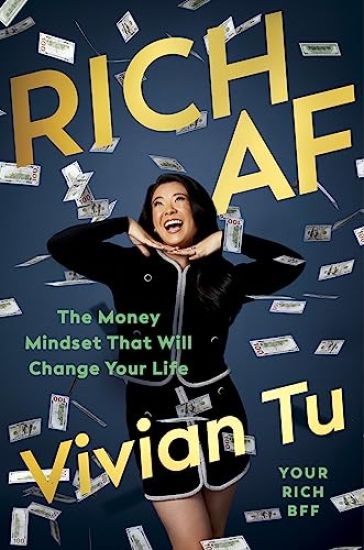
Rich AF

Rich AF

Vivian Tu

PENGUIN BOOKS LTD
2023
sidottu
From TikTok star and Your (favourite) Rich BFF Vivian Tu, the definitive book on personal finance for a new generation Building on the lessons she learned on Wall Street about money and the markets, Vivian Tu now offers her best personal finance tips and tricks to readers of all ages and demographics, so that anyone can get rich, whether you grew up knowing the rules to the game or not. · Vivian will be your mentor, dispensing fresh, no-BS advice on how to think like a rich person and create smart money habits, breaking down her best recommendations to help you:· Maximize your earnings to get more out of your 9-to-5· Understand the differences between savings accounts, and where you should keep your money· Identify the tax strategies and (legal) loopholes you need to retire in style· Overcome investing fears to secure wealth for generations And much more! Rich AF will equip readers with the tools and knowledge to not only understand the financial landscape, but to build a financial strategy of their own. PRAISE FOR RICH AF “I wish this book existed when I was coming up and making money for the first time, because Vivian shows us how to make our finances WORK for us!” Bretman Rock, social media phenomenon and bestselling author “smart, funny, and forthright. She imparts valuable lessons and breaks down complicated financial concepts in a way that will keep you chuckling as you read.” Lisa Ling, award-winning journalist and CBS News reporter “Rich AF proves that finance is for everyone! Vivian will show you that no matter who you are, it’s never too late to pull up your seat at the table.” Karamo Brown, author, actor, and Queer Eye culture expert “This is an excellent roadmap for those who want to learn how to make the most of their money.” Alexa von Tobel, CFP®, author of Financially Forward and founder of Inspired Capital
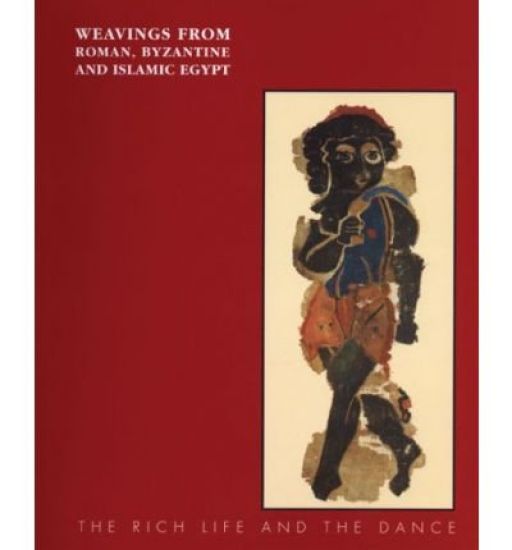
Rich Life and the Dance

Rich Life and the Dance

University of Illinois Press
2005
nidottu
While the monumental sculptures of ancient Egypt are more widely known, the simple pleasures of life as it was lived are better portrayed in textiles, which carried designs commemorating the joys of festivals, food, and dancing. The Rich Life and the Dance presents 103 full-colour images of the astonishing textile collection of Rose Choron, featuring rare examples from Egypt's Coptic Christians as well as the Islamic period. Dating primarily from the third to seventh centuries, these hand-woven fabrics showcase colourful images of dancers, haloed saints with hands raised in prayer, and a plethora of flowers and animals evoking the bountiful ecology of the Nile Delta. Some display Arabic inscriptions celebrating divine power, and all offer insights into a lost world: people's dress, their interior decoration, and their view of their relationship with the natural and supernatural worlds. Eunice Dauterman Maguire explains the work by providing a rich historical and mythic context, as well as detailed technical explanations. This volume also features a preface by Rose Choron herself, explaining the origins of the collection and the source of her fascination with the textiles.
Rich Country, Poor Country

Rich Country, Poor Country

Benjamin F. Bobo

Praeger Publishers Inc
2005
sidottu
In this series of essays that span over 20 years of research, Benjamin Bobo builds the case for multinational corporations to take an active role in combating poverty around the world. Citing sobering statistics (for example, three-fourths of the world's nations are classified as Third World and four-fifths of the world's people live in these nations), Bobo argues that huge corporate entities not only have the wherewithal but an obligation to alleviate the suffering that results from a lack of economic resources and opportunity. Through these provocative and forward-looking essays, he presents a theoretical and practical framework for multinationals to stimulate economic development in the Third World—providing access to capital, entrepreneurial expertise, and emerging technologies.In a bold challenge to conventional thinking about wealth creation and strategic decision-making, Bobo applies such concepts as profit satisficing and stakeholder givebacks, and proposes an agenda for change that begins in business schools (the intellectual training ground for multinational managers), with increased emphasis on sustainability and human development. The net result, he argues, will be a world in which both producers and consumers benefit.
Rich's Farewell to Military Profession, 1581

Rich's Farewell to Military Profession, 1581

Barnaby Rich

University of Texas Press
1959
pokkari
In a long and extraordinary career as captain, courier, privateer, real-estate agent, author, and informer, Barnaby Rich's principal achievement was the present volume-a collection of Elizabethan short stories despite its military title. Unquestionably best sellers in Rich's own time, these tales continue to delight scholars, critics, and even casual readers today. One twentieth-century critic pronounces the Farewell "a landmark in Elizabethan short-story writing" and cites Rich's "romantic charm, gaiety and lightness of touch, good vivid dialogue, directness and ease." According to Henry Seidel Canby, Rich's "humor is of the gayest. . . . There is a suggestion of Chaucer about him, and not a little of the poet's merry humor." Yet the "stories themselves are diverse." Certainly their charm and humor fetched Rich's contemporaries, who read out of existence all but one copy of the first edition and all but five of the subsequent three editions. Eight dramatists-including Shakespeare, Middleton, Shirley, and Marmion-immortalized several of the stories, however, by turning them into plays. The present edition affords an opportunity to read Rich's tales in the form in which Elizabethans knew them. The text reproduced is that of the unique copy of the first edition, which appeared in 1581. The editor's scholarly, illuminating introduction and commentary display much of the liveliness, charm, and humor for which his subject was praised and in addition tell a great deal about the life and literature of that most fascinating of periods, the Age of Elizabeth I. Scholars will be especially interested in Cranfill's revelations of how an Elizabethan story maker operated, in the complex, checkered bibliographical history of the Farewell, and above all in the considerable use Shakespeare seems to have made of Rich's tales.
Rich Wife

Rich Wife

Emily Bludworth de Barrios

UNIVERSITY OF WISCONSIN PRESS
2025
nidottu
Rich Wife is a collection of expansive long poems whose structures echo the cluttered charm of a dresser adorned with hats and hairpins, vials and scarves. Drawing inspiration from James Schuyler’s looping conversations and Chelsey Minnis’s cascading forms, these poems traverse the interlaced landscapes of motherhood, marriage, wealth, and the unspoken contracts of domestic life. Emily Bludworth de Barrios folds personal experience into far-ranging meditations on beauty, nostalgia, power, and privilege, following in the footsteps of Gertude Stein’s fluid turns in Lifting Belly and Anne Carson’s woven observations in The Glass Essay. The poems coil back on themselves, creating recursive strands that offer readers both intimacy and critical distance. As much a contemplation of art as it is of womanhood, Rich Wife engages deeply with art history and aesthetics and examines the domestic as an artistic canvas in itself, where every object and relationship becomes a charged symbol.
Rich World, Poor World

Rich World, Poor World

Ali A. Allawi

YALE UNIVERSITY PRESS
2024
sidottu
A landmark history of the world economic order, exploring how developing countries have fought to escape impoverishment Over the past two decades, experiments in neoliberal economics have opened up a chasm of inequality between the Global South and the West. Development advice from richer nations has led to social upheaval, political unrest, environmental degradation—and even the creation of a new underclass. Brutal extremes of wealth and poverty are now commonplace. Ali A. Allawi traces the evolution of the world economic order from the late imperial era to the present day. Shedding light on continuing controversies, Allawi shows how the process of development has been hindered at every turn, from poor leadership and lost opportunities to widespread corruption. In doing so, he argues that the current neoliberal consensus is only the most recent of a series of failed policy imperatives. Covering issues in the Global South as well as failures in the West, this definitive account offers an impassioned and authoritative call for change.