Kirjojen hintavertailu. Mukana 12 459 402 kirjaa ja 12 kauppaa.

Kirjahaku

Etsi kirjoja tekijän nimen, kirjan nimen tai ISBN:n perusteella.

1000 tulosta hakusanalla Richard D. Estes

The Trials by Opera of Gilbert and Sullivan and Richard D'Oyly Carte

The Trials by Opera of Gilbert and Sullivan and Richard D'Oyly Carte

Jean Gouldsmith Skinner; Linda Barker; Miles Bailey

The Choir Press
2022
nidottu
The Trials by Opera of Gilbert and Sullivan and Richard D'Oyly Carte explores the relationship of these three creative geniuses. They created a sensational new genre of musical entertainment but their fractious relationship was held together by the diplomacy and organisational ability of Helen D'Oyly Carte. During the period from 1875 to 1890 William S. Gilbert and Arthur Sullivan had great success with their comic operas, both at home and overseas. Richard D'Oyly Carte played an invaluable part in the promotion of their productions, but this led to conflict with Gilbert who never accepted the importance of D'Oyly Carte's contribution and resented him making money on the back of the Gilbert and Sullivan's creative talents. Although Gilbert and Sullivan produced harmonious and beloved work, their relationship was far from congenial. Gilbert disliked Sullivan's sybaritic tendencies and his hobnobbing with the great and the good including royalty. Sullivan found Gilbert abrasive. Business and copyright problems abounded during this time but despite conflicts, legal actions and ill health, Gilbert, Sullivan and Richard D'Oyly Carte created a legacy of gloriously staged music which endures today.
A Kid's Chronicles: From High School Drop Out to Ph.D.

A Kid's Chronicles: From High School Drop Out to Ph.D.

Richard D. Jacques

Createspace Independent Publishing Platform
2016
nidottu
Richard "Dicky" Jax navigates a slew of challenges and obstacles while growing up, including school bullies and, of course, girls. Then he finds himself searching for a safe and secure home-as well as a place in the world-after his parents' divorce. Soon after dropping out of high school as a teenager, he sustains multiple severe injuries in a car accident, losing both an eye and a kidney. But he never gives up hope. He continues his quest for belonging and meets a wealth of friends, counselors, teachers, and employers along the way. But will he ever find the contentment he so desperately seeks? For fans of The Glass Castle by Jeanette Walls and This Boy's Life by Tobias Wolff, author Richard D. Jacques presents a compelling coming-of-age tale that recounts his life story with captivating wit, detail, and honesty. While some of the names and events have been slightly changed, the narrative is inextricably based on his life, the people who shared it with him, and the indelible mark they left behind.
To Be a Friend of Christ: The Life of Marion D. Hanks
Marion Duff Hanks (1921-2011) was one of the most beloved and influential leaders of the Church of Jesus Christ of Latter-day Saints in the twentieth century, serving as a General Authority (senior leader) for forty years. He was also a leader of national import. As a recognized expert on youth, five US presidents appointed him to their President's Council on Physical Fitness and Sports. Hanks also served as an executive leader of Rotary International and the Boy Scouts of America.Author Richard Hanks draws on previously unavailable primary sources--journals, correspondence, notebooks, and recordings--to share this first and only authorized biography of his father. Hanks traces his father's influence as he advocated for numerous changes in the institutional church, including humanitarian efforts, refugee relief services, missionary community service, a focus on mercy for the sinner, and a churchwide emphasis on "coming unto Christ." A Renaissance man, Duff Hanks felt comfortable mingling with presidents and world leaders and speaking from pulpits and podiums to huge audiences and on television. But he found his greatest joy in assisting the individual, encouraging each in their personal search for happiness. Once, when asked about his goals, he replied, "My strongest desire is to qualify to be a friend of Christ."
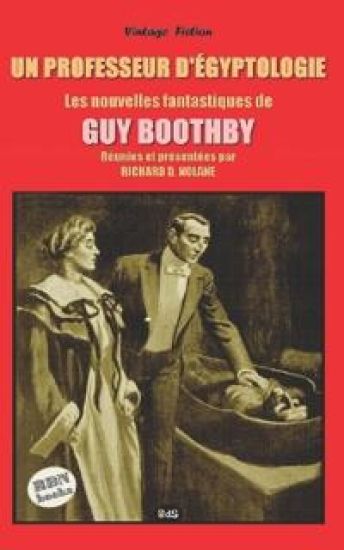
Un professeur d'égyptologie

Un professeur d'égyptologie

Richard D Nolane

L'Oeil Du Sphinx/Rdn Books
2022
pokkari
Best-seller de la litt rature populaire anglaise autour des ann es 1900 et cr ateur d'un de ses plus fameux "m chants", le Dr Nikola, Guy Boothby (1867-1905) fut publi plusieurs reprises de son vivant en France, notamment avec le roman fantastique Pharos l' gyptien, ou encore le r cit policier Mon cas le plus trange.Longtemps oubli , il fut red couvert dans les ann es 1980 gr ce Richard D. Nolane, qui a r uni ici, pour la premi re fois, pays anglo-saxons compris, toutes ses nouvelles fantastiques, dont cinq rest es in dites en fran ais.
Strategic Capitalism: The New Economic Strategy for Winning the Capitalist Cold War
Praise for Strategic Capitalism“Richard D’Aveni understands that managing competition between the United States and China—and their quite different forms of capitalism—will occupy leaders on both sides of the Pacific for decades to come and will shape the first half of the 21st century more than any other factor. This book is a welcome addition to a vitally important debate.”—Ian Bremmer, president of Eurasia Group and author of Every Nation for Itself“Understanding the pluses and minuses of modern ‘capitalism,’ in more than a sloganeering way, is the great challenge for corporations and for government from North America to Europe to East Asia. Strategic Capitalism is a valuable contribution to clear thinking about this imperative.”—James Fallows, The Atlantic, and author of China Airborne“Professor D’Aveni is a business provocateur extraordinaire. He tells you the straight scoop and will never cave to conventional wisdom unless there is proof that it is right. Strategic Capitalism is another example of D’Aveni’s ability to synthesize a complex topic down to its key elements.”—Bill Achtmeyer, Founder, Chairman, and Managing Partner of The Parthenon GroupThe Capitalist Cold War Has BegunThe United States and its economic allies are under attack by a force unlike any they have ever faced. China and other emerging nations are competing for markets around the world using their own versions of capitalism—and, thus far, they are winning handily.In Strategic Capitalism, one of the world’s leading authorities on global business strategy, Richard D’Aveni, describes how the “economic cold war” began, how it is being played out now, and how the West can change the course of events in its favor.Brilliantly conceived—and sure to ignite passions on both sides of the political aisle— Strategic Capitalism calls for an end to the economic idealism that dominates the national dialog. It also calls for a cold, hard focus on reality, which is this: government-managed capitalist systems consistently outmaneuver and outperform the traditional laissez-faire capitalism of the West.With refreshing levels of thoroughness, knowledge, and detachment, D’Aveni describes the competitive landscape today. These are the facts:The world’s best competitors—with China in the lead—have adopted elements of managed capitalism, in which government and businesses work together toward a single aim.China’s objective is clear—to displace the United States as the world’s economic leader by becoming the global rule maker.If the West does not act soon, it stands to lose everything it holds most dear: financial prosperity, economic freedom, geopolitical power, national security, and even democratic values.This is disruptive innovation on a global scale. But instead of companies using breakthrough products and brands to gain market share, nations are devising “game-changing” economic systems to seize influence over—and beyond—the global economy.Bleak as the situation may be, D’Aveni contends that the West can reverse the trends currently tilting the global balance of power.In order to meet the challenges of the future, America must revisit long-held assumptions about economics and economies, seriously consider radical alternative policies, and embrace the concept of Strategic Capitalism.
Colombia

Colombia

Richard D. Mahoney

Oxford University Press Inc
2020
nidottu
Even to experts, Colombia is one of the most confusing countries in the Americas. Its democratic tradition is among the richest and most long-standing in the hemisphere, with only eleven years of military rule during its 200 some years of independence. Except for the United States and Canada, Colombia has had the highest growth rate in the Americas over the last 75 years. It is widely seen as having some of the continent's best universities and deep intellectual traditions along with a dazzling array of fine and industrial arts and now globally-popular tropical music. But despite these admirable achievements, Colombia has also experienced what its Nobel laureate Gabriel García Marquez once called "a biblical holocaust" of human savagery. Along with the scourge of politically-motivated assassinations (averaging 30 per day in the 1990s) have been drug-related massacres, widespread disappearances, rapes and kidnappings, and even the signature defilement of murder victims. The relentless dynamics of the illegal drug industry raises a puzzling question: how did Colombia capture and control that enormously-lucrative industry and then leverage its status as America's No. 1 drug supplier into a $7 billion military partnership with the world's superpower? The answer to that question is something everyone needs to know. To unravel the enigma, Richard D. Mahoney links historical legacies with key periods in the post-World War II era and then sets forth overarching cultural features--land violence, the Church, race, the Spanish language, and magical culture-that run through Colombia's history, distinguish its national experience, and fuel its unquenchable creativity.
Colombia

Colombia

Richard D. Mahoney

Oxford University Press Inc
2020
sidottu
Even to experts, Colombia is one of the most confusing countries in the Americas. Its democratic tradition is among the richest and most long-standing in the hemisphere, with only eleven years of military rule during its 200 some years of independence. Except for the United States and Canada, Colombia has had the highest growth rate in the Americas over the last 75 years. It is widely seen as having some of the continent's best universities and deep intellectual traditions along with a dazzling array of fine and industrial arts and now globally-popular tropical music. But despite these admirable achievements, Colombia has also experienced what its Nobel laureate Gabriel García Marquez once called "a biblical holocaust" of human savagery. Along with the scourge of politically-motivated assassinations (averaging 30 per day in the 1990s) have been drug-related massacres, widespread disappearances, rapes and kidnappings, and even the signature defilement of murder victims. The relentless dynamics of the illegal drug industry raises a puzzling question: how did Colombia capture and control that enormously-lucrative industry and then leverage its status as America's No. 1 drug supplier into a $7 billion military partnership with the world's superpower? The answer to that question is something everyone needs to know. To unravel the enigma, Richard D. Mahoney links historical legacies with key periods in the post-World War II era and then sets forth overarching cultural features--land violence, the Church, race, the Spanish language, and magical culture-that run through Colombia's history, distinguish its national experience, and fuel its unquenchable creativity.
Olivier Messiaen

Olivier Messiaen

Richard D E Burton

Oxford University Press Inc
2016
sidottu
The 20th century French composer Olivier Messiaen was a devout Roman Catholic and notably claimed that his music was an expression of his faith. Unsurprisingly, many performers and listeners consider Messiaen's strong religiosity central to their appreciation of the composer's music. Music scholars have devoted much energy to exploring how Messiaen's music was an extension of his religious beliefs. Yet, these works tend to discuss Messiaen's Catholicism solely in terms of personal religious identity and ignore the composer's broader connections to the cultural landscape of Roman Catholicism in France. In Olivier Messiaen: Texts, Contexts, and Intertexts (1937-1948) the late French literature scholar Richard Burton examines nine of Messiaen's works in the context of the broader French Catholic intellectual tradition. Drawing on an expansive knowledge of the Catholic literature and the surrealist tradition, Burton reveals that Messiaen's middle-period compositions are filled with intertextual references to the Bible and other theological writings, which Messiaen, given his reputation for falsifying facts, may have gone to great lengths to obscure. As a Catholic, Messiaen is presented as somewhat removed from the ethos of his time and place, taking no part in the social side of Catholicism that found expression in the Pétainist litany of 'Patrie, Famille, Travail'. Rather, Messiaen regarded himself as having a 'vertical' relationship with God, which could make him seem unworldly and even uncaring. With insights into the artistic careers of Messiaen's notable contemporaries and historical perspectives on the breakdown of French politics during World War II, Burton creates a vivid picture of the previously unexamined spiritual and philosophical inspirations behind Messiaen's pivotal mid-century compositions.
'Knowledge is Power'

'Knowledge is Power'

Richard D. Brown

Oxford University Press Inc
1992
nidottu
One of the leading scholars dealing with early communication history in America, Richard Brown discusses how information moved through eighteenth and nineteenth-century American society, principally through the expansion of the printed word and its change from the property of the learned and wealthy into a mass-audience market.
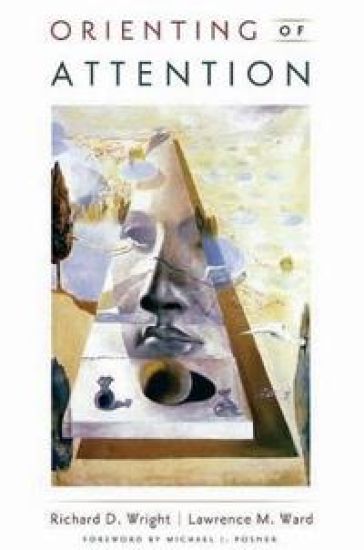
Orienting of Attention

Orienting of Attention

Richard D. Wright; Lawrence M. Ward

Oxford University Press Inc
2008
sidottu
This book is a succinct introduction to the orienting of attention. Richard Wright and Lawrence Ward describe the covert orienting literature clearly and concisely, illustrating it with numerous high-quality images, specifically designed to make the challenging theoretical concepts accessible. The book begins with an historical introduction that provides a great deal of information about orienting, much of which will be new even to seasoned researchers. Wright and Ward then systematically describe the development of various experimental paradigms that have been devised to study covert orienting, and the theoretical issues raised by this research. One trend that they analyse in detail is the progression from relatively simple models of spatial attention (attention spotlight and zoom lens models) to an integrative computational framework based on a concept called the 'activity distribution'. They also present a comprehensive survey of cognitive neuroscience research on the brain mechanisms underlying spatial attention shifts, as well as a chapter summarising recent research on crossmodal attention shifts, and elucidating the links between attention orienting in the visual, auditory, and tactile domains. In the Epilogue they offer a concise summary of the book, and develop preliminary frameworks for understanding the relationship between spatial attention and orienting in response to social cues (social cognitive neuroscience) and for describing the evolution of covert orienting. Orienting of Attention provides a systematic survey that is ideal for those looking for an accessible introduction to the field and also for students and researchers who want a state-of the-art overview.
Baudelaire and the Second Republic

Baudelaire and the Second Republic

Richard D. E. Burton

Clarendon Press
1991
sidottu
Baudelaire and the Second Republic is the first fully comprehensive study of Baudelaire's actions, reactions, and writings from the Revolution of February 1848 to the Bonapartist coup d'état of December 1851. The picture of Baudelaire that emerges from the biographical, textual and contextual materials discussed, is of a consistent radical republican. He is shown to have been close in his views first to Blanqui and then, after the failure of the insurrection of June 1848, to Proudhon and to the démoc-soc party that constituted the main resistance to Bonapartism during what remained of the Second Republic. Baudelaire was close to the popular political culture of mid-nineteenth-century France and drew upon a reservoir of popular themes and images - notably the image of wine - in expressing his commitment to the cause of radical republicanism. A book which traces in detail the links between literary texts and socio-political contexts, this will appeal both to students of Baudelaire and of mid-1800s French politics and society.