Observera att förlaget som ger ut denna produkt baserar innehållet i sina produkter på fria källor som Wikipedia. Boken är med stor sannolikhet endast ett utdrag ur dessa informationskällor, alltså inte en vanlig bok i den bemärkelsen.
Richard E. Wagner has spent more than five decades in academia, holding professorship and leadership positions at the University of California Irvine, Tulane University, Virginia Polytechnic Institute and State University, Auburn University, Florida State University, and George Mason University. He has contributed to the fields of public finance, macroeconomics, and political economy in more than 200 journal articles and 30 books. Economics in Wagner's hands is about exchange and the institutions within which exchange takes place. As a result, much of his scholarship explores how politics, law, and society shape economic relationships.Generous and wise in his relationships with colleagues and students, Wagner is an exemplar of a lifelong learner. Through his example, Wagner continues to teach us all how to prioritize the sheer joy of learning and how to maintain a sense of urgency in our teaching, and how to avoid getting caught up in negative-sum interactions.In honor of Wagner's 80th birthday and retirement from George Mason University in 2021, a group of his colleagues and students gathered to reflect upon and honor his productive career and to advance research inspired by his work. This Festschrift, edited by Peter J. Boettke and Christopher J. Coyne, includes original essays and reflections that pay tribute to a prolific scholar whose research and teaching have profoundly shaped mainline political economy.The Legacy of Richard E. Wagner should be of interest to anyone inspired by Wagner's research as well as students, scholars, and policymakers interested in the real-world implications of sound economic theory.
Richard E. Wagner has spent more than five decades in academia, holding professorship and leadership positions at the University of California Irvine, Tulane University, Virginia Polytechnic Institute and State University, Auburn University, Florida State University, and George Mason University. He has contributed to the fields of public finance, macroeconomics, and political economy in more than 200 journal articles and 30 books. Economics in Wagner's hands is about exchange and the institutions within which exchange takes place. As a result, much of his scholarship explores how politics, law, and society shape economic relationships.Generous and wise in his relationships with colleagues and students, Wagner is an exemplar of a lifelong learner. Through his example, Wagner continues to teach us all how to prioritize the sheer joy of learning and how to maintain a sense of urgency in our teaching, and how to avoid getting caught up in negative-sum interactions.In honor of Wagner's 80th birthday and retirement from George Mason University in 2021, a group of his colleagues and students gathered to reflect upon and honor his productive career and to advance research inspired by his work. This Festschrift, edited by Peter J. Boettke and Christopher J. Coyne, includes original essays and reflections that pay tribute to a prolific scholar whose research and teaching have profoundly shaped mainline political economy.The Legacy of Richard E. Wagner should be of interest to anyone inspired by Wagner's research as well as students, scholars, and policymakers interested in the real-world implications of sound economic theory.
This volume is a collection of articles on reliability systems and Bayesian reliability analysis. Written by reputable researchers, the articles are self-contained and are linked with literature reviews and new research ideas. The book is dedicated to Emeritus Professor Richard E Barlow, who is well known for his pioneering research on reliability theory and Bayesian reliability analysis.
Building a successful career starts with you.It's easy to get caught up in the day-to-day demands of your current job and lose sight of the big picture, but with a typical career spanning 50 years or more, you do so at your own peril. It's up to you to chart your own course to professional success.If you read nothing else on effectively managing your career, read these 10 articles by experts in the field. We've combed through hundreds of articles in the Harvard Business Review archive and selected the most important ones to help you develop yourself, make the right career moves, navigate inevitable detours and disruptions, and turn your professional dreams into reality.This book will inspire you to:Identify and leverage your strengthsCultivate the curiosity, skills, and knowledge you need to maintain your professional relevance far into the futureNavigate messy job transitions gracefullyBuild and sustain a network that supports and encourages your growthRestore meaning and passion to your workBounce back from career setbacks big and smallReinvent yourself, even in tough timesThis collection of articles includes "Managing Oneself," by Peter F. Drucker; "How to Play to Your Strengths," by Laura Morgan Roberts, Gretchen Spreitzer, Jane Dutton, Robert Quinn, Emily Heaphy, and Brianna Barker Caza; "How to Stay Stuck in the Wrong Career," by Herminia Ibarra; "Five Ways to Bungle a Job Change," by Boris Groysberg and Robin Abrahams; "Learning to Learn," by Erika Andersen; "The Strategic Side Gig," by Ken Banta and Orlan Boston; "How Leaders Create and Use Networks," by Herminia Ibarra and Mark Lee Hunter; "How to Bounce Back from Adversity," by Joshua D. Margolis and Paul G. Stoltz; "Rebounding from Career Setbacks," by Mitchell Lee Marks, Philip Mirvis, and Ron Ashkenas; "Reawakening Your Passion for Work," by Richard Boyatzis, Annie McKee, and Daniel Goleman; and "Next-Gen Retirement," by Heather C. Vough, Christine D. Bataille, Leisa Sargent, and Mary Dean Lee.HBR's 10 Must Reads paperback series is the definitive collection of books for new and experienced leaders alike. Leaders looking for the inspiration that big ideas provide, both to accelerate their own growth and that of their companies, should look no further. HBR's 10 Must Reads series focuses on the core topics that every ambitious manager needs to know: leadership, strategy, change, managing people, and managing yourself. Harvard Business Review has sorted through hundreds of articles and selected only the most essential reading on each topic. Each title includes timeless advice that will be relevant regardless of an ever-changing business environment.
Building a successful career starts with you.It's easy to get caught up in the day-to-day demands of your current job and lose sight of the big picture, but with a typical career spanning 50 years or more, you do so at your own peril. It's up to you to chart your own course to professional success.If you read nothing else on effectively managing your career, read these 10 articles by experts in the field. We've combed through hundreds of articles in the Harvard Business Review archive and selected the most important ones to help you develop yourself, make the right career moves, navigate inevitable detours and disruptions, and turn your professional dreams into reality.This book will inspire you to:Identify and leverage your strengthsCultivate the curiosity, skills, and knowledge you need to maintain your professional relevance far into the futureNavigate messy job transitions gracefullyBuild and sustain a network that supports and encourages your growthRestore meaning and passion to your workBounce back from career setbacks big and smallReinvent yourself, even in tough timesThis collection of articles includes "Managing Oneself," by Peter F. Drucker; "How to Play to Your Strengths," by Laura Morgan Roberts, Gretchen Spreitzer, Jane Dutton, Robert Quinn, Emily Heaphy, and Brianna Barker Caza; "How to Stay Stuck in the Wrong Career," by Herminia Ibarra; "Five Ways to Bungle a Job Change," by Boris Groysberg and Robin Abrahams; "Learning to Learn," by Erika Andersen; "The Strategic Side Gig," by Ken Banta and Orlan Boston; "How Leaders Create and Use Networks," by Herminia Ibarra and Mark Lee Hunter; "How to Bounce Back from Adversity," by Joshua D. Margolis and Paul G. Stoltz; "Rebounding from Career Setbacks," by Mitchell Lee Marks, Philip Mirvis, and Ron Ashkenas; "Reawakening Your Passion for Work," by Richard Boyatzis, Annie McKee, and Daniel Goleman; and "Next-Gen Retirement," by Heather C. Vough, Christine D. Bataille, Leisa Sargent, and Mary Dean Lee.HBR's 10 Must Reads paperback series is the definitive collection of books for new and experienced leaders alike. Leaders looking for the inspiration that big ideas provide, both to accelerate their own growth and that of their companies, should look no further. HBR's 10 Must Reads series focuses on the core topics that every ambitious manager needs to know: leadership, strategy, change, managing people, and managing yourself. Harvard Business Review has sorted through hundreds of articles and selected only the most essential reading on each topic. Each title includes timeless advice that will be relevant regardless of an ever-changing business environment.
More that half a century after the first publication of The Hollow Earth, the theory proposed by Raymond Bernard is still on debate. In 1964, Dr. Bernard states that this is the homeland of the flying saucers. The significance of Adm. Byrd s flight for 1,700 miles into the North Polar opening, leading to the hollow interior of the earth, the home of a Super Race who are the Creators of the flying saucers.The author claims that this remarkable book proves that there exists on the inside of the earths crust, which is about 800 miles thick, a New World, and that Admiral Byrds polar expeditions penetrated a total distance of 4,000 miles into this Land Beyond the North and South Poles, where there exist immense openings leading to the subterranean world in the hollow interior of the earth, home of a super civilization.Copy and paste the link for our books: https: //saucerianbooks.blogspot.com/
As either observer or participant, radio deejay and political activist Richard E. Stamz witnessed every significant period in the history of blues and jazz in the last century. From performing first-hand as a minstrel in the 1920s to broadcasting Negro League baseball games in a converted 1934 Chrysler to breaking into Chicago radio and activist politics and hosting his own television variety show, the remarkable story of his life also is a window into milestones of African American history throughout the twentieth century.Dominating the airwaves with his radio show "Open the Door, Richard" on WGES in Chicago, Stamz cultivated friendships with countless music legends, including Willie Dixon, Sonny Boy Williamson, Little Walter, Howlin' Wolf, Memphis Slim, and Leonard Chess. The pioneering Chicago broadcaster and activist known as "The Crown Prince of Soul" died in 2007 at the age of 101, but not before he related the details of his life and career to college professor Patrick A. Roberts. Give 'Em Soul, Richard! surrounds Stamz's memories of race records, juke joints, and political action in Chicago's Englewood neighborhood with insights on the larger historical trends that were unfolding around him in radio and American history. Narrated by Stamz, this entertaining and insightful chronicle includes commentary by Roberts as well as reflections on the unlikely friendship and collaboration between a black radio legend and a white academic that resulted in one of the few existing first-hand accounts of Chicago's post-war radio scene.
As either observer or participant, radio deejay and political activist Richard E. Stamz witnessed every significant period in the history of blues and jazz in the last century. From performing first-hand as a minstrel in the 1920s to broadcasting Negro League baseball games in a converted 1934 Chrysler to breaking into Chicago radio and activist politics and hosting his own television variety show, the remarkable story of his life also is a window into milestones of African American history throughout the twentieth century.Dominating the airwaves with his radio show "Open the Door, Richard" on WGES in Chicago, Stamz cultivated friendships with countless music legends, including Willie Dixon, Sonny Boy Williamson, Little Walter, Howlin' Wolf, Memphis Slim, and Leonard Chess. The pioneering Chicago broadcaster and activist known as "The Crown Prince of Soul" died in 2007 at the age of 101, but not before he related the details of his life and career to college professor Patrick A. Roberts. Give 'Em Soul, Richard! surrounds Stamz's memories of race records, juke joints, and political action in Chicago's Englewood neighborhood with insights on the larger historical trends that were unfolding around him in radio and American history. Narrated by Stamz, this entertaining and insightful chronicle includes commentary by Roberts as well as reflections on the unlikely friendship and collaboration between a black radio legend and a white academic that resulted in one of the few existing first-hand accounts of Chicago's post-war radio scene.
Scenario-Based e-Learning Scenario-Based e-Learning offers a new instructional design approach that can accelerate expertise, build critical thinking skills, and promote transfer of learning. This book focuses on the what, when, and how of scenario-based e-learning for workforce learning. Throughout the book, Clark defines and demystifies scenario-based e-learning by offering a practical design model illustrated with examples from veterinary science, automotive troubleshooting, sales and loan analysis among other industries. Filled with helpful guidelines and a wealth of illustrative screen shots, this book offers you the information needed to: Identify the benefits of a SBeL design for learners and learning outcomesDetermine when SBeL might be appropriate for your needsIdentify specific outcomes of SBeL relevant to common organizational goalsClassify specific instructional goals into one or more learning domainsApply a design model to present content in a task-centered contextEvaluate outcomes from SBeL lessonsIdentify tacit expert knowledge using cognitive task analysis techniquesMake a business case for SBeL in your organization Praise for Scenario-Based e-Learning "Clark has done it again?with her uncanny ability to make complex ideas accessible to practitioners, the guidelines in this book provide an important resource for you to build your own online, problem-centered instructional strategies." ?M. David Merrill, professor emeritus at Utah State University; author, First Principles of Instruction "Clark's wonderful book provides a solid explanation of the how, what, and why of scenario-based e-learning. The tools, techniques, and resources in this book provide a roadmap for creating engaging, informative scenarios that lead to tangible, measurable learning outcomes. If you want to design more engaging e-learning, you need to read this book." ?Karl M. Kapp, Professor of Instructional Technology, Bloomsburg University; author, The Gamification of Learning and Instruction
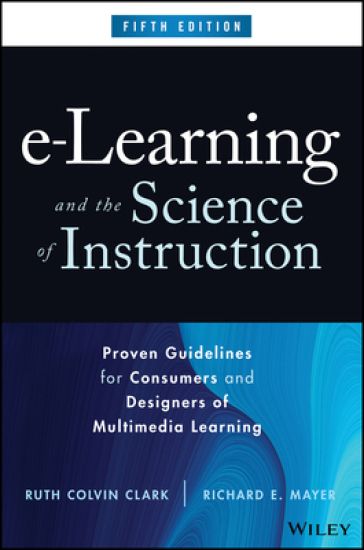
Improve the quality of your eLearning materials with evidence-based guidelines e-Learning and the Science of Instruction, 5th Edition: Proven Guidelines for Consumers and Designers of Multimedia Learning helps practitioners apply evidence-based principles to the design, development, and selection of digital instructional and training materials. This book goes beyond instructional design advice, providing actionable ideas and multimedia examples based on recent research findings. You will learn how to put evidence into practice, with proven e-learning design and development guidelines. During the pandemic, e-learning assumed a much greater role as an instructional delivery medium, especially with virtual classrooms using tools such as Zoom and MS Teams. The combination of new technological functionality, increases in a remote workforce, and new research findings have led to gaps regarding how to leverage digital learning most effectively. This book explains what instructional designers, multimedia developers, and e-learning consumers need to know to maximize the potential of their e-learning resources. In addition to guidelines regarding use of graphics, audio, text, engagement techniques and collaborative online learning, this new edition covers video-based instruction, digital games, and immersive virtual reality-, showing you when and how to utilize these tools effectively. Discover the latest research findings about how people learn—and how they learn best onlineBuild instructional materials, including video instruction, digital games, and immersive VR experiences, that empower learners to succeedGet ideas and inspiration for engaging learners in synchronous and asynchronous environmentsSee concrete examples of how research evidence in instructional design can be applied in practiceApply evidence regarding how best to leverage collaborative online learning e-Learning and the Science of Instruction is a valuable resource for students and practitioners who need to design, develop, and select effective eLearning and virtual training materials.
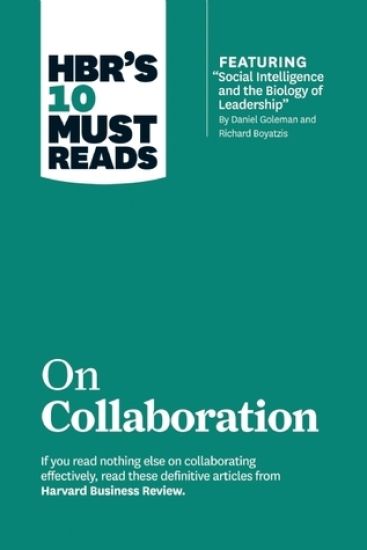
NEW from the bestselling HBR's 10 Must Reads series. Join forces with others inside and outside your organization to solve your toughest problems. If you read nothing else on collaborating effectively, read these 10 articles. We've combed through hundreds of articles in the Harvard Business Review archive and selected the most important ones to help you work more productively with people on your team, in other departments, and in other organizations. Leading experts such as Daniel Goleman, Herminia Ibarra, and Morten Hansen provide the insights and advice you need to: * Forge strong relationships up, down, and across the organization * Build a collaborative culture * Bust silos * Harness informal knowledge sharing * Pick the right type of collaboration for your business * Manage conflict wisely * Know when not to collaborate Looking for more Must Read articles from Harvard Business Review? Check out these titles in the popular series: HBR's 10 Must Reads: The Essentials HBR's 10 Must Reads on Communication HBR's 10 Must Reads on Innovation HBR's 10 Must Reads on Leadership HBR's 10 Must Reads on Making Smart Decisions HBR's 10 Must Reads on Managing Yourself HBR's 10 Must Reads on Strategic Marketing HBR's 10 Must Reads on Teams
Join forces with others inside and outside your organization to solve your toughest problems. If you read nothing else on collaborating effectively, read these 10 articles. We’ve combed through hundreds of articles in the Harvard Business Review archive and selected the most important ones to help you work more productively with people on your team, in other departments, and in other organizations. Leading experts such as Daniel Goleman, Herminia Ibarra, and Morten Hansen provide the insights and advice you need to: Forge strong relationships up, down, and across the organizationBuild a collaborative cultureBust silosHarness informal knowledge sharingPick the right type of collaboration for your businessManage conflict wiselyKnow when not to collaborate
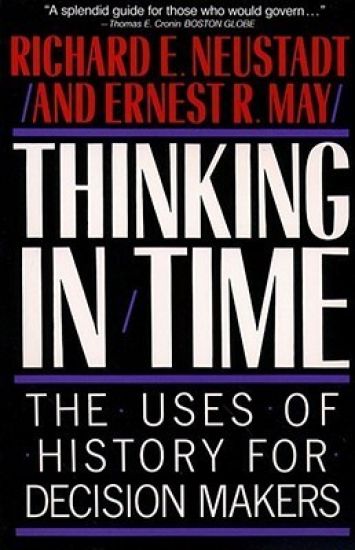
“A convincing case that careful analysis of the history, issues, individuals, and institutions can lead to better decisions—in business as well as in government” (BusinessWeek).Two noted professors offer easily remembered rules for using history effectively in day-to-day management of governmental and corporate affairs to avoid costly blunders. “An illuminating guide to the use and abuse of history in affairs of state” (Arthur Schlesinger).
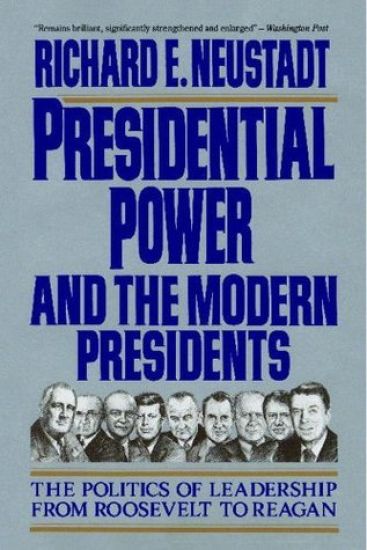
Richard E. Neustadt presents research and analysis on the judgement of presidential leadership and creates a framework of the modern president.In an effort to identify what America uses to measure the success of a president and his leadership, Presidential Power and the Modern President approaches the president himself by looking directly at his influence on governmental action. From Roosevelt to Reagan, Neustadt examines presidential success and suggests a theory of presidential power, testing it against the events in the administrations of postwar presidents.
The Bayesian network is one of the most important architectures for representing and reasoning with multivariate probability distributions. When used in conjunction with specialized informatics, possibilities of real-world applications are achieved. Probabilistic Methods for BioInformatics explains the application of probability and statistics, in particular Bayesian networks, to genetics. This book provides background material on probability, statistics, and genetics, and then moves on to discuss Bayesian networks and applications to bioinformatics. Rather than getting bogged down in proofs and algorithms, probabilistic methods used for biological information and Bayesian networks are explained in an accessible way using applications and case studies. The many useful applications of Bayesian networks that have been developed in the past 10 years are discussed. Forming a review of all the significant work in the field that will arguably become the most prevalent method in biological data analysis.