This title outlines a set of principles and analytical methods that can be adapted to different assessment scenarios designed to enable readers to construct their own effective methods for assessment. Guidelines for design and methods of planning, choosing and implementation are provided.
'For anyone starting a degree this is a useful concise guide to what's in store throughout the first year and beyond' - The Psychologist Study Skills for Psychology has been shaped around a typical Psychology student's journey. Beginning with an overview of the nature of the degree and advice about what needs to be sorted out in the first few weeks of the course, this book tackles how to get the most from your lectures, exam preparation and project development, right through to contemplating and investigating future career options. This highly accessible guide is designed to help you meet the challenges and reap the rewards of your degree by introducing a range of study skills and providing you with ways to practice those skills. This book should accompany you throughout your degree course as a resource that you can use whenever you need help. Key features of Study Skills for Psychology include: Learning outcomes at the beginning of each chapter to highlight key areasText boxes throughout to reaffirm understandingNumerous examples and illustrations Exercises and learning aids to enable practice of important skillsA structure based around the PDP (Personal Development Planning) model, providing a framework through which you can understand what and how you learn, enabling you to plan, review and take responsibility for your own learning, performance and achievements. An essential companion for any student, Study Skills for Psychology will give you the skills to enjoy your time studying for and succeeding in your Psychology degree. SAGE Study Skills are essential study guides for students of all levels. From how to write great essays and succeeding at university, to writing your undergraduate dissertation and doing postgraduate research, SAGE Study Skills help you get the best from your time at university. Visit the SAGE Study Skills hub for tips, resources and videos on study success!
'For anyone starting a degree this is a useful concise guide to what's in store throughout the first year and beyond' - The Psychologist Study Skills for Psychology has been shaped around a typical Psychology student's journey. Beginning with an overview of the nature of the degree and advice about what needs to be sorted out in the first few weeks of the course, this book tackles how to get the most from your lectures, exam preparation and project development, right through to contemplating and investigating future career options. This highly accessible guide is designed to help you meet the challenges and reap the rewards of your degree by introducing a range of study skills and providing you with ways to practice those skills. This book should accompany you throughout your degree course as a resource that you can use whenever you need help. Key features of Study Skills for Psychology include: Learning outcomes at the beginning of each chapter to highlight key areasText boxes throughout to reaffirm understandingNumerous examples and illustrations Exercises and learning aids to enable practice of important skillsA structure based around the PDP (Personal Development Planning) model, providing a framework through which you can understand what and how you learn, enabling you to plan, review and take responsibility for your own learning, performance and achievements. An essential companion for any student, Study Skills for Psychology will give you the skills to enjoy your time studying for and succeeding in your Psychology degree. SAGE Study Skills are essential study guides for students of all levels. From how to write great essays and succeeding at university, to writing your undergraduate dissertation and doing postgraduate research, SAGE Study Skills help you get the best from your time at university. Visit the SAGE Study Skills hub for tips, resources and videos on study success!
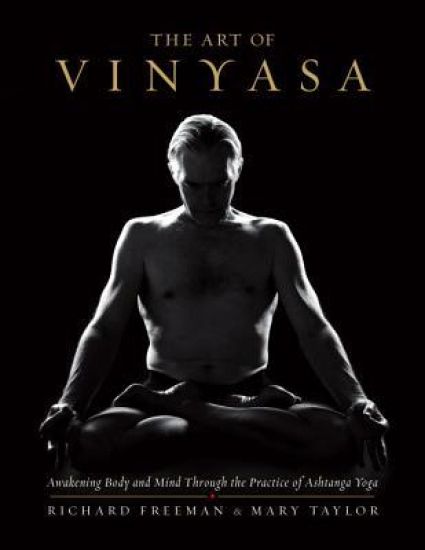
A radical presentation of the most rigorous form of contemporary yoga as meditation in motion. The Art of Vinyasa takes a unique look at Ashtanga yoga as meditation in motion that produces profound inner change. Two of the most well-respected teachers of the Ashtanga style of yoga, Richard Freeman and Mary Taylor, explore this rigorous practice not as a gymnastic feat, but as a meditative form. They reveal that doing the practice--and particularly the vinyasa, or the breath-synchonized movements--in such a deep and focused way allows practitioners to experience a profound awakening of the body and mind. It also develops an adaptable, flexible practice that can last a lifetime. Freeman and Taylor give an in-depth explanation of form, alignment, and anatomy, and how they work together in the practice. They also present a holistic approach to asana practice that includes an awareness of the subtle breath, and seamlessly merges yoga philosophy with practical technique. Unlike other books on Ashtanga, The Art of Vinyasa does not follow the linear pattern of the sequences of postures that are the hallmark of Ashtanga yoga. Instead, it interlinks the eight limbs--yama and niyama (ethical practices); asana (postures); pranayama (breathing); pratyahara (nongrasping of the senses); dharana (concentration); dhyana (meditation); and samadhi (harmony, insight)--and shows how to establish an internally rooted yoga practice. The book will be fully illustrated with fifty halftones by esteemed photographer and cinematographer Robert Muratore, along with thirty illustrations.
Eminent yoga teachers Richard Freeman and Mary Taylor explore essential lessons from The Bhagavad Gita to reveal a practical guide for living in today's complex world. The Bhagavad Gita is one of the most influential and widely recognized ancient texts in Indian epic literature. Through the telling of the story and its many different philosophical teachings, the text provides deep insight into how to meet life's inevitable challenges while remaining open, clear, and compassionate. It offers modern day wisdom seekers a framework for understanding our core beliefs and who we really are--revealing the fact that healthy relationships to others and the world are essential to living a full, compassionate, balanced life. Richard Freeman and Mary Taylor, both deeply respected yogic teachers, offer a practical, immediately relevant interpretation that emphasizes self-reflection and waking up in our modern world. Following the traditional sequence of teachings in The Bhagavad Gita--from its opening scene in which Arjuna finds himself in the middle of a battlefield, hesitating and trapped between opposing sides, torn by his dharma and confused by the various paths of action he might choose in the process of awakening--Freeman and Taylor interweave insight into how these classic teachings are relevant for modern readers struggling with what it means to live responsibly in the twenty-first century. With quotes, citations, and a full translation of the original text, they look at the overall arc of the The Bhagavad Gita's teachings and how that relates to the turmoil that arises, not only for Arjuna, but for any of us in the face of crises of conscience, spirit, and form. Exploring the essential themes such as love, wisdom, and karma, and by offering embodiment exercises to apply the teachings, When Love Comes to Light guides readers in the step-by-step process of waking up their intelligence and finding a path toward compassionate action.
Written without "yoga jargon," Feeling Happy explores the nature of happiness as a basic human capacity--and illuminates how suffering, imbalanced emotion, and confusion can cast a veil over one's ability to truly feel happy. What is the fully embodied experience of happiness, and is there any way for it to last? Feeling Happy helps you explore what happiness is and offers practical steps toward cultivating happiness as a deep, embodied expression of life and connection to others. Using familiar examples from everyday life, traditional understanding of one's search for happiness, stories, and humor, Freeman and Taylor demonstrate how to find your way back home to the essence of who you are, and the direct experience of what it feels like to be truly happy. The book offers 24 accessible practices--meditations, simple movements, and breathing exercises--along with 22 black-and-white illustrative photos as guides along the path toward fully embodying happiness. These practices together with insight into the nature of being, will allow you to wake up and integrate the physical body, heart, and mind through the breath so that even in difficult times, compassion, equanimity, and happiness can emerge. Richard Freeman and Mary Taylor draw from their years of experience practicing and teaching yoga, meditation and the philosophical interfacing of yoga and Buddhism to explore what happiness is and to offer practical steps toward cultivating happiness as a deep, embodied expression of life. They offer insight into the nature of happiness as a basic human capacity--and illuminate how suffering, imbalanced emotion, and confusion can cast a veil over one's ability to truly feel happy. Some of the practices included: - Focusing and calming the mind- Observing and engaging the breath as a guide- Working with difficulty and vulnerability- Keeping a tender and open heart- Building authenticity and presence- Attuning to yourself and to others- Cultivating kindness and compassion in complex times- And more
France is often described as one of the last Western economies unable to reform itself in the face of globalization. Yet its economy has not fallen by the wayside and has even resisted the great recession that began in 2008. By interlinking historical, economic, and political factors and by comparing France with other nations, this book explains the puzzle presented by the development of France. Understanding France's economy requires downplaying the usual policy injunctions demands for less state control and less rigidity in the labor market and instead stressing the importance of constructing a long-term industrial strategy.
Protesters now routinely fill the streets when any large, formal meeting dealing with international economic issues takes place. They express concern about the potential social and environmental costs of globalization and want negotiators to address these issues in trade agreements and international organizations. In addition, the debate over whether and how to link labor standards to trade has led to an impasse in American trade policy for much of the past decade and has tied the hands of US trade negotiators. Proposals to "let the market do it" or "let the International Labor Organization (ILO) do it" abound, but it is less common to find any serious analysis of just how activists can galvanize consumers to demand that corporations raise labor standards in their global operations or how the ILO can become more effective. In this study, Elliott and Freeman move beyond the debate on the relative merits and risks of a social clause in trade agreements and focus on practical approaches for improving labor standards in a more integrated global economy.The authors examine both what is being done in these areas and what more needs to be done to ensure that steady and tangible progress toward universal respect for core labor standards is made. While concluding that the ILO should have primary responsibility for labor standards, the book also suggests that the WTO should consider how to address egregious and willful violations of core labor standards if they are trade related.
This book offers a timely account of health reform struggles in developed democracies. The editors, leading experts in the field, have brought together a group of distinguished scholars to explore the ambitions and realities of health care regulation, financing, and delivery across countries. These wide-ranging essays cover policy debates and reforms in Canada, Germany, Holland, the United Kingdom, and the United States, as well as separate treatments of some of the most prominent issues confronting policy makers. These include primary care, hospital care, long-term care, pharmaceutical policy, and private health insurance. The authors are attentive throughout to the ways in which cross-national, comparative research may inform national policy debates not only under the Obama administration but across the world.
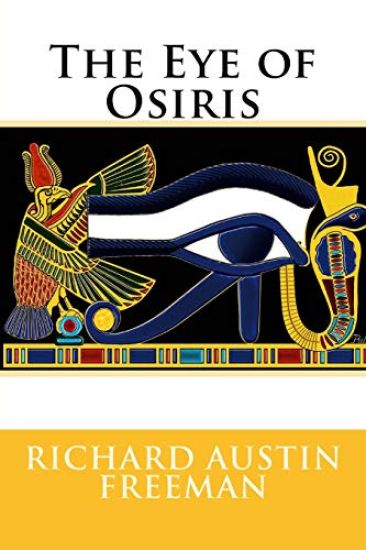
This is the tantalizing tale of a missing world-renowned archaeologist that, so far, no one seems to be able to find any clues to. Dr. Thorndyke, our detective, is unusually perceptive and begins to find clues leading to a man with a tattoo of the "Eye of Osiris".
Harold Monkhouse is usually such an uncomplaining patient so when his brother Amos calls in one night, what he doesn't expect is to see him at death's door. Suspicions aroused, he demands an urgent second opinion. And when Harold is later found dead from arsenic poisoning, Amos is left in no doubt that foul play is afoot. The inquiry begins and Barbara Monkhouse is soon singled out as the prime suspect. What ensues is a roller coaster ride into crime fiction at its best as the truth of the fateful night eludes even the best of detective minds. Could it be a simple case of wife poisoning husband-or is it just possible that another shadowy figure stole into Harold's room, as a thief in the night, to rid the world of an innocent man?
First published in 1898, this is an account of a journey from Gold Coast to Bontukmu by a medical officer. He describes the journey and the interior, makes observations on dress, the prevalance of malaria, and commerce in the area.