Kirjojen hintavertailu. Mukana 11 699 587 kirjaa ja 12 kauppaa.

Kirjahaku

Etsi kirjoja tekijän nimen, kirjan nimen tai ISBN:n perusteella.

1000 tulosta hakusanalla Richard Preston

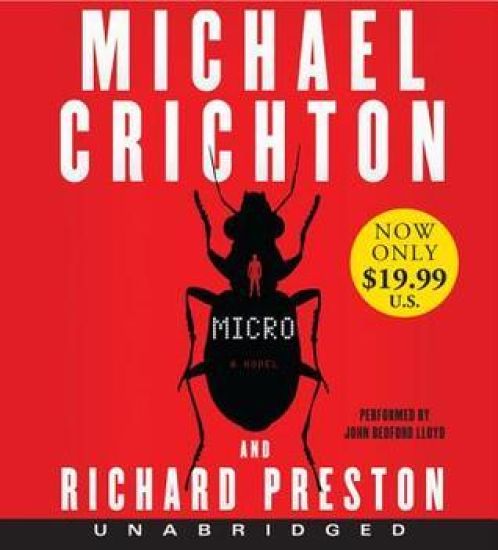
Micro Low Price CD

Micro Low Price CD

Michael Crichton; Richard Preston

HarperAudio
2012
cd
In the vein of Jurassic Park, this high concept thriller follows a group of graduate students lured to Hawaii to work for a mysterious biotech company--only to find themselves cast out into the rain forest, with nothing but their scientific expertise and wits to protect them. An instant classic, Micro pits nature against technology in vintage Crichton fashion. Completed by visionary science writer Richard Preston, this boundary-pushing thriller melds scientific fact with pulse-pounding fiction to create yet another masterpiece of sophisticated, cutting-edge entertainment.
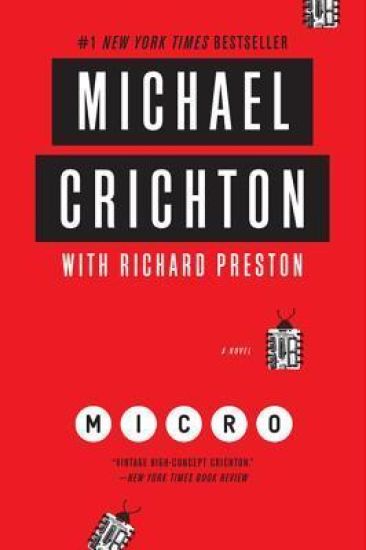
Micro

Micro

Michael Crichton; Richard Preston

HARPER PAPERBACKS
2013
nidottu
In the vein of Jurassic Park, this high-concept thriller follows a group of graduate students lured to Hawaii to work for a mysterious biotech company--only to find themselves cast out into the rain forest, with nothing but their scientific expertise and wits to protect them.An instant classic, Micro pits nature against technology in vintage Michael Crichton fashion. Completed by visionary science writer Richard Preston, this boundary-pushing thriller melds scientific fact with pulse-pounding fiction to create yet another masterpiece of sophisticated, cutting-edge entertainment.
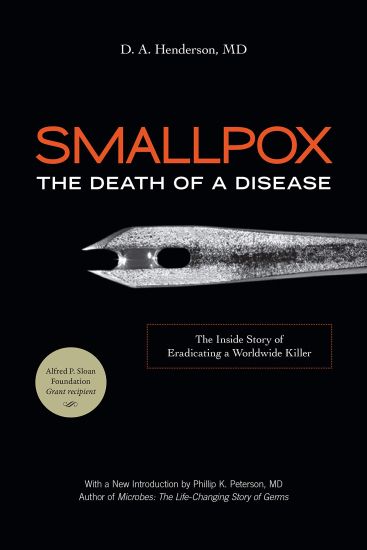
Smallpox: The Death of a Disease

Smallpox: The Death of a Disease

D.A. Henderson; Preston Richard

Prometheus Books
2021
nidottu
With a New Introduction by Phillip K. Peterson, M.D., author of Microbes: The Life-Changing Story of Germs For more than 3000 years, hundreds of millions of people have died or been left permanently scarred or blind by the relentless, incurable disease called smallpox. In 1967, Dr. D.A. Henderson became director of a worldwide campaign to eliminate this disease from the face of the earth. This spellbinding book is Dr. Henderson's personal story of how he led the World Health Organization's campaign to eradicate smallpox—the only disease in history to have been deliberately eliminated. Some have called this feat "the greatest scientific and humanitarian achievement of the past century." This latest edition features a new introduction by Phillip K. Peterson, M.D., in which the infectious diseases expert contends that Dr. Henderson’s campaign against smallpox may provide insights towards the fight against COVID-19 and future global pandemics. In a lively, engrossing narrative, Dr. Henderson makes it clear that the gargantuan international effort involved more than straightforward mass vaccination. He and his staff had to cope with civil wars, floods, impassable roads, and refugees as well as formidable bureaucratic and cultural obstacles, shortages of local health personnel and meager budgets. Countries across the world joined in the effort; the United States and the Soviet Union worked together through the darkest cold war days; and professionals from more than 70 nations served as WHO field staff. On October 26, 1976, the last case of smallpox occurred. The disease that annually had killed two million people or more had been vanquished–and in just over ten years. The story did not end there. Dr. Henderson recounts in vivid detail the continuing struggle over whether to destroy the remaining virus in the two laboratories still that held it. Then came the startling discovery that the Soviet Union had been experimenting with smallpox virus as a biological weapon and producing it in large quantities. The threat of its possible use by a rogue nation or a terrorist has had to be taken seriously and Dr. Henderson has been a central figure in plans for coping with it. New methods for mass smallpox vaccination were so successful that he sought to expand the program of smallpox immunization to include polio, measles, whooping cough, diphtheria, and tetanus vaccines. That program now reaches more than four out of five children in the world and is eradicating poliomyelitis. This unique book is to be treasured—a personal and true story that proves that through cooperation and perseverance the most daunting of obstacles can be overcome.
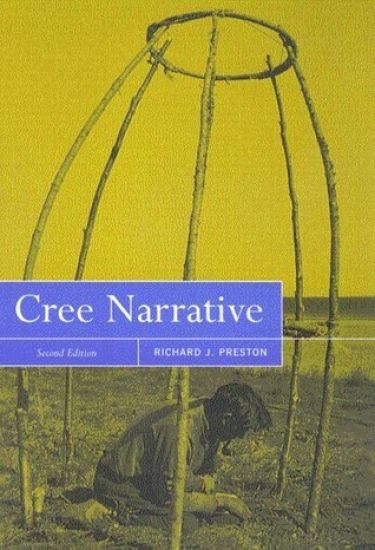
Cree Narrative

Cree Narrative

Richard J. Preston

McGill-Queen's University Press
2002
nidottu
Based primarily on the oral accounts of John Blackned, Cree Narrative offers a detailed account of traditional Cree society. The result is an integrated picture of Cree thought, feelings, and beliefs relating to living on and with the land. For this expanded reissue of his pioneering work in cognitive anthropology, Richard Preston has added four new chapters. He contextualizes his original research and provides historical and social context for the Waskaganish area during the time of his fieldwork in the 1960s. He also includes a biography of John Blackned and a new selection of Blackned's stories that vividly portray Cree experience at the end of the fur trade period in the early nineteen hundreds. To step into the sensibility of another culture and portray it wisely and with love is a rare accomplishment. Richard Preston achieved this in the original edition of Cree Narrative, published in a limited fashion by Canada's National Museum of Man in 1975, and continues it here.
North American Trees

North American Trees

Richard J. Preston; Richard R. Braham

Iowa State University Press
2003
nidottu
Completely updated, this new edition continues the grand tradition of this classic reference covering trees of North America excluding Mexico and tropical Florida. This handbook has been designed to meet the needs of the general public as well as those of students and scientists. Concise descriptions of botanical and silvical characters have been included for species of trees. Accurate and up-to-date, the new edition of this highly regarded reference incorporates recent changes in scientific and common names of trees, and offers improved distribution maps and more detailed descriptions of individual species. All of the trees are grouped by family, from pines and redwoods to ashes and elders, with a clearly organized key to identification. Individual entries on hundreds of species offer concise descriptions of habit, leaves, fruit, twig, and bark. Line drawings of leaf, flower, and fruit accompany each entry. A convenient glossary has also been included. Accurate and up-to-date, this new edition incorporates recent changes in scientific and common names of North American treesConcise descriptions of botanical and silvical characters are included for species of treesAll of the trees are grouped by family with a clearly organised key to identification
Decadence and decay : from ancient Rome to the present

Decadence and decay : from ancient Rome to the present

Faramerz Dabhiowala; Melanie Grundmann; Richard Whatmore; Mattias Hessérus; Adoreé Villany; Andrew Huddleston; Saul David; Andrew Preston; Daniela Cammack; Pernille Røge; Adam Tooze; J.R. McNeill; Jonathan Rees; Robert Beuregard; William O’Reilly; Michael Nelson; Peter Heather; Robert Coates-Stephans; Neil McLynn; Richard Miles

Bokförlaget Stolpe
2019
sidottu
The fear of living in the end times has a long history. In Decadence and Decay, a group of distinguished international scholars describe how societies over time have handled and interpreted the concept of decline. In times of unrest and transition, declinism the notion that a culture or civilisation is headed towards irreversible decline tends to capture the public imagination. The essays in this volume address how notions of decadence and decay have been used both as opprobrium and as a form of self-definition and empowerment an instrument to protect individualism against collectivistic oppression. From ancient Rome to the present, ideas and expressions of decadence and decay have played a critical role in how we perceive the world.
Krig : hur konflikter format våra samhällen

Krig : hur konflikter format våra samhällen

Alexey Arbatov; David J. Betz; Philip Bobbitt; Christopher Coker; Rolf Ekéus; Richard J. Evans; Gregory Feifer; Lawrence Freedman; Janne Haaland Matláry; Dick Harrison; Tom Holland; Rob Johnson; Frederick Kagan; Kimberly Kagan; Elisabeth Kendall; Fredrik Logevall; Rana Mitter; Peter Pomerantsev; Andrew Preston; Malise Ruthven; Charly Salonius-Pasternak; Hew Strachan; Nathan Shachar; Lilia Shevtsova; Jessica Stern; Pascal Vennesson

Bokförlaget Stolpe
2022
sidottu
Det påstås att ungefär 14 500 krig har utkämpats sedan år 3 500 f.Kr. Mänskligheten har bara erfarit 300 år av fred på jorden. Under 1900-talet dödades fler människor i krig än något tidigare sekel. Relativt sett dödar vi dock varandra mer sällan. Håller vi gradvis på att bli mer fredliga? Oavsett hur många som dödas, och med vilken metod, kan vi vara säkra på att krig kommer att fortsätta utkämpas. Ligger orsakerna till krig i samhället eller i biologin, i tävlan om ekonomiska resurser eller sexuella, i historiska omständigheter eller i en universell våldsinstinkt? Allt sedan antiken fram till dagens terrorism har krig varit förstörare och skapare av stater och civilisationer. Essäerna i denna antologi har sitt ursprung i det internationellt välrenommerade Engelsbergsseminariet 2015 och är skrivna av historiker, journalister, tänkare, forskare och författare från hela världen. Huvudredaktörer är Kurt Almqvist och Alexander Linklater.
Geopolitikens återkomst : striden om framtidens historia

Geopolitikens återkomst : striden om framtidens historia

Jeremy Black; Philip Bobbitt; Michael Broers; Roger Crowley; Gregory Feifer; Noah Feldman; Jonathan Fenby; David Frum; Gabriel Gorodetsky; Peter Heather; Josef Joffe; Anna-Lena Laurén; John H. Maurer; Sean McMeekin; Walter Russell Mead; Richard Miles; Fraser Nelson; Richard Overy; Lincoln Paine; Andrew Preston; Morris Rossabi; Charly Salonius-Pasternak; Norman Stone; Barry Strauss; Mikael Wigell

Bokförlaget Stolpe
2021
sidottu
Det var inte länge sedan idén om att vi nått historiens slut vann kraft och spridning: tanken att människans sociokulturella evolution nått fram till en punkt där den knappast kunde nå längre. Ett kvartssekel senare verkar denna optimism ha försvunnit. I stället bevittnar vi nu geopolitikens återkomst. Ett tjugotal experter utforskar i denna antologi hur vi hamnade där vi är idag men också vart vi kan tänkas vara på väg. Huvudredaktörer är Kurt Almqvist och Alexander Linklater.
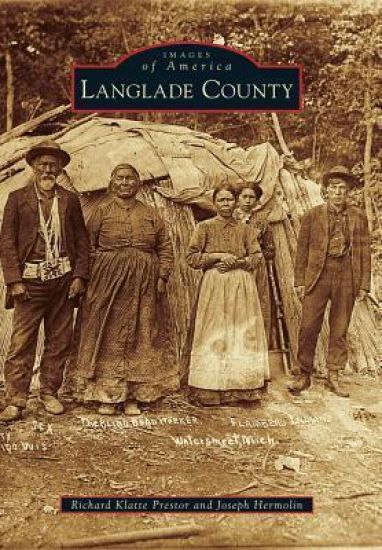
Langlade County

Langlade County

Richard Klatte Prestor; Joseph Hermolin

Arcadia Publishing (SC)
2012
nidottu
The "Great North Woods" counties of Wisconsin, home to various native tribes, have transformed through several fascinating stages of development. The US government built a military road from Fort Howard (Green Bay) to Michigan's Upper Peninsula soon after the Civil War, causing increased development in what would later become Langlade County and the heavily forested lands that stretched northeastward. The Wolf River proved essential in creating the local logging trade, which in turn drove the expansion of railroad lines. By 1900, logging was slowing down, but the public's growing awareness of Langlade's abundant hunting and fishing resources gave rise to northern Wisconsin's tourism industry. Even Indian tribes gradually participated in the tourist trade. A.J. Kingsbury photographed these transitions. This book reaches beyond Langlade County to portray early-20th-century Ojibwe and Menominee tribes along with loggers, railroads, and tourist attractions.
Richard

Richard

Ben Myers

Picador
2011
pokkari
In February 1995, Richey Edwards checked out of a London hotel instead of flying to the US with the rest of the Manic Street Preachers. There were a few subsequent sightings but then nothing. His body was never found, and he was declared legally dead in November 2008. Now Richard tells the story of his life – and disappearance – as he might have told it. ‘This moving, tender novel tells the story of a lost boy adrift in a world that he can’t make sense of’ Marie Claire ‘Myers deserves credit not only for adding a third dimension to Edwards, but for trying a fourth, for attempting to document a period of his life that seems destined to remain a mystery’ The Times ‘A sympathetic and sad imagining of the boy who became a reluctant pop idol’ Time Out ‘Harrowing and hauntingly sad’ Mojo