Kirjojen hintavertailu. Mukana 12 475 141 kirjaa ja 12 kauppaa.

Kirjahaku

Etsi kirjoja tekijän nimen, kirjan nimen tai ISBN:n perusteella.

1000 tulosta hakusanalla Richard Reeves

Dream Hoarders

Dream Hoarders

Richard V. Reeves

Brookings Institution
2017
sidottu
America is becoming a class-based society.It's now conventional wisdom to focus on the excesses of the top 1% - especially the top 0.01% - and how the ultra-rich are hoarding income and wealth while incomes for most other Americans are stagnant. But the more important, and widening, gap in American society is between the upper middle class and everyone else.Reeves defines the upper middle class as those whose incomes are in the top 20 percent of American society. Income isn't the only way to measure a society, but in a market economy it is crucial because access to money generally determines who gets the best quality education, housing, health care, and other necessary goods and services.As Reeves shows, the growing separation between the upper middle class and everyone else can be seen in family structure, neighborhoods, attitudes, and lifestyle. Those at the top of the income ladder are becoming more effective at passing on their status to their children, reducing overall social mobility. The result is a fracturing of American society along class lines, not just an economic divide. Upper-middle-class children become upper-middle-class adults.These trends matter because the separation and perpetuation of the upper middle class corrode prospects for more progressive approaches to policy. Various forms of ""opportunity hoarding"" among the upper middle class make it harder for others to rise up to the top rung. Examples include zoning laws and schooling, occupational licensing, college application procedures, and the allocation of internships. Upper middle class opportunity hoarding, Reeves argues, results in a less competitive economy as well as a less open society.Inequality is inevitable and can even be good, within limits. But Reeves argues that society can take effective action to reduce opportunity hoarding and thus promote broader opportunity. This fascinating book shows how American society has become the very class-defined society that earlier Americans rebelled against - and what can be done to restore a more equitable society.

Of Boys and Men

Of Boys and Men

Richard V. Reeves

Swift Press
2023
pokkari
A Book of the Year in The Economist and Daily Mail A Barack Obama 2024 Summer Reading List Pick 'One of the most important non-fiction books of the year' - Sunday Times Boys are 50% more likely than girls to fail at all three key school subjects: maths, reading and science In the US, the wages of most men are lower today than they were in 1979, while women’s wages have risen across the board In the UK, suicide is the biggest killer of men under the age of 45 Boys are falling behind at school and college because the educational system is structed in ways that put them at a disadvantage. Men are struggling in the labour market because of an economic shift away from traditionally male jobs. And fathers are dislocated because the cultural role of family provider has been hollowed out. The male malaise is not the result of a mass psychological breakdown, but of deep structural challenges. Structural challenges require structural solutions, and this is what Richard V. Reeves proposes in Of Boys and Men – starting boys at school a year later than girls; getting more men into caring professions; rethinking the role of fatherhood outside of a nuclear family context. Feminism has done a huge amount of good in the world. We now need its corollary – a positive vision of masculinity that is compatible with gender equality.
The Lone Flag – Memoir of the British Consul in Macao During World War II

The Lone Flag – Memoir of the British Consul in Macao During World War II

John Pownall Reeves; Colin Day; Richard Garrett; David Calthorpe

Hong Kong University Press
2014
sidottu
When Hong Kong fell to the Japanese on Christmas Day 1941, Macao was left as a tiny isolated enclave on the China Coast surrounded by Japanese-held territory. As a Portuguese colony, Macao was neutral, and John Reeves, the British Consul, could remain there and continue his work despite being surrounded in all directions by his country's enemy. His main task was to provide relief to the 9,000 or more people who crossed the Pearl River from Hong Kong to take refuge in Macao and who had a claim for support from the British Consul. The core of this book is John Reeves' memoir of those extraordinary years and of his tireless efforts to provide food, shelter and medical care for the refugees. He coped with these challenges as Macao's own people faced starvation. Despite Macao's neutrality, it was thoroughly infiltrated by Japanese agents. Marked for assassination, he had to have armed guards as he went about his business. He also had to navigate the complexities of multiple intelligence agencies-British, Portuguese, Japanese, Chinese Nationalist-in a place that was described as the Casablanca of the Far East.
Cracked Coverage

Cracked Coverage

Jimmie L. Reeves; Richard Campbell

Duke University Press
1994
sidottu
Carefully documenting the deceptions and excesses of television news coverage of the so-called cocaine epidemic, Cracked Coverage stands as a bold indictment of the backlash politics of the Reagan coalition and its implicit racism, the mercenary outlook of the drug control establishment, and the enterprising reporting of crusading journalism. Blending theoretical and empirical analyses, Jimmie L. Reeves and Richard Campbell explore how TV news not only interprets "reality" in ways that reflect prevailing ideologies, but is in many respects responsible for constructing that reality. Their examination of the complexity of television and its role in American social, cultural, and political conflict is focused specifically on the ways in which American television during the Reagan years helped stage and legitimate the "war on drugs," one of the great moral panics of the postwar era. The authors persuasively argue, for example, that powder cocaine in the early Reagan years was understood and treated very differently on television and by the state than was crack cocaine, which was discovered by the news media in late 1985. In their critical analysis of 270 news stories broadcast between 1981 and 1988, Reeves and Campbell demonstrate a disturbing disparity between the earlier presentation of the middle- and upper-class "white" drug offender, for whom therapeutic recovery was an available option, and the subsequent news treatment of the inner-city "black" drug delinquent, often described as beyond rehabilitation and subject only to intensified strategies of law and order. Enlivened by provocative discussions of Nancy Reagan’s antidrug activism, the dramatic death of basketball star Len Bias, and the myth of the crack baby, the book argues that Reagan’s war on drugs was at heart a political spectacle that advanced the reactionary agenda of the New and Religious Right-an agenda that dismissed social problems grounded in economic devastation as individual moral problems that could simply be remedied by just saying "no."Wide ranging and authoritative, Cracked Coverage: Television News, the Anti-Cocaine Crusade, and the Reagan Legacy is a truly interdisciplinary work that will attract readers across the humanities and social sciences in addition to students, scholars, journalists, and policy makers interested in the media and drug-related issues.
Cracked Coverage

Cracked Coverage

Jimmie L. Reeves; Richard Campbell

Duke University Press
1994
pokkari
Carefully documenting the deceptions and excesses of television news coverage of the so-called cocaine epidemic, Cracked Coverage stands as a bold indictment of the backlash politics of the Reagan coalition and its implicit racism, the mercenary outlook of the drug control establishment, and the enterprising reporting of crusading journalism. Blending theoretical and empirical analyses, Jimmie L. Reeves and Richard Campbell explore how TV news not only interprets "reality" in ways that reflect prevailing ideologies, but is in many respects responsible for constructing that reality. Their examination of the complexity of television and its role in American social, cultural, and political conflict is focused specifically on the ways in which American television during the Reagan years helped stage and legitimate the "war on drugs," one of the great moral panics of the postwar era. The authors persuasively argue, for example, that powder cocaine in the early Reagan years was understood and treated very differently on television and by the state than was crack cocaine, which was discovered by the news media in late 1985. In their critical analysis of 270 news stories broadcast between 1981 and 1988, Reeves and Campbell demonstrate a disturbing disparity between the earlier presentation of the middle- and upper-class "white" drug offender, for whom therapeutic recovery was an available option, and the subsequent news treatment of the inner-city "black" drug delinquent, often described as beyond rehabilitation and subject only to intensified strategies of law and order. Enlivened by provocative discussions of Nancy Reagan’s antidrug activism, the dramatic death of basketball star Len Bias, and the myth of the crack baby, the book argues that Reagan’s war on drugs was at heart a political spectacle that advanced the reactionary agenda of the New and Religious Right-an agenda that dismissed social problems grounded in economic devastation as individual moral problems that could simply be remedied by just saying "no."Wide ranging and authoritative, Cracked Coverage: Television News, the Anti-Cocaine Crusade, and the Reagan Legacy is a truly interdisciplinary work that will attract readers across the humanities and social sciences in addition to students, scholars, journalists, and policy makers interested in the media and drug-related issues.
Struggling for Air

Struggling for Air

Richard Revesz; Jack Lienke

Oxford University Press Inc
2016
sidottu
Since the early days of the Obama administration, conservative politicians have railed against the President's "war on coal." As evidence of this supposed siege, they point to a series of rules issued by the Environmental Protection Agency that require the nation's power plants to cut their emissions of several types of air pollution. It's true that, because coal produces far more pollution than any other major energy source, the EPA's rules are expected to further reduce the fuel's already shrinking share of the electricity market, in favor of cleaner options like natural gas, wind and solar power. Even so, the rules are hardly the "unprecedented regulatory assault" that opponents make them out to be. Instead, they are merely the latest chapter in a longstanding quest for redemption, a multi-decade struggle to overcome a tragic flaw in our nation's most important environmental law. In 1970, a nearly unanimous Congress passed the Clean Air Act, which had the remarkably ambitious aim of eliminating all air pollution that posed a threat to public health or welfare. But there was a problem: for some of the most common pollutants, Congress empowered the EPA to set emission limits only for newly constructed industrial facilities-most notably, power plants. Existing facilities, by contrast, would be largely exempt from direct federal regulation-a regulatory practice known as "grandfathering." What lawmakers didn't anticipate was that imposing costly requirements on new plants while giving existing ones a pass would simply encourage those old plants to stay in business much longer than originally planned. For almost half a century now, the core problems of U.S. environmental policy have flowed inexorably from the smokestacks of these coal-fired clunkers, which continue to pollute at far higher rates than their younger peers. In Struggling for Air, Richard L. Revesz and Jack Lienke chronicle the political compromises that gave rise to grandfathering, its deadly consequences, and the repeated attempts-by Presidential administrations of both parties-to make things right.
Retaking Rationality

Retaking Rationality

Richard Revesz; Michael Livermore

Oxford University Press Inc
2008
sidottu
That America's natural environment has been degraded and despoiled over the past 25 years is beyond dispute. Nor has there been any shortage of reasons why - short-sighted politicians, a society built on over-consumption, and the dramatic weakening of environmental regulations. In Retaking Rationality, Richard Revesz and Michael Livermore argue convincingly that one of the least understood-and most important-causes of our failure to protect the environment has been a misguided rejection of reason. The authors show that environmentalists, labor unions, and other progressive groups have declined to participate in the key governmental proceedings concerning the cost-benefit analysis of federal regulations. As a result of this vacuum, industry groups have captured cost-benefit analysis and used it to further their anti-regulatory ends. Beginning in 1981, the federal Office of Management and Budget and the federal courts have used cost-benefit analysis extensively to determine which environmental, health, and safety regulations are approved and which are sent back to the drawing board. The resulting imbalance in political participation has profoundly affected the nation's regulatory and legal landscape. But Revesz and Livermore contend that economic analysis of regulations is necessary and that it needn't conflict with-and can in fact support-a more compassionate approach to environmental policy. Indeed, they show that we cannot give up on rationality if we truly want to protect our natural environment. Retaking Rationality makes clear that by embracing and reforming cost-benefit analysis, and by joining reason and compassion, progressive groups can help enact strong environmental and public health regulation.
The Sexual Imperative in the Novels of Sir Henry Rider Haggard
The Sexual Imperative in the Novels of Sir Henry Rider Haggard is a detailed study of the development of the theme of the sexual imperative primarily through the prism of ten of Haggard’s novels, a largely unexplored area of his fiction, and also through some of his contemporary romances. Filling an important gap in Haggard scholarship, which has traditionally tended to focus on his early romances and their political and psychological resonances, the book contributes to wider current debates on Victorian and turn-of-the-century literature. This volume explores the relationship between Haggard’s fictional rendition of the sexual imperative and aspects of his personal history, proposing that his preoccupation with the subject constitutes, in significant part, an outworking of deeply personal sexual and emotional issues. Relating Haggard’s fiction to the literary and social context in which he wrote, Richard Reeve contends that although Haggard’s treatment of this theme is not nearly as adventurous as that of some of his literary contemporaries, his repeated consideration of what he regarded as the most important human driver lends his fiction a strength and integrity which has not been fully recognized.
The Sexual Imperative in the Novels of Sir Henry Rider Haggard
The Sexual Imperative in the Novels of Sir Henry Rider Haggard is a detailed study of the development of the theme of the sexual imperative primarily through the prism of ten of Haggard’s novels, a largely unexplored area of his fiction, and also through some of his contemporary romances. Filling an important gap in Haggard scholarship, which has traditionally tended to focus on his early romances and their political and psychological resonances, the book contributes to wider current debates on Victorian and turn-of-the-century literature. This volume explores the relationship between Haggard’s fictional rendition of the sexual imperative and aspects of his personal history, proposing that his preoccupation with the subject constitutes, in significant part, an outworking of deeply personal sexual and emotional issues. Relating Haggard’s fiction to the literary and social context in which he wrote, Richard Reeve contends that although Haggard’s treatment of this theme is not nearly as adventurous as that of some of his literary contemporaries, his repeated consideration of what he regarded as the most important human driver lends his fiction a strength and integrity which has not been fully recognized.
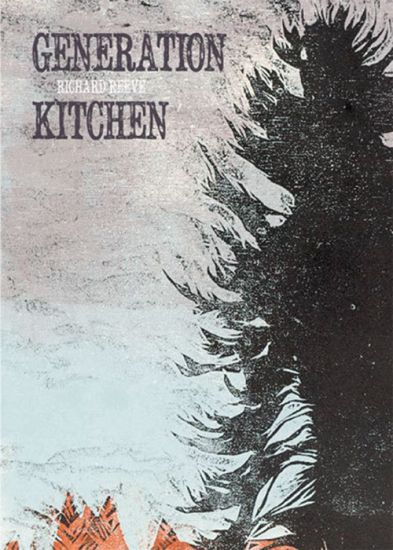
Generation Kitchen

Generation Kitchen

Richard Reeve

OTAGO UNIVERSITY PRESS
2015
nidottu
Much sought after by oil companies, ‘generation kitchens’ are sites where geological forces have combined to create conditions for oil production. By turns brooding and wittily observant, Richard Reeve’s fifth book of poetry meditates on the intrigues of fossil fuel companies and ecological despoliation, but also on personal rites of passage – on relationships, deaths, the turn of the seasons. Oracular and bardic, Reeve’s work is also paradoxically down to earth and gritty. He knows that, beyond the geopolitical framework, beyond the anthropocene moment, the landscape endures.
Timothy Richard, D.D.

Timothy Richard, D.D.

B Reeve

Alpha Edition
2019
pokkari
This book has been considered by academicians and scholars of great significance and value to literature. This forms a part of the knowledge base for future generations. So that the book is never forgotten we have represented this book in a print format as the same form as it was originally first published. Hence any marks or annotations seen are left intentionally to preserve its true nature.
Les nécessités de la vie et les conséquences des rêves, précédé d'exemples (Edition1)
Dieses klassische Buch wurde urspr nglich vor Jahrzehnten unter dem Titel "The Man Who Could Not Lose". Es wurde jetzt von Writat f r seine franz sischsprachigen Leser in die franz sische Sprache bersetzt. Bei Writat liegt uns die Bewahrung des literarischen Erbes der Vergangenheit am Herzen. Wir haben dieses Buch ins Franz sische bersetzt, damit heutige und zuk nftige Generationen es lesen und bewahren k nnen.