Kirjojen hintavertailu. Mukana 11 699 587 kirjaa ja 12 kauppaa.

Kirjahaku

Etsi kirjoja tekijän nimen, kirjan nimen tai ISBN:n perusteella.

1000 tulosta hakusanalla Richard Wright Procter

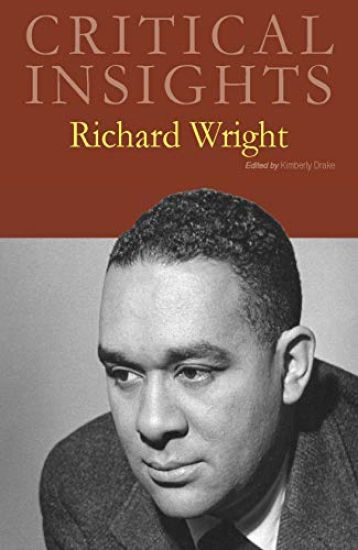
Richard Wright

Richard Wright

H.W. Wilson Publishing Co.
2019
sidottu
Critical Insights: Richard Wright explores the work of this groundbreaking author of Black Boy and Native Son, to place the author’s body of work in the canon of American literature, the literature of identity and literature of protest.
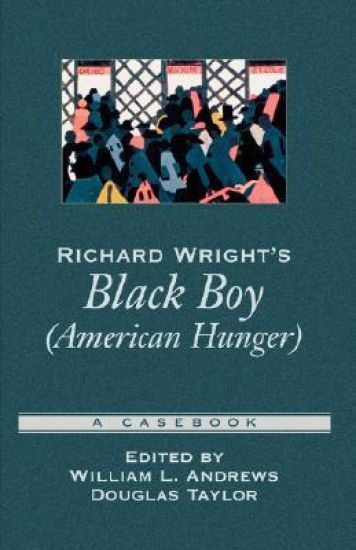
Richard Wright's Black Boy (American Hunger)
This casebook gathers together the most important critical responses to Richard Wright's autobiography. It includes a 1945 interview with Richard Wright, contemporary reviews of Black Boy written by W.E.B. Du Bois, Lionel Trilling, Mary McCarthy, and Ralph Ellison, and eight critical essays. These essays address a range of topics including the circumstances of the book's original publication in 1945; the relationship between the novel and Wright's actual biography; the African-American autobiographical tradition; the influences of various writers and literary movements on Black Boy; and the impact of African-American vernacular and oral performance on Wright's autobiography.
Richard Wright and Transnationalism

Richard Wright and Transnationalism

Mamoun Alzoubi

Routledge
2020
nidottu
Richard Wright and Transnationalism sees Dr. Mamoun Alzoubi argue that renowned American Author, Richard Wright, transformed the way that we approach comparative literature by beginning to look at matters of American racism and Civil Rights in transnational contexts, formed by the new nations surfacing from colonial rule. Richard Wright and Transnationalism demonstrates how Wright, beginning with his work in the 1950s, began to hypothesize the shared history of suffering that linked the experience of slavery, Jim Crow and racism in African American life with the impact of colonialism and neocolonialism on the large communities of Africa, Asia and Europe.
Richard Wright's Native Son

Richard Wright's Native Son

Andrew Warnes

Routledge
2006
sidottu
Richard Wright’s Native Son (1940) is one of the most violent and revolutionary works in the American canon. Controversial and compelling, its account of crime and racism remain the source of profound disagreement both within African-American culture and throughout the world. This guide to Wright's provocative novel offers: an accessible introduction to the text and contexts of Native Son a critical history, surveying the many interpretations of the text from publication to the presenta selection of reprinted critical essays on Native Son, by James Baldwin, Hazel Rowley, Antony Dawahare, Claire Eby and James Smethurst, providing a range of perspectives on the novel and extending the coverage of key critical approaches identified in the survey section a chronology to help place the novel in its historical context suggestions for further reading. Part of the Routledge Guides to Literature series, this volume is essential reading for all those beginning detailed study of Native Son and seeking not only a guide to the novel, but a way through the wealth of contextual and critical material that surrounds Wright's text.
Richard Wright's Native Son

Richard Wright's Native Son

Andrew Warnes

Routledge
2006
nidottu
Richard Wright’s Native Son (1940) is one of the most violent and revolutionary works in the American canon. Controversial and compelling, its account of crime and racism remain the source of profound disagreement both within African-American culture and throughout the world. This guide to Wright's provocative novel offers: an accessible introduction to the text and contexts of Native Son a critical history, surveying the many interpretations of the text from publication to the presenta selection of reprinted critical essays on Native Son, by James Baldwin, Hazel Rowley, Antony Dawahare, Claire Eby and James Smethurst, providing a range of perspectives on the novel and extending the coverage of key critical approaches identified in the survey section a chronology to help place the novel in its historical context suggestions for further reading. Part of the Routledge Guides to Literature series, this volume is essential reading for all those beginning detailed study of Native Son and seeking not only a guide to the novel, but a way through the wealth of contextual and critical material that surrounds Wright's text.
Richard Wright - American Writers 74

Richard Wright - American Writers 74

Bone Robert

UNIVERSITY OF MINNESOTA PRESS
1989
nidottu
Richard Wright - American Writers 74 was first published in 1989. Minnesota Archive Editions uses digital technology to make long-unavailable books once again accessible, and are published unaltered from the original University of Minnesota Press editions.
Richard Wright (2023)

Richard Wright (2023)

Will Bradley; Martin Clark

RIZZOLI INTERNATIONAL PUBLICATIONS
2023
sidottu
Featuring essays from leading cultural voices, Richard Wright s second Gagosian book provides a comprehensive and richly illustrated overview of the Turner Prize winning artist s work from 2010 to today. Richard Wright is considered a central figure in the celebrated generation of artists who emerged from Glasgow, Scotland, in the 1990s. Working in acrylic, gouache, gold leaf, and, more recently, stained glass, he is best known for his site-specific yet transient works that subtly encourage viewers to reassess their physical surroundings. Wright s diverse yet distinctive compositions display a profound art historical knowledge, drawing influence from geometric patterns, minimalist typography, gothic ornamentation, and baroque embellishment. This fully illustrated volume, the second published by Gagosian, provides a comprehensive illustrated survey of the artist s work from 2010 to today. The book features newly commissioned texts from Martin Clark and Tim Ingold; a newly published conversation between the artist and Will Bradley, recorded at the British School at Rome; and an exhaustive collection of plates documenting individual works and permanent commissions in such locations as Tate Britain, London; Kunsthistorisches Museum, Vienna; and Rijksmuseum, Amsterdam.
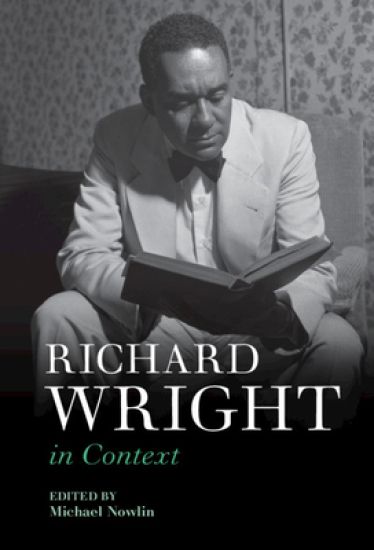
Richard Wright in Context

Richard Wright in Context

Cambridge University Press
2021
sidottu
Richard Wright was one of the most influential and complex African American writers of the twentieth century. Best known as the trailblazing, bestselling author of Native Son and Black Boy, he established himself as an experimental literary intellectual in France who creatively drew on some of the leading ideas of his time - Marxism, existentialism, psychoanalysis, and postcolonialism - to explore the sources and meaning of racism both in the United States and worldwide. Richard Wright in Context gathers thirty-three new essays by leading scholars relating Wright's writings to biographical, regional, social, literary, and intellectual contexts essential to understanding them. It explores the places that shaped his life and enabled his literary destiny, the social and cultural contexts he both observed and immersed himself in, and the literary and intellectual contexts that made him one the most famous Black writers in the world at mid-century.
Richard Wright and Transnationalism

Richard Wright and Transnationalism

Mamoun Alzoubi

Routledge
2018
sidottu
Richard Wright and Transnationalism sees Dr. Mamoun Alzoubi argue that renowned American Author, Richard Wright, transformed the way that we approach comparative literature by beginning to look at matters of American racism and Civil Rights in transnational contexts, formed by the new nations surfacing from colonial rule. Richard Wright and Transnationalism demonstrates how Wright, beginning with his work in the 1950s, began to hypothesize the shared history of suffering that linked the experience of slavery, Jim Crow and racism in African American life with the impact of colonialism and neocolonialism on the large communities of Africa, Asia and Europe.
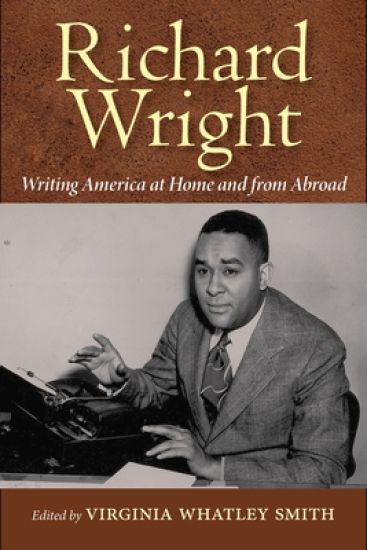
Richard Wright Writing America at Home and from Abroad
Critics in this volume reassess the prescient nature of Richard Wright's mind as well as his life and body of writings, especially those directly concerned with America and its racial dynamics. This edited collection offers new readings and understandings of the particular America that became Wright's focus at the beginning of his career and was still prominent in his mind at the end.Virginia Whatley Smith's edited collection examines Wright's fixation with America at home and from abroad: his oppression by, rejection of, conflict with, revolts against, and flight from America. Other people have written on Wright's revolutionary heroes, his difficulties with the FBI, and his works as a postcolonial provocateur; but none have focused singly on his treatment of America. Wherever Wright traveled, he always positioned himself as an African American as he compared his experiences to those at hand.However, as his domestic settlements changed to international residences, Wright's craftsmanship changed as well. To convey his cultural message, Wright created characters, themes, and plots that would expose arbitrary and whimsical American policies, oppressive rules which would invariably ensnare Wright's protagonists and sink them more deeply into the quagmire of racial subjugation as they grasped for a fleeting moment of freedom.Smith's collection brings to the fore new ways of looking at Wright, particularly his post-Native Son international writings. Indeed, no critical interrogations have considered the full significance of Wright's masterful crime fictions. In addition, the author's haiku poetry complements the fictional pieces addressed here, reflecting Wright's attitude toward America as he, near the end of his life, searched for nirvana - his antidote to American racism.
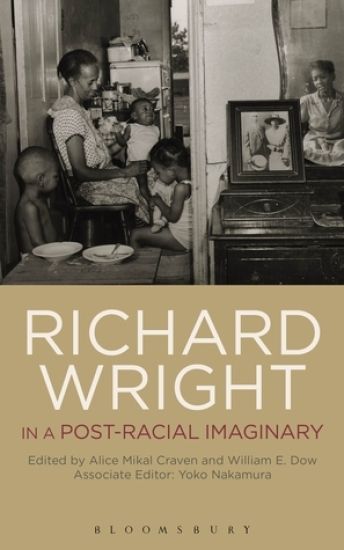
Richard Wright in a Post-Racial Imaginary
In African American fiction, Richard Wright was one of the most significant and influential authors of the twentieth century. Richard Wright in a Post-Racial Imaginary analyses Wright's work in relation to contemporary racial and social issues, bringing voices of established and emergent Wright scholars into dialogue with each other. The essays in this volume show how Wright's best work asks central questions about national alienation as well as about international belonging and the trans-national gaze. Race is here assumed as a superimposed category, rather than a biological reality, in keeping with recent trends in African-American studies. Wright's fiction and almost all of his non-fiction lift beyond the mainstays of African-American culture to explore the potentialities and limits of black trans-nationalism. Wright's trans-native status, his perpetual "outsidedness" mixed with the "essential humanness" of his activist and literary efforts are at the core of the innovative approaches to his work included here.
Richard Wright: Author and World Traveler: Author and World Traveler
African American author Richard Wright wrote about racial discrimination and injustice in the mid-1900s. Today, Wright and his work are widely celebrated. Richard Wright: Author and World Traveler explores his life and legacy. Easy-to-read text, vivid images, and helpful back matter give readers a clear look at this subject. Features include a table of contents, infographics, a glossary, additional resources, and an index. Aligned to Common Core Standards and correlated to state standards. Core Library is an imprint of Abdo Publishing, a division of ABDO.
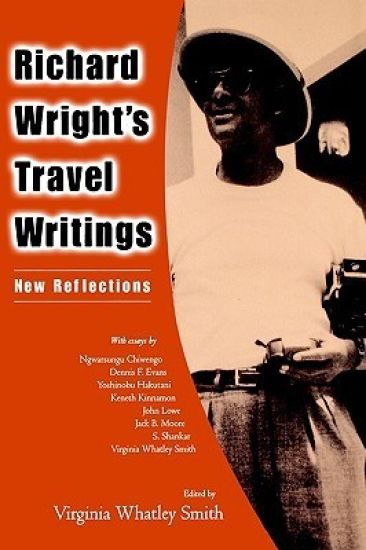
Richard Wright's Travel Writings

Richard Wright's Travel Writings

University Press of Mississippi
2006
nidottu
Attracted to remote lands by his interest in the postcolonial struggle, Richard Wright (1908-1960) became one of the few African Americans of his time to engage in travel writing. He went to emerging nations not as a sightseer but as a student of their cultures, learning the politics and the processes of social transformation. When Wright fled from the United States in 1946 to live as an expatriate in Paris, he was exposed to intellectual thoughts and challenges that transcended his social and political education in America. Three events broadened his world view- his introduction to French existentialism, the rise of the Pan-Africanist movement to decolonize Africa, and Indonesia's declaration of independence from colonial rule in 1945. During the 1950s as he traveled to emerging nations his encounters produced four travel narratives-Black Power (1953), The Color Curtain (1956), Pagan Spain (1956), and White Man, Listen! (1957). Upon his death in 1960, he left behind an unfinished book on French West Africa, which exists only in notes, outlines, and a draft. Written by multinational scholars, this collection of essays exploring Wright's travel writings shows how in his hands the genre of travel writing resisted, adapted, or modified the forms and formats practiced by white authors. Enhanced by nine photographs taken by Wright during his travels, the essays focus on each of Wright's four separate narratives as well as upon his unfinished book and reveal how Wright drew on such non-Western influences as the African American slave narrative and Asian literature of protest and resistance. The essays critique Wright's representation of customs and people and employ a broad range of interpretive modes, including the theories of formalism, feminism, and postmodernism, among others. Wright's travel books are proved here to be innovative narratives that laid down the roots of such later genres as postcolonial literature, contemporary travel writing, and resistance literature. Virginia Whatley Smith is an associate professor of English at the University of Alabama, Birmingham. Her work has appeared in African American Review, Mississippi Quarterly, and MLA Approaches to Teaching Wright's 'Native Son.'
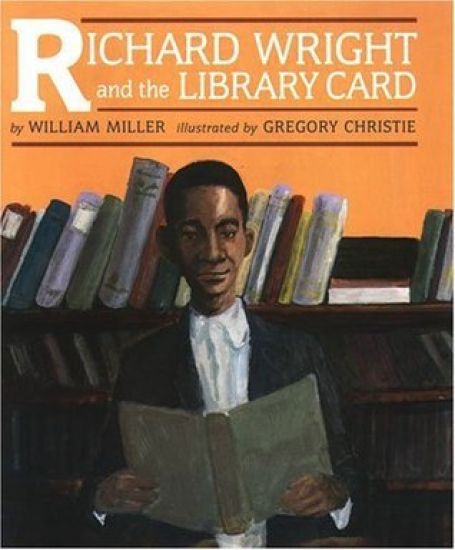
Richard Wright Y El Carné de Biblioteca

Richard Wright Y El Carné de Biblioteca

William Miller

Lee Low Books
1997
nidottu
This is the true story of the renowned African American author Richard Wright and his determination to borrow books from the public library that turned him away because of his color.As a young black man in the segregated South of the 1920s, Wright was hungry to explore new worlds through books, but was forbidden from borrowing them from the library. This touching account tells of his love of reading, and how his unwavering perseverance, along with the help of a co-worker, came together to make Richard's dream a reality. Translated from Richard Wright and the Library Card, Richard Wright y el carn de biblioteca shares a poignant turning point in the life of a young man who became one of this country's most brilliant writers, the author of Native Son and Black Boy.
Richard Wright in a Post-Racial Imaginary
In African American fiction, Richard Wright was one of the most significant and influential authors of the twentieth century. Richard Wright in a Post-Racial Imaginary analyses Wright's work in relation to contemporary racial and social issues, bringing voices of established and emergent Wright scholars into dialogue with each other. The essays in this volume show how Wright's best work asks central questions about national alienation as well as about international belonging and the trans-national gaze. Race is here assumed as a superimposed category, rather than a biological reality, in keeping with recent trends in African-American studies. Wright's fiction and almost all of his non-fiction lift beyond the mainstays of African-American culture to explore the potentialities and limits of black trans-nationalism. Wright's trans-native status, his perpetual "outsidedness" mixed with the "essential humanness" of his activist and literary efforts are at the core of the innovative approaches to his work included here.
Richard Wright's Women

Richard Wright's Women

Butler E. Brewton

Academica Press
2010
sidottu
Richard Wright died 50 years ago and in that time there has been little research on the role of women in his powerful novels of African-American life in America. This research monograph fulfills that informational and interpretative need. It is an analysis of Wright's seemingly thin and shadowy use of female characters and a reinterpretation of those characters as symbolical instruments in the development of Wright's chief male characters as they struggle as “boy-men” in the profoundly racist America of the early and mid 20th century America.
A Richard Wright Bibliography
Any future biographical work on Richard Wright will find this bibliography a necessity; academic or public libraries supporting a program of black culture will find it invaluable; and it belongs in any library supporting American literature studies. Richard Wright has truly been well served. Choice The most comprehensive bibliography ever compiled for an American writer, this book contains 13,117 annotated items pertaining to Richard Wright. It includes almost all published mentions of the author or his work in every language in which those mentions appear. Sources listed include books, articles, reviews, notes, news items, publishers' catalogs, promotional materials, book jackets, dissertations and theses, encyclopedias, biographical dictionaries, handbooks and study guides, library reports, best seller charts, the Index Translationum, playbills and advertisements, editorials, radio transcripts, and published letters and interviews. The bibliography is arranged chronologically by year. Each entry includes bibliographical information, an annotation by the authors, and information about all reprintings, partial or full. The index is unusually complete and contains the titles of Wright's works, real and fictional characters in the works, entries relating to significant places and events in the author's life, important literary terminology, and much additional information.