Kirjojen hintavertailu. Mukana 11 627 373 kirjaa ja 12 kauppaa.

Kirjahaku

Etsi kirjoja tekijän nimen, kirjan nimen tai ISBN:n perusteella.

1000 tulosta hakusanalla Ritesh Sachan

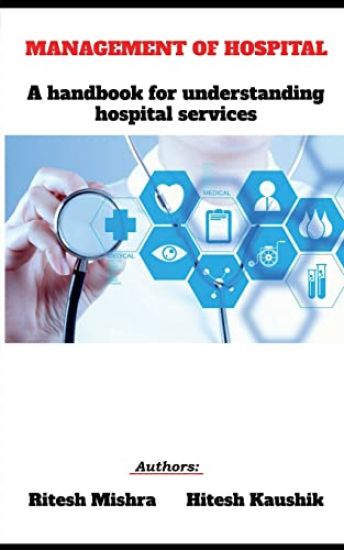
Management of Hospital

Management of Hospital

Ritesh Mishra

Notion Press, Inc.
2021
nidottu
This book "Management of hospital " is designed to understand Hospital services and their function in order to ease learning the working process of hospital and its services. This book has been prepared to enlighten the interlinked working procedure of departments of hospital. This book "Management of hospital " is beneficial to the healthcare manager, administrators, medical professional as well as students and general people as this book describe the basic hospital services concisely but completely. It covers the introduction of hospital, its function and basic departments involved in operation of hospital smoothly so that best patient care and services can be rendered through cost control mechanism. this book describes the role and the working process of all departments individually as well as co-ordination between them. this book will definitely enable the reader to gain insights into various aspects like importance, functions, controlling, co-ordination, communication, staffing and documentation of both clinical and non-clinical services in a hospital. The special features of this book are: - introduce the concept of hospital operation and management - define different types of patient care service for hospital - define different types of emergency services for hospital - explain the emergency department of hospital - introduce the concept of hospital waste management - introduce the role of a hospital in disaster and it's emergency plan
Contemporary Indian Art Between Local & Global
The interest of this work in investigating the role of these concepts is to portray how the dynamics of a local/global structure define and influence the art practices. The other important thing is the placement and positioning of Locals in the changed economic/political/social and cultural conditions of the world. How artists are making and responding to their local identities and global ambitions what are the defining criteria for these terms and what is their importance. The book starts with the analysis of global and local and then their role and significance in contemporary art practices of India. How the Indian art has become a Global thing and what were the political, cultural, and economic changes that started these new concepts of Globalization in Indian art. The central argument of this work is to review the concept of Global Indian art as a practice and methodology that resists the singular identity system imposed by our colonial past and permits free expression. Rather than expressing an essential difference based on origin, the research will focus on the contradictions and specifics of different subject positions.
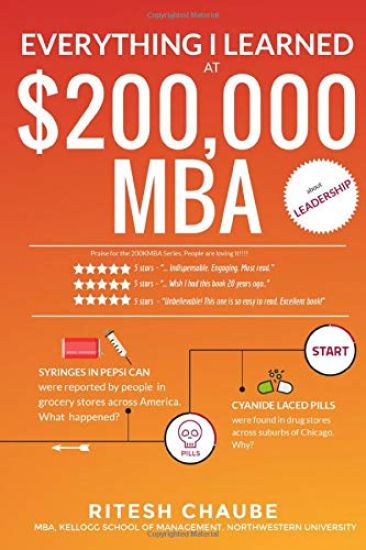
Everything I learned at $200,000 MBA about Leadership: Hostage negotiators, cyanide in Tylenol pills, needle syringes in Pepsi soda cans
Tylenol bottles laced with cyanide were found in drug stores across suburbs of Chicago. Why? Why were people finding hypodermic syringes in Pepsi cans? Why did JC Penney put up a billboard resembling Hitler? How did a hostage negotiator handle a home invasion in Providence, Rhode Island? That's right. This is the most fascinating book on leadership you will ever read. PERIOD. Hello, my name is Ritesh and I was fortunate to attend the #1 Business School in the World for Leadership. Sticker price: $200k. In this book, I unleash everything I learned. Read on. I promise to not take myself too seriously.Unlike most boring MBA books out there, this book is fun. Like watching episodes of 'MBA Professors Gone Wild'. Full of day-to-day conversational terms like 'shitty', 'sucks', and 'blows' to keep you entertained and awake. I combine intrigue, fascination and story telling with world class knowledge in a way you haven't seen before. With this book, I had a simple goal in mind: If my family and loved ones could read it just one book about Leadership, which book would that be? I wrote this book for them and now I am sharing this book with you. And, pretty much like your family and friends, mine are easily bored too. So, I made this book fun and entertaining to read while still delivering extremely useful leadership material. What makes this book good is that I regularly put my $200k ego aside and am willing to learn from the experts in the field. No matter who they are. I go out and seek the best knowledge on the subject from the real gurus, whether they have an MBA or PhD or not. Whether academia has celebrated them or not. And, that makes everything I write simply the best in the field. For example, one of the experts I learned negotiations from is Chris Voss. He used to be a FBI hostage negotiator. We will cover everything from vision formulation and principles of global leadership to negotiating like FBI hostage negotiators, managing crisis with calm, effective corporate governance, lobbying and effecting change of regulation by mastering the legal system. This book will unleash a visionary approach to leadership using everything I have learned through continued education, research, and years of professional experience. From Steve Jobs to Richard Branson, we examine how well they stacked up on the leadership scale.This book presents a combination of knowledge you won't find anywhere. Period. In every topic covered in this book, great effort has been made to take the science forward and provide you the depth of information with the ease of understanding that is uncommon among business books. I wrote this book for people like us and I cannot wait to see the great things you will do with it. - Ritesh Chaube P.S.: The reviews are in and people are wild about the first book in this series on Marketing. "Five stars Indispensable. Engaging. Must read." - Brian H. "Wish I had this book 20 years ago. Five stars " - Zachary Wood "Five stars Unbelievable This one is so easy to read. An excellente book and recommended must read for every professional" - Lucianna L.
DevOps with Windows Server 2016

DevOps with Windows Server 2016

Ritesh Modi

Packt Publishing Limited
2017
nidottu
Obtain enterprise agility and continuous delivery by implementing DevOps with Windows Server 2016 About This Book • This practical learning guide will improve your application lifecycle management and help you manage environments efficiently • Showcase through a sample application ways to apply DevOps principles and practices in the real world • Implement DevOps using latest technologies in Windows Server 2016 such as Windows Container, Docker, and Nano Servers Who This Book Is For This book is for .NET developers and system administrators who have a basic knowledge of Windows Server 2016 and are now eager to implement DevOps at work using Windows Server 2016. Knowledge of Powershell, Azure, and containers will help. What You Will Learn • Take a deep dive into the fundamentals, principles, and practices of DevOps • Achieve an end-to-end DevOps implementation • Execute source control management using GITHUB and VSTS vNext • Automate the provisioning and configuration of infrastructure • Build and release pipeline • Measure the success of DevOps through application instrumentation and monitoring In Detail Delivering applications swiftly is one of the major challenges faced in fast-paced business environments. Windows Server 2016 DevOps is the solution to these challenges as it helps organizations to respond faster in order to handle the competitive pressures by replacing error-prone manual tasks using automation. This book is a practical description and implementation of DevOps principles and practices using the features provided by Windows Server 2016 and VSTS vNext. It jumps straight into explaining the relevant tools and technologies needed to implement DevOps principles and practices. It implements all major DevOps practices and principles and takes readers through it from envisioning a project up to operations and further. It uses the latest and upcoming concepts and technologies from Microsoft and open source such as Docker, Windows Container, Nano Server, DSC, Pester, and VSTS vNext. By the end of this book, you will be well aware of the DevOps principles and practices and will have implemented all these principles practically for a sample application using the latest technologies on the Microsoft platform. You will be ready to start implementing DevOps within your project/engagement. Style and approach This practical, learning book is linear and progressive, and every chapters builds on the previous chapters. We focus on the practical skills required to implement DevOps, with a summary of the key concepts only where strictly necessary.
Azure for Architects

Azure for Architects

Ritesh Modi

Packt Publishing Limited
2017
nidottu
Your one stop guide to making the most out of Azure Cloud About This Book • Get familiar with the different design patterns available in Microsoft Azure • Develop Azure cloud architecture and a pipeline management system • Get to know the security best practices for your Azure deployment Who This Book Is For If you are Cloud Architects, DevOps Engineers, or developers who want to learn key architectural aspects of the Azure Cloud platform, then this book is for you. Prior basic knowledge of the Azure Cloud platform is good to have. What You Will Learn • Familiarize yourself with the components of the Azure Cloud platform • Understand the cloud design patterns • Use enterprise security guidelines for your Azure deployment • Design and implement Serverless solutions • See Cloud architecture and the deployment pipeline • Understand cost management for Azure solutions In Detail Over the years, Azure cloud services has grown quickly, and the number of organizations adopting Azure for their cloud services is also gradually increasing. Leading industry giants are finding that Azure fulfills their extensive cloud requirements. This book will guide you through all the important and tough decision-making aspects involved in architecturing a Azure public cloud for your organization. The book starts with an extensive introduction to all the categories of designs available with Azure. These design patterns focus on different aspects of cloud such as high availability, data management, and so on. Gradually, we move on to various aspects such as building your cloud structure and architecture. It will also include a brief description about different types of services provided by Azure, such as Azure functions and Azure Analytics, which can prove beneficial for an organization. This book will cover each and every aspect and function required to develop a Azure cloud based on your organizational requirements. By the end of this book, you will be in a position to develop a full-fledged Azure cloud. Style and approach This hands-on guide to the Azure Cloud platform covers different architectural concepts and implementations necessary for any enterprise scale deployment.
Solidity Programming Essentials

Solidity Programming Essentials

Ritesh Modi

Packt Publishing Limited
2018
nidottu
Learn the most powerful and primary programming language for writing smart contracts and find out how to write, deploy, and test smart contracts in Ethereum.Key FeaturesGet you up and running with Solidity Programming language Build Ethereum Smart Contracts with Solidity as your scripting language Learn to test and deploy the smart contract to your private Blockchain Book DescriptionSolidity is a contract-oriented language whose syntax is highly influenced by JavaScript, and is designed to compile code for the Ethereum Virtual Machine. Solidity Programming Essentials will be your guide to understanding Solidity programming to build smart contracts for Ethereum and blockchain from ground-up.We begin with a brief run-through of blockchain, Ethereum, and their most important concepts or components. You will learn how to install all the necessary tools to write, test, and debug Solidity contracts on Ethereum. Then, you will explore the layout of a Solidity source file and work with the different data types. The next set of recipes will help you work with operators, control structures, and data structures while building your smart contracts. We take you through function calls, return types, function modifers, and recipes in object-oriented programming with Solidity. Learn all you can on event logging and exception handling, as well as testing and debugging smart contracts.By the end of this book, you will be able to write, deploy, and test smart contracts in Ethereum. This book will bring forth the essence of writing contracts using Solidity and also help you develop Solidity skills in no time.What you will learnLearn the basics and foundational concepts of Solidity and Ethereum Explore the Solidity language and its uniqueness in depthCreate new accounts and submit transactions to blockchainGet to know the complete language in detail to write smart contractsLearn about major tools to develop and deploy smart contractsWrite defensive code using exception handling and error checkingUnderstand Truffle basics and the debugging processWho this book is forThis book is for anyone who would like to get started with Solidity Programming for developing an Ethereum smart contract. No prior knowledge of EVM is required.
Azure for Architects

Azure for Architects

Ritesh Modi

Packt Publishing Limited
2019
nidottu
Create advanced data and integrated solutions using Azure Event Grid, functions, and containersKey FeaturesGet familiar with the different design patterns available in Microsoft AzureDevelop Azure cloud architecture and a pipeline management systemGet to know the security best practices for your Azure deploymentBook DescriptionOver the years, Azure cloud services have grown quickly, and the number of organizations adopting Azure for their cloud services is also gradually increasing. Leading industry giants are finding that Azure fulfills their extensive cloud requirements.Azure for Architects – Second Edition starts with an extensive introduction to major designing and architectural aspects available with Azure. These design patterns focus on different aspects of the cloud, such as high availability, security, and scalability. Gradually, we move on to other aspects, such as ARM template modular design and deployments.This is the age of microservices and serverless is the preferred implementation mechanism for them. This book covers the entire serverless stack available in Azure including Azure Event Grid, Azure Functions, and Azure Logic Apps. New and advance features like durable functions are discussed at length. A complete integration solution using these serverless technologies is also part of the book. A complete chapter discusses all possible options related to containers in Azure including Azure Kubernetes services, Azure Container Instances and Registry, and Web App for Containers.Data management and integration is an integral part of this book that discusses options for implementing OLTP solutions using Azure SQL, Big Data solutions using Azure Data factory and Data Lake Storage, eventing solutions using stream analytics, and Event Hubs. This book will provide insights into Azure governance features such as tagging, RBAC, cost management, and policies.By the end of this book, you will be able to develop a full-?edged Azure cloud solution that is Enterprise class and future-ready.What you will learnCreate an end-to-end integration solution using Azure Serverless StackLearn Big Data solutions and OLTP–based applications on AzureUnderstand DevOps implementations using Azure DevOpsArchitect solutions comprised of multiple resources in AzureDevelop modular ARM templatesDevelop Governance on Azure using locks, RBAC, policies, tags and costLearn ways to build data solutions on AzureUnderstand the various options related to containers including Azure Kubernetes ServicesWho this book is forIf you are Cloud Architects, DevOps Engineers, or developers who want to learn key architectural aspects of the Azure Cloud platform, then this book is for you. Prior basic knowledge of the Azure Cloud platform is good to have.
Azure Resource Manager Templates Quick Start Guide

Azure Resource Manager Templates Quick Start Guide

Ritesh Modi

Packt Publishing Limited
2019
nidottu
Compose and decompose ARM templates and use advanced concepts like looping, conditions, dependencies, PowerShell and Desired State Configuration.Key FeaturesDesign, implement, and unit test ARM templatesDevelop and deploy ARM templates following security best practicesBook DescriptionAzure Resource Manager (ARM) templates are declarations of Azure resources in the JSON format to provision and maintain them using infrastructure as code. This book gives practical solutions and examples for provisioning and managing various Azure services using ARM templates.The book starts with an understanding of infrastructure as code, a refresher on JSON, and then moves on to explain the fundamental concepts of ARM templates. Important concepts like iteration, conditional evaluation, security, usage of expressions, and functions will be covered in detail. You will use linked and nested templates to create modular ARM templates. You will see how to create multiple instances of the same resources, how to nest and link templates, and how to establish dependencies between them. You will also learn about implementing design patterns, secure template design, the unit testing of ARM templates, and adopting best practices.By the end of this book, you will understand the entire life cycle of ARM templates and their testing, and be able to author them for complex deployments.What you will learnUnderstand the foundations of ARM templates including nested and linked templatesDesign, create, and unit test ARM templates using best practicesLearn about conditional deployments, looping, Custom Script Extensions using PowerShell, Bash, and DSCImplement design patterns related to ARM templatesRun post-deployment PowerShell and Desired State Configuration scriptsCreate solutions and deploy them on Azure using ARM templatesWho this book is forThis books is for developers, DevOps engineers, and architects who have experience in Azure.
Solidity Programming Essentials

Solidity Programming Essentials

Ritesh Modi

PACKT PUBLISHING LIMITED
2022
nidottu
A comprehensive guide sprinkled with lots of hands-on code samples to get you up and running with Solidity and writing your smart contracts on Blockchain and EthereumKey FeaturesLearn proven smart contract implementation challenges and solve them using SolidityGo deeper into Solidity to write effective upgradable and maintainable smart contracts using best practicesGet to grips with the latest version of Solidity with updated codes and examplesBook DescriptionSolidity is a high-level language for writing smart contracts, and the syntax has large similarities with JavaScript, thereby making it easier for developers to learn, design, compile, and deploy smart contracts on large blockchain ecosystems including Ethereum and Polygon among others. This book guides you in understanding Solidity programming from scratch.The book starts with step-by-step instructions for the installation of multiple tools and private blockchain, along with foundational concepts such as variables, data types, and programming constructs. You'll then explore contracts based on an object-oriented paradigm, including the usage of constructors, interfaces, libraries, and abstract contracts. The following chapters help you get to grips with testing and debugging smart contracts. As you advance, you'll learn about advanced concepts like assembly programming, advanced interfaces, usage of recovery, and error handling using try-catch blocks. You'll also explore multiple design patterns for smart contracts alongside developing secure smart contracts, as well as gain a solid understanding of writing upgradable smart concepts and data modeling. Finally, you'll discover how to create your own ERC20 and NFT tokens from scratch.By the end of this book, you will be able to write, deploy, and test smart contracts in Ethereum.What you will learnWrite efficient, effective, and secure smart contractsCode, compile, and test smart contracts in an object-oriented wayImplement assembly code in SolidityAdopt upgradable and haltable ownership and security design patternsUnderstand exception handling and debugging in SolidityCreate new ERC20 and NFT tokens from the ground upWho this book is forThis Ethereum book is primarily aimed at beginners who want to get started with Solidity Programming for developing an Ethereum smart contract. No prior knowledge of EVM is required, but knowing the basics of any programming language will help you follow along.
Applied Deep Learning with Keras

Applied Deep Learning with Keras

Ritesh Bhagwat; Mahla Abdolahnejad; Matthew Moocarme

Packt Publishing Limited
2019
nidottu
Take your neural networks to a whole new level with the simplicity and modularity of Keras, the most commonly used high-level neural networks API.Key FeaturesSolve complex machine learning problems with precisionEvaluate, tweak, and improve your deep learning models and solutionsUse different types of neural networks to solve real-world problemsBook DescriptionThough designing neural networks is a sought-after skill, it is not easy to master. With Keras, you can apply complex machine learning algorithms with minimum code.Applied Deep Learning with Keras starts by taking you through the basics of machine learning and Python all the way to gaining an in-depth understanding of applying Keras to develop efficient deep learning solutions. To help you grasp the difference between machine and deep learning, the book guides you on how to build a logistic regression model, first with scikit-learn and then with Keras. You will delve into Keras and its many models by creating prediction models for various real-world scenarios, such as disease prediction and customer churning. You’ll gain knowledge on how to evaluate, optimize, and improve your models to achieve maximum information. Next, you’ll learn to evaluate your model by cross-validating it using Keras Wrapper and scikit-learn. Following this, you’ll proceed to understand how to apply L1, L2, and dropout regularization techniques to improve the accuracy of your model. To help maintain accuracy, you’ll get to grips with applying techniques including null accuracy, precision, and AUC-ROC score techniques for fine tuning your model.By the end of this book, you will have the skills you need to use Keras when building high-level deep neural networks.What you will learnUnderstand the difference between single-layer and multi-layer neural network modelsUse Keras to build simple logistic regression models, deep neural networks, recurrent neural networks, and convolutional neural networksApply L1, L2, and dropout regularization to improve the accuracy of your modelImplement cross-validate using Keras wrappers with scikit-learnUnderstand the limitations of model accuracyWho this book is forIf you have basic knowledge of data science and machine learning and want to develop your skills and learn about artificial neural networks and deep learning, you will find this book useful. Prior experience of Python programming and experience with statistics and logistic regression will help you get the most out of this book. Although not necessary, some familiarity with the scikit-learn library will be an added bonus.
Azure for Architects

Azure for Architects

Ritesh Modi; Jack Lee; Rithin Skaria

Packt Publishing Limited
2020
nidottu
Build and design multiple types of applications that are cross-language, platform, and cost-effective by understanding core Azure principles and foundational conceptsKey FeaturesGet familiar with the different design patterns available in Microsoft AzureDevelop Azure cloud architecture and a pipeline management systemGet to know the security best practices for your Azure deploymentBook DescriptionThanks to its support for high availability, scalability, security, performance, and disaster recovery, Azure has been widely adopted to create and deploy different types of application with ease. Updated for the latest developments, this third edition of Azure for Architects helps you get to grips with the core concepts of designing serverless architecture, including containers, Kubernetes deployments, and big data solutions.You'll learn how to architect solutions such as serverless functions, you'll discover deployment patterns for containers and Kubernetes, and you'll explore large-scale big data processing using Spark and Databricks. As you advance, you'll implement DevOps using Azure DevOps, work with intelligent solutions using Azure Cognitive Services, and integrate security, high availability, and scalability into each solution. Finally, you'll delve into Azure security concepts such as OAuth, OpenConnect, and managed identities.By the end of this book, you'll have gained the confidence to design intelligent Azure solutions based on containers and serverless functions.What you will learnUnderstand the components of the Azure cloud platformUse cloud design patternsUse enterprise security guidelines for your Azure deploymentDesign and implement serverless and integration solutionsBuild efficient data solutions on AzureUnderstand container services on AzureWho this book is forIf you are a cloud architect, DevOps engineer, or a developer looking to learn about the key architectural aspects of the Azure cloud platform, this book is for you. A basic understanding of the Azure cloud platform will help you grasp the concepts covered in this book more effectively.
Microsoft SQL Server 2012 Performance Tuning Cookbook

Microsoft SQL Server 2012 Performance Tuning Cookbook

Ritesh Shah; Bihag Thaker

Packt Publishing Limited
2012
nidottu
This book has individual recipes and you can read it from cover to cover or dip into any recipe and get solution to a specific issue. Every recipe is based on a script/procedure explained with step-by-step instructions and screenshots. Concepts are illustrated for better understanding of why one solution performs better than another. SQL Server 2012 Performance Tuning Cookbook is aimed at SQL Server Database Developers, DBAs, and Database Architects who are working in any capacity to achieve optimal performance. However, basic knowledge of SQL Server is expected, but professionals who want to get hands-on with performance tuning and have not worked on tuning the SQL Server for performance will find this book helpful.
Bragg Fibers

Bragg Fibers

Ritesh Kumar Chourasia; Aavishkar Katti

Springer International Publishing AG
2024
sidottu
This book highlights the guiding mechanisms as well as the most current and important results in the field of innovative, bio-inspired Bragg fibers. While conventional optical fibers (COF) have several advantages over traditional waveguides, they also suffer from a number of disadvantages which are not present in Bragg fibers due to their minimal nonlinearities, lack of polarization or birefringence effect, lack of Fresnel reflections at the open fiber end, and absence of material or cladding losses. A natural platform for biological and chemical sensing, and with potential to boost communication systems' speed and bandwidth, the primary goal of this book is to apprise readers in academia and industry of properties of EM wave propagation in Bragg fibers with a defect layer. Their major applications in bio/chemical sensing, fuel adulteration sensing, high-temperature sensing, optical dual-channel inline filtering, optical de-multiplexers, optical couplers, and nonlinear soliton generation are presented in detail, along with comparisons of Bragg fibers with alternative structures and their relative pros and cons.
Regulierung Der Europaeischen Telekommunikationsmaerkte Im Zeitalter Der Liberalisierung
Mit der vollstandigen Liberalisierung wurde Ende der neunziger Jahre auf europaischer Ebene eine Entscheidung zugunsten des Wettbewerbs im Telekommunikationssektor getroffen. Um potenziellen Wettbewerbern den Markteintritt zu erleichtern, wurde eine umfassende Regulierung der Telekommunikationsmarkte eingefuhrt. Mit zunehmendem Wettbewerb wurde eine derart weit reichende Regulierung in Frage gestellt und schliesslich durch einen neuen europaischen Rechtsrahmen ersetzt, der die Regulierungsintensitat verringern sollte. Die Arbeit untersucht den Regulierungsrahmen in Deutschland, dem Vereinigten Koenigreich und Spanien vor und nach der Umsetzung des neuen Rechtsrahmens und analysiert diesen unter Berucksichtigung netzoekonomischer Gesichtspunkte.