Kirjahaku
Etsi kirjoja tekijän nimen, kirjan nimen tai ISBN:n perusteella.
1000 tulosta hakusanalla Robert B Read

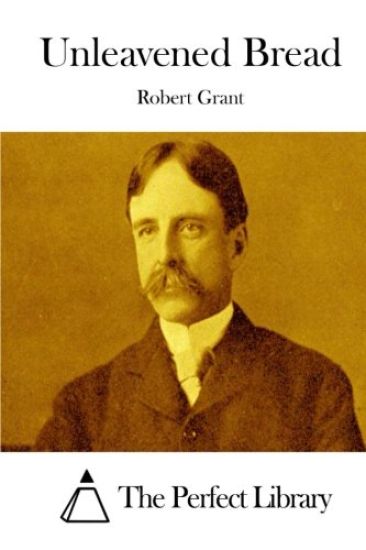
Unleavened Bread is a 1900 novel by American writer Robert Grant, and one of the best selling books of that year. It was also adapted into a Broadway play in 1901, directed by Leo Ditrichstein.Robert Grant (1852-1940) was an American author and a jurist who participated in a review of the Sacco and Vanzetti trial a few weeks before their executions.In "Unleavened Bread," A businessman's selfish wife forces her way into upper society. A dramatization or Robert Grant's much talked-of novel, by Leo Ditrichstein, was remarkably well acted in the Savoy Theatre last night, and is likely to be a live theatrical topic for a few weeks at least. It was received with abundant applause by an uncommonly friendly and appreciative audience.


Babcock and Selma White were among the last of the wedding guests to take their departure. It was a brilliant September night with a touch of autumn vigor in the atmosphere, which had not been without its effect on the company, who had driven off in gay spirits, most of them in hay-carts or other vehicles capable of carrying a party. Their songs and laughter floated back along the winding country road. Selma, comfortable in her wraps and well tucked about with a rug, leaned back contentedly in the chaise, after the goodbyes had been said, to enjoy the glamour of the full moon. They were seven miles from home and she was in no hurry to get there. Neither festivities nor the undisguised devotion of a city young man were common in her life. Consideration she had been used to from a child, and she knew herself to be tacitly acknowledged the smartest girl in Westfield, but perhaps for that very reason she had held aloof from manhood until now. At least no youth in her neighborhood had ever impressed her as her equal. Neither did Babcock so impress her; but he was different from the rest. He was not shy and unexpressive; he was buoyant and self-reliant, and yet he seemed to appreciate her quality none the less.
Reproduction of the original: Unleavened Bread by Robert Grant
The Bread and Biscuit Baker's and Sugar-Boiler's Assistant; Including a Large Variety of Modern Recipes
Robert Wells
ALPHA EDITION
2022
pokkari
This book has been considered important throughout the human history, and so that this work is never forgotten we have made efforts in its preservation by republishing this book in a modern format for present and future generations. This whole book has been reformatted, retyped and designed. These books are not made of scanned copies and hence the text is clear and readable.

""Unleavened Bread Book II"" centers on the complexities of ambition and the societal constraints faced by women in the early 20th century. Through the protagonist, Selma White, the narrative explores her relentless pursuit of respect and success in a male-dominated world. Selma's journey through three marriages illustrates her struggle between personal aspirations and the societal expectations placed upon her. Each marriage reflects her evolving understanding of self-worth and the sacrifices made for love and ambition. The novel highlights the tension between personal ambition and societal expectations, portraying Selma as both a product of her time and a forerunner of modern women seeking independence. Her journey prompts readers to reconsider the definitions of success and the complexities of navigating societal norms, making her story relevant even today. Ultimately, Selma's quest for recognition becomes a poignant commentary on the universal struggle for self-acceptance and respect in a world that often undermines women's aspirations.

""Unleavened Bread Book I"" centers on the complexities of ambition and the societal constraints faced by women in the early 20th century. Through the protagonist, Selma White, the narrative explores her relentless pursuit of respect and success in a male-dominated world. Selma's journey through three marriages illustrates her struggle between personal aspirations and the societal expectations placed upon her. Each marriage reflects her evolving understanding of self-worth and the sacrifices made for love and ambition. The novel highlights the tension between personal ambition and societal expectations, portraying Selma as both a product of her time and a forerunner of modern women seeking independence. Her journey prompts readers to reconsider the definitions of success and the complexities of navigating societal norms, making her story relevant even today. Ultimately, Selma's quest for recognition becomes a poignant commentary on the universal struggle for self-acceptance and respect in a world that often undermines women's aspirations.

""Unleavened Bread Book III"" centers on the complexities of ambition and the societal constraints faced by women in the early 20th century. Through the protagonist, Selma White, the narrative explores her relentless pursuit of respect and success in a male-dominated world. Selma's journey through three marriages illustrates her struggle between personal aspirations and the societal expectations placed upon her. Each marriage reflects her evolving understanding of self-worth and the sacrifices made for love and ambition. The novel highlights the tension between personal ambition and societal expectations, portraying Selma as both a product of her time and a forerunner of modern women seeking independence. Her journey prompts readers to reconsider the definitions of success and the complexities of navigating societal norms, making her story relevant even today. Ultimately, Selma's quest for recognition becomes a poignant commentary on the universal struggle for self-acceptance and respect in a world that often undermines women's aspirations.
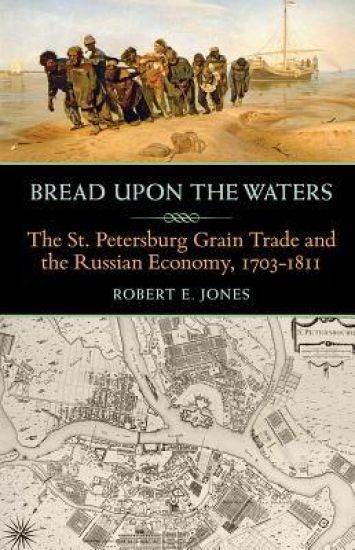
In eighteenth-century Russia, as elsewhere in Europe, bread was a dietary staple—truly grain was the staff of economic, social, and political life. Early on Tsar Peter the Great founded St. Petersburg to export goods from Russia’s vast but remote interior and by doing so to drive Russia’s growth and prosperity. But the new city also had to be fed with grain brought over great distances from those same interior provinces. In this compelling account, Robert E. Jones chronicles how the unparalleled effort put into the building of a wide infrastructure to support the provisioning of the newly created but physically isolated city of St. Petersburg profoundly affected all of Russia’s economic life and, ultimately, the historical trajectory of the Russian Empire as a whole.Jones details the planning, engineering, and construction of extensive canal systems that efficiently connected the new capital city to grain and other resources as far away as the Urals, the Volga, and Ukraine. He then offers fresh insights to the state’s careful promotion and management of the grain trade during the long eighteenth century. He shows how the government established public granaries to combat shortages, created credit instruments to encourage risk taking by grain merchants, and encouraged the development of capital markets and private enterprise. The result was the emergence of an increasingly important cash economy along with a reliable system of provisioning the fifth largest city in Europe, with the political benefit that St. Petersburg never suffered the food riots common elsewhere in Europe.Thanks to this well-regulated but distinctly free-market trade arrangement, the grain-fueled economy became a wellspring for national economic growth, while also providing a substantial infrastructural foundation for a modernizing Russian state. In many ways, this account reveals the foresight of both Peter I and Catherine II and their determination to steer imperial Russia’s national economy away from statist solutions and onto a path remarkably similar to that taken by Western European countries but distinctly different than that of either their Muscovite predecessors or Soviet successors.
Since its independence in 1991, Russia has struggled with the growing pains of defining its role in international politics. After Vladimir Putin ascended to power in 2000, the country undertook grandiose foreign policy projects in an attempt to delineate its place among the world’s superpowers. With this in mind, Robert Nalbandov examines the milestones of Russia’s international relations since the turn of the twenty-first century. He focuses on the specific goals, engagement practices, and tools used by Putin’s administration to promote Russia’s vital national and strategic interests in specific geographic locations. His findings illuminate Putin’s foreign policy objective of reinstituting Russian global strategic dominance. Nalbandov argues that identity-based politics have dominated Putin’s tenure and that Russia’s east/west split is reflected in Asian-European politics. Nalbandov’s analysis shows that unchecked domestic power, an almost exclusive application of hard power, and determined ambition for unabridged global influence and a defined place as a world superpower are the keys to Putin’s Russia.