Kirjojen hintavertailu. Mukana 11 244 527 kirjaa ja 12 kauppaa.

Kirjahaku

Etsi kirjoja tekijän nimen, kirjan nimen tai ISBN:n perusteella.

1000 tulosta hakusanalla Robert Colls

The Secular Mind

The Secular Mind

Robert Coles

Princeton University Press
2001
pokkari
Does the business of daily living distance us from life's mysteries? Do most Americans value spiritual thinking more as a hobby than as an all-encompassing approach to life? Will the concept of the soul be defunct after the next few generations? Child psychiatrist and best-selling author Robert Coles offers a profound meditation on how secular culture has settled into the hearts and minds of Americans. This book is a sweeping essay on the shift from religious control over Western society to the scientific dominance of the mind. Interwoven into the story is Coles's personal quest for understanding how the sense of the sacred has stood firm in the lives of individuals--both the famous and everyday people whom he has known--even as they have struggled with doubt. As a student, Coles questioned Paul Tillich on the meaning of the "secular mind," and his fascination with the perceived opposition between secular and sacred intensified over the years. This book recounts conversations Coles has had with such figures as Anna Freud, Karen Horney, William Carlos Williams, Walker Percy, and Dorothy Day. Their words dramatize the frustration and the joy of living in both the secular and sacred realms. Coles masterfully draws on a variety of literary sources that trace the relationship of the sacred and the secular: the stories of Abraham and Moses, the writings of St. Paul, Augustine, Kierkegaard, Darwin, and Freud, and the fiction of George Eliot, Hardy, Meredith, Flannery O'Connor, and Huxley. Ever since biblical times, Coles shows us, the relationship between these two realms has thrived on conflict and accommodation. Coles also notes that psychoanalysis was first viewed as a rival to religion in terms of getting a handle on inner truths. He provocatively demonstrates how psychoanalysis has either been incorporated into the thinking of many religious denominations or become a type of religion in itself. How will people in the next millennium deal with advances in chemistry and neurology? Will these sciences surpass psychoanalysis in controlling how we think and feel? This book is for anyone who has wondered about the fate of the soul and our ability to seek out the sacred in our constantly changing world.
The Moral Intelligence of Children

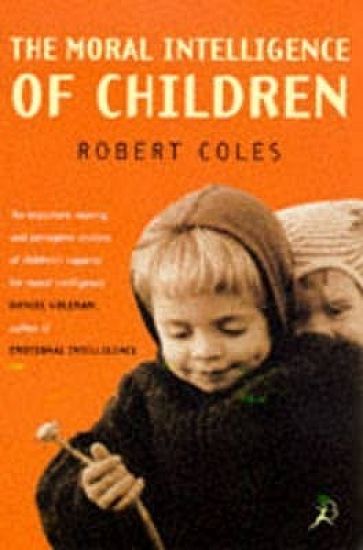
The Moral Intelligence of Children

Robert Coles

Bloomsbury Publishing PLC
1998
nidottu
This volume explores the question of how to raise a child whose moral intelligence and strong values will be the basis for a balanced and happy life. Drawing on his experience as a teacher and child psychiatrist, and pivotal events in his own life, the author shows how character develops from the earliest years, moulded by the often unselfconscious guidance of parents. The book also aims to illustrate how the shared, daily experience between emotionally-connected adults and their children is a crucial factor in instilling moral sense, and how children can be taught to develop moral intelligence through witnessing the conduct of others. It then examines how values are born and shaped during the "moral archaeology of childhood". In infancy, the author explains, there is moral life that precedes language, and he considers how to stop a baby being a bully, and how to teach a toddler to act well.
Children and War

Children and War

Robert Coles

New York University Press
2002
sidottu
"This anthology is breathtaking in its geographic and temporal sweep."?Canadian Journal of History The American media has recently "discovered" children's experiences in present-day wars. A week-long series on the plight of child soldiers in Africa and Latin America was published in Newsday and newspapers have decried the U.S. government's reluctance to sign a United Nations treaty outlawing the use of under-age soldiers. These and numerous other stories and programs have shown that the number of children impacted by war as victims, casualties, and participants has mounted drastically during the last few decades. Although the scale on which children are affected by war may be greater today than at any time since the world wars of the twentieth century, children have been a part of conflict since the beginning of warfare. Children and War shows that boys and girls have routinely contributed to home front war efforts, armies have accepted under-aged soldiers for centuries, and war-time experiences have always affected the ways in which grown-up children of war perceive themselves and their societies. The essays in this collection range from explorations of childhood during the American Revolution and of the writings of free black children during the Civil War to children's home front war efforts during World War II, representations of war and defeat in Japanese children's magazines, and growing up in war-torn Liberia. Children and War provides a historical context for two centuries of children's multi-faceted involvement with war.
Children and War

Children and War

Robert Coles

New York University Press
2002
pokkari
"This anthology is breathtaking in its geographic and temporal sweep."?Canadian Journal of History The American media has recently "discovered" children's experiences in present-day wars. A week-long series on the plight of child soldiers in Africa and Latin America was published in Newsday and newspapers have decried the U.S. government's reluctance to sign a United Nations treaty outlawing the use of under-age soldiers. These and numerous other stories and programs have shown that the number of children impacted by war as victims, casualties, and participants has mounted drastically during the last few decades. Although the scale on which children are affected by war may be greater today than at any time since the world wars of the twentieth century, children have been a part of conflict since the beginning of warfare. Children and War shows that boys and girls have routinely contributed to home front war efforts, armies have accepted under-aged soldiers for centuries, and war-time experiences have always affected the ways in which grown-up children of war perceive themselves and their societies. The essays in this collection range from explorations of childhood during the American Revolution and of the writings of free black children during the Civil War to children's home front war efforts during World War II, representations of war and defeat in Japanese children's magazines, and growing up in war-torn Liberia. Children and War provides a historical context for two centuries of children's multi-faceted involvement with war.
Flannery O'Connor's South

Flannery O'Connor's South

Robert Coles

University of Georgia Press
1993
pokkari
Flannery O'Connor's South offers a forceful analysis, both literary and philosophical, of Flannery O'Connor's life and literature. First published in 1980, this study draws upon Robert Coles' personal experiences in the South during the civil rights movement of the late 1950s and early 1960s, his brief acquaintance with Flannery O'Connor, and his careful readings of her works. The voices and gestures of the people Coles met in the South help illuminate the social scene that influenced one of the region's most valuable and interesting writers.
Still Hungry in America

Still Hungry in America

Robert Coles; Thomas J. Ward

University of Georgia Press
2018
nidottu
Originally published in 1969, the documentary evidence of poverty and malnutrition in the American South showcased in Still Hungry in America still resonates today. The work was created to complement a July 1967 U.S. Senate Subcommittee on Employment, Manpower, and Poverty hearings on hunger in America. At those hearings, witnesses documented examples of deprivation afflicting hundreds of thousands of American families. The most powerful testimonies came from the authors of this profoundly disturbing and important book.Al Clayton’s sensitive camerawork enabled the subcommittee members to see the agonizing results of insufficient food and improper diet, rendered graphically in stunted, weakened and fractured bones, dry, shrunken, and ulcerated skin, wasting muscles, and bloated legs and abdomens. Physician and child psychiatrist Robert Coles, who had worked with these populations for many years, described with fierce clarity the medical and psychological effects of hunger. Coles’s powerful narrative, reinforced by heartbreaking interviews with impoverished people and accompanied by 101 photographs taken by Clayton in Appalachia, rural Mississippi, and Atlanta, Georgia, convey the plight of the millions of hungry citizens in the most affluent nation on earth.A new foreword by historian Thomas J. Ward Jr. analyzes food insecurity among today’s rural and urban poor and frames the current crisis in the American diet not as a scarcity of food but as an overabundance of empty calories leading to obesity, diabetes, and high blood pressure.
Chekhov's Doctors

Chekhov's Doctors

Robert Coles

Kent State University Press
2003
nidottu
In his brief but distinguished life, Anton Chekhov was a doctor, a documentary essayist, an admired dramatist, and a humanitarian. He remains a nineteenth-century Russian literary giant whose prose continues to offer moral insight and to resonate with readers across the world. Chekhov experienced no conflict between art and science or art and medicine. He believed that knowledge of one complemented the other. Chekhov brought medical knowledge and sensitivity to his creative writinghe had an intimate knowledge of the world of medicine and the skills of doctoring, and he utilized this information in his approach to his characters. His sensibility as a medical insider gave special poignancy to his physician characters. The doctors in his engaging tales demonstrate a wide spectrum of behavior, personality, and character. At their best, they demonstrate courage, altruism, and tenderness, qualities that lie at the heart of good medical practice. At their worst, they display insensitivity and incompetency. The stories in Chekhov's Doctors are powerful portraits of doctors in their everyday lives, struggling with their own personal problems as well as trying to serve their patients. The fifth volume in the acclaimed Literature and Medicine Series, Chekhov's Doctors will serve as a rich text for professional health care educators as well as for general readers.
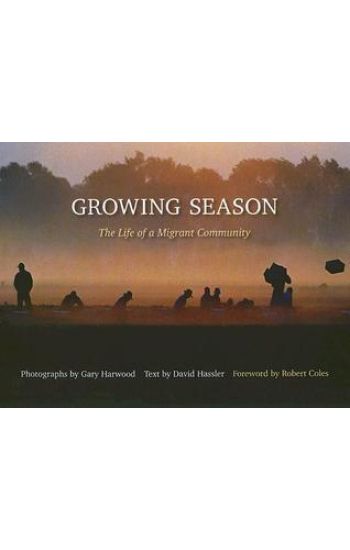
Growing Season

Growing Season

Robert Coles

Kent State University Press
2006
sidottu
The lives and work of Mexican migrant workers in their northeastern Ohio home are captured in colorful photographs and stories that convey their great pride in work and family, as well as their struggles and their joys. Simultaneous.
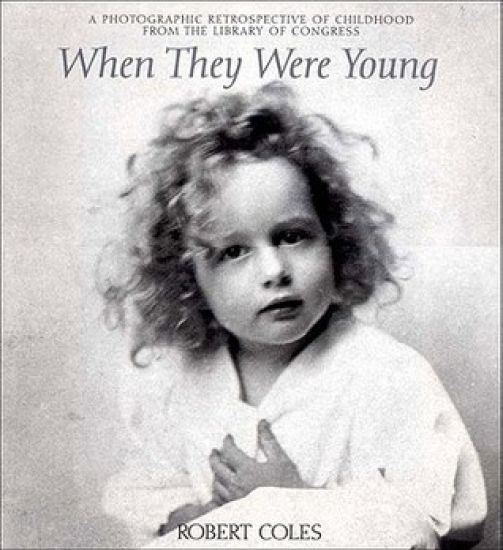
When They Were Young

When They Were Young

Robert Coles

Kales Press
2008
sidottu
Married with heartfelt prose by Pulitzer Prize-winning author Robert Coles and a foreword by Librarian of Congress James H. Billington, When They Were Young reveals that the experience of childhood is connected across time through a broad presentation of eloquent images. Spanning the history of photography from the daguerreotype to documentary, each tritone image in this volume is illustrated on a full page. Works by internationally renowned photographers such as Edward Curtis and Dorothea Lange are included. The companion exhibition, When They Were Young: A Photographic Retrospective of Childhood opens in Fall 2002 in the Library's Jefferson Building. The publication and exhibition will be featured at the Library's annual National Book Festival. 78 full-page tritone photographs.
Black Writers Abroad

Black Writers Abroad

Robert Coles

Routledge
2018
sidottu
Originally published in 1999 Black Writers Abroad puts forward the theory that African American literature was born, partially within the context of a people and its writers who lived, for the most part, in slavery and bondage prior to the Civil War. It is an in-depth study of black American writers who, left the United States as expatriates. The book discusses the people that left, where they went, why they left and why they did or did not return, from the nineteenth century to the twentieth century. It seeks to explain the impact exile had upon these authors’ literary work and careers, as well as upon African American literary history.
Black Writers Abroad

Black Writers Abroad

Robert Coles

Routledge
2020
nidottu
Originally published in 1999 Black Writers Abroad puts forward the theory that African American literature was born, partially within the context of a people and its writers who lived, for the most part, in slavery and bondage prior to the Civil War. It is an in-depth study of black American writers who, left the United States as expatriates. The book discusses the people that left, where they went, why they left and why they did or did not return, from the nineteenth century to the twentieth century. It seeks to explain the impact exile had upon these authors’ literary work and careers, as well as upon African American literary history.
Secular Days, Sacred Moments

Secular Days, Sacred Moments

Robert Coles; David D. (EDT) Cooper

Michigan State University Press
2013
pokkari
No writer or public intellectual of our era has been as sensitive to the role of faith in the lives of ordinary Americans as Robert Coles. Though not religious in the conventional sense, Coles is unparalleled in his astute understanding and respect for the relationship between secular life and sacredness, which cuts across his large body of work. Drawing inspiration from figures like Dietrich Bonhoeffer, Dorothy Day, and Simone Weil, Coles's extensive writings explore the tug of war between faith and doubt. As Coles himself admits, the "back-and-forthness between faith and doubt is the story of my life." These thirty-one thought-provoking essays are drawn from Coles's weekly column in the Catholic publication "America." In them, he turns his inquisitive lens on a range of subjects and issues, from writers and painters to his recent reading and film viewing, contemporary events and lingering controversies, recollections of past and present mentors, events of his own daily life, and ordinary encounters with students, patients, neighbors, and friends. Addressing moral questions openly and honestly with a rare combination of rectitude and authorial modesty, these essays position Coles as a preeminent, durable, and trusted voice in the continuing national conversation over religion, civic life, and moral purpose.
Geography of Faith

Geography of Faith

Robert Coles; Daniel Berrigan

Skylight Paths Publishing
2001
sidottu
A classic of faith-based activism—updated for a new generation. Why was Daniel Berrigan wanted by the FBI? Why did Robert Coles harbor a fugitive? Listen in to the conversations between these two great teachers as they struggle with what it means to put your faith to the test. Discover how their story of challenging the status quo during a time of great political, religious, and social change is just as applicable to our lives today. Thirty years ago, at the height of U.S. involvement in the Vietnam War, Daniel Berrigan, a Jesuit priest, was wanted by the FBI for his nonviolent protest activities. He hid in the house of Robert Coles, who would later win the Pulitzer Prize. The two began a dialogue that encompasses a fascinating range of topics, from war, psychology, and violence, to social institutions, compassion, activism, and family life. With this expanded, anniversary edition of a classic, new generations of readers can examine for themselves how spirituality is not only for ourselves, but often demands action and personal risk in the public arena. New to this edition, Robert Coles offers historical perspective on this turbulent time and assesses the progress of faith-based activism in the years since. Daniel Berrigan challenges today’s activists in a new afterword. Finally, a glossary of terms helps to clarify the key people, places, and movements that are often the subject of the Coles/Berrigan conversations.
Simone Weil

Simone Weil

Robert Coles

Skylight Paths Publishing
2001
pokkari
A brilliant portrait of a beloved and controversial figure in twentieth-century spirituality. Simone Weil (1906-1943) was a writer and philosopher who devoted her life to a search for God—while avoiding membership in organized religion. She wrote with the clarity of a brilliant mind educated in the best French schools, the social conscience of a grass-roots labor organizer, and the certainty and humility of a mystic—and she persistently carried out her search in the company of the poor and oppressed. Robert Coles's study of this strange and compelling figure includes the details of her short, eventful life: her academic career, her teaching, her political and social activism, and her mystical experiences. Coles also analyzes the major themes her life encompassed: her politics, her Jewish identity, her moral concerns, her intellect, and her experience of grace. This is the best, most accessible introduction to the woman who was a spiritual influence on the life and work of so many, among them T. S. Eliot, Flannery O'Connor, Adrienne Rich, and Albert Camus. Robert Coles, M.D., was awarded the Pulitzer Prize for his five-volume Children of Crisis series. He is Professor of Psychiatry and Medical Humanities at Harvard Medical School and the James Agee Professor of Social Ethics at Harvard University, and is the author of many books, including The Spiritual Life of Children, The Moral Life of Children, and Dorothy Day: A Radical Devotion.
Simone Weil

Simone Weil

Robert Coles

Skylight Paths Publishing
2001
sidottu
A brilliant portrait of a beloved and controversial figure in twentieth-century spirituality. Simone Weil (1906-1943) was a writer and philosopher who devoted her life to a search for God—while avoiding membership in organized religion. She wrote with the clarity of a brilliant mind educated in the best French schools, the social conscience of a grass-roots labor organizer, and the certainty and humility of a mystic—and she persistently carried out her search in the company of the poor and oppressed. Robert Coles's study of this strange and compelling figure includes the details of her short, eventful life: her academic career, her teaching, her political and social activism, and her mystical experiences. Coles also analyzes the major themes her life encompassed: her politics, her Jewish identity, her moral concerns, her intellect, and her experience of grace. This is the best, most accessible introduction to the woman who was a spiritual influence on the life and work of so many, among them T. S. Eliot, Flannery O'Connor, Adrienne Rich, and Albert Camus. Robert Coles, M.D., was awarded the Pulitzer Prize for his five-volume Children of Crisis series. He is Professor of Psychiatry and Medical Humanities at Harvard Medical School and the James Agee Professor of Social Ethics at Harvard University, and is the author of many books, including The Spiritual Life of Children, The Moral Life of Children, and Dorothy Day: A Radical Devotion.
The Geography of Faith

The Geography of Faith

Robert Coles; Daniel Berrigan S.J.

SkyLight Paths Publishing,US
2002
nidottu
A classic of faith-based activism-updated for a new generation. Why was Daniel Berrigan wanted by the FBI? Why did Robert Coles harbor a fugitive? "Listen in to the conversations between these two great teachers as they struggle with what it means to put your faith to the test. Discover how their story of challenging the staus quo during a time of great political, religious, and social change is just as applicable to our lives today." "Thirty years ago, at the height of U.S. involvement in the Viet Nam War, Daniel Berrigan, a Jesuit priest, was wanted by the FBI for his nonviolent protest activities. He hid in the house of Robert Coles, who would later win the Pulitzer Prize. The two began a dialogue that encompasses a fascinating range of topics, from war, psychology, and violence, to social institutions, compassion, activism, and family life." "With this expanded, anniversary edition of a classic, new generations of readers can examine for themselves how spirituality is not only for ourselves, but often demands action and personal risk in the public arena." "New to this edition, Robert Coles offers historical perspective on this turbulent time and assesses the progress of faith-based activism in the years since. Daniel Berrigan challenges today's activists in a new afterword." Finally, a glossary of terms helps to clarify the key people, place, and movements that are often the subject of the Coles/Berrigan conversations.
The Youngest Parents

The Youngest Parents

Coles Daniel A.; Coles Michael H.; Robert Coles

WW Norton Co
1997
sidottu
These teenage parents are black, white, and Hispanic; city dwellers and residents of small towns. From conversations with these teenagers, Dr. Coles weaves a subtle yet dramatic narrative that reveals the aspirations and apprehensions of these "youngest parents" whose prospects aren't very promising and whose assumptions aren't always those he, or we, share. Young mothers don't have an easy time ahead of them, but many pregnant teens believe that the babies they carry will lead lives very different from their own, that their babies may find the success that eludes them and may escape the limitations they've suffered. Dr. Coles finds that the fathers' confusion and, sometimes, resentment give way to a deep longing for respect and a desire for a way out of lives limited by poverty and poor education. Dr. Coles's text is accompanied by photographic essays by two outstanding American photographers. Jocelyn Lee, a photographer based in Boston, lived intimately with young families in Massachusetts where she explored the daily lives of young parents. John Moses, a pediatrician and photographer, worked for several years with teenage parents in rural North Carolina, and his pictures show the pride and tenderness they've found in family life.
You May Plow Here

You May Plow Here

Sara Brooks; Robert Coles

WW Norton Co
1992
nidottu
The daughter of a freeholder, Sara Brooks was born in 1911 on her parents’ subsistence farm in west Alabama. Here in her own words, she makes us understand what it felt like to be young, black, innocent, and steeped in the ways of a black rural world that has largely been lost to us.
Outcast Cape Town

Outcast Cape Town

John Western; Robert Coles

University of California Press
1997
pokkari
Social geographer John Western analyzes the urban spatial planning of the 1950 Group Areas Act that achieved, in the built environment of Cape Town, the racial separatism of apartheid. His new prologue for the paperback edition assesses the changes to be expected from the new government and the obstacles to significant change.