Kirjojen hintavertailu. Mukana 11 627 363 kirjaa ja 12 kauppaa.

Kirjahaku

Etsi kirjoja tekijän nimen, kirjan nimen tai ISBN:n perusteella.

1000 tulosta hakusanalla Robert P Boog

Mentalization

Mentalization

Robert P. Drozek

Oxford University Press
2025
nidottu
Do you struggle with instability in your emotions, self-esteem, relationships, or behavior? If so, then you might have borderline personality disorder (BPD), a serious and relatively common mental health condition that is highly responsive to treatment. People with BPD can find it challenging to effectively mentalize-to “read,” access, and reflect on mental states in themselves and other people. This book is all about mentalization-based treatment, or “MBT,” one of the leading evidence-based therapies for people with BPD. As the first book for non-clinicians about MBT, it shows you how to apply MBT's techniques in your everyday life, so that-like the tens of thousands of patients whose lives have already been changed by MBT-you can get relief from the suffering of borderline personality disorder. With the help of worksheets, mentalizing prompts, and case examples from actual treatments of patients with BPD, the book walks you through the core elements in MBT as a therapy, outlining the therapeutic strategies that make MBT so effective. Purchasers receive access to a webpage, so that you can download and print additional copies of worksheets and chapter reviews. This book will be helpful for people with BPD and other mental health conditions, family members affected by BPD, clinicians seeking to teach their clients about MBT, and members of the general public who are curious about mentalizing and MBT.
The Death of the American Trial

The Death of the American Trial

Robert P. Burns

University of Chicago Press
2009
sidottu
In "The Death of the American Trial", distinguished legal scholar Robert P. Burns makes an impassioned case for reversing the rapid decline of the trial before we lose one of our public culture's greatest achievements. As a practice that is adapted for modern times yet rooted in ancient wisdom, the trial is uniquely suited to balance the tensions - between idealism and realism, experts and citizens, contextual judgment and reliance on rules - that define American culture. Arguing that many observers make a grave mistake by taking a complacent or even positive view of the trial's demise, Burns concludes by laying out the catastrophic consequences of losing an institution that so perfectly embodies democratic governance.
The Death of the American Trial

The Death of the American Trial

Robert P. Burns

University of Chicago Press
2011
nidottu
In "The Death of the American Trial", distinguished legal scholar Robert P. Burns makes an impassioned case for reversing the rapid decline of the trial before we lose one of our public culture's greatest achievements. As a practice that is adapted for modern times yet rooted in ancient wisdom, the trial is uniquely suited to balance the tensions - between idealism and realism, experts and citizens, contextual judgment and reliance on rules - that define American culture. Arguing that many observers make a grave mistake by taking a complacent or even positive view of the trial's demise, Burns concludes by laying out the catastrophic consequences of losing an institution that so perfectly embodies democratic governance.
Law in the Laboratory

Law in the Laboratory

Robert P. Charrow

University of Chicago Press
2010
sidottu
The National Institutes of Health and the National Science Foundation together fund more than $40 billion of research annually in the United States and around the globe. These large public expenditures come with strings, including a complex set of laws and guidelines that regulate how scientists may use NIH and NSF funds, how federally funded research may be conducted, and who may have access to or own the product of the research. Until recently, researchers have had little instruction on the nature of these laws and how they work. But now, with Robert P. Charrow's "Law in the Laboratory", they have a readable and entertaining introduction to the major ethical and legal considerations pertaining to research under the aegis of federal science funding. For any academic whose position is grant funded, or for any faculty involved in securing grants, this book will be an essential reference manual. And for those who want to learn how federal legislation and regulations affect laboratory research, Charrow's primer will shed light on the often obscured intersection of government and science.
Law in the Laboratory

Law in the Laboratory

Robert P. Charrow

University of Chicago Press
2010
nidottu
The National Institutes of Health and the National Science Foundation together fund more than $40 billion of research annually in the United States and around the globe. These large public expenditures come with strings, including a complex set of laws and guidelines that regulate how scientists may use NIH and NSF funds, how federally funded research may be conducted, and who may have access to or own the product of the research. Until recently, researchers have had little instruction on the nature of these laws and how they work. But now, with Robert P. Charrow's "Law in the Laboratory", they have a readable and entertaining introduction to the major ethical and legal considerations pertaining to research under the aegis of federal science funding. For any academic whose position is grant funded, or for any faculty involved in securing grants, this book will be an essential reference manual. And for those who want to learn how federal legislation and regulations affect laboratory research, Charrow's primer will shed light on the often obscured intersection of government and science.
Making Physics

Making Physics

Robert P. Crease

University of Chicago Press
2000
nidottu
From Nobel Prize-winning work in atomic physics to community concerns over radiation leaks, Brookhaven National Laboratory's ups and downs track the changing fortunes of "big science" in the United States since World War II. But Brookhaven is also unique; it was the first major national laboratory built specifically for basic civilian research. This text brings to life the people, the instruments, the science, and the politics of Brookhaven's first quarter-century. The book shows the experimental energy of Brookhaven's researchers, competing among themselves as well as with other laboratories around the world. Drawing on a wide variety of sources, from oral interviews and internal memos to lab notebooks and transcripts of security clearance hearings, Robert P. Crease recounts the difficult founding and siting of Brookhaven, the successful resolution of immense engineering and technical problems in the design and construction of experimental apparatus, and changing relations with the surrounding Long Island community. But most of all, Crease tells the stories of Brookhaven's scientists and their research, which has included detailed descriptions of the structure of the nucleus, early attempts at radiotherapy for inoperable tumours, and studies of strange particles and the weak and strong interactions.
Kafka's Law

Kafka's Law

Robert P. Burns

University of Chicago Press
2014
sidottu
The Trial is actually closer to reality than fantasy as far as the client's perception of the system. It's supposed to be a fantastic allegory, but it's reality. It's very important that lawyers read it and understand this." Justice Anthony Kennedy famously offered this assessment of the Kafkaesque character of the American criminal justice system in 1993. While Kafka's vision of the "Law" in The Trial appears at first glance to be the antithesis of modern American legal practice, might the characteristics of this strange and arbitrary system allow us to identify features of our own system that show signs of becoming similarly nightmarish? With Kafka's Law, Robert P. Burns shows how The Trial provides an uncanny lens through which to consider flaws in the American criminal justice system today. Burns begins with the story, at once funny and grim, of Josef K., caught in the Law's grip and then crushed by it. Laying out the features of the Law that eventually destroy K., Burns argues that the American criminal justice system has taken on many of these same features. In the overwhelming majority of contemporary cases, police interrogation is followed by a plea bargain, in which the court's only function is to set a largely predetermined sentence for an individual already presumed guilty. Like Kafka's nightmarish vision much of American criminal law and procedure has become unknowable, ubiquitous, and bureaucratic. It, too, has come to rely on deception in dealing with suspects and jurors, to limit the role of defense, and to increasingly dispense justice without the protection of formal procedures. But, while Kennedy may be correct in his grim assessment, a remedy is available in the tradition of trial by jury, and Burns concludes by convincingly arguing for its return to a more central place in American criminal justice.
How It Works

How It Works

Robert P. Fairbanks

University of Chicago Press
2009
sidottu
Of the some sixty thousand vacant properties in Philadelphia, half of them are abandoned row houses. Taken as a whole, these derelict homes symbolize the city's plight in the wake of industrial decline. But a closer look reveals a remarkable new phenomenon - street-level entrepreneurs repurposing hundreds of these empty houses as facilities for recovering addicts and alcoholics. "How It Works" is a compelling study of this recovery house movement and its place in the new urban order wrought by welfare reform. To find out what life is like in these recovery houses, Robert P. Fairbanks II goes inside one particular home in the Kensington neighborhood. Operating without a license and unregulated by any government office, the recovery house provides food, shelter, company, and a bracing self-help philosophy to addicts in an area saturated with drugs and devastated by poverty. From this starkly vivid close-up, Fairbanks widens his lens to reveal the intricate relationships the recovery houses have forged with public welfare, the formal drug treatment sector, criminal justice institutions, and local government.
How It Works

How It Works

Robert P. Fairbanks

University of Chicago Press
2009
nidottu
Of the some sixty thousand vacant properties in Philadelphia, half of them are abandoned row houses. Taken as a whole, these derelict homes symbolize the city's plight in the wake of industrial decline. But a closer look reveals a remarkable new phenomenon - street-level entrepreneurs re purposing hundreds of these empty houses as facilities for recovering addicts and alcoholics. "How It Works" is a compelling study of this recovery house movement and its place in the new urban order wrought by welfare reform. To find out what life is like in these recovery houses, Robert P. Fairbanks II goes inside one particular home in the Kensington neighborhood. Operating without a license and unregulated by any government office, the recovery house provides food, shelter, company, and a bracing self-help philosophy to addicts in an area saturated with drugs and devastated by poverty. From this starkly vivid close-up, Fairbanks widens his lens to reveal the intricate relationships the recovery houses have forged with public welfare, the formal drug treatment sector, criminal justice institutions, and local government.
The Reason of Following

The Reason of Following

Robert P. Scharlemann

University of Chicago Press
1992
sidottu
In the Reason of Following noted scholar Robert P. Scharlemann takes Christology in a radically new direction, suggesting that Christology itself represents a form of reason and an understanding of selfhood. For the first time, Scharlemann establishes a logical place for Christology in philosophical theology. Scharlemann presents a christological phenomenology of the self, tracing the connections between the "I am" of the God who spoke to Moses, the "I am" of Christ, and the "I am" of autonomous self-identification. How, he asks, can the self that spontaneously responds to Jesus' "Follow me!" be compared with the everyday, autonomous self? What is the nature of "following" on the part of those who answer the summons of one whose name is "I am"? Pursuing these questions, Scharlemann develops a christological phenomenology of the self—an account in which following means not the expression of the self in action or reflection but rather self-discovery in another person. With a deep sense of both culture and philosophy, Scharlemann distinguishes the forms of reason involved in "following" from those in ethics, aesthetics, and other modes of religious philosophic thought. His penetrating readings of nineteenth- and twentieth-century German theological and philosophical traditions provide an introduction to lesser-known thinkers such as Hermann and Picht as well as a profound critique of major figures such as Descartes, Heidegger, Fichte, and Kant. Finally Scharlemann outlines a program for a more systematic and rounded presentation of what Christian doctrine might mean in the contemporary world. His work will be of interest to students of theology and philosophy alike.
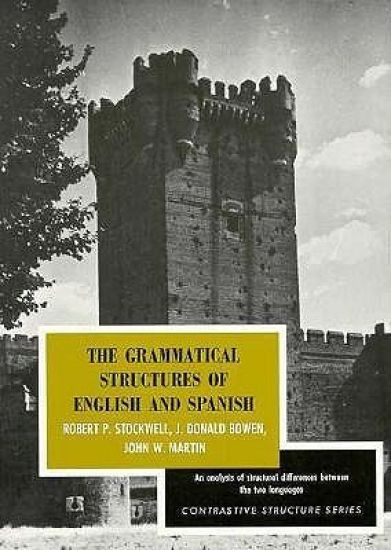
The Grammatical Structures of English and Spanish

The Grammatical Structures of English and Spanish

Robert P. Stockwell; J. Donald Bowen; John W. Martin

University of Chicago Press
1965
nidottu
This series is designed to provide a detailed account of one of the major problems in the teaching of a second language—the interference caused by structural differences between the native language of the learner and the foreign language he is studying. The similarities and differences between English and the language being taught are described in two volumes, one on the sound systems and one on the grammatical systems, for some of the foreign languages most in demand in the United States today.
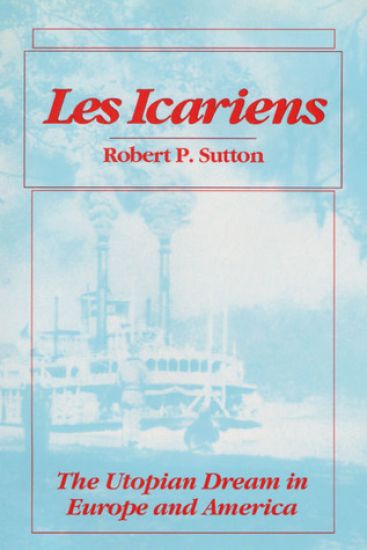
Les Icariens

Les Icariens

Robert P. Sutton

University of Illinois Press
1994
sidottu
This is the first complete account of the epic tale of the Icarians and their dream of creating a perfect society without money or property. Robert P. Sutton analyzes the origins of Icarianism in the milieu of French politics in the 1840s, discusses its founder Etienne Cabet, and traces the eventual creation of six communal societies in Illinois, Iowa, and California between 1848 and 1898. Les Icariens is a fascinating amalgam of biography, a history of French Socialism, and the story of one of the longest-lived secular communal experiments in America.
The Play of Nature

The Play of Nature

Robert P. Crease

Indiana University Press
1993
sidottu
"Crease's brilliantly exploited theatrical analogy places scientific theorizing back into the wider context of experimental inquiry." —Robert C. Scharff Crease attacks the "mystical" account of experimentation embraced by the positivist and Kantian varieties of philosophy of science, according to which experimentation takes a backseat to theory.
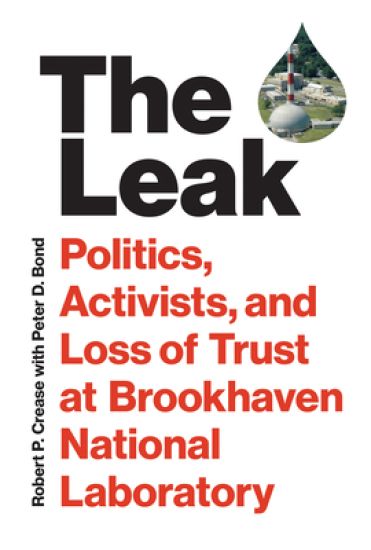
The Leak

The Leak

Robert P. Crease; Peter D. Bond

MIT PRESS LTD
2022
sidottu
How the discovery of a harmless leak of radiation sparked a media firestorm, political grandstanding, and fearmongering that closed a vital scientific facility. In 1997, scientists at Brookhaven National Laboratory found a small leak of radioactive water near their research reactor. Brookhaven was--and is--a world-class, Nobel Prize-winning lab, and its reactor was the cornerstone of US materials science and one of the world's finest research facilities. The leak, harmless to health, came from a storage pool rather than the reactor. But its discovery triggered a media and political firestorm that resulted in the reactor's shutdown, and even attempts to close the entire laboratory. A quarter century later, the episode reveals the dynamics of today's controversies in which fears and the dismissal of science disrupt serious discussion and research of vital issues such as vaccines, climate change, and toxic chemicals. This story has all the elements of a thriller, with vivid characters and dramatic twists and turns. Key players include congressmen and scientists; journalists and university presidents; actors, supermodels, and anti-nuclear activists, all interacting and teaming up in surprising ways. The authors, each with insider knowledge of and access to confidential documents and the key players, reveal how a fact of no health significance could be portrayed as a Chernobyl-like disaster. This compelling expos reveals the gaps between scientists, politicians, media, and the public that have only gotten more dangerous since 1997. Peter Bond is a retired physicist who worked at Brookhaven National Laboratory for 43 years in a wide variety of roles, including interim laboratory director during much of the period covered by this book.
Christian Faith and Modern Democracy

Christian Faith and Modern Democracy

Robert P. Kraynak

University of Notre Dame Press
2001
nidottu
Do Christianity and modern liberal democracy share a common moral vision, or are they opposed and even hostile to each other? In Christian Faith and Modern Democracy, Robert Kraynak challenges the commonly accepted view that Christianity is inherently compatible with modern democratic society. Contrary to conventional wisdom, Kraynak argues that there is no necessary connection between Christianity and any form of government and that, in many important respects, Christianity is weakened by its close alliance with contemporary versions of democracy and human rights. Christian Faith and Modern Democracy was written, in part, to convince secular intellectuals that modern democracy needs God. But it was also written in response to the new consensus about politics that has emerged among Christian believers. Almost all churches and theologians now think that the form of government most compatible with Christianity is democracy and that the historic opposition of the Christian tradition to democracy and to various forms of liberalism was a mistake. What caused Christians to change their view of political authority and to embrace liberal democracy? Were they wise to change their view? This provocative book attempts to answer these questions by reexamining the relationship between democracy and Christianity through the lens of St. Augustine's distinction between the city of God and the earthly city, applied to the conditions of the modern age. Kraynak argues that St. Augustine's teaching provides the basis for a Christian theory of constitutional government and permits a variety of legitimate forms of government, including constitutional democracy. Yet, unlike contemporary Christian doctrines, it does so without embracing the subversive premises of liberalism that have threatened to turn the Christian faith into little more than a mirror image of the modern world. Sure to spark controversy among secular intellectuals and Christian believers alike, this insightful volume is an outstanding work of political philosophy with a firm foundation in theology.
Disease and Its Control

Disease and Its Control

Robert P. Hudson

Praeger Publishers Inc
1987
nidottu
This book is . . . a survey history of medicine from the earliest times, centered thematically on how changing concepts of disease have affected its management. . . . One finds a gratifying mastery of recent as well as classic scholarship in medical history and a careful sidestepping of positivistic excesses. . . . Disease and Its Control is a fresh and welcome synthesis of historical scholarship that will be accessible to interested laymen. Annals of Internal Medicine
Hoosier Honor

Hoosier Honor

Robert P. Sulek

Praeger Publishers Inc
1990
sidottu
College student-athletes are often a study of failure--a failure in graduation, in setting priorities, in having dreams fulfilled. Over 65 percent of all college athletes might not graduate. Only a handful of NCAA schools combine excellent basketball with a consistent level of graduation. One aim of this book is to help current college athletes to graduate by documenting a success story--Indiana University. The volume does not focus on Indiana's basketball success but instead its academic success under the seventeen-year tenure of Coach Knight. The author first details the failure of present sports programs in low graduation levels, abuse and exploitation of athletes, and in spirit and philosophy. He then explores what is described as Coach Knight's hard-love, and the people and processes involved in the Indiana program. This volume addresses athletic administrators, educators, athlete-students, and their fans.Written in a light and sensitive style, Hoosier Honor tells the success story of the Indiana University basketball team under Coach Bob Knight. The most winning coach in the Big Ten Conference, Knight's greatest success is his ability to graduate an extremely high percentage of his players. This volume documents that success: the success of a man who knows that defense wins games; a man with limitations who learned to compensate and trains his team to compensate; a teacher and a mentor. Voices of those around Coach Knight are finally heard and a psychological analysis of Knight and the Dostoyevsky-type double internal struggle is present in Knight's hard-love of the players. The IU program is a model one--philosophical approach to basketball.
The Times Square Hustler

The Times Square Hustler

Robert P. McNamara

Praeger Publishers Inc
1994
sidottu
The author became interested in male prostitution while researching populations susceptible to AIDS. He found such a population in male prostitutes in Times Square which had developed a community to deal with common problems. Among these changing the community were AIDS, crack cocaine, and urban redevelopment. This work is directed to sociologists, social workers, and those interested in popular culture.