Kirjojen hintavertailu. Mukana 12 390 323 kirjaa ja 12 kauppaa.

Kirjahaku

Etsi kirjoja tekijän nimen, kirjan nimen tai ISBN:n perusteella.

1000 tulosta hakusanalla Robert P. Nevin

All American

All American

Robert P Capt. McGovern

HARPERCOLLINS PUBLISHERS INC
2008
nidottu
Captain Robert McGovern epitomizes all that is right and good in America. One of nine children growing up in a New Jersey family, he made local headlines as a high school football phenom before becoming a star linebacker for the Kansas City Chiefs, the Pittsburgh Steelers, and the New England Patriots. When his illustrious NFL career was over, he earned a law degree from Fordham University and went to work for the New York City district attorney's office. From that vantage point he witnessed close-up the fall of the Twin Towers on that world-altering morning in September 2001--an event that inspired him to leave public life and join the U.S. Army to better serve the country he loves.As a military prosecuting attorney, Captain McGovern has advised battlefield commanders on legal rules of engagement in Afghanistan and has prosecuted suspected terrorists in Iraq. A dedicated soldier and a man of faith who has been on the front lines of the War on Terror--both at home and in the Middle East--Captain Robert McGovern is an extraordinary American with a remarkable and important story to tell--one that every American needs to hear.
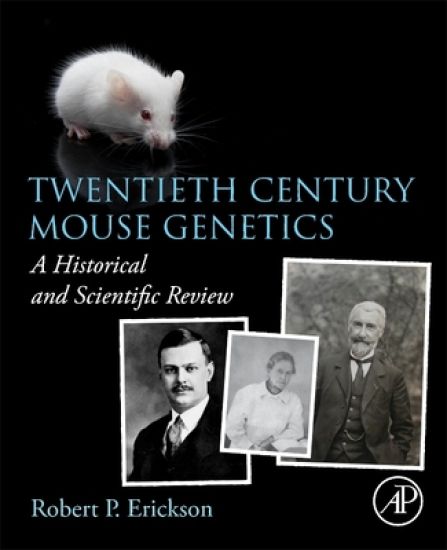
Twentieth Century Mouse Genetics

Twentieth Century Mouse Genetics

Robert P. Erickson

Academic Press Inc
2021
nidottu
Twentieth Century Mouse Genetics: A Historical and Scientific Review provides a comprehensive examination of key advances in mouse genetics throughout the 20th century. Here Dr. Robert P. Erickson, a leader in the field, identifies the contributions of historic mouse genetics studies, and how those approaches and early discoveries are still shaping human genetics research and medical genetics today. In addition to historical overviews, the author provides researcher biographies and updates connecting historic research to ongoing advances. Past studies discussed use the T/t complex as an example and include the origins of mouse genetics, the synthesis of genetics and evolution, cytogenetics and gene mapping, population genetics and mutation research, immunogenetics, reproductive genetics, molecular cloning, X-inactivation and epigenetics, sex determination, and pharmacogenetics. Here researchers, students, and clinicians will find fresh inspiration to engage in human genetics research employing mouse models and to translate those findings to clinical practice.
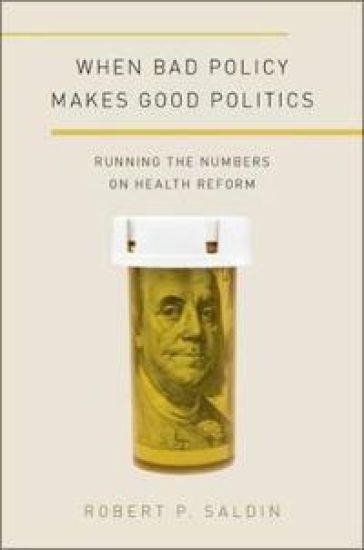
When Bad Policy Makes Good Politics

When Bad Policy Makes Good Politics

Robert P. Saldin

Oxford University Press Inc
2017
sidottu
From all outward appearances, the American policymaking process has been revolutionized in the last half century. Beginning in the 1970s, new safeguards were put in place to prevent the kind of free-wheeling and sometimes reckless policymaking environment of earlier periods. These changes--including the creation of the non-partisan Congressional Budget Office--were widely hailed as ushering in a new era of accountability in Washington and putting an end to the days when cagey political operatives could rush major legislation through Congress without any real consideration of the economic costs. But what if the supposedly new and improved policymaking process that resulted from these 'good government' reforms is every bit as prone to manipulation as the one it replaced? As Robert Saldin shows in When Bad Policy Makes Good Politics, that has unfortunately been the case. As in the past, the new politics of the policymaking process encourage savvy political actors to game the system. The very rules that were designed to thwart financially irresponsible legislation now incentivize the development of fundamentally flawed and unworkable policies. To uncover the pathologies of the American policymaking process, Saldin traces the sad tale of the Community Living Assistance Services and Supports (CLASS) Act. While few outside the beltway are aware of it, it was a major piece of legislation that played a central role in the passage of the Affordable Care Act (ACA), the most important social policy law since the 1960s. The CLASS Act targeted an intractable problem: the ever-increasing demand for costly long-term care services. For decades, both Republicans and Democrats have recognized the problem as a major one, so the question has not been whether we should tackle it. Rather, the debate centered on how we should do it-that is, how we should pay for it. The problem was always that the costs were staggering, and there was little political will to fund such a program (Medicare did not fund it). Long term care advocates realized this, and therefore focused on passing a law that effectively ignored the economic costs. They finally shuttled it into the larger Affordable Care Act, which was passed into law in 2010. Saldin traces the process, showing how an array of perverse incentives allowed such a flawed law to come into being. In fact, Kathleen Sibelius, the Secretary of Health and Human Services, announced in late 2011 that the administration would no longer try to put the law into effect because of its basic unworkability. Saldin's book is ostensibly about this one piece of legislation, but it's about much more than this: the near-impossibility of passing 'clean' laws that are not doctored by special interests adept at gaming the system. Essential reading for anyone interested in the policymaking process, the book establishes that our current policymaking environment produces outcomes that are just as perverse as the ones enacted by the old system.
When Bad Policy Makes Good Politics

When Bad Policy Makes Good Politics

Robert P. Saldin

Oxford University Press Inc
2017
nidottu
From all outward appearances, the American policymaking process has been revolutionized in the last half century. Beginning in the 1970s, new safeguards were put in place to prevent the kind of free-wheeling and sometimes reckless policymaking environment of earlier periods. These changes--including the creation of the non-partisan Congressional Budget Office--were widely hailed as ushering in a new era of accountability in Washington and putting an end to the days when cagey political operatives could rush major legislation through Congress without any real consideration of the economic costs. But what if the supposedly new and improved policymaking process that resulted from these 'good government' reforms is every bit as prone to manipulation as the one it replaced? As Robert Saldin shows in When Bad Policy Makes Good Politics, that has unfortunately been the case. As in the past, the new politics of the policymaking process encourage savvy political actors to game the system. The very rules that were designed to thwart financially irresponsible legislation now incentivize the development of fundamentally flawed and unworkable policies. To uncover the pathologies of the American policymaking process, Saldin traces the sad tale of the Community Living Assistance Services and Supports (CLASS) Act. While few outside the beltway are aware of it, it was a major piece of legislation that played a central role in the passage of the Affordable Care Act (ACA), the most important social policy law since the 1960s. The CLASS Act targeted an intractable problem: the ever-increasing demand for costly long-term care services. For decades, both Republicans and Democrats have recognized the problem as a major one, so the question has not been whether we should tackle it. Rather, the debate centered on how we should do it-that is, how we should pay for it. The problem was always that the costs were staggering, and there was little political will to fund such a program (Medicare did not fund it). Long term care advocates realized this, and therefore focused on passing a law that effectively ignored the economic costs. They finally shuttled it into the larger Affordable Care Act, which was passed into law in 2010. Saldin traces the process, showing how an array of perverse incentives allowed such a flawed law to come into being. In fact, Kathleen Sibelius, the Secretary of Health and Human Services, announced in late 2011 that the administration would no longer try to put the law into effect because of its basic unworkability. Saldin's book is ostensibly about this one piece of legislation, but it's about much more than this: the near-impossibility of passing 'clean' laws that are not doctored by special interests adept at gaming the system. Essential reading for anyone interested in the policymaking process, the book establishes that our current policymaking environment produces outcomes that are just as perverse as the ones enacted by the old system.

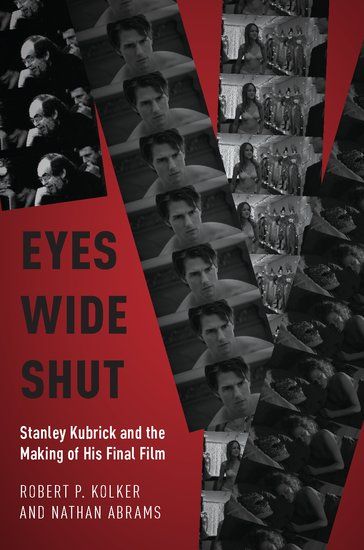
Eyes Wide Shut

Eyes Wide Shut

Robert P. Kolker; Nathan Abrams

Oxford University Press Inc
2019
sidottu
Twenty years since its release, Stanley Kubrick's Eyes Wide Shut remains a complex, visually arresting film about domesticity, sexual disturbance, and dreams. It was on the director's mind for some 50 years before he finally put it into production. Using the Stanley Kubrick Archive at the University of the Arts, London, and interviews with participants in the production, the authors create an archeology of the film that traces the progress of the film from its origins to its completion, reception, and afterlife. The book is also an appreciation of this enigmatic work and its equally enigmatic creator.
Eyes Wide Shut

Eyes Wide Shut

Robert P. Kolker; Nathan Abrams

Oxford University Press Inc
2019
nidottu
Twenty years since its release, Stanley Kubrick's Eyes Wide Shut remains a complex, visually arresting film about domesticity, sexual disturbance, and dreams. It was on the director's mind for some 50 years before he finally put it into production. Using the Stanley Kubrick Archive at the University of the Arts, London, and interviews with participants in the production, the authors create an archeology of the film that traces the progress of the film from its origins to its completion, reception, and afterlife. The book is also an appreciation of this enigmatic work and its equally enigmatic creator.
Never Trump

Never Trump

Robert P. Saldin; Steven M. Teles

Oxford University Press Inc
2020
sidottu
As it became increasingly apparent that Donald Trump might actually become the Republican party's 2016 presidential nominee, alarmed conservatives coalesced behind a simple, uncompromising slogan: Never Trump. Although the movement initially included a large number of Republican office-holders, its white-hot core was always comprised of the policy experts, public intellectuals, and campaign professionals who play a critical role in the modern political party system. They saw in Trump a repudiation of longstanding conservative doctrine and, in his unprincipled appeals to voters, the kind of demagogue the founders famously warned about. Never Trumpers took their shot at denying Trump the presidency-everything from flailing attempts to coalesce around other Republican candidates and collective letters of opposition, to a desperate third party challenge and even supporting their longtime nemesis Hillary Clinton. But in their attempt to kill the king, they missed. Now on the margins of a party that has enthusiastically united around the president, Never Trumpers have been reduced to the status of a remnant, shut out from government and hoping for a day when their party awakens from its Trumpist spell. Based on extensive interviews with conservative opponents of the president, Robert P. Saldin and Steven M. Teles reveal why such a wide range of committed partisans chose to break with their longtime comrades in arms. Never Trump provides a window into the motivations of these conservative professionals and a guide to the long-term consequences that their unprecedented revolt holds for the Republican and Democratic parties, conservatism, and American democracy.
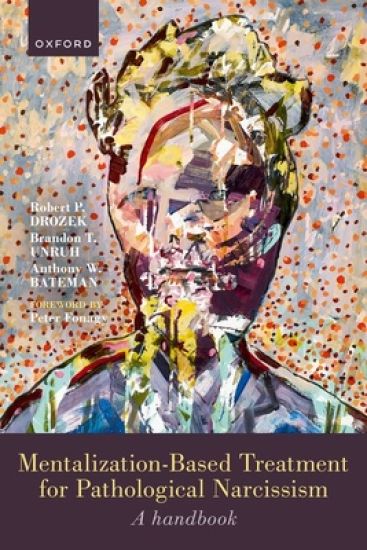
Mentalization-Based Treatment for Pathological Narcissism

Mentalization-Based Treatment for Pathological Narcissism

Robert P. Drozek; Brandon Unruh; Anthony Bateman; Peter Fonagy

Oxford University Press
2023
nidottu
Despite the growing cultural and empirical interest in narcissism and narcissistic personality disorder, therapists often feel confused and overwhelmed about how to help patients struggling with these problems. “Mentalization” refers to the ability to read, access, and reflect on mental states in oneself and other people. Research shows that people with narcissism can suffer from extreme difficulties mentalizing themselves and others, leading to instability in their mood, interpersonal relationships, and sense of self. Mentalization-based Treatment for Pathological Narcissism: A Handbook provides much needed guidance about how to effectively help patients suffering from narcissistic vulnerabilities. Mentalization-based treatment, or MBT, is an evidence-based therapy for patients with personality disorders, helping patients to reflect on mental states in themselves and others, resulting in significant improvements in everyday functioning. This book reviews the deficits in mentalizing associated with pathological narcissism, describes how to give the diagnosis of narcissism to patients, outlines how to structure therapy sessions, and offers step-by-step techniques about “what to do and say” when sitting with these patients. Utilizing vibrant case examples and verbatim scripts from actual psychotherapies, the authors explain how to address the most common clinical challenges associated with narcissism: disconnection from emotions; impairments in empathy; rigid thinking; monologues and intellectualization; unstable self-esteem; and tendencies to blame other people for disruptions in their relationships.
Ninety-Nine Lessons in Critical Thinking

Ninety-Nine Lessons in Critical Thinking

Robert P. Friedland

OXFORD UNIVERSITY PRESS INC
2025
nidottu
Ninety-Nine Lessons in Critical Thinking was designed to enhance the reader's awareness of how they think and how decisions involving patients and scientific matters can be influenced by word choice, preconceived ideas, framing, biases, and inattentiveness. Entertaining and informative stories from the author's 45 year clinical and scientific experience and from the history of medicine and science are presented to illustrate ways in which critical thinking skills can be developed and awareness of thought processes enhanced. The evolution of human learning and awareness is used to illustrate the fundamental nature of the concepts, and emphasis is placed on ways to enhance awareness of how our attention and words influence thought. Medical professionals (including medical students, residents, postgraduate fellows, graduate students, dentists, and nurse practitioners) are faced with an enormous amount of information coming from scientific literature, computerized patient records and artificial intelligence. Methods for dealing with this avalanche of data and ways to retain focus on key patient and scientific matters are explored, and practical suggestions to improve doctor-patient interactions are included, with a focus on approaching care regarding the patient's life context and personhood. The ninety-nine lessons demonstrate how to enhance understanding of the humanity of both the patient and the doctor and how awareness of thought is essential for innovative and compassionate care and research.
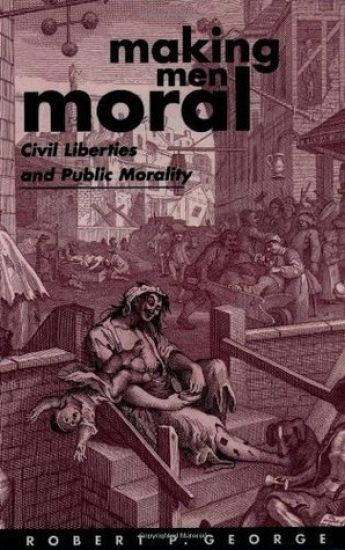
Making Men Moral

Making Men Moral

Robert P. George

Clarendon Press
1995
nidottu
Contemporary liberal thinkers commonly suppose that there is something in principle unjust about the legal prohibition of putatively victimless immoralities. Against the prevailing liberal view, Robert P. George defends the proposition that `moral laws' can play a legitimate, if subsidiary, role in preserving the `moral ecology' of the cultural environment in which people make the morally significant choices by which they form their characters and influence, for good or ill, the moral lives of others. George shows that a defence of morals legislation is fully compatible with a `pluralistic perfectionist' political theory of civil liberties and public morality.
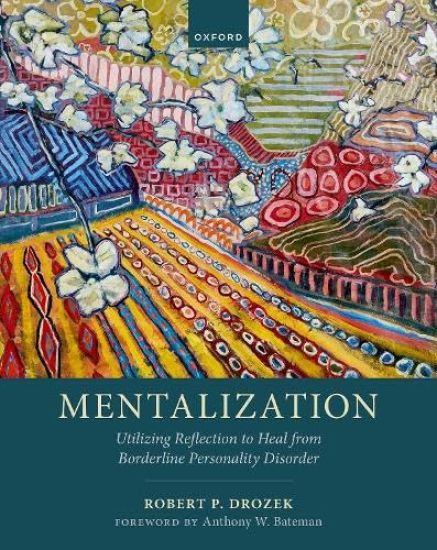
Mentalization

Mentalization

Robert P. Drozek

Oxford University Press
2025
nidottu
Do you struggle with instability in your emotions, self-esteem, relationships, or behavior? If so, then you might have borderline personality disorder (BPD), a serious and relatively common mental health condition that is highly responsive to treatment. People with BPD can find it challenging to effectively mentalize-to “read,” access, and reflect on mental states in themselves and other people. This book is all about mentalization-based treatment, or “MBT,” one of the leading evidence-based therapies for people with BPD. As the first book for non-clinicians about MBT, it shows you how to apply MBT's techniques in your everyday life, so that-like the tens of thousands of patients whose lives have already been changed by MBT-you can get relief from the suffering of borderline personality disorder. With the help of worksheets, mentalizing prompts, and case examples from actual treatments of patients with BPD, the book walks you through the core elements in MBT as a therapy, outlining the therapeutic strategies that make MBT so effective. Purchasers receive access to a webpage, so that you can download and print additional copies of worksheets and chapter reviews. This book will be helpful for people with BPD and other mental health conditions, family members affected by BPD, clinicians seeking to teach their clients about MBT, and members of the general public who are curious about mentalizing and MBT.
The Death of the American Trial

The Death of the American Trial

Robert P. Burns

University of Chicago Press
2009
sidottu
In "The Death of the American Trial", distinguished legal scholar Robert P. Burns makes an impassioned case for reversing the rapid decline of the trial before we lose one of our public culture's greatest achievements. As a practice that is adapted for modern times yet rooted in ancient wisdom, the trial is uniquely suited to balance the tensions - between idealism and realism, experts and citizens, contextual judgment and reliance on rules - that define American culture. Arguing that many observers make a grave mistake by taking a complacent or even positive view of the trial's demise, Burns concludes by laying out the catastrophic consequences of losing an institution that so perfectly embodies democratic governance.
The Death of the American Trial

The Death of the American Trial

Robert P. Burns

University of Chicago Press
2011
nidottu
In "The Death of the American Trial", distinguished legal scholar Robert P. Burns makes an impassioned case for reversing the rapid decline of the trial before we lose one of our public culture's greatest achievements. As a practice that is adapted for modern times yet rooted in ancient wisdom, the trial is uniquely suited to balance the tensions - between idealism and realism, experts and citizens, contextual judgment and reliance on rules - that define American culture. Arguing that many observers make a grave mistake by taking a complacent or even positive view of the trial's demise, Burns concludes by laying out the catastrophic consequences of losing an institution that so perfectly embodies democratic governance.
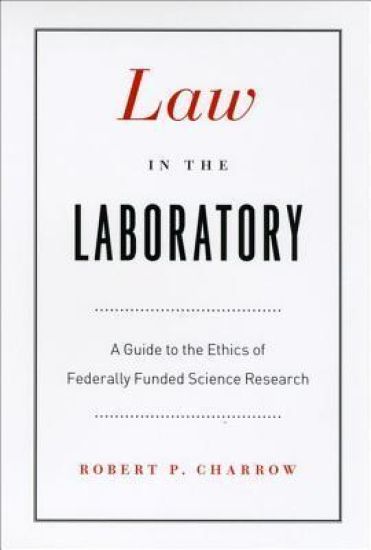
Law in the Laboratory

Law in the Laboratory

Robert P. Charrow

University of Chicago Press
2010
sidottu
The National Institutes of Health and the National Science Foundation together fund more than $40 billion of research annually in the United States and around the globe. These large public expenditures come with strings, including a complex set of laws and guidelines that regulate how scientists may use NIH and NSF funds, how federally funded research may be conducted, and who may have access to or own the product of the research. Until recently, researchers have had little instruction on the nature of these laws and how they work. But now, with Robert P. Charrow's "Law in the Laboratory", they have a readable and entertaining introduction to the major ethical and legal considerations pertaining to research under the aegis of federal science funding. For any academic whose position is grant funded, or for any faculty involved in securing grants, this book will be an essential reference manual. And for those who want to learn how federal legislation and regulations affect laboratory research, Charrow's primer will shed light on the often obscured intersection of government and science.
Law in the Laboratory

Law in the Laboratory

Robert P. Charrow

University of Chicago Press
2010
nidottu
The National Institutes of Health and the National Science Foundation together fund more than $40 billion of research annually in the United States and around the globe. These large public expenditures come with strings, including a complex set of laws and guidelines that regulate how scientists may use NIH and NSF funds, how federally funded research may be conducted, and who may have access to or own the product of the research. Until recently, researchers have had little instruction on the nature of these laws and how they work. But now, with Robert P. Charrow's "Law in the Laboratory", they have a readable and entertaining introduction to the major ethical and legal considerations pertaining to research under the aegis of federal science funding. For any academic whose position is grant funded, or for any faculty involved in securing grants, this book will be an essential reference manual. And for those who want to learn how federal legislation and regulations affect laboratory research, Charrow's primer will shed light on the often obscured intersection of government and science.
Making Physics

Making Physics

Robert P. Crease

University of Chicago Press
2000
nidottu
From Nobel Prize-winning work in atomic physics to community concerns over radiation leaks, Brookhaven National Laboratory's ups and downs track the changing fortunes of "big science" in the United States since World War II. But Brookhaven is also unique; it was the first major national laboratory built specifically for basic civilian research. This text brings to life the people, the instruments, the science, and the politics of Brookhaven's first quarter-century. The book shows the experimental energy of Brookhaven's researchers, competing among themselves as well as with other laboratories around the world. Drawing on a wide variety of sources, from oral interviews and internal memos to lab notebooks and transcripts of security clearance hearings, Robert P. Crease recounts the difficult founding and siting of Brookhaven, the successful resolution of immense engineering and technical problems in the design and construction of experimental apparatus, and changing relations with the surrounding Long Island community. But most of all, Crease tells the stories of Brookhaven's scientists and their research, which has included detailed descriptions of the structure of the nucleus, early attempts at radiotherapy for inoperable tumours, and studies of strange particles and the weak and strong interactions.
Kafka's Law

Kafka's Law

Robert P. Burns

University of Chicago Press
2014
sidottu
The Trial is actually closer to reality than fantasy as far as the client's perception of the system. It's supposed to be a fantastic allegory, but it's reality. It's very important that lawyers read it and understand this." Justice Anthony Kennedy famously offered this assessment of the Kafkaesque character of the American criminal justice system in 1993. While Kafka's vision of the "Law" in The Trial appears at first glance to be the antithesis of modern American legal practice, might the characteristics of this strange and arbitrary system allow us to identify features of our own system that show signs of becoming similarly nightmarish? With Kafka's Law, Robert P. Burns shows how The Trial provides an uncanny lens through which to consider flaws in the American criminal justice system today. Burns begins with the story, at once funny and grim, of Josef K., caught in the Law's grip and then crushed by it. Laying out the features of the Law that eventually destroy K., Burns argues that the American criminal justice system has taken on many of these same features. In the overwhelming majority of contemporary cases, police interrogation is followed by a plea bargain, in which the court's only function is to set a largely predetermined sentence for an individual already presumed guilty. Like Kafka's nightmarish vision much of American criminal law and procedure has become unknowable, ubiquitous, and bureaucratic. It, too, has come to rely on deception in dealing with suspects and jurors, to limit the role of defense, and to increasingly dispense justice without the protection of formal procedures. But, while Kennedy may be correct in his grim assessment, a remedy is available in the tradition of trial by jury, and Burns concludes by convincingly arguing for its return to a more central place in American criminal justice.
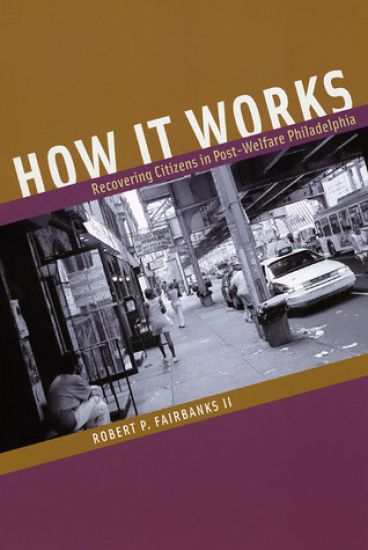
How It Works

How It Works

Robert P. Fairbanks

University of Chicago Press
2009
sidottu
Of the some sixty thousand vacant properties in Philadelphia, half of them are abandoned row houses. Taken as a whole, these derelict homes symbolize the city's plight in the wake of industrial decline. But a closer look reveals a remarkable new phenomenon - street-level entrepreneurs repurposing hundreds of these empty houses as facilities for recovering addicts and alcoholics. "How It Works" is a compelling study of this recovery house movement and its place in the new urban order wrought by welfare reform. To find out what life is like in these recovery houses, Robert P. Fairbanks II goes inside one particular home in the Kensington neighborhood. Operating without a license and unregulated by any government office, the recovery house provides food, shelter, company, and a bracing self-help philosophy to addicts in an area saturated with drugs and devastated by poverty. From this starkly vivid close-up, Fairbanks widens his lens to reveal the intricate relationships the recovery houses have forged with public welfare, the formal drug treatment sector, criminal justice institutions, and local government.
How It Works

How It Works

Robert P. Fairbanks

University of Chicago Press
2009
nidottu
Of the some sixty thousand vacant properties in Philadelphia, half of them are abandoned row houses. Taken as a whole, these derelict homes symbolize the city's plight in the wake of industrial decline. But a closer look reveals a remarkable new phenomenon - street-level entrepreneurs re purposing hundreds of these empty houses as facilities for recovering addicts and alcoholics. "How It Works" is a compelling study of this recovery house movement and its place in the new urban order wrought by welfare reform. To find out what life is like in these recovery houses, Robert P. Fairbanks II goes inside one particular home in the Kensington neighborhood. Operating without a license and unregulated by any government office, the recovery house provides food, shelter, company, and a bracing self-help philosophy to addicts in an area saturated with drugs and devastated by poverty. From this starkly vivid close-up, Fairbanks widens his lens to reveal the intricate relationships the recovery houses have forged with public welfare, the formal drug treatment sector, criminal justice institutions, and local government.
The Reason of Following

The Reason of Following

Robert P. Scharlemann

University of Chicago Press
1992
sidottu
In the Reason of Following noted scholar Robert P. Scharlemann takes Christology in a radically new direction, suggesting that Christology itself represents a form of reason and an understanding of selfhood. For the first time, Scharlemann establishes a logical place for Christology in philosophical theology. Scharlemann presents a christological phenomenology of the self, tracing the connections between the "I am" of the God who spoke to Moses, the "I am" of Christ, and the "I am" of autonomous self-identification. How, he asks, can the self that spontaneously responds to Jesus' "Follow me!" be compared with the everyday, autonomous self? What is the nature of "following" on the part of those who answer the summons of one whose name is "I am"? Pursuing these questions, Scharlemann develops a christological phenomenology of the self—an account in which following means not the expression of the self in action or reflection but rather self-discovery in another person. With a deep sense of both culture and philosophy, Scharlemann distinguishes the forms of reason involved in "following" from those in ethics, aesthetics, and other modes of religious philosophic thought. His penetrating readings of nineteenth- and twentieth-century German theological and philosophical traditions provide an introduction to lesser-known thinkers such as Hermann and Picht as well as a profound critique of major figures such as Descartes, Heidegger, Fichte, and Kant. Finally Scharlemann outlines a program for a more systematic and rounded presentation of what Christian doctrine might mean in the contemporary world. His work will be of interest to students of theology and philosophy alike.