

Kirjahaku
Etsi kirjoja tekijän nimen, kirjan nimen tai ISBN:n perusteella.
1000 tulosta hakusanalla Robert Paul Wolff


Here is a comprehensive analysis of rearmament under the Baldwin and Chamberlain governments. It reveals the primary determinants of events and provides important new information regarding the principal considerations underlying Chamberlain's policy of appeasement. The author concentrates on a problem that was of central concern to the government. For this reason, and because he draws on the recently opened Cabinet and Treasury papers at the Public Record Office in London, he is able to offer a broader view than that of the existing studies. He describes in detail the interaction of the Cabinet, Treasury, and Armed Services, and the influence of the financial and industrial communities. Originally published in 1977. The Princeton Legacy Library uses the latest print-on-demand technology to again make available previously out-of-print books from the distinguished backlist of Princeton University Press. These editions preserve the original texts of these important books while presenting them in durable paperback and hardcover editions. The goal of the Princeton Legacy Library is to vastly increase access to the rich scholarly heritage found in the thousands of books published by Princeton University Press since its founding in 1905.

The Origins of Soviet American Diplomacy
Robert Paul Browder
Princeton University Press
2015
pokkari
When Litvinov arrived in Washington in 1933 after the sixteen years of diplomatic silence between his country and the U.S., he carried with him his commission as official representative to the U.S., dated 1918 and signed by Lenin and Chicherin, as evidence of the long-standing desire of the Soviet Union for recognition. This is an absorbing narrative of the events which led up to this dramatic arrival, heralded with such high hopes and good will, and of the collapse into discord and disillusionment which followed. A full-length account of these negotiations, it presents a new picture of the pressures for and against diplomatic recognition of the Soviet Union. Originally published in 1953. The Princeton Legacy Library uses the latest print-on-demand technology to again make available previously out-of-print books from the distinguished backlist of Princeton University Press. These editions preserve the original texts of these important books while presenting them in durable paperback and hardcover editions. The goal of the Princeton Legacy Library is to vastly increase access to the rich scholarly heritage found in the thousands of books published by Princeton University Press since its founding in 1905.

Here is a comprehensive analysis of rearmament under the Baldwin and Chamberlain governments. It reveals the primary determinants of events and provides important new information regarding the principal considerations underlying Chamberlain's policy of appeasement. The author concentrates on a problem that was of central concern to the government. For this reason, and because he draws on the recently opened Cabinet and Treasury papers at the Public Record Office in London, he is able to offer a broader view than that of the existing studies. He describes in detail the interaction of the Cabinet, Treasury, and Armed Services, and the influence of the financial and industrial communities. Originally published in 1977. The Princeton Legacy Library uses the latest print-on-demand technology to again make available previously out-of-print books from the distinguished backlist of Princeton University Press. These editions preserve the original texts of these important books while presenting them in durable paperback and hardcover editions. The goal of the Princeton Legacy Library is to vastly increase access to the rich scholarly heritage found in the thousands of books published by Princeton University Press since its founding in 1905.

The Origins of Soviet American Diplomacy
Robert Paul Browder
Princeton University Press
2016
sidottu
When Litvinov arrived in Washington in 1933 after the sixteen years of diplomatic silence between his country and the U.S., he carried with him his commission as official representative to the U.S., dated 1918 and signed by Lenin and Chicherin, as evidence of the long-standing desire of the Soviet Union for recognition. This is an absorbing narrative of the events which led up to this dramatic arrival, heralded with such high hopes and good will, and of the collapse into discord and disillusionment which followed. A full-length account of these negotiations, it presents a new picture of the pressures for and against diplomatic recognition of the Soviet Union. Originally published in 1953. The Princeton Legacy Library uses the latest print-on-demand technology to again make available previously out-of-print books from the distinguished backlist of Princeton University Press. These editions preserve the original texts of these important books while presenting them in durable paperback and hardcover editions. The goal of the Princeton Legacy Library is to vastly increase access to the rich scholarly heritage found in the thousands of books published by Princeton University Press since its founding in 1905.


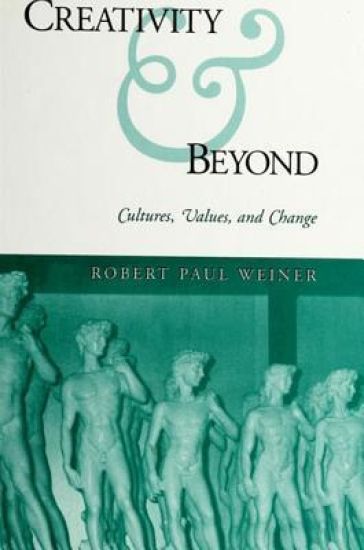
Explores how historical, artistic, and technological developments and cross-cultural exchange have altered our conceptions of creativity.Creativity and Beyond offers a wide-ranging, interdisciplinary tour of cultures past and present to examine the different ways people have conceived of "creativity" and how the common understanding of creativity is changing in the current flux of global culture. Weiner analyzes the ways in which understanding creativity is tied to broader contemporary patterns, including intellectual concerns with postmodernism; trends in the arts; the changing status of women; the power of the electronic media; multiculturalism; developments in psychology, science, and technology; and the dramatic political, economic, and social transformations of our age.

In Art Matters, Robert Paul Lamb provides the definitive study of Ernest Hemingway's short story aesthetics. Lamb locates Hemingway's art in literary historical contexts and explains what he learned from earlier artists, including Edgar Allan Poe, Paul Cézanne, Henry James, Guy de Maupassant, Anton Chekhov, Stephen Crane, Gertrude Stein, James Joyce, and Ezra Pound. Examining how Hemingway developed this inheritance, Lamb insightfully charts the evolution of the unique style and innovative techniques that would forever change the nature of short fiction.Art Matters opens with an analysis of the authorial effacement Hemingway learned from Maupassant and Chekhov, followed by fresh perspectives on the author's famous use of concision and omission. Redefining literary impressionism and expressionism as alternative modes for depicting modern consciousness, Lamb demonstrates how Hemingway and Willa Cather learned these techniques from Crane and made them the foundation of their respective aesthetics. After examining the development of Hemingway's art of focalization, he clarifies what Hemingway really learned from Stein and delineates their different uses of repetition. Turning from techniques to formal elements, Art Matters anatomizes Hemingway's story openings and endings, analyzes how he created an entirely unprecedented role for fictional dialogue, explores his methods of characterization, and categorizes his settings in the fifty-three stories that comprise his most important work in the genre.A major contribution to Hemingway scholarship and to the study of modernist fiction, Art Matters shows exactly how Hemingway's craft functions and argues persuasively for the importance of studies of articulated technique to any meaningful understanding of fiction and literary history. The book also develops vital new ways of understanding the short story genre as Lamb constructs a critical apparatus for analyzing the short story, introduces to a larger audience ideas taken from practicing storywriters, theorists, and critics, and coins new terms and concepts that enrich our understanding of the field.

In Art Matters, Robert Paul Lamb provides the definitive study of Ernest Hemingway's short story aesthetics. Lamb locates Hemingway's art in literary historical contexts and explains what he learned from earlier artists, including Edgar Allan Poe, Paul Cézanne, Henry James, Guy de Maupassant, Anton Chekhov, Stephen Crane, Gertrude Stein, James Joyce, and Ezra Pound. Examining how Hemingway developed this inheritance, Lamb insightfully charts the evolution of the unique style and innovative techniques that would forever change the nature of short fiction.Art Matters opens with an analysis of the authorial effacement Hemingway learned from Maupassant and Chekhov, followed by fresh perspectives on the author's famous use of concision and omission. Redefining literary impressionism and expressionism as alternative modes for depicting modern consciousness, Lamb demonstrates how Hemingway and Willa Cather learned these techniques from Crane and made them the foundation of their respective aesthetics. After examining the development of Hemingway's art of focalization, he clarifies what Hemingway really learned from Stein and delineates their different uses of repetition. Turning from techniques to formal elements, Art Matters anatomizes Hemingway's story openings and endings, analyzes how he created an entirely unprecedented role for fictional dialogue, explores his methods of characterization, and categorizes his settings in the fifty-three stories that comprise his most important work in the genre.A major contribution to Hemingway scholarship and to the study of modernist fiction, Art Matters shows exactly how Hemingway's craft functions and argues persuasively for the importance of studies of articulated technique to any meaningful understanding of fiction and literary history. The book also develops vital new ways of understanding the short story genre as Lamb constructs a critical apparatus for analyzing the short story, introduces to a larger audience ideas taken from practicing storywriters, theorists, and critics, and coins new terms and concepts that enrich our understanding of the field.

In The Hemingway Short Story: A Study in Craft for Writers and Readers, Robert Paul Lamb delivers a dazzling analysis of the craft of this influential writer. Lamb scrutinizes a selection of Hemingway's exemplary stories to illuminate the author's methods of construction and to show how craft criticism complements and enhances cultural literary studies. The Hemingway Short Story, the highly anticipated sequel to Lamb's critically acclaimed Art Matters: Hemingway, Craft, and the Creation of the Modern Short Story, reconciles the creative writer's focus on art with the concerns of cultural critics, establishing the value that craft criticism holds for all readers.Beautifully written in clear and engaging prose, Lamb's study presents close readings of representative Hemingway stories such as Soldier's Home, A Canary for One, God Rest You Merry, Gentlemen, and Big Two-Hearted River. Lamb's examination of Indian Camp, for instance, explores not only its biographical contexts -- showing how details, incidents, and characters developed in the writer's mind and notebook as he transmuted life into art -- but also its original, deleted opening and the final text of the story, uncovering otherwise unseen aspects of technique and new terrains of meaning. Lamb proves that a writer is not merely a site upon which cultural forces contend, but a professional in his or her craft who makes countless conscious decisions in creating a literary text.Revealing how the short story operates as a distinct literary genre, Lamb provides the meticulous readings that the form demands -- showing Hemingway practicing his craft, offering new inclusive interpretations of much debated stories, reevaluating critically neglected stories, analyzing how craft is inextricably entwined with a story's cultural representations, and demonstrating the many ways in which careful examinations of stories reward us.

In The Hemingway Short Story: A Study in Craft for Writers and Readers, Robert Paul Lamb delivers a dazzling analysis of the craft of this influential writer. Lamb scrutinizes a selection of Hemingway's exemplary stories to illuminate the author's methods of construction and to show how craft criticism complements and enhances cultural literary studies. The Hemingway Short Story, the highly anticipated sequel to Lamb's critically acclaimed Art Matters: Hemingway, Craft, and the Creation of the Modern Short Story, reconciles the creative writer's focus on art with the concerns of cultural critics, establishing the value that craft criticism holds for all readers.Beautifully written in clear and engaging prose, Lamb's study presents close readings of representative Hemingway stories such as Soldier's Home, A Canary for One, God Rest You Merry, Gentlemen, and Big Two-Hearted River. Lamb's examination of Indian Camp, for instance, explores not only its biographical contexts -- showing how details, incidents, and characters developed in the writer's mind and notebook as he transmuted life into art -- but also its original, deleted opening and the final text of the story, uncovering otherwise unseen aspects of technique and new terrains of meaning. Lamb proves that a writer is not merely a site upon which cultural forces contend, but a professional in his or her craft who makes countless conscious decisions in creating a literary text.Revealing how the short story operates as a distinct literary genre, Lamb provides the meticulous readings that the form demands -- showing Hemingway practicing his craft, offering new inclusive interpretations of much debated stories, reevaluating critically neglected stories, analyzing how craft is inextricably entwined with a story's cultural representations, and demonstrating the many ways in which careful examinations of stories reward us.
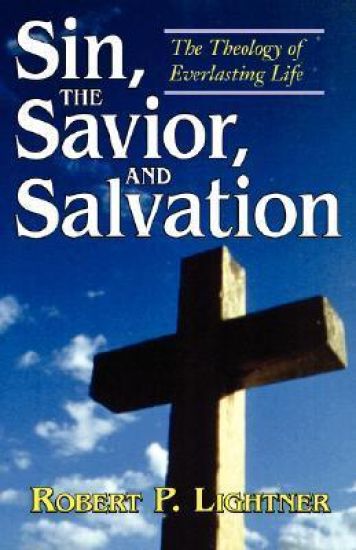
This book crystallizes in clear, concise, and correct terms the essentials of the doctrine of sin and salvation better than any other. --Norman L. Geisler

"Whether Christ died for all men or for only those who will believe has been an issue much debated since the days of the Reformation," observes Dr. Robert Lightner in the introduction. "Unless Christ dies for all men, the message of God's love and Christ's death must be given with tongue in cheek and with some reservation." In this revised edition, the author has included three new appendices that examine the issue of limited atonement and sharing the gospel, key biblical passages regarding the topic of "double predestination," and recent presentations of the limited atonement view.

Democracy is emerging as the political system of choice throughout the world. Peoples now freed from the shackles of totalitarian systems seek to share the benefits made possible by democracy in its "home bases" in North America and Western Europe. Yet, paradoxically, in the last decade liberal democracy has been subjected to an onslaught of criticism from thinkers at its "home bases". Criticisms of democracy have been informed by scholarship in feminism, postmodernism and communitarianism as well as the revived interest in applying ethics to public policy. These criticisms raise important questions about the traditional values - liberalism, neutrality or equality, autonomy, and human rights - thought to justify democracy. They also raise questions about the success of democratic systems in promoting alternative values and in protecting lifestyles not desired by majorities. This anthology contains essays by authors at the forefront of the controversy as well as by acute observers of the processes by which "democratic" public policy is formed. The essays include criticisms of democratic theory and practice, defences of liberalism (the set of values often thought to ground democracy), calls for major revisions of democratic institutions and practices, and recommendations for new ways of understanding our rights and responsibilities as members of democratic communities.

This work has been selected by scholars as being culturally important and is part of the knowledge base of civilization as we know it.This work is in the public domain in the United States of America, and possibly other nations. Within the United States, you may freely copy and distribute this work, as no entity (individual or corporate) has a copyright on the body of the work.Scholars believe, and we concur, that this work is important enough to be preserved, reproduced, and made generally available to the public. To ensure a quality reading experience, this work has been proofread and republished using a format that seamlessly blends the original graphical elements with text in an easy-to-read typeface.We appreciate your support of the preservation process, and thank you for being an important part of keeping this knowledge alive and relevant.

This work has been selected by scholars as being culturally important and is part of the knowledge base of civilization as we know it.This work is in the public domain in the United States of America, and possibly other nations. Within the United States, you may freely copy and distribute this work, as no entity (individual or corporate) has a copyright on the body of the work.Scholars believe, and we concur, that this work is important enough to be preserved, reproduced, and made generally available to the public. To ensure a quality reading experience, this work has been proofread and republished using a format that seamlessly blends the original graphical elements with text in an easy-to-read typeface.We appreciate your support of the preservation process, and thank you for being an important part of keeping this knowledge alive and relevant.

Survey of Wheat and Wheat Relatives for Resistance to Puccinia Graminis Triticiti, Physiologic Race 15 B
Robert Paul Seifert
Hassell Street Press
2021
nidottu