
Kirjahaku
Etsi kirjoja tekijän nimen, kirjan nimen tai ISBN:n perusteella.
1000 tulosta hakusanalla Robert Rymore
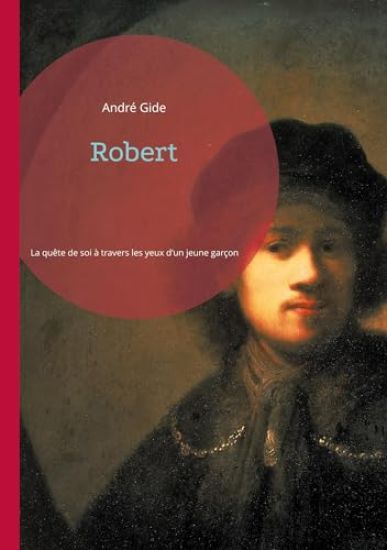
Andr Gide se voit adresser une r ponse pistolaire par Robert X - le mari de la d funt veline X qui fit publier de mani re posthume son journal intime, sous le titre L' cole des femmes, par les soins de sa fille -, qui demande l' crivain de publier son droit de r ponse la suite du d voilement de sa vie de couple par son pouse. Robert, tout la fois scandalis par l'action de sa femme et plus encore de sa fille, pr sente sa version de l' volution de son mariage o il transpara t que son amour, toujours intact d'une certaine mani re pour veline, s'est heurt avec le caract re de plus en plus libre-penseur de sa femme qui s' loignait du mod le bourgeois et profond ment catholique dans lequel il voulait contraindre son m nage. Selon lui, sa femme n'a pas support de le voir tel qu'en lui-m me, s'attachant avant tout l'image id alis e qu'elle se faisait de lui, et sous l'influence de personnes sans morale religieuse a fini par le lui reprocher.

Das fiktive Dokudrama "Robert" ist ein Versuch, die Geschehnisse des Badeunfalls meines Bruders in Erinnerung zu rufen und dadurch sein Ged chtnis zu bewahren. Die erz hlerische Dokumentation will eintauchen in das kurze Leben Roberts (1937-1944), in die damalige Zeit (Drittes Reich) und damit auch in das furchtbare Kriegsjahr 1944, in dem sich der Badeunfall ereignet hatte. Mit den sp rlich vorhandenen Fakten soll der nicht restlos aufgekl rte Ertrinkungstod des Bruders aufge- und verarbeitet werden.

Zwischen Kriegswirren, Machtgier und Intrigen am k niglichen Hof begegnet Thronfolger, David von Tungston, seiner geliebten Anabel und erlebt mit ihr eine tiefe Seelenverwandtschaft, die sie auf unbeschreibliche Weise miteinander verbindet. Als er auf Robert trifft, wei er die Faszination, die dieser auf ihn aus bt, nicht zu deuten und ger t zunehmend in dessen Bann, ohne zu ahnen, dass er durch ihn in einen machtpolitischen Interessenkonflikt verwickelt wird. Erst als David erkennt, dass die Krone in Gefahr ist, trifft er eine folgenschwere Entscheidung.
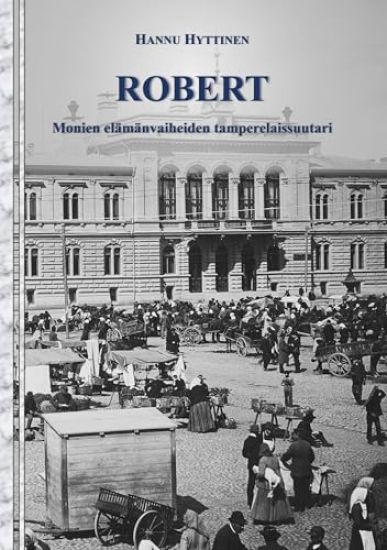
Lestadiolaisuuden historiaan on kuulunut monia v rikk it persoonia, joiden tarina on painunut vuosien saatossa unohduksiin. Yksi heist on tamperelainen suutari Robert Gr nfors (1851-1934), jonka vaiherikas el m kietoutuu niin Tampereen kenk teollisuuden varhaisvaiheisiin kuin kaupungin kehitykseen ja kaupunkilaisten el m n erityisesti 1800-luvun j lkipuoliskolla. H nelle itselleen merkitt vimm ksi muodostui side esikoislestadiolaiseen her tysliikkeeseen, mink ansiosta h nen tarinansa ei painunut unohduksiin, vaan s ilyi meid n p iviimme asti. T m julkaisu kertoo Robertin el m ntarinan niilt osin kuin se on t ll hetkell kohtuullisella ty m r ll selvitett viss . Sis lt jakautuu suunnilleen puoliksi Tampereen kaupungin ja lestadiolaisuuden historiaan liittyvien teemojen v lille. Teoksen liitteen ovat meid n p iviimme s ilyneet Robert Gr nforsin omat kirjoitukset, jotka omalla tavallaan valottavat h nen persoonaansa ja aikaa, jona h n eli.

The most authoritative, comprehensive, perceptive biography of R. L. Stevenson to date, using for the first time his collected correspondence â?? which has been unavailable to all previous writers.
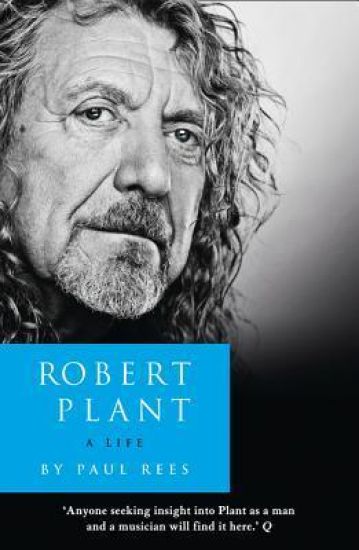
Robert Plant is one of the few genuine living rock legends. Frontman of Led Zeppelin, musical innovator and seller of millions of records, Plant has had a profound influence on music for over four decades. But the full account of his life has barely been told â?¦ until now.

One of the most popular series ever published for young Americans, these classics of childhood have been praised alike by parents, teachers, and librarians. These lively, inspiring, believing biographies sweep today's young readers right into history.

Robert's Rules In Plain English
Doris P Zimmerman
HarperCollins Publishers (Australia) Pty Ltd
2005
nidottu
A user-friendly guide to parliamentary procedure explains how to run a meeting effectively, outlining basic rules in straightforward language while providing complementary sample dialogues and coverage of electronic meetings and Internet usage. Reprint. 40,000 first printing.

Robert Plant by Paul Rees is the definitive biography of Led Zeppelin's legendary frontman. As lead singer for one of the biggest and most influential rock bands of all time--whose song "Stairway to Heaven" has been played more times on American radio than any other track--Robert Plant defined what it means to be a rock god.Over the course of his twenty-year career, British music journalist and editor Paul Rees has interviewed such greats as Sir Paul McCartney, Bruce Springsteen, Madonna, Bono, and AC/DC. Rees now offers a full portrait of Robert Plant for the first time, exploring the forces that shaped him, the ravaging highs and lows of the Zeppelin years--including his relationship with Jimmy Page and John Bonham--and his life as a solo artist today.Illustrated with more than two dozen photographs, Robert Plant: A LIfe is the never-before-told story of a gifted, complicated music icon who changed the face of rock 'n' roll.


Robert Irwin's Power Tips for Buying a House for Less
Robert Irwin
McGraw-Hill Professional
2000
nidottu
Get more house for less money with one of America's top real estate experts! Robert Irwin's "Power Tips for Buying a House for Less" is the homebuyer's book for today's red hot real estate market - by the real estate guru whose guides have sold over one million copies. Whether the market is soaring skyward or standing still, potential buyers need Robert Irwin's inside secrets to save money and aggravation. In his trademark straightforward style, Irwin reveals how to: size up buyer's brokers vs. traditional seller's brokers; stay cool in hot markets; use home inspection reports for price leverage; and battle, bargain, and come out on top.

Renowned Flash wizard and innovator Robert Penner reveals the fascinating programming and design concepts behind his signature creations. Detailing his groundbreaking designs, this book showcases Penner’s work that merges math and design with Flash. You'll get an inside look at his sophisticated and unique approach to design--which incorporates advanced ActionScript programming--and discover exclusive techniques associated with some of the most groundbreaking interactive designs ever created.
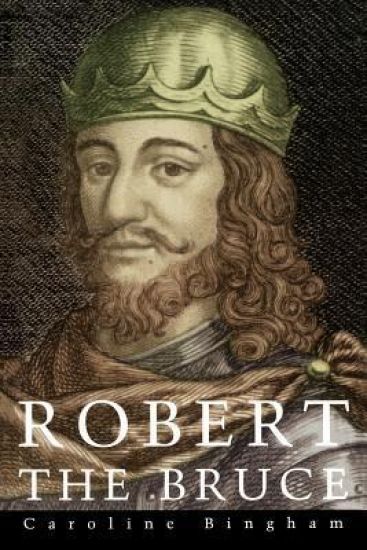
The quintessential patriot king and national hero, Robert the Bruce brought independence to Scotland. Caroline Bingham''s biography unites the historic figure of popular mythology with the genuine man.'

A "witty, lively and wholly fascinating" (The New York Times) portrait of an iconic Southern hero With lively storytelling and full-hearted Southern directness, Roy Blount, Jr., presents a unique portrait of Robert E. Lee. Fascinated by the qualities that made Lee such a charismatic, though reluctant, leader, Blount vividly conveys Lee's audacity and uncanny successes in battle, as well as his humility, his quirky sense of humor, and the sorrowful sense of responsibility he felt for his outnumbered, half-starved army. The first concise biography of this American legend, Robert E. Lee will appeal to history and military buffs, students of Southern culture, and every reader curious about the makeup of a man who has become an American icon.
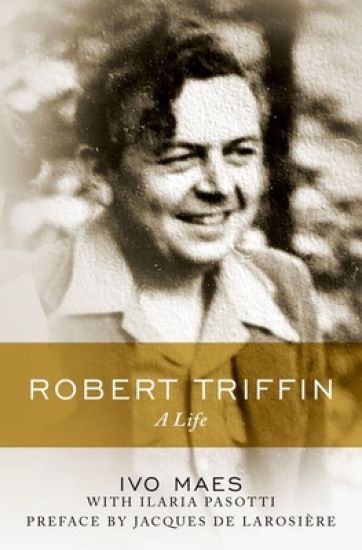
With World War II still raging, nations came together to create a new international monetary order, the Bretton Woods system. This agreement created the International Monetary Fund, the World Bank, and a system of stable exchange rates with currencies pegged against the dollar. One man saw the political, economic, and moral tensions inherent in keeping the dollar, a national currency, as a global reserve currency. When the monetary arrangement collapsed in 1973, economist Robert Triffin had already predicted its downfall two decades previously. Robert Triffin, a Belgian-American scholar and policy advisor, was a defining voice in economics and international politics in the twentieth century and an architect of the new multilateral liberal world order in his own right. Best known for his analysis of the vulnerabilities of the international monetary system - the "Triffin dilemma" - Triffin was a voice of reason and compassion in the postwar period. Triffin played a key role in the debates on European monetary integration, especially with his proposals for a European Reserve Fund and a European currency unit, becoming one of the intellectual fathers of Europe's single currency, the euro. This intellectual biography evaluates what made Triffin a crucial figure in modern economic history. With an emphasis on the ideas that shaped the postwar international system, Robert Triffin: A Life explores both the man and the mission. In addition to analyzing his work in economics and policymaking, Ivo Maes and Ilaria Pasotti trace Triffin's story from a very modest background, as the son of a butcher, who grew up through the interwar period, to a singularly influential economist in the late twentieth century. The first biography of one of the intellectual giants of the postwar era, Robert Triffin critically examines the accomplishments and the legacy of a scholar who believed that innovations in economic policy could lead to a better and more peaceful world.
Archbishop of Canterbury from 1272 until his death in 1279, the Dominican friar Robert Kildwardby has long been known primarily for his participation in the Oxford Prohibitions of 1277, but his contributions spread far wider. A central figure in the Late Middle Ages, Kilwardby was one of the earliest commentators of the work of Aristotle, as well as an unwavering proponent of Augustinian thought and a believer of the plurality of forms. Although he was a prominent thinker of the time, key areas of his philosophical thought remain unexamined in contemporary scholarship. José Filipe Silva here offers the first book-length analysis of Kilwardby's full body of work, which is essential in understanding both the reception of Aristotle in the Latin West and the developments of later medieval philosophy. Beginning with his early philosophical commitments, Silva tracks Kilwardby's life and academic thought, including his theories on knowledge, moral happiness, and the nature of the soul, along with his attempts to reconcile Augustinian and Aristotelian thought. Ultimately, Robert Kilwardby offers a comprehensive overview of an unsung scholar, solidifying his philosophical legacy as one of the most influential authors of the Late Middle Ages.

Archbishop of Canterbury from 1272 until his death in 1279, the Dominican friar Robert Kildwardby has long been known primarily for his participation in the Oxford Prohibitions of 1277, but his contributions spread far wider. A central figure in the Late Middle Ages, Kilwardby was one of the earliest commentators of the work of Aristotle, as well as an unwavering proponent of Augustinian thought and a believer of the plurality of forms. Although he was a prominent thinker of the time, key areas of his philosophical thought remain unexamined in contemporary scholarship. José Filipe Silva here offers the first book-length analysis of Kilwardby's full body of work, which is essential in understanding both the reception of Aristotle in the Latin West and the developments of later medieval philosophy. Beginning with his early philosophical commitments, Silva tracks Kilwardby's life and academic thought, including his theories on knowledge, moral happiness, and the nature of the soul, along with his attempts to reconcile Augustinian and Aristotelian thought. Ultimately, Robert Kilwardby offers a comprehensive overview of an unsung scholar, solidifying his philosophical legacy as one of the most influential authors of the Late Middle Ages.

Robert Michels (1876-1936) is best known for his 1911 book Political Parties, which is still a standard reference in political science debates. Michels' work sought to prove an "iron law of oligarchy" that governs the organisational evolution of democratic political parties. The work was closely informed by Michels' engagement with the German Social Democratic Party in the early 1900s, his involvement in radical politics in France and Italy in this period, and by his interest in a range of intellectual and social movements - including feminism, nationalism, racial theory, and the emerging disciplines of sociology and political science. Using archival and printed sources hitherto overlooked in work on Michels, this new study contests previous arguments which have sought to explain Michels as a disillusioned adherent of ideas of direct democracy or as an extremist moving from revolutionary syndicalism to fascism. The biographical and intellectual influences on Michels are shown to be more complex, and more transnational, than such schematic explanations have allowed. Andrew Bonnell sheds new light on Michels' relationship with the German Social Democratic Party and on his understanding of his own role as an intellectual in a workers' party. Bonnell also analyses Michels' problematical relationship with revolutionary syndicalism in France and Italy. Michels was connected to a possibly uniquely diverse network of intellectual and political contacts in pre-1914 Europe. This transnational intellectual history illuminates the intellectual worlds in which Michels moved and presents a new interpretation of his shift from the radical left of the spectrum to Italian fascism, an intellectual itinerary which has intrigued many historians.
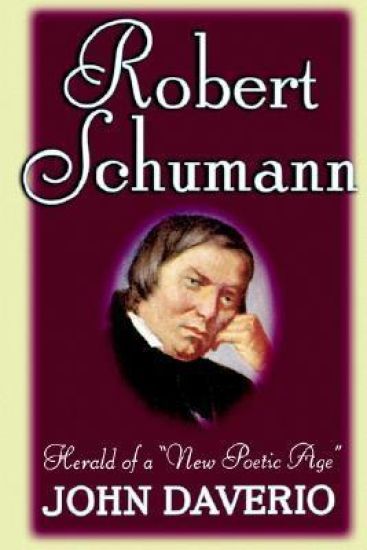
Forced by a hand injury to abandon a career as a pianist, Robert Schumann went on to become one of the world's great composers. Among many works, his Spring Symphony (1841), Piano Concerto in A Minor (1841/1845), and the Third, or Rhenish, Symphony (1850) exemplify his infusion of classical forms with intense, personal emotion. His musical influence continues today and has inspired many other famous composers in the century since his death. Indeed Brahms, in a letter of January 1873, wrote: `The remembrance of Schumann is sacred to me. I will always take this noble pure artist as my model'. Now, in Robert Schumann: Herald of a `New Poetic Age', John Daverio presents the first comprehensive study of the composer's life and works to appear in nearly a century. Long regarded as a quintessentially romantic figure, Schumann also has been portrayed as a profoundly tragic one: a composer who began his career as a genius and ended it as a mere talent. Daverio takes issue with this Schumann myth, arguing instead that the composer's entire creative life was guided by the desire to imbue music with the intellectual substance of literature. A close analysis of the interdependence among Schumann's activities as reader, diarist, critic, and musician reveals the depth of his literary sensibility. Drawing on documents only recently brought to light, the author also provides a fresh outlook on the relationship between Schumann's mental illness - which brought on an extended sanitarium stay and eventual death in 1856 - and his musical creativity. Schumann's character as man and artist thus emerges in all its complexity. The book concludes with an analysis of the late works and a postlude on Schumann's influence on successors from Brahms to Berg. This well-researched study of Schumann interprets the composer's creative legacy in the context of his life and times, combining nineteenth-century cultural and intellectual history with a fascinating analysis of the works themselves.