Kirjahaku
Etsi kirjoja tekijän nimen, kirjan nimen tai ISBN:n perusteella.
1000 tulosta hakusanalla Roberto Calasso
A book that begins before Adam and ends after us. In this magisterial work by the Italian intellectual superstar Roberto Calasso, figures of the Bible and its whole outline emerge in a new light: one that is often astonishing and disquieting, as indeed--more than any other--is the book from which they originate. Roberto Calasso's The Book of All Books is a narration that moves through the Bible as if through a forest, where every branch--every verse--may offer some revelation. Where a man named Saul becomes the first king of a people because his father sent him off to search for some donkeys that had gone astray. Where, in answer to an invitation from Jerusalem's king, the queen of a remote African realm spends three years leading a long caravan of young men, girls dressed in purple, and animals, and with large quantities of spices, to ask the king certain questions. And where a man named Abraham hears these words from a divine voice: "Go away from your land, from your country and from the house of your father toward the land that I will show you"--words that reverberate throughout the Bible, a story about a separation and a promise followed by many other separations and promises. The Book of All Books, the tenth part of a series, parallels in many ways the second part, The Marriage of Cadmus and Harmony. There, gods and heroes of the Greek myths revealed new physiognomies, whereas here the age-old figures and stories of the Bible are illuminated anew.
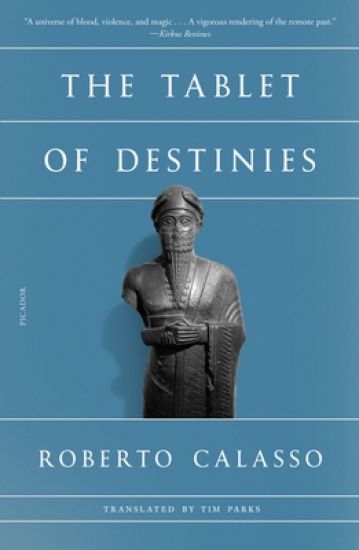
Roberto Calasso, "a literary institution of one" (The Paris Review), tells the story of the eternal life of Utnapishtim, the savior of man, in the eleventh part of his great literary project. A long time ago, the gods grew tired of humans, who were making too much noise and disturbing their sleep, and they decided to send a Flood to destroy them. But Ea, the god of fresh underground water, didn't agree and advised one of his favorite mortals, Utnapishtim, to build a quadrangular boat to house humans and animals. So Utnapishtim saved living creatures from the Flood. Rather than punish Utnapishtim, Enlil, king of the gods, granted him eternal life and banished him to the island of Dilmun. Thousands of years later, Sindbad the Sailor is shipwrecked on that very same island, and the two begin a conversation about courage, loss, salvation, and sacrifice. What Utnapishtim tells Sindbad is the subject of this book, the eleventh part of Roberto Calasso's great opus that began in 1983 with The Ruin of Kasch. The Tablet of Destinies, a continuous narrative from beginning to end, delves into our earliest mythologies and records the origin stories of human civilization.
The author of The Marriage of Cadmus and Harmony presents an original interpretation of the work of Franz Kafka in a series of essays that looks at the meaning of Kafka's stories and what they reveal about the enigmatic author himself. Reprint.
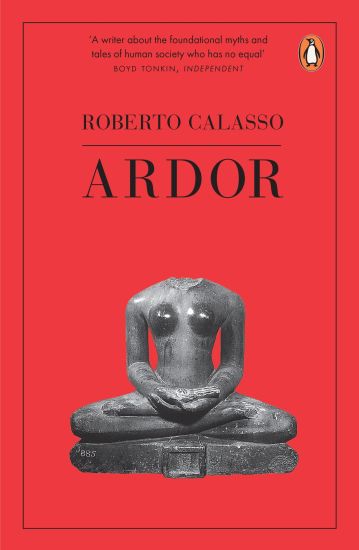
In this revelatory volume, Roberto Calasso, whom the Paris Review has called 'a literary institution', explores the ancient texts known as the Vedas. Little is known about the Vedic people who lived more than three thousand years ago in northern India: they left behind almost no objects, images, ruins. Only a 'Parthenon of words' remains: verses and formulations suggesting a daring understanding of life. 'If the Vedic people had been asked why they did not build cities,' writes Calasso, 'they could have replied: we did not seek power, but rapture.' This is the ardor of the Vedic world, a burning intensity that is always present, both in the mind and in the cosmos. With his signature erudition and profound sense of the past, Calasso explores the enigmatic web of ritual and myth that define the Vedas. Often at odds with modern thought, he shows how these texts illuminate the nature of consciousness more than neuroscientists have been able to offer us up to now.
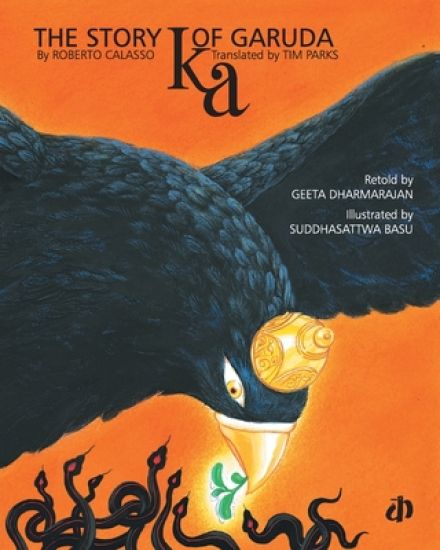
The skies shook, then came rains of fire. Yet Garuda, the big, black eagle, pierced through the walls of heaven to snatch away the soma. He had to. That was the only way he could free his mother. With superb artwork, this is a fascinating version, adapted from the original international bestseller.
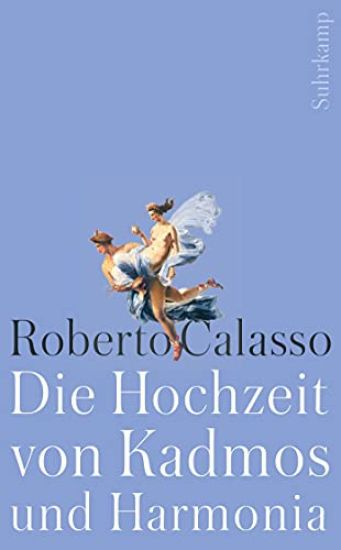
The Marriage of Cadmus and Harmony
Roberto Calasso; Tim (TRN) Parks
Random House USA Inc
1994
pokkari
Presenting the stories of Zeus and Europa, Theseus and Ariadne, the birth of Athens and the fall of Troy, in all their variants, Calasso also uncovers the distant origins of secrets and tragedy, virginity, and rape. "A perfect work like no other. (Calasso) has re-created . . . the morning of our world."--Gore Vidal. 15 engravings.
Liberties Journal of Culture and Politics
Anthony Julius; Nicholas Lemann; Alfred Brendel; Paul Berman; Jorie Graham; Fouad Ajami; Jack Goldsmith; Edward Luttwak; Roberto Calasso; Ishion Hutchinson; Walter Sheidel; Helen Vendler; Robert Alter; Daryl Michael Scott; Rosanna Warren; Alastair Macaulay; David Greenberg
Liberties Journal Foundation
2021
pokkari
Liberties – A Journal of Culture and Politics features original essays and poetry from some of today’s best writers and artists to inspire and impact the intellectual and creative lifeblood of culture and politics. This issue of Liberties includes: Anthony Julius on censorship of the arts; Nicholas Lemann on rescuing capitalism; Alfred Brendel on playing Beethoven; Paul Berman on the George Floyd uprising; Fouad Ajami’s story of an honor killing; Jack Goldsmith on conservatives and the courts; Edward Luttwak on understanding China; Roberto Calasso on when journals mattered; Walter Scheidel on life after covid; Helen Vendler on the poet Robert Hayden; Robert Alter on Lolita today; Daryl Michael Scott on the 13th Amendment; Alastair Macaulay on Balanchine; David Greenberg on renaming our heritage; new poetry from Jorie Graham, Ishion Hutchinson, and Rosanna Warren; and, Leon Wieseltier (editor) and Celeste Marcus (managing editor).
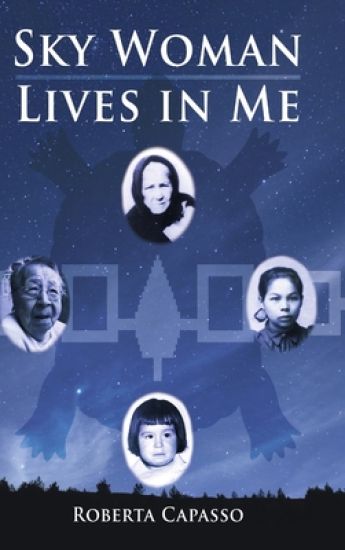
Author Roberta Capasso explores the way generations of Native American children were forcibly taken from their families and subjected to the federal government's Indian boarding school experiment in order to assimilate them. As a direct descendant of a woman victimized by this experiment, the author tells with raw emotion and diligent archival research the story of the historical and emotional bonds between her deceased relatives and herself. Like a detective cracking a murder mystery, discrepancies between the Carlisle Indian School's accounts and a great-grandmother's real life story are exposed, with fascinating and fortuitous twists and turns along the way. This story of her great-great-grandmother Elizabeth and her great-grandmother Sophia must be told to everyone. Becoming a voice for Oneida Turtle Clan as a descendant of Sky Woman, in the Oneida Creation Story, the author hopes to spread truth and knowledge to all cultures in a captivating narrative of a tragic period in United States History.
Topics in Spatial Stochastic Processes
Vincenzo Capasso; Ely Merzbach; B. Gail Ivanoff; Marco Dozzi; Robert Dalang; Thomas Mountford
Springer-Verlag Berlin and Heidelberg GmbH Co. K
2003
nidottu
The theory of stochastic processes indexed by a partially ordered set has been the subject of much research over the past twenty years. The objective of this CIME International Summer School was to bring to a large audience of young probabilists the general theory of spatial processes, including the theory of set-indexed martingales and to present the different branches of applications of this theory, including stochastic geometry, spatial statistics, empirical processes, spatial estimators and survival analysis. This theory has a broad variety of applications in environmental sciences, social sciences, structure of material and image analysis. In this volume, the reader will find different approaches which foster the development of tools to modelling the spatial aspects of stochastic problems.
Roberto is the story of a hero of the Cuban revolution, a psychopathic killer with a handsome face and Latin charm. Do honey bees hold the key to his acts of violence?