Kirjojen hintavertailu. Mukana 12 406 410 kirjaa ja 12 kauppaa.

Kirjahaku

Etsi kirjoja tekijän nimen, kirjan nimen tai ISBN:n perusteella.

1000 tulosta hakusanalla Robin L Mills

The Practical Guide to the Genetic Family History

The Practical Guide to the Genetic Family History

Robin L. Bennett

JOHN WILEY AND SONS LTD
2010
nidottu
HELPS YOU DEVELOP AND ASSESS PEDIGREES TO MAKE DIAGNOSES, EVALUATE RISK, AND COUNSEL PATIENTS The Second Edition of The Practical Guide to the Genetic Family History not only shows how to take a medical-family history and record a pedigree, but also explains why each bit of information gathered is important. It provides essential support in diagnosing conditions with a genetic component. Moreover, it aids in recommending genetic testing, referring patients for genetic counseling, determining patterns of inheritance, calculating risk of disease, making decisions for medical management and surveillance, and informing and educating patients. Based on the author's twenty-five years as a genetic counselor, the book also helps readers deal with the psychological, social, cultural, and ethical problems that arise in gathering a medical-family history and sharing findings with patients. Featuring a new Foreword by Arno Motulsky, widely recognized as the founder of medical genetics, and completely updated to reflect the most recent findings in genetic medicine, this Second Edition presents the latest information and methods for preparing and assessing a pedigree, including: Value and utility of a thorough medical-family historyDirected questions to ask when developing a medical-family history for specific disease conditionsUse of pedigrees to identify individuals with an increased susceptibility to cancerVerification of family medical informationSpecial considerations when adoptions or gamete donors are involvedEthical issues that may arise in recording a pedigree Throughout the book, clinical examples based on hypothetical families illustrate key concepts, helping readers understand how real issues present themselves and how they can be resolved. This book will enable all healthcare providers, including physicians, nurses, medical social workers, and physician assistants, as well as genetic counselors, to take full advantage of the pedigree as a primary tool for making a genetic risk assessment and providing counseling for patients and their families.
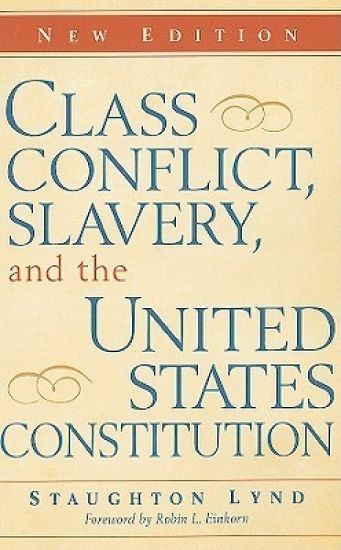
Class Conflict, Slavery, and the United States Constitution

Class Conflict, Slavery, and the United States Constitution

Robin L. Einhorn

Cambridge University Press
2009
sidottu
First published in 1967, Class Conflict, Slavery, and the United States Constitution was among the first studies to identify the importance of slavery to the founding of the American Republic. Provocative and powerful, this book offers explanations for the movements and motivations that underpinned the Revolution and the Early Republic. First, Staughton Lynd analyzes what motivated farm tenants and artisans during the period of the American Revolution. Second, he argues that slavery, and a willingness to compromise with slavery, were at the center of all political arrangements by the patriot leadership, including the United States Constitution. Third, he maintains that the historiography of the United States has adopted the mistaken perspective of Thomas Jefferson, who held that southern plantation owners were merely victimized agrarians. This new edition reproduces the original Preface by Edward P. Thompson and includes a new Afterword by Robin Einhorn that examines Lynd's arguments in the context of forty years of subsequent scholarship.
Class Conflict, Slavery, and the United States Constitution

Class Conflict, Slavery, and the United States Constitution

Robin L. Einhorn

Cambridge University Press
2009
pokkari
First published in 1967, Class Conflict, Slavery, and the United States Constitution was among the first studies to identify the importance of slavery to the founding of the American Republic. Provocative and powerful, this book offers explanations for the movements and motivations that underpinned the Revolution and the Early Republic. First, Staughton Lynd analyzes what motivated farm tenants and artisans during the period of the American Revolution. Second, he argues that slavery, and a willingness to compromise with slavery, were at the center of all political arrangements by the patriot leadership, including the United States Constitution. Third, he maintains that the historiography of the United States has adopted the mistaken perspective of Thomas Jefferson, who held that southern plantation owners were merely victimized agrarians. This new edition reproduces the original Preface by Edward P. Thompson and includes a new Afterword by Robin Einhorn that examines Lynd's arguments in the context of forty years of subsequent scholarship.
The Book Of Me

The Book Of Me

Robin L Gist

Lulu.com
2010
pokkari
The Book Of Me tells the real life story of a small town girls life of surviving and growing up in an drug, alcohol. sexualy, verbably and physicaly abusive household and family her escape and her journeys, battles and struggles of hustling to survive on the streets and to beat the streets to turn her life around
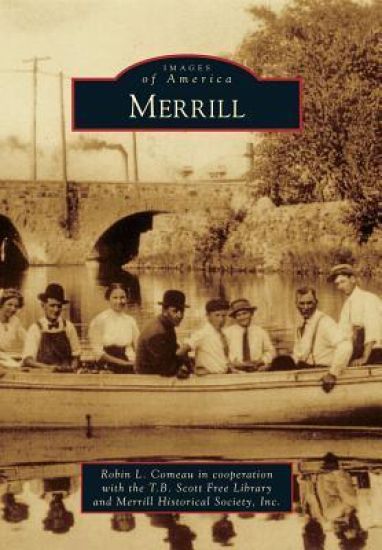
Merrill

Merrill

Robin L Comeau in Cooperation with the T; Merrill Historical Society Inc

Arcadia Publishing (SC)
2013
nidottu
Jenny or Jenny Bull Falls, as the city was fondly referred to before the railroad roared into town, was born on the backs of speculators, lumbermen, and businessmen in the mid-1840s. Pursuing wide-eyed dreams in the vast pine forests of the north woods, Jenny's population was around 200 in 1870. The worn trails of the Ojibwe/Chippewa, the area's first occupants, were transformed into logging roads, and by the time the city's name was formally changed to Merrill in 1881, the population had grown to 2,000. Nicknamed the "City of Parks" in 1903, Merrill is situated on the convergence of the Wisconsin and Prairie Rivers and features four seasons of natural beauty within the city limits. The wonder of Merrill lies in a century of traditions and in the heritage and beauty of its numerous historic buildings and places.
Kamikaze Attacks of World War II

Kamikaze Attacks of World War II

Robin L. Rielly

McFarland Co Inc
2012
pokkari
Drawing on U.S. government reports, interrogation reports of Japanese officers, ship action reports and secondary sources, this book details more than 400 kamikaze attacks by Japanese aircraft, manned torpedoes, suicide boats and suicide swimmers against U.S. ships during World War II. Part One focuses on the traditions, development and history of the kamikazes, including the origins of the samurai class and its ethos, the development of kamikaze aircraft and watercraft, and the indoctrination of children in the Japanese school system. Part Two details the kamikaze attacks on ships in the waters around the Philippines, Iwo Jima, Taiwan, Okinawa and Japan. Appendices list all of the U.S. ships suffering kamikaze attacks along with casualty figures, outlines and silhouettes of various U.S. ships involved in kamikaze attacks, and silhouettes of Japanese kamikaze aircraft.
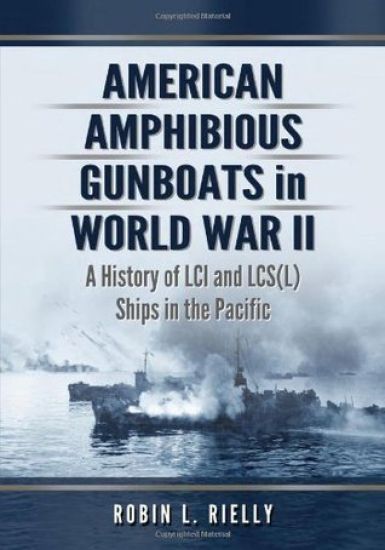
American Amphibious Gunboats in World War II

American Amphibious Gunboats in World War II

Robin L. Rielly

McFarland Co Inc
2013
pokkari
As the United States began its campaign against numerous Japanese-held islands in the Pacific, Japanese tactics required them to develop new weapons and strategies. One of the most crucial to the island assaults was a new group of amphibious gunboats that could deliver heavy fire close in to shore as American forces landed. These gunboats were also to prove important in the interdiction of inter-island barge traffic and, late in the war, the kamikaze threat. Several variations of these gunboats were developed, based on the troop carrying LCI(L). They included three conversions of the LCI(L), with various combinations of guns, rockets and mortars, and a fourth gunboat, the LCS(L), based on the same hull but designed as a weapons platform from the beginning. By the end of the war the amphibious gunboats had proven their worth.
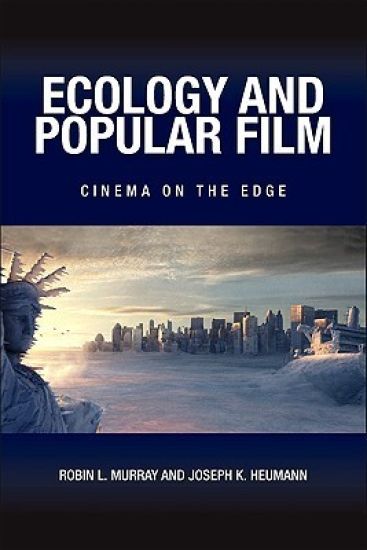
Ecology and Popular Film

Ecology and Popular Film

Robin L. Murray; Joseph K. Heumann

State University of New York Press
2009
pokkari
Ecocritical takes on popular film. Ecology and Popular Film examines representations of nature in mainstream film while also looking at film itself as a form of nature writing. Considering a selection of mainstream movies that embrace a wide variety of environmental themes, from the Lumières' Oil Wells of Baku (1896) to Al Gore's An Inconvenient Truth (2006), Murray and Heumann explore such themes as environmental politics, eco-terrorism, ecology and home, tragic and comic eco-heroes, the spectacular, and evolutionary narrative, in a manner that is both accessible and fun. Other films discussed include The River (1937), Soylent Green (1971), Pale Rider (1985), 28 Days Later (2002), and The Day After Tomorrow (2004). The book also includes a comprehensive filmography of films that deal with environmental themes and issues.
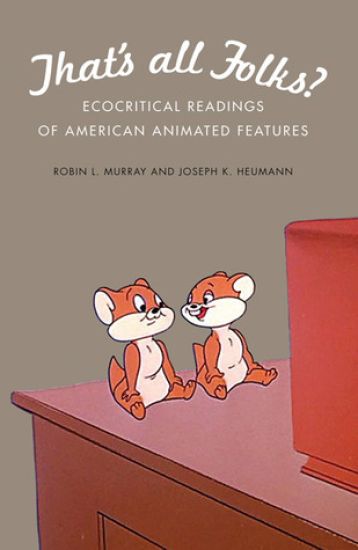
That's All Folks?

That's All Folks?

Robin L. Murray; Joseph K. Heumann

University of Nebraska Press
2011
sidottu
Although some credit the environmental movement of the 1970s, with its profound impact on children's television programs and movies, for paving the way for later eco-films, the history of environmental expression in animated film reaches much further back in American history, as That's All Folks? makes clear. Countering the view that the contemporary environmental movement—and the cartoons it influenced—came to life in the 1960s, Robin L. Murray and Joseph K. Heumann reveal how environmentalism was already a growing concern in animated films of the 1930s, 1940s, and 1950s. From Felix the Cat cartoons to Disney's beloved Bambi to Pixar's Wall-E and James Cameron's Avatar, this volume shows how animated features with environmental themes are moneymakers on multiple levels—particularly as broad-based family entertainment and conveyors of consumer products. Only Ralph Bakshi's X-rated Fritz the Cat and R-rated Heavy Traffic and Coonskin, with their violent, dystopic representation of urban environments, avoid this total immersion in an anti-environmental consumer market. Showing us enviro-toons in their cultural and historical contexts, this book offers fresh insights into the changing perceptions of the relationship between humans and the environment and a new understanding of environmental and animated cinema.
Film and Everyday Eco-disasters

Film and Everyday Eco-disasters

Robin L. Murray; Joseph K. Heumann

University of Nebraska Press
2014
sidottu
Eco-disasters such as coal-mining accidents, oil spills, and food-borne diseases appear regularly in the news, making them seem nearly commonplace. These ecological crises highlight the continual tensions between human needs and the environmental impact these needs produce. Contemporary documentaries and feature films explore environmental-human conflicts by depicting the consequences of our overconsumption and dependence on nonrenewable energy.Film and Everyday Eco-disasters examines changing perspectives toward everyday eco-disasters as reflected in the work of filmmakers from the silent era forward, with an emphasis on recent films such as Dead Ahead, an HBO dramatization of the Exxon Valdez disaster; Total Recall, a science fiction action film highlighting oxygen as a commodity; The Devil Wears Prada, a comment on the fashion industry; and Food, Inc., a documentary interrogation of the food industry. The authors evaluate not only the success of these films as rhetorical arguments but also their rhetorical strategies. This interdisciplinary approach to film studies fuses cultural, economic, and literary critiques in articulating an approach to ecology that points to sustainable development as an alternative to resource exploitations and their associated everyday eco-disasters.
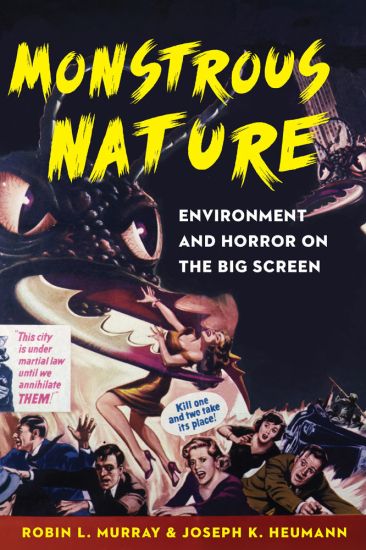
Monstrous Nature

Monstrous Nature

Robin L. Murray; Joseph K. Heumann

University of Nebraska Press
2016
sidottu
Godzilla, a traditional natural monster and representation of cinema’s subgenre of natural attack, also provides a cautionary symbol of the dangerous consequences of mistreating the natural world-monstrous nature on the attack. Horror films such as Godzilla invite an exploration of the complexities of a monstrous nature that humanity both creates and embodies. Robin L. Murray and Joseph K. Heumann demonstrate how the horror film and its offshoots can often be understood in relation to a monstrous nature that has evolved either deliberately or by accident and that generates fear in humanity as both character and audience. This connection between fear and the natural world opens up possibilities for ecocritical readings often missing from research on monstrous nature, the environment, and the horror film. Organized in relation to four recurring environmental themes in films that construct nature as a monster-anthropomorphism, human ecology, evolution, and gendered landscapes-the authors apply ecocritical perspectives to reveal the multiple ways nature is constructed as monstrous or in which the natural world itself constructs monsters. This interdisciplinary approach to film studies fuses cultural, theological, and scientific critiques to explore when and why nature becomes monstrous.
Karate for Kids

Karate for Kids

Robin L. Rielly

Tuttle Publishing
2004
sidottu
A fun and accessible introduction to studying karate—designed specifically with the interests and capabilities of young martial artists in mind.First-time martial arts students are not just starting a program of physical and mental practice. They are entering a new world—one that not only has new rules, new goals, and even new clothing—but that also offers them lots of new opportunities for fun and accomplishment.Karate for Kids will help prepare kids to start learning about karate and help them practice at home. It includes thorough introductions to the history and philosophy of the techniques, what to expect in the first few classes, how to warm up and practice, and advice on setting goals.With over 75 full-color illustrations, including 40 clearly diagrammed karate exercises, along with lots of fun facts and informative sidebars written in kid-friendly, jargon-free language, this is the perfect introduction for the younger martial artist.
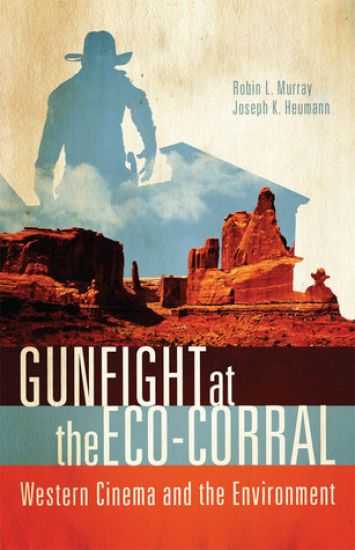
Gunfight at the Eco-Corral

Gunfight at the Eco-Corral

Robin L. Murray; Joseph K. Heumann

University of Oklahoma Press
2012
nidottu
Most film critics point to classic conflicts - good versus evil, right versus wrong, civilization versus savagery - as defining themes of the American Western. In this provocative examination of Westerns from Tumbleweeds (1925) to Rango (2011), Robin L. Murray and Joseph K. Heumann argue for a more expansive view that moves beyond traditional conflicts to encompass environmental themes and struggles. The environment, after all, is the fundamental stage for most western stories, from land rush dramas that pit ""sod busters"" against ranchers to conflicts between mining-town communities and corporations. Because environmental issues lie at the forefront of so many conflicts today, Murray and Heumann believe that the Western is ripe for such new examination.Drawing on perspectives from both film studies and environmental history, the authors show how western films frequently deal with issues related to land use and different ways of looking at the natural world. In films as diverse as Gene Autry musicals, early John Wayne B-Westerns, and revisionist critiques such as the 2010 remake of True Grit, resources are exploited in the name of progress. Beginning with an analysis of two iconic Westerns, Shane and The Searchers, Murray and Heumann identify the environmental dichotomies - previously overlooked by critics - that are broached in both films, and they clarify the history that lies behind the environmental debates in these films and many others.How do Westerns respond to the historical contexts they present? And what do those responses suggest about American views of nature and its exploitation? The conflicts these movies address grow out of differing views of progress, frequently in relation to technology. The authors show that such binary oppositions tend to blur when examined closely, demonstrating that environmental issues are often more complex than we realize.
Fieldnotes from a Depth Psychological Exploration of Evil
In Fieldnotes from a Depth Psychological Exploration of Evil, Robin L. Gordon presents an accessible account of an attempt to define and understand the nature of evil. Gordon takes on the role of guide to this confusing land, tying together threads of Jungian theory, philosophy, etymology, neuroscience and history, as we are led on a personal journey of discovery.Gordon begins by analysing what a twelfth-century meeting between Chinggis Khan and Taoist priest Ch’ang-Ch’un can tell us about the presence of opposing traits and the nature of evil in human beings. We learn what depth psychology has said about evil and the shadow part of our psyches, and examine examples of human behaviour throughout history to understand the etymological, philosophical and historical understandings and definitions of evil. Gordon’s own relationship with her work, and the feelings that arise when researching the psychological framework of Nazi doctors, genocide in Rwanda, Bosnia and Syria, and the functionality of serial killers, are interrogated. We then return to Chinggis Khan’s and Ch’ang-Ch’un’s relationship, attempting to build a real and practical definition of "evil", and assessing their dialogues as a metaphor for Jung’s views of the transcendent function.Fieldnotes from a Depth Psychological Exploration of Evil will be essential reading for academics and students of Jungian and post-Jungian studies, sociology, criminology and philosophy. It will also be a key resource for Jungian analysts and psychotherapists interested in the study of evil and its impact on society and the psyche, as well as anyone investigating and redefining their own meanings of evil, past and present.
Fieldnotes from a Depth Psychological Exploration of Evil
In Fieldnotes from a Depth Psychological Exploration of Evil, Robin L. Gordon presents an accessible account of an attempt to define and understand the nature of evil. Gordon takes on the role of guide to this confusing land, tying together threads of Jungian theory, philosophy, etymology, neuroscience and history, as we are led on a personal journey of discovery.Gordon begins by analysing what a twelfth-century meeting between Chinggis Khan and Taoist priest Ch’ang-Ch’un can tell us about the presence of opposing traits and the nature of evil in human beings. We learn what depth psychology has said about evil and the shadow part of our psyches, and examine examples of human behaviour throughout history to understand the etymological, philosophical and historical understandings and definitions of evil. Gordon’s own relationship with her work, and the feelings that arise when researching the psychological framework of Nazi doctors, genocide in Rwanda, Bosnia and Syria, and the functionality of serial killers, are interrogated. We then return to Chinggis Khan’s and Ch’ang-Ch’un’s relationship, attempting to build a real and practical definition of "evil", and assessing their dialogues as a metaphor for Jung’s views of the transcendent function.Fieldnotes from a Depth Psychological Exploration of Evil will be essential reading for academics and students of Jungian and post-Jungian studies, sociology, criminology and philosophy. It will also be a key resource for Jungian analysts and psychotherapists interested in the study of evil and its impact on society and the psyche, as well as anyone investigating and redefining their own meanings of evil, past and present.