Kirjojen hintavertailu. Mukana 11 244 527 kirjaa ja 12 kauppaa.

Kirjahaku

Etsi kirjoja tekijän nimen, kirjan nimen tai ISBN:n perusteella.

1000 tulosta hakusanalla Roderic A. Grupen

Oh, What a Lovely Century

Oh, What a Lovely Century

Roderic Fenwick Owen

Sphere
2021
sidottu
A TIMES BOOK OF THE YEAR'A completely extraordinary autobiography. One that reads like the most outlandish, beguiling fiction but that is - amazingly - all true' - William Boyd, Sunday Times bestselling author'Outrageous fun...my goodness there are knee-tremblers galore in this racy memoir' - The Times'A wonderful journey through 20th Century history. I thoroughly enjoyed it' - Lady Anne Glenconner, author of Lady in Waiting ---For fear of growing up like his stiff-upper-lipped Uncle Dick, Roderic Fenwick Owen (1921-2011) survived Eton, Oxford and the Second World War to become a travel writer, experiencing the varied wonders of the 20th century's people and places in that guise. Frequently finding himself party to crucial historical events (including experiencing Nazi Germany in 1939 and the Pentagon during the Cold War Years), his life featured a stellar cast of characters from Eisenhower and Jackson Pollock to Christopher Lee and Sean Connery. At the heart of Roddy's writing adventures lay his search for love, even if just for the night. He fell head over heels for, and married a Polynesian princess while beachcombing in Tahiti, but when a dazzling trip to 1950s New York opened his eyes to the fact he was more attracted to men than women, he was forced to continue his quest for his soulmate under threat of danger. This was at a time when the police were prosecuting and imprisoning more gay men than ever before, including some of his friends. Lyrical, witty and at times jaw-droppingly unbelievable, Oh, What A Lovely Century is both a highly personal memoir and a marvellous obituary of an ever-changing and now lost world - that was frequently the best of times, and sometimes the worst.---'A joy' - The Telegraph'Entertaining [and] particularly vivid' - Mail on Sunday 'Riotous' - Evening Standard'Gamey, rollicking and hugely entertaining' - Spectator'Stuffed to the gills with raucous anecdotes and mesmerising detail ... Fenwick Owen's memoirs are witty and touching but also an important record of how society has changed' - Jessica Fellowes, author of The Mitford Murders
The Sooners; a Romance of Early Oklahoma

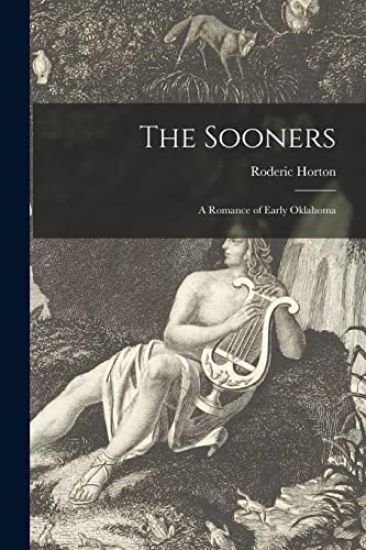
The Sooners; a Romance of Early Oklahoma

Roderic Horton

Hassell Street Press
2021
nidottu
This work has been selected by scholars as being culturally important and is part of the knowledge base of civilization as we know it.This work is in the public domain in the United States of America, and possibly other nations. Within the United States, you may freely copy and distribute this work, as no entity (individual or corporate) has a copyright on the body of the work.Scholars believe, and we concur, that this work is important enough to be preserved, reproduced, and made generally available to the public. To ensure a quality reading experience, this work has been proofread and republished using a format that seamlessly blends the original graphical elements with text in an easy-to-read typeface.We appreciate your support of the preservation process, and thank you for being an important part of keeping this knowledge alive and relevant.
Mostyn Stayne. [A Novel.]

Mostyn Stayne. [A Novel.]

Roderic Quinn

British Library, Historical Print Editions
2011
pokkari
Title: Mostyn Stayne. A novel.]Publisher: British Library, Historical Print EditionsThe British Library is the national library of the United Kingdom. It is one of the world's largest research libraries holding over 150 million items in all known languages and formats: books, journals, newspapers, sound recordings, patents, maps, stamps, prints and much more. Its collections include around 14 million books, along with substantial additional collections of manuscripts and historical items dating back as far as 300 BC.The FICTION & PROSE LITERATURE collection includes books from the British Library digitised by Microsoft. The collection provides readers with a perspective of the world from some of the 18th and 19th century's most talented writers. Written for a range of audiences, these works are a treasure for any curious reader looking to see the world through the eyes of ages past. Beyond the main body of works the collection also includes song-books, comedy, and works of satire. ++++The below data was compiled from various identification fields in the bibliographic record of this title. This data is provided as an additional tool in helping to insure edition identification: ++++ British Library Quinn, Roderic; 1897. 24 p.; 8 . 012625.e.46.
Ogygia, or, a Chronological Account of Irish Events

Ogygia, or, a Chronological Account of Irish Events

Roderic O'Flaherty

Gale Ecco, Print Editions
2018
sidottu
The 18th century was a wealth of knowledge, exploration and rapidly growing technology and expanding record-keeping made possible by advances in the printing press. In its determination to preserve the century of revolution, Gale initiated a revolution of its own: digitization of epic proportions to preserve these invaluable works in the largest archive of its kind. Now for the first time these high-quality digital copies of original 18th century manuscripts are available in print, making them highly accessible to libraries, undergraduate students, and independent scholars.Rich in titles on English life and social history, this collection spans the world as it was known to eighteenth-century historians and explorers. Titles include a wealth of travel accounts and diaries, histories of nations from throughout the world, and maps and charts of a world that was still being discovered. Students of the War of American Independence will find fascinating accounts from the British side of conflict. ++++The below data was compiled from various identification fields in the bibliographic record of this title. This data is provided as an additional tool in helping to insure edition identification: ++++British LibraryT186390With a list of subscribers. First published in Latin in 1685.Dublin: printed by W. M'Kenzie, 1793. 2v.; 8
Ogygia, or, a Chronological Account of Irish Events

Ogygia, or, a Chronological Account of Irish Events

Roderic O'Flaherty

Gale Ecco, Print Editions
2018
sidottu
The 18th century was a wealth of knowledge, exploration and rapidly growing technology and expanding record-keeping made possible by advances in the printing press. In its determination to preserve the century of revolution, Gale initiated a revolution of its own: digitization of epic proportions to preserve these invaluable works in the largest archive of its kind. Now for the first time these high-quality digital copies of original 18th century manuscripts are available in print, making them highly accessible to libraries, undergraduate students, and independent scholars.Rich in titles on English life and social history, this collection spans the world as it was known to eighteenth-century historians and explorers. Titles include a wealth of travel accounts and diaries, histories of nations from throughout the world, and maps and charts of a world that was still being discovered. Students of the War of American Independence will find fascinating accounts from the British side of conflict. ++++The below data was compiled from various identification fields in the bibliographic record of this title. This data is provided as an additional tool in helping to insure edition identification: ++++British LibraryT186390With a list of subscribers. First published in Latin in 1685.Dublin: printed by W. M'Kenzie, 1793. 2v.; 8
We Demand

We Demand

Roderick A. Ferguson

University of California Press
2017
pokkari
This title is part of American Studies Now and available as an e-book first. Visit ucpress.edu/go/americanstudiesnow to learn more. In the post-World War II period, students rebelled against the university establishment. In student-led movements, women, minorities, immigrants, and indigenous people demanded that universities adapt to better serve the increasingly heterogeneous public and student bodies. The success of these movements had a profound impact on the intellectual landscape of the twentieth century: out of these efforts were born ethnic studies, women's studies, and American studies. In We Demand, Roderick A. Ferguson demonstrates that less than fifty years since this pivotal shift in the academy, the university is moving away from "the people" in all their diversity. Today the university is refortifying its commitment to the defense of the status quo off campus and the regulation of students, faculty, and staff on campus. The progressive forms of knowledge that the student-led movements demanded and helped to produce are being attacked on every front. Not only is this a reactionary move against the social advances since the '60s and '70s-it is part of the larger threat of anti-intellectualism in the United States.
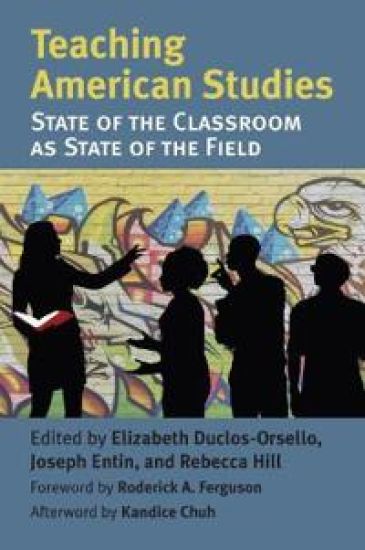
Teaching American Studies

Teaching American Studies

Roderick A. Ferguson

University Press of Kansas
2021
sidottu
“What if American Studies is defined not so much in the pages of the most cutting-edge publications, but through what happens in our classrooms and other learning spaces?” In Teaching American Studies Elizabeth Duclos-Orsello, Joseph Entin, and Rebecca Hill ask a diverse group of American Studies educators to respond to that question by writing chapters about teaching that use a classroom activity or a particular course to reflect on the state of the field of American Studies.Teaching American Studies speaks to teachers with a wide range of relationships to the field. To start, it is a useful how-to guide for faculty who might be new to, or unfamiliar with, American Studies. Each author brings the reader into their classes to offer specific, concrete details about their pedagogical practice and their students’ learning. The resulting chapters connect theory and educational action as well as share challenges, difficulties, and lessons learned. The volume also provides a collective impression of American Studies from the point of view of students and teachers. What primary and secondary texts and what theoretical challenges and issues do faculty use to organize their teaching? How does the teaching we do respond to our institutional and educational contexts? How do our experiences and those of our students challenge or change our understanding of American Studies? Chapters in this collection discuss teaching a broad range of materials, from memoirs and novels by Anne Moody and Octavia Butler, to cutting-edge cultural theory, to the widely used collection Keywords for American Cultural Studies. But the chapters in this collection are also about dancing, eating, and walking around a campus to view statues and gravestones. They are about teaching during the era of Donald Trump, of Black Lives Matter, about giving up authority in the classroom, about teaching in the South, in New England, in the Midwest, and for ten-minute intervals at a cooking school in New Jersey.Teaching American Studies is both a new way to think about American Studies and a timely collection of effective ways to teach about race, gender, sexuality, and power in a moment of political polarization and intense public scrutiny of universities.
Teaching American Studies

Teaching American Studies

Roderick A. Ferguson

University Press of Kansas
2021
nidottu
“What if American Studies is defined not so much in the pages of the most cutting-edge publications, but through what happens in our classrooms and other learning spaces?” In Teaching American Studies Elizabeth Duclos-Orsello, Joseph Entin, and Rebecca Hill ask a diverse group of American Studies educators to respond to that question by writing chapters about teaching that use a classroom activity or a particular course to reflect on the state of the field of American Studies.Teaching American Studies speaks to teachers with a wide range of relationships to the field. To start, it is a useful how-to guide for faculty who might be new to, or unfamiliar with, American Studies. Each author brings the reader into their classes to offer specific, concrete details about their pedagogical practice and their students’ learning. The resulting chapters connect theory and educational action as well as share challenges, difficulties, and lessons learned. The volume also provides a collective impression of American Studies from the point of view of students and teachers. What primary and secondary texts and what theoretical challenges and issues do faculty use to organize their teaching? How does the teaching we do respond to our institutional and educational contexts? How do our experiences and those of our students challenge or change our understanding of American Studies? Chapters in this collection discuss teaching a broad range of materials, from memoirs and novels by Anne Moody and Octavia Butler, to cutting-edge cultural theory, to the widely used collection Keywords for American Cultural Studies. But the chapters in this collection are also about dancing, eating, and walking around a campus to view statues and gravestones. They are about teaching during the era of Donald Trump, of Black Lives Matter, about giving up authority in the classroom, about teaching in the South, in New England, in the Midwest, and for ten-minute intervals at a cooking school in New Jersey.Teaching American Studies is both a new way to think about American Studies and a timely collection of effective ways to teach about race, gender, sexuality, and power in a moment of political polarization and intense public scrutiny of universities.
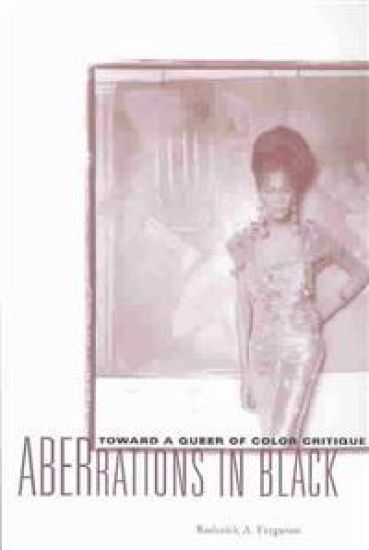
Aberrations in Black

Aberrations in Black

Roderick A. Ferguson

University of Minnesota Press
2003
nidottu
A hard-hitting look at the regulation of sexual difference and its role in circumscribing African American culture The sociology of race relations in America typically describes an intersection of poverty, race, and economic discrimination. But what is missing from the picture-sexual difference-can be as instructive as what is present. In this ambitious work, Roderick A. Ferguson reveals how the discourses of sexuality are used to articulate theories of racial difference in the field of sociology. He shows how canonical sociology-Gunnar Myrdal, Ernest Burgess, Robert Park, Daniel Patrick Moynihan, and William Julius Wilson-has measured African Americans’s unsuitability for a liberal capitalist order in terms of their adherence to the norms of a heterosexual and patriarchal nuclear family model. In short, to the extent that African Americans’s culture and behavior deviated from those norms, they would not achieve economic and racial equality.Aberrations in Black tells the story of canonical sociology’s regulation of sexual difference as part of its general regulation of African American culture. Ferguson places this story within other stories-the narrative of capital’s emergence and development, the histories of Marxism and revolutionary nationalism, and the novels that depict the gendered and sexual idiosyncrasies of African American culture-works by Richard Wright, Ralph Ellison, James Baldwin, Audre Lorde, and Toni Morrison. In turn, this book tries to present another story-one in which people who presumably manifest the dysfunctions of capitalism are reconsidered as indictments of the norms of state, capital, and social science. Ferguson includes the first-ever discussion of a new archival discovery-a never-published chapter of Invisible Man that deals with a gay character in a way that complicates and illuminates Ellison’s project.Unique in the way it situates critiques of race, gender, and sexuality within analyses of cultural, economic, and epistemological formations, Ferguson’s work introduces a new mode of discourse-which Ferguson calls queer of color analysis-that helps to lay bare the mutual distortions of racial, economic, and sexual portrayals within sociology.
The Reorder of Things

The Reorder of Things

Roderick A. Ferguson

University of Minnesota Press
2012
nidottu
In the 1960s and 1970s, minority and women students at colleges and universities across the United States organized protest movements to end racial and gender inequality on campus. African American, Chicano, Asia American, American Indian, women, and queer activists demanded the creation of departments that reflected their histories and experiences, resulting in the formation of interdisciplinary studies programs that hoped to transform both the university and the wider society beyond the campus.In The Reorder of Things, however, Roderick A. Ferguson traces and assesses the ways in which the rise of interdisciplines-departments of race, gender, and ethnicity; fields such as queer studies-were not simply a challenge to contemporary power as manifest in academia, the state, and global capitalism but were, rather, constitutive of it. Ferguson delineates precisely how minority culture and difference as affirmed by legacies of the student movements were appropriated and institutionalized by established networks of power.Critically examining liberationist social movements and the cultural products that have been informed by them, including works by Adrian Piper, Toni Cade Bambara, Jhumpa Lahiri, and Zadie Smith, The Reorder of Things argues for the need to recognize the vulnerabilities of cultural studies to co-option by state power and to develop modes of debate and analysis that may be in the institution but are, unequivocally, not of it.
Lessons of Everyday Law

Lessons of Everyday Law

Roderick A. Macdonald

Queen's University
2002
nidottu
Problems of discovering and representing reality, of making and transcribing rules into linguistic and other symbolic forms, of fact-finding and interpretation routinely confront policy-makers and lawyers. But, in a sense, everyone is a lawyer because ordinary human interaction is saturated with norms and normative processes, institutions, structures, and cultures. Everyday life thus provides an unlimited supply of images and events that raise some of the most complex issues of legal theory. In Lessons of Everyday Law Roderick MacDonald shows that stories of everyday law are revealing not just for what they can teach about policy-making and law reform but as accounts of practices internal to the little legal systems of everyday life. The norms governing ordinary encounters reveal how human beings make sense of their relationships with each other and translate these relationships into discrete, culturally determined legal forms and values. Most of these small-scale norms can also be found in larger normative settings, such as the official legal system of the political state and the multiple regimes of international law. Lessons of Everyday Law suggests that the stream of influence between the micro-law of everyday life and the macro-law of the world legal order flows both ways. Attending to the normative dimensions of everyday human interaction enriches our understanding of the forms, aspirations, and limits of law -- wherever it is found.
The Physics and Technology of Amorphous SiO2

The Physics and Technology of Amorphous SiO2

Roderick A.B. Devine

Springer-Verlag New York Inc.
2011
nidottu
The contents of this volume represent most of the papers presented either orally or as posters at the international conference held in Les rd th Arcs, Savoie, from June 29 to July 3 1987. The declared objective of the conference was to bring together specialists working in various fields, both academic and applied, to examine the state of our under­ standing of the physics of amorphous sioz from the point of view of its structure, defects (both intrinsic and extrinsic), its ability to trans­ port current and to trap charges, its sensitivity to irradiation, etc. For this reason, the proceedings is divided, as was the conference schedule, into a number of sections starting from a rather academic viewpoint of the internal structure of idealized Si0 and progressing 2 towards subjects of increasing technological importance such as charge transport and trapping and breakdown in thin films. The proceedings terminates with a section on novel applications of amorphous SiOz and in particular, buried oxide layers formed by ion implantation. Although every effort was made at the conference to ensure that each presentation occured in its most obvious session, in editing the proceedings we have taken the liberty of changing the order where it seems that a paper was in fact more appropriate to an alternative section. In any event, because of the natural overlap of subjects, many papers could have been suitably placed in several different sections.
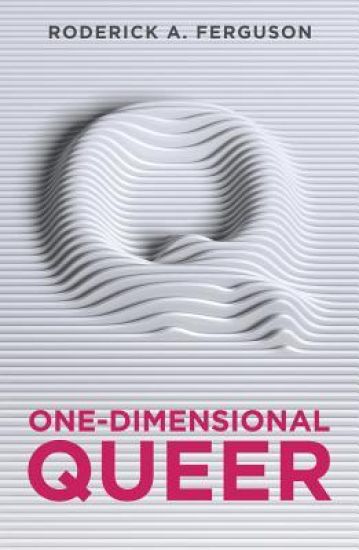
One-Dimensional Queer

One-Dimensional Queer

Roderick A. Ferguson

Polity Press
2018
sidottu
The story of gay rights has long been told as one of single-minded focus on the fight for sexual freedom. Yet its origins are much more complicated than this single-issue interpretation would have us believe, and to ignore gay liberation's multidimensional beginnings is to drastically underestimate its radical potential for social change. Ferguson shows how queer liberation emerged out of various insurgent struggles crossing the politics of race, gender, class, and sexuality, and deeply connected to issues of colonization, incarceration, and capitalism. Tracing the rise and fall of this intersectional politics, he argues that the one-dimensional mainstreaming of queerness falsely placed critiques of racism, capitalism, and the state outside the remit of gay liberation. As recent activism is increasingly making clear, this one-dimensional legacy has promoted forms of exclusion that marginalize queers of color, the poor, and transgender individuals. This forceful book joins the call to reimagine and reconnect the fight for social justice in all its varied forms.