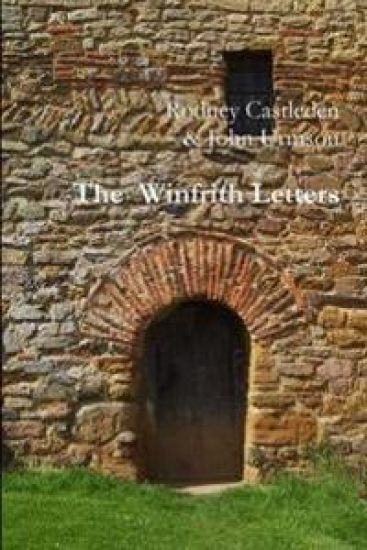
A story of a collaboration. A series of letters between the co-writers of 'Winfrith' (an historian and a composer) shows how a music drama came into being. All the stresses and strains of creativity are visible in this blow-by-blow account of a race against time, to write a full-scale stageworthy music drama in time to celebrate the Millennium at Brixworth Church in Northamptonshire. A story of ambition, disagreement, compromise, and ultimately achievement against heavy odds. Includes the full text of the music drama and samples of the music. 278 pages.
The story of Seaford in the French Wars, 1793 to 1815, based on contemporary sources, including historic maps, court books, diaries and newspaper reports of the time. Seaford was a town with two parallel histories. Its status as a member of the Cinque Ports Confederation gave it unusual privileges, such as the right to send two Members to Parliament, and there was no shortage of ambitious politicians who wanted to stand for election here. At the same time, the town stagnated, with a population of just one thousand and only a tenth of those entitled to vote. Most of the inhabitants were poor agricultural workers or fishermen. It is a lively and colourful tale of large-scale corruption in a rotten borough. The book gives character sketches of all the major personalities of the time. 207 pages, 70 black and white illustrations.
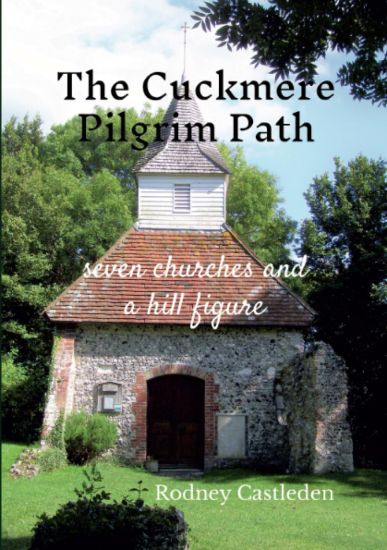
The book describes the route of the Cuckmere Pilgrim Path, a 14 mile round walk through the Sussex countryside. The path links seven churches and the Long Man, a chalk hill figure. As each church is reached, the narrative of the walk breaks off and there is a section about the detailed history of the building and its setting. The route includes Alfriston, Berwick, Alciston, Selmeston, Arlington, Wilmington and Lullington.
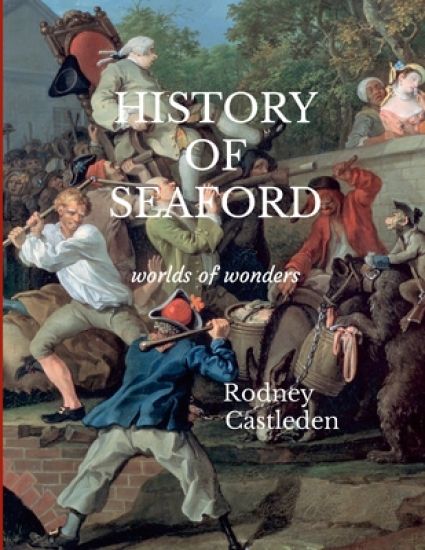
The first full history of Seaford in Sussex, this book covers the development of the port shortly after the Norman Conquest and its rise to Cinque Port status in the middle ages. Natural silting at the mouth of the River Ouse led to the port's decline. Later Seaford became a major poltical hub, returning two Members of Parliament. Seaford is a town that has struggled for survival, reinventing itself several times over across 900 years. Large format (US Letter), 392 pages, 272 black & white pictures.
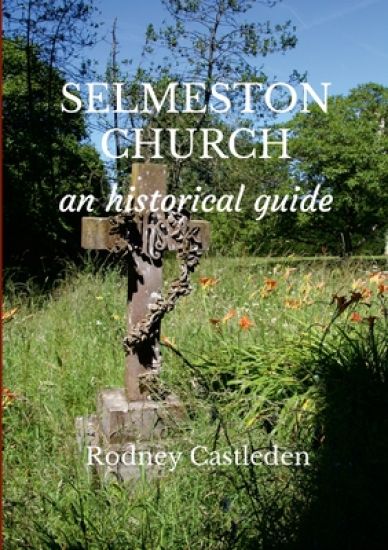
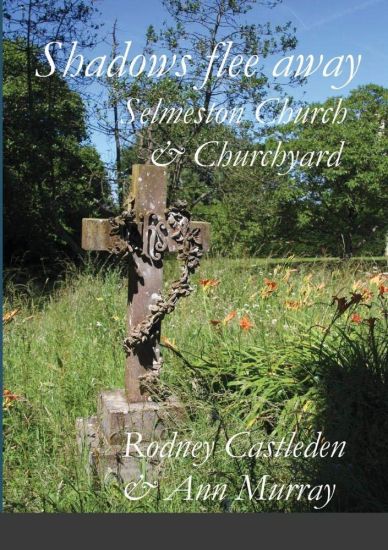
An historical guide to Selmeston Church in Sussex and its setting. The church looks like a medieval church, but was rebuilt from the ground up in the nineteenth century by the vicar, William Parish; his friend Lewis Carroll often stayed at the rectory opposite the church. The history of the site goes back much further, to the first Saxon settlers, and before that to neolithic and mesolithic people, who had settlements within a hundred metres of the church. This guide explores some of the historical enigmas. 101 pages, 47 black and white illustrations
A guide to the history of Wilmington church in Sussex and its setting. The book includes the architectural history of the church and the ruined priory right next to it, as well as sections on the ancient yew tree in the churchyard and the Long Man on Windover Hill immediately to the south. The book includes way the church was altered during the Victorian restoration, as well as the latest thinking about the origins of the enigmatic chalk hill figure, the Long Man of Wilmington.
An historical guide to Alciston church and the surrounding area. The manor of Alciston is unusual in having only two owners since the Norman Conquest, Battle Abbey and the Gage family, both of whom were conscientious record-keepers. Alciston's history is therefore known in some detail. The guide explores the church's fascinating architectural history, illuminated by a rare archaeological excavation at the eastern end. 105 pages, 47 black and white illustrations.
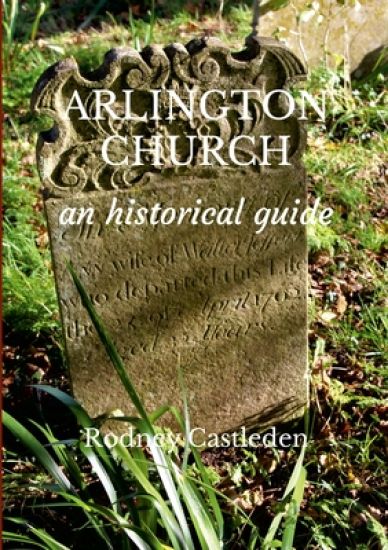
Arlington in Sussex is an enigma - a large church and churchyard serving a tiny hamlet. What happened here? This historical guide has the church as its focus, but explores the long history of the surrounding area along the way. The Saxons chose an unusual and difficult site - low, wet and densely wooded. They may have founded a river port here. The church's Norman chapel was probably built as part of the Canterbury pilgrimage cult. 102 pages, 49 black and white illustrations.
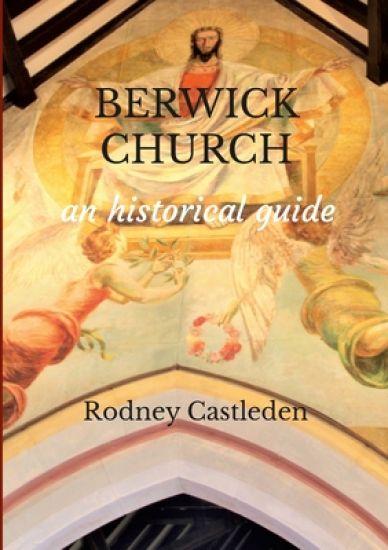
Berwick church in Sussex is renowned for its wall paintings by Duncan Grant and other artists in the Bloomsbury Group. But the church also has a fascinating earlier history. It was radically restored by Edward Ellman, the Victorian rector, and before that it had a history dating back to Saxon times. The font is Saxon, and the large mound in the churchyard may be a pre-Christian burial mound. This book is a guide to the church's long and interesting history.
The story of a small Sussex Downland village is told for the first time. Using a wide range of sources, including historic maps, house histories, old letters and personal reminiscences, the complex history of East Blatchington emerges, with unexpected results. The book reveals how close the village came to extinction in the Black Death, and how the ambition of the last squire led to many of the village's present-day problems. And some extraordinary personalities reappear from the past. What emerges is an unexpectedly rich and colourful picture of an English village that has come close to being forgotten. 309pp, over 90 black and white illustrations.
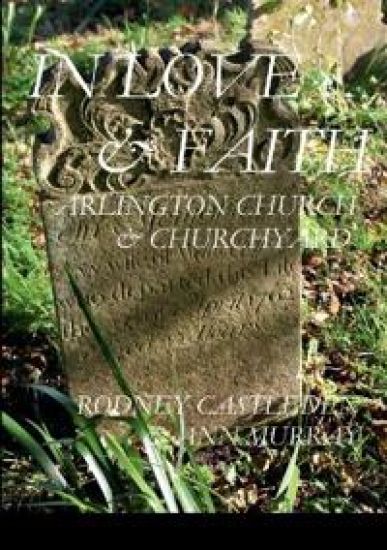
The book reviews the history of Arlington Church and Churchyard in Sussex, and gives the full record of all the inscriptions on the site, together with plans, photos and indexes. An invaluable resource for local amd family history. Arlington is an enigma: an unusually large church and churchyard serving a tiny village. The Saxons, who founded the village, chose an unusual and difficult site - low, wet and densely wooded - next to the Cuckmere River. Was it for the sake of of trading up and down the river? Was the Norman chapel connected to the Canterbury pilgrimage cult? Arlington has a history of isolation, disunity and dissent, not helped by roads that in the past were often under water. This A5 paperback is 227 pages long with 12 plans, 54 black and white illustrations, an index of monuments and a general index.
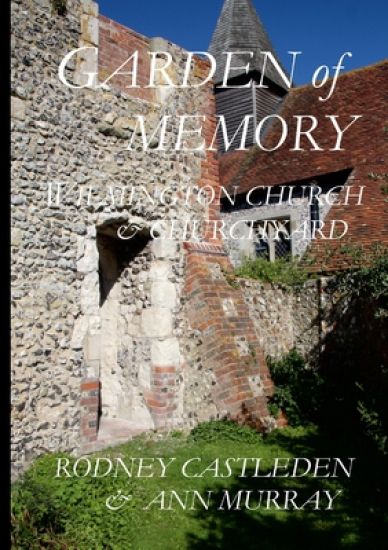
A complete record of all the inscriptions in the church and churchyard at Wilmington in Sussex. Wilmington is steeped in history and folklore. Stories of the church, the priory next to it and the figure of the Long Man looming over them on Windover Hill seem to intertwine. The yew tree presiding over the churchyard may be more ancient than any of them. A detailed historical introduction narrates the stories of all of these features and shows how they link together. The full record of monumental inscriptions includes photos, plans and indexes, making this book an invaluable resource for local and family history. 247 pages.
This is the first book to have been written about the Long Man of Wilmington. Many different theories about the Long Man's origins are discussed and evaluated. The book is a guide to the history and archaeology of the Giant's Downland setting, and will appeal to everyone who loves the landscape, heritage, history and lore of the South Downs. An expanded version of the 1983 edition, which has been described in a review as 'a modern antiquarian classic'. 258 pages, 96 black and white illustrations.
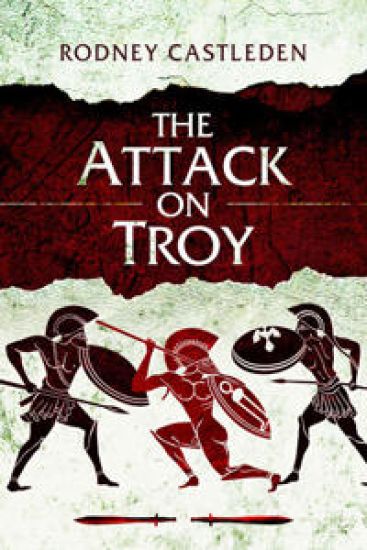
3300 years ago Agamemnon, king of Mycenae in Greece, attacked the city of Troy in western Anatolia. The bloody siege that followed gave rise to one of the most famous legends of the ancient world, and the search for the truth behind the legend has intrigued scholars ever since. In this fascinating new investigation Rodney Castleden reconsiders all the evidence in order to establish the facts and give a historical basis to the most potent myth of ancient warfare.
Selmeston in Sussex was a settlement long before the Saxons arrived, even though it has a Saxon name. Eight thousand years ago, stone age houses stood close to the site of the church. The unusual circular churchyard hints at a pre-Christian origin. The book reviews the site's history and gives a full record of all the inscriptions, together with plans, photos and indexes. 242 pages long, this book is an invaluable resource for both local and family history.
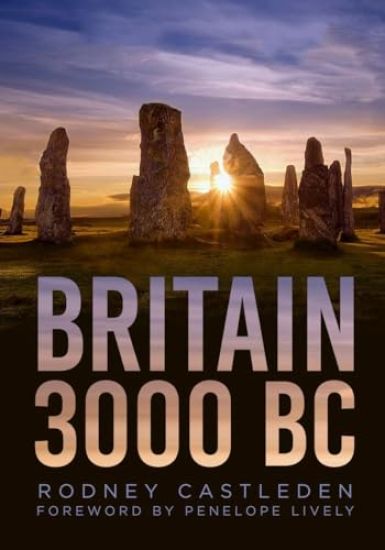
Were prehistoric people like us? How did they live, what did they think and how did they see their world?3000 BC was a moment of great significance in the British Isles: Avebury, Stonehenge and many other major monuments were at vital stages in their construction and use, and writing – often regarded as the ultimate hallmark of civilisation – made its first appearance in Europe. In this revised and updated edition of Britain 3000 BC, Rodney Castleden uses the evidence of archaeological investigations to recreate the society, customs, economy, religion and ritual of Britain 5000 years ago, and to reveal the lost world of prehistoric people.From the well-built stone houses of Skara Brae on the Orkney Islands to the more primitive wooden huts of Honington in Suffolk, Castleden enters the dwellings and lifestyles of neolithic communities and delves into the nature of their society, their trading networks and positive obsession with death. Britain 3000 BC will be fascinating reading for everyone who is interested in prehistory, archaeology and the magnificent monuments our ancient ancestors left behind.