Roger Schank’s influential book, Dynamic Memory, described how computers could learn based upon what was known about how people learn. Since that book’s publication in 1982, Dr Schank has turned his focus from artificial intelligence to human intelligence. Dynamic Memory Revisited contains the theory of learning presented in the original book, extending it to provide principles for teaching and learning. It includes Dr Schank’s important theory of case-based reasoning and assesses the role of stories in human memory. In addition, it covers his ideas on non-conscious learning, indexing, and the cognitive structures that underlie learning by doing. Dynamic Memory Revisited is crucial reading for all who are concerned with education and school reform. It draws attention to how effective learning takes place and provides instruction for developing software that truly helps students learn.
The world is being invaded by aliens, who wish to build colonies as a means of survival. Their planet has been destroyed by an asteroid. These aliens are detected by the falling of pink snow and occasional sighting of themselves. The scientific community forms a team of specialized individuals to investigate. Cristene Longara who is a newspaper reporter, and her photographer Reggi Bergoin are sent with this group.Princeston Jovic, a special investigator from the government of the U.S., is sent to check out reports of alien activity in the mountains of Vietnam. In a tavern he meets a beautiful woman, and they fall in love. There is animosity between Princeston and the team leader, Monol. The team meets with the aliens and can't agree on anything. The aliens are destroyed and the team heads back to the U.S.A. Princeston plans to meet a female member of the team back home.
Ten years ago, most scholars and students relied on bulky card catalogs, printed bibliographic indices, and hardcopy books and journals. Today, much content is available electronically or online. This book examines the history of one of the first, and most successful, digital resources for scholarly communication, JSTOR. Beginning as a grant-funded project of the Andrew W. Mellon Foundation at the University of Michigan, JSTOR has grown to become a major archive of the backfiles of academic journals, and its own nonprofit organization. Roger Schonfeld begins this history by looking at JSTOR's original mission of saving storage space and thereby storage costs, a mission that expanded immediately to improving access to the literature. What role did the University play? Could JSTOR have been built without the active involvement of a foundation? Why was it seen as necessary to "spin off" the project? This case study proceeds as an organizational history of the birth and maturation of this nonprofit, which had to emerge from the original university partnership to carve its own identity. How did the grant project evolve into a successful marketplace enterprise? How was JSTOR able to serve its twofold mission of archiving its journals while also providing access to them? What has accounted for its growth? Finally, Schonfeld considers implications of the economic and organizational aspects of archiving as well as the system-wide savings that JSTOR ensures by broadly distributing costs.
The battle of arriving mortality is experienced by each of us during our lifetime. For some it is a ferocious fight filled with fear and intensity, and for others it is a time of seeking peace as the new future beyond human knowledge arrives. For everyone, however, it requires our complete attention as we are swept up by the forces over which we often have little control. This book takes the reader to that battlefront, and through the physician's eyes, allows a better understanding of how patients may improve the circumstances that would otherwise seem inevitable. Surviving Mortality is a primer on survival as these patients fight the greatest battles of their lives.
Not a designer? Don’t have a big marketing budget? Now you can design effective marketing materials yourself with this guide written by best-selling author and design expert Roger C. Parker. This one-stop guide to marketing gives you the basics for creating effective messages and step-by-step instruction for using Publisher 2003 to design compelling, easy-to-read marketing materials that deliver your message successfully. Key Book Benefits:Demystifies design in clear, simple, everyday language that is easy for non-designers and non-marketers to understandFocuses on the key steps needed to create attractive, easy-to-read marketing and training materialsEmphasizes tips, techniques, and how to avoid expensive mistakes that spell the crucial differences between messages that are read and messages that are ignoredIncludes before-and-after project makeovers, worksheets, review questions, and glossaries of new terms appearing in each chapter• Offers bonus templates, worksheets, and more on the companion Web site
This work reveals the storied love affair that has long existed between native Nebraskans and the University of Nebraska football team. The author draws upon his experiences as a devoted "Huskerviller," and the insights of more than 500 other Husker fans who shared their ideas through interviews, questionnaires, and Internet communication, to compose a story that highlights how the culture, history, and geography of Nebraska are intimately embedded in fans' devotion to the Cornhuskers. The book features photographs and an extensive bibliography, while an appendix provides 16 essays written by devoted Husker fans.
From Roger C. Schank—one of the most highly respected thinkers, writers, and speakers in the training, learning, and e-learning community—comes a compelling book of essays that explore the myriad issues related to challenges faced by today’s instructional designers and trainers. The essays offer a much-needed perspective on what trainers do, why they do it, and how they do it. Lessons in Learning, e-Learning, and Training serves as a barometer to the issues that often perplex trainers and helps to illuminate three main points: what can and cannot be taught; how people think and learn; and what technology can really effectively provide. In addition, each essay is filled with practical guidance and includes a summary of ideas, tips and techniques, things to think about, checklists, and other job aids.
Most six-year-olds can't wait to go to school on that first day in September. It's a sign of coming of age. They get to go to school like the big kids. For an alarmingly large number of these children, however, boredom, anxiety, and fear of learning quickly set in. This happens because societies build schools that achieve much less than they promise, are frustrating for students, and generally fail to help children become adults who can think for themselves. The development of flexible, inquiring minds has rarely been the primary consideration in the design of educational systems. Making students into proper members of society has usually been of much greater concern than developing students who are creative thinkers. Today's schools are organized around yesterday's ideas, needs, and resources. The purpose of this volume is to raise consciousness about the changes needed in the educational system. It is concerned with what is wrong with the educational system and how to improve it. It presents a pragmatic view of what education could be through the use of computer technology -- technology permitting us to pursue the radical notion that children must be allowed to guide their own education because interested learners learn more. Children can and will become voracious learners if they are in charge of their own education. This does not mean letting them play video games all day, but it does mean allowing them to pursue the intellectual goals that interest them, rather than being force-fed knowledge according to someone else's schedule. The school system must face the responsibility of creating learning environments that are so much fun that children cannot wait to get up in the morning and go to school. This volume describes the progress being made at The Institute for the Learning Sciences using computers to provide motivating environments for learning -- environments that enable students to explore new worlds, and learn things by doing them. This technology will allow society to support what is one of the most important parts of a good educational system: the cultivation of individual initiative in students. This text documents the authors' work from the cognitive psychology which underlies it on through to guided tours of a number of the software learning environments they've developed. The CD ROM version of Engines for Education illustrates the types of innovative education software being developed at the Institute for the Learning Sciences at Northwestern University. In addition to providing tours of seven different ILS programs, the CD ROM itself provides an example of a new form of hypermedia system developed at ILS. Containing the complete text of the book with full-text search, the CD ROM enables readers to move fluidly between pages as they would with a traditional book; it also engages the reader through question-answer interactions with the system. Hardware Requirements: Macintosh (not a Macintosh Power PC) with 16M of RAM (13M of free RAM) and a CD ROM Drive. Software Requirements: System 7 (or later version) and Quicktime.
To hear politicians talk, one would think the entire purpose of school is to assess children rather than educate them. Excitement about learning doesn't seem to be on anyone's agenda. The villains are those who profit from testing mania, make the tests, coach for testing, publish the books on which the tests are based, and believe that the results matter. Children are being taught things they don't need to know and nobody seems to care. Scrooge Meets Dick and Jane is a cautionary tale of the dangers of educational testing and outmoded curriculum design. Bringing a new twist to Charles Dickens' classic story, A Christmas Carol, Scrooge is recast as the head of an educational testing service. He is faced with the ghosts of Education Past, Present, and Future as well as his former mentor, John Dewey. As he observes a horrible future, he comes to understand the harm he has done and its repercussions on the school system. His time with the ghosts and John Dewey leads him to a dramatic turnaround regarding schools and scholastic teaching. It haunts him until he decides to undo the damage he has done to children all over the world.
In the author's words: "This book is an honest attempt to understand what it means to be educated in today's world." His argument is this: No matter how important science and technology seem to industry or government or indeed to the daily life of people, as a society we believe that those educated in literature, history, and other humanities are in some way better informed, more knowing, and somehow more worthy of the descriptor "well educated." This 19th-century conception of the educated mind weighs heavily on our notions on how we educate our young. When we focus on intellectual and scholarly issues in high school as opposed to issues, such as communications, basic psychology, or child raising, we are continuing to rely on outdated notions of the educated mind that come from elitist notions of who is to be educated and what that means. To accommodate the realities of today's world it is necessary to change these elitist notions. We need to rethink what it means to be educated and begin to focus on a new conception of the very idea of education. Students need to learn how to think, not how to accomplish tasks, such as passing standardized tests and reciting rote facts. In this engaging book, Roger C. Schank sets forth the premises of his argument, cites its foundations in the Great Books themselves, and illustrates it with examples from an experimental curriculum that has been used in graduate schools and with K-12 students. Making Minds Less Well Educated Than Our Own is essential reading for scholars and students in the learning sciences, instructional design, curriculum theory and planning, educational policy, school reform, philosophy of education, higher education, and anyone interested in what it means to be educated in today's world.
In the author's words: "This book is an honest attempt to understand what it means to be educated in today's world." His argument is this: No matter how important science and technology seem to industry or government or indeed to the daily life of people, as a society we believe that those educated in literature, history, and other humanities are in some way better informed, more knowing, and somehow more worthy of the descriptor "well educated." This 19th-century conception of the educated mind weighs heavily on our notions on how we educate our young. When we focus on intellectual and scholarly issues in high school as opposed to issues, such as communications, basic psychology, or child raising, we are continuing to rely on outdated notions of the educated mind that come from elitist notions of who is to be educated and what that means. To accommodate the realities of today's world it is necessary to change these elitist notions. We need to rethink what it means to be educated and begin to focus on a new conception of the very idea of education. Students need to learn how to think, not how to accomplish tasks, such as passing standardized tests and reciting rote facts. In this engaging book, Roger C. Schank sets forth the premises of his argument, cites its foundations in the Great Books themselves, and illustrates it with examples from an experimental curriculum that has been used in graduate schools and with K-12 students. Making Minds Less Well Educated Than Our Own is essential reading for scholars and students in the learning sciences, instructional design, curriculum theory and planning, educational policy, school reform, philosophy of education, higher education, and anyone interested in what it means to be educated in today's world.
How are our memories, our narratives, and our intelligence interrelated? What can artificial intelligence and narratology say to each other? In this pathbreaking study by an expert on learning and computers, Roger C. Schank argues that artificial intelligence must be based on real human intelligence, which consists largely of applying old situations - and our narratives of them - to new situations in less than obvious ways. To design smart machines, Schank therefore investigated how people use narratives and stories, the nature and function of those narratives, and the connection of intelligence to both telling and listening. As Schank explains, "We need to tell someone else a story that describes our experiences because the process of creating the story also creates the memory structure that will contain the gist of the story for the rest of our lives. Talking is remembering." This first paperback edition includes an illuminating foreword by Gary Saul Morson.
An atlas of 13,000 years of Florida maritime history, this book begins with an overview of its bathymetry, shoreline, winds and currents. Other chapters examine the growth of Florida's maritime industries and survey ship types, lighthouse locations, ports, hurricanes, reefs and shipwreck sites.
Blending elements of geography, archaeology, and ethnography, this readable, illustrated history offers a fascinating portrait of all aspects of Caymanian nautical traditions and describes how an intrepid and independent group of islanders flourished on the frontiers of the sea.From the moment of their discovery by Europeans in 1503, the Caymans were recognized for their abundance of sea turtles, a resource that supported the colonization of the West Indies and fostered the development of a distinctive group of sea-hardened people whose nautical skills were known throughout the world. Roger C. Smith follows the mysterious tracks of the sea turtles and the mariners who hunted them, from the shores of the Caymans to the coastal lagoons of Cuba and finally to the Miskito Cays of Nicaragua. He also pursues the colonial exploits of privateers and pirates, examines the development of island catboats and schooners, and takes the reader underwater to the sites of unlucky ships that wrecked on poorly charted reefs.
The Anthropological Papers of the University of Arizona is a peer-reviewed monograph series sponsored by the School of Anthropology. Established in 1959, the series publishes archaeological and ethnographic papers that use contemporary method and theory to investigate problems of anthropological importance in the southwestern United States, Mexico, and related areas.
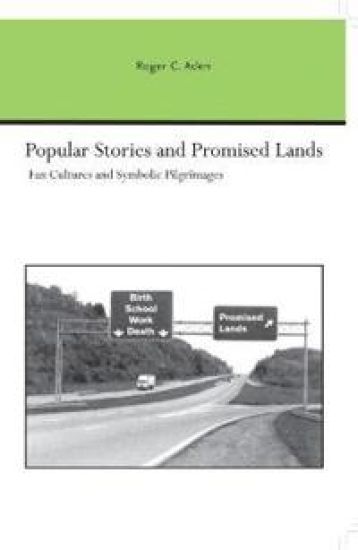
Popular culture stories--found in comic strips, TV programs, magazines, and movies--gain their popularity by evoking our desires and anxieties. Aden offers a well-constructed argument that creating a sense of place (and with it a sense of personal identity and community) serves as an important enticement for many popular cultures works. . . . Aden handles contemporary theory deftly and] does an excellent job of identifying many of the tensions present in 20th-century America. --Quarterly Journal of Speech Stories encountered at the movies, on television, and in popular magazines are treated as reflections of the popular culture. . . . Believing that the American experience has been guided by a 'normative narrative' or 'grand narrative' that constitutes the 'American dream, ' Aden holds that stories can be used to extract the 'rules' of a narrative, determine the direction, and identify conceptions of the 'promised lands' for a culture. --Critical Studies in Mass Communication
Features 103 photographs and illustrations of thirty key sites in and around the Chickamauga battlefield--the most visited battlefield park--organized in an order that allows for a driving tour through the park.