

Kirjahaku
Etsi kirjoja tekijän nimen, kirjan nimen tai ISBN:n perusteella.
1000 tulosta hakusanalla Roger Lewis



The Selected Letters of Lewis Carroll
Lewis Carroll; Roger Lancelyn Green
Palgrave Macmillan
1989
sidottu
Lewis Carroll is one of the world's best-loved writers. His immortal Wonderland and delightful nonsense verses have enchanted generations of children and adults alike. The wit and imagination, the wisdom, sense of absurdity and sheer fun which fill his books shine just as clearly from the many letters he wrote. '...each is a miniature Wonderland... They reveal a truly delightful man...the combination of intense goodness and unselfishness with a magic, nonsense wit is unique'. The Scotsman '...a magnificent collection of delightful and entertaining letters reflecting all that was embraced in that remarkable character...all his charm, inventive fun, wisdom, generosity, kindliness and inventive mind'. Walter Tyson, Oxford Times.
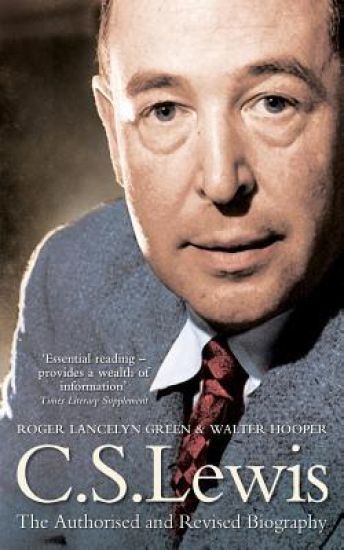
This is the true story of C.S. Lewis - one of the great writers of the 20th century, whose books for children and adults have become much-loved classics. Part of the story has been made famous through the film "Shadowlands" - here it is told in full by those who knew him personally.

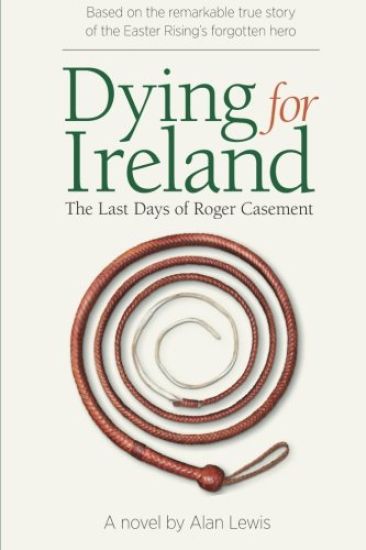
Dying for Ireland: The Last Days of Roger Casement
Alan H. Lewis
Createspace Independent Publishing Platform
2016
nidottu
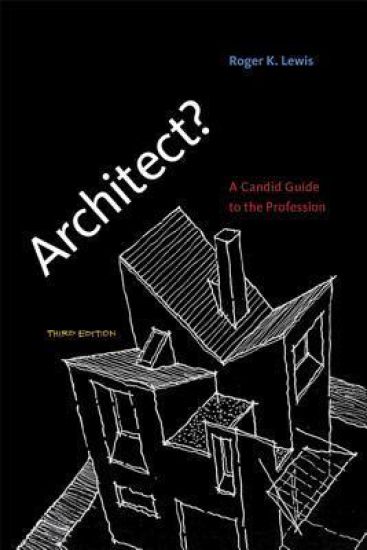
The new edition of an essential text offers an informative, engaging view of the architectural profession from education through practice.Since 1985, Architect? has been an essential text for aspiring architects, offering the best basic guide to the profession available. This third edition has been substantially revised and rewritten, with new material covering the latest developments in architectural and construction technologies, digital methodologies, new areas of focus in teaching and practice, evolving aesthetic philosophies, sustainability and green architecture, and alternatives to traditional practice. Architect? tells the inside story of architectural education and practice; it is realistic, unvarnished, and insightful. Chapter 1 asks "Why Be an Architect?" and chapter 2 offers reasons "Why Not to Be an Architect." After this provocative beginning, Architect? goes on to explain and critique architectural education, covering admission, degree and curriculum types, and workload as well as such post-degree options as internship, teaching, and work in related fields. It offers a detailed discussion of professors and practitioners and the "-isms" and "-ologies" most prevalent in teaching and practicing architecture. It explains how an architect works and gets work, and describes architectural services from initial client contact to construction oversight. The new edition also includes a generous selection of drawings and cartoons from the author's Washington Post column, "Shaping the City," offering teachable moments wittily in graphic form.The author, Roger Lewis, has taught, practiced, and written extensively about architecture for many years. In Architect? he explains-for students, professors, practitioners, and even prospective clients-how architects think and work and what they care about as they strive to make the built environment more commodious, more beautiful, and more sustainable.
Service Responses to the Emergence of Joint Decisionmaking
Leslie Lewis; Roger Allen Brown; C.Robert Roll
RAND
2002
pokkari
An assessment of the manner in which the services have altered their planning, programming, and budgeting processes in response to the changes brought about by the 1986 Goldwater-Nichols legislation. The Goldwater-Nichols legislation, passed in 1986, sought to counterbalance the decisionmaking authority of the services by giving the Commanders-in-Chief (CINCs) a far greater voice in the determination of operational requirements. Toward this goal, the CINCs' spokesperson, the Chairman of the Joint Chiefs of Staff, was empowered to integrate CINC requirements as well as to demonstrate how those requirements related to joint operational readiness. This report examines in detail how the Goldwater-Nichols legislation has affected decisionmaking within the Department of Defense and, more specifically, how the individual services have responded to the changes brought about by that legislation.After first describing the forces that underlay the passage of Goldwater-Nichols, the report outlines the manner in which the Departments of the Army, Navy, and Air Force have changed their decision models as well as their planning, programming, and budgeting processes in order to better respond to CINC demands. The report concludes that all of the services have to varying degrees undergone some reorganization in response to the changes brought about by Goldwater-Nichols. However, those changes, which have largely reflected the cultures of the individual services, have been incremental at best and have yet to fully meet the challenge this new decisionmaking environment has posed. [AF]
British Industrial Capitalism Since The Industrial Revolution
Roger Lloyd-Jones; Merv Lewis
Routledge
2016
sidottu
The authors use a long-wave framework to examine the historical evolution of British industrial capitalism since the late-18th century, and present a challenging and distinctive economic history of modern and contemporary Britain. The book is intended for undergraduate courses on the economic history of modern Britain within history, economic and social history, economic history and economic degree schemes, and economic theory courses.

British Industrial Capitalism Since The Industrial Revolution
Roger Lloyd-Jones; Merv Lewis
Routledge
1997
nidottu
The authors use a long-wave framework to examine the historical evolution of British industrial capitalism since the late-18th century, and present a challenging and distinctive economic history of modern and contemporary Britain. The book is intended for undergraduate courses on the economic history of modern Britain within history, economic and social history, economic history and economic degree schemes, and economic theory courses.

Identity Matters: Canadian Stories
Roger C. Lewis
Createspace Independent Publishing Platform
2017
nidottu

Personal Capitalism and Corporate Governance
Myrddin John Lewis; Roger Lloyd-Jones; Mark David Matthews
Ashgate Publishing Limited
2011
sidottu
This book is specifically aimed at addressing a gap in the study of the evolution of corporate governance in Britain. In particular its key theme, the relationship between corporate governance and personal capitalism in British manufacturing in the first half of the twentieth century, provides the means for a systematic and critical examination of the dominant Chandlerian paradigm that the long-running persistence of personal capitalism shaped the governance of British manufacturing firms well into the twentieth century and acted to erode their competitive performance. The book helps to identify those aspects of corporate governance that have undergone change, with some critical observations on the magnitude of change and those aspects which have displayed characteristics of continuity. The empirical spine of this book is set out in a series of case studies which provide the basis for the examination of corporate governance in Britain during the period c. 1900 to 1950. By focusing particularly on the responses of a range of businesses to the turbulent environment of the inter-war years, this volume offers an insight into a much neglected, yet vital, area of business and economic history.

A History of the Perkins School of Theology
Lewis Howard Grimes; Roger Loyd
Hutson Street Press
2025
sidottu

A History of the Perkins School of Theology
Lewis Howard Grimes; Roger Loyd
Hutson Street Press
2025
pokkari

Personal Capitalism and Corporate Governance
Myrddin John Lewis; Roger Lloyd-Jones; Mark David Matthews
Routledge
2016
nidottu
This book is specifically aimed at addressing a gap in the study of the evolution of corporate governance in Britain. In particular its key theme, the relationship between corporate governance and personal capitalism in British manufacturing in the first half of the twentieth century, provides the means for a systematic and critical examination of the dominant Chandlerian paradigm that the long-running persistence of personal capitalism shaped the governance of British manufacturing firms well into the twentieth century and acted to erode their competitive performance. The book helps to identify those aspects of corporate governance that have undergone change, with some critical observations on the magnitude of change and those aspects which have displayed characteristics of continuity. The empirical spine of this book is set out in a series of case studies which provide the basis for the examination of corporate governance in Britain during the period c. 1900 to 1950. By focusing particularly on the responses of a range of businesses to the turbulent environment of the inter-war years, this volume offers an insight into a much neglected, yet vital, area of business and economic history.

A History of the Perkins School of Theology
Lewis Howard Grimes; Roger Loyd
Sagwan Press
2018
pokkari
This work has been selected by scholars as being culturally important, and is part of the knowledge base of civilization as we know it. This work was reproduced from the original artifact, and remains as true to the original work as possible. Therefore, you will see the original copyright references, library stamps (as most of these works have been housed in our most important libraries around the world), and other notations in the work.This work is in the public domain in the United States of America, and possibly other nations. Within the United States, you may freely copy and distribute this work, as no entity (individual or corporate) has a copyright on the body of the work.As a reproduction of a historical artifact, this work may contain missing or blurred pages, poor pictures, errant marks, etc. Scholars believe, and we concur, that this work is important enough to be preserved, reproduced, and made generally available to the public. We appreciate your support of the preservation process, and thank you for being an important part of keeping this knowledge alive and relevant.
Alfred Herbert Ltd and the British Machine Tool Industry, 1887-1983
Roger Lloyd-Jones; M.J. Lewis
Ashgate Publishing Limited
2006
sidottu
At the beginning of the twentieth century Britain was amongst the world leaders in the production of machine tools, yet by the 1980s the industry was in terminal decline. Focusing on the example of Britain's largest machine tool maker, Alfred Herbert Ltd of Coventry, this study charts the wider fortunes of this vital part of the manufacturing sector. Taking a chronological approach, the book explores how during the late nineteenth century the industry developed a reputation for excellence throughout the world, before the challenges of two world wars necessitated drastic changes and reorganisations. Despite meeting these challenges and emerging with confidence into the post-war market place, the British machine tool industry never regained its pre-eminent position, and increasingly lost ground to foreign competition. By using the example of Alfred Herbert Ltd to illuminate the broader economic and business history of the British machine tool industry, this study not only provides a valuable insight into British manufacturing, but also contributes to the ongoing debates surrounding Britain's alleged decline as a manufacturing nation.

The First World War was above all a war of logistics. Whilst the conflict will forever be remembered for the mud and slaughter of the Western Front, it was a war won on the factory floor as much as the battlefield. Examining the war from an industrial perspective, Arming the Western Front examines how the British between 1900 and 1920 set about mobilising economic and human resources to meet the challenge of 'industrial war'. Beginning with an assessment of the run up to war, the book examines Edwardian business-state relations in terms of armament supply. It then outlines events during the first year of the war, taking a critical view of competing constructs of the war and considering how these influenced decision makers in both the private and public domains. This sets the framework for an examination of the response of business firms to the demand for 'shells more shells', and their varying ability to innovate and manage changing methods of production and organisation. The outcome, a central theme of the book, was a complex and evolving trade-off between the quantity and quality of munitions supply, an issue that became particularly acute during the Battle of the Somme in 1916. This deepened the economic and political tensions between the military, the Ministry of Munitions, and private engineering contractors as the pressure to increase output accelerated markedly in the search for victory on the western front. The Great War created a dual army, one in the field, the other at home producing munitions, and the final section of the book examines the tensions between the two as the country strove for final victory and faced the challenges of the transition to the peace time economy.

The First World War was above all a war of logistics. Whilst the conflict will forever be remembered for the mud and slaughter of the Western Front, it was a war won on the factory floor as much as the battlefield. Examining the war from an industrial perspective, Arming the Western Front examines how the British between 1900 and 1920 set about mobilising economic and human resources to meet the challenge of 'industrial war'. Beginning with an assessment of the run up to war, the book examines Edwardian business-state relations in terms of armament supply. It then outlines events during the first year of the war, taking a critical view of competing constructs of the war and considering how these influenced decision makers in both the private and public domains. This sets the framework for an examination of the response of business firms to the demand for 'shells more shells', and their varying ability to innovate and manage changing methods of production and organisation. The outcome, a central theme of the book, was a complex and evolving trade-off between the quantity and quality of munitions supply, an issue that became particularly acute during the Battle of the Somme in 1916. This deepened the economic and political tensions between the military, the Ministry of Munitions, and private engineering contractors as the pressure to increase output accelerated markedly in the search for victory on the western front. The Great War created a dual army, one in the field, the other at home producing munitions, and the final section of the book examines the tensions between the two as the country strove for final victory and faced the challenges of the transition to the peace time economy.