Kirjahaku
Etsi kirjoja tekijän nimen, kirjan nimen tai ISBN:n perusteella.
1000 tulosta hakusanalla Rohit Arora
This book, Islet Cell Growth Factors, provides a timely contribution to the current thinking regarding the concepts in the area of islet cell regeneration with special reference to insulin secreting beta cells. The contributions are from leaders in the field with a long-standing interest in the area of islet biology.In the first chapter Drs. Dirice and Kulkarni provide a broad introduction to the topic of islet cell regeneration with a focus on growth factor pathways, especially the insulin and insulin-like growth factor signaling mechanisms affecting beta cells in Type 1, Type 2 and gestational diabetes. This is followed by a contribution by Drs. Granot and Dor who describe an elegant lineage-trace model to confirm that proliferation is one of the major mechanisms underlying beta-cell regeneration in adult rodents. These findings are backed up by Drs. Georgia and Bhushan on cell cycle control in beta cells. Subsequent chapters are focused on proteins downstream of the growth factor pathways in the regulation of beta-cell biology. Thus, Drs. Ham and Stoffers discuss the role of the homeodomain protein, Pdx-1, on beta-cell growth while Dr. Bernal-Mizrachi describes the significance of Akt in beta-cell growth and function. Finally, Drs. Kitamura, Kitamura and Accili highlight the importance of the forkhead protein, FoxO1, in pancreatic betacells.In addition to insulin and IGF-I, several other growth factors play an important role in modulating beta-cell growth. The pathway utilized by the hepatocyte growth factor is discussed by Drs. Gonzalez-Perusa, Alonso and Garcia-Ocana. The significance of pathways relevant for beta-cell proliferation and apoptosis during pregnancy and the postnatal period is nicely presented by Drs. Fujinaka, Wang, Matsushita and Vasavada. Together these chapters provide a comprehensive and mechanistic view of the signaling pathways that are relevant for mammalian beta-cell proliferation. This is an excellent book for the research scientist
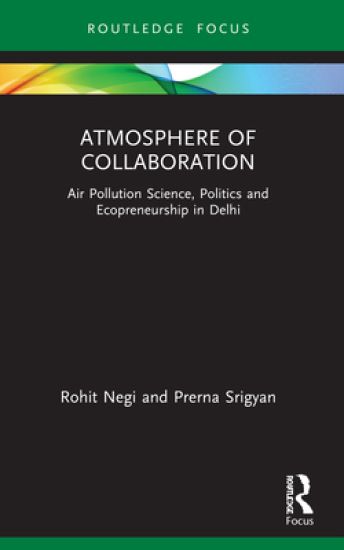
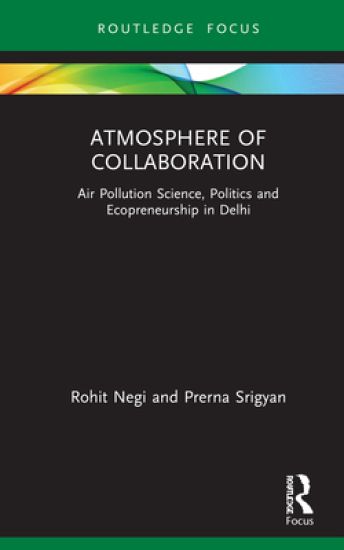
This book discusses air pollution in Delhi from scientific, social and entrepreneurial perspectives. Using key debates and interventions on air pollution, it examines the trajectories of environmental politics in the Delhi region, one of the most polluted areas in the world. It highlights the administrative struggles, public advocacy, and entrepreneurial innovations that have built creative new links between science and urban citizenship. The book describes the atmosphere of collaboration that pervades these otherwise disparate spheres in contemporary Delhi.Key features: · Presents an original case study on urban environmentalism from the Global South· Cuts across science, policy, advocacy and innovation· Includes behind-the-scenes discussions, tensions and experimentations in the Indian air pollution space· Uses immersive ethnography to study a topical and relevant urban issueAs South Asian and Global South cities confront fast-intensifying environmental risks, this study presents a dialogue between urban political ecology (UPE) and science and technology studies on Delhi’s air. The book explores how the governance of air is challenged by scales, jurisdictions, and institutional structures. It also shows how technical experts are bridging disciplinary silos as they engage in advocacy by translating science for public understanding. The book serves as a reminder of the enduring struggles over space, quality of life, and citizenship while pointing to the possibilities for different urban futures being negotiated by variegated agents.The book will interest scholars and researchers of science and technology studies, urban studies, urban geography, environmental studies, environmental politics, governance, public administration, and sociology, especially in the Global South context. It will also be useful to practitioners, policymakers, bureaucrats, government bodies, civil society organisations, and those working on air pollution advocacy.

Efficient Cost Aware Artificial Intelligence in Healthcare and Biomedicine
Rohit Kumar
ELSEVIER SCIENCE PUBLISHING CO INC
2025
nidottu
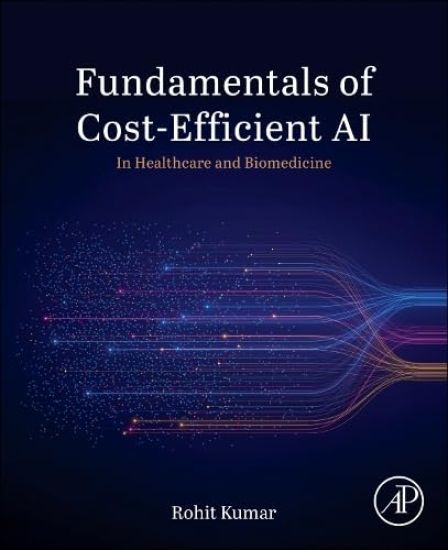
Efficient Cost Aware Artificial Intelligence in Healthcare and Biomedicine is situated within the broader context of artificial intelligence (AI) and deep learning (DL) technologies as they pertain to healthcare and biomedicine. AI and DL have witnessed remarkable advancements in recent years, leading to breakthroughs in various applications, including medical image analysis, drug discovery, disease diagnosis, and personalized treatment recommendations. In 14 chapters this book offers techniques and best practices for compressing deep learning models, allowing them to run efficiently on healthcare devices with limited memory and processing power. This book provides the void code-first approach to optimizing AI for healthcare and biomedicine by offering practical solutions to the unique challenges posed by AI in healthcare. The growing demand for efficient AI computing techniques, coupled with advancements in Deep Learning and Large Language Models tailored for healthcare and biomedicine, makes this book, Efficient Cost Aware Artificial Intelligence in Healthcare and Biomedicine timely and essential. It addresses the pressing need for practical guidance on compressing and optimizing AI models for everyday healthcare devices, making it accessible to a broad and diverse audience seeking to harness the power of AI within the healthcare and biomedicine sectors. "Efficient AI in Healthcare and Biomedicine" empowers healthcare professionals, researchers, and organizations with practical solutions to the challenges posed by resource-intensive deep learning models in healthcare and biomedicine.
Analytical Chemistry for Environmental Solutions: Elements of Change
Rohit Bhatia; Gagandeep Singh
Academic Press
2026
nidottu
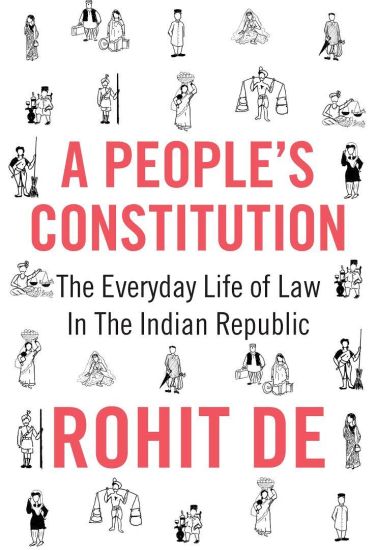
It has long been contended that the Indian Constitution of 1950, a document in English created by elite consensus, has had little influence on India’s greater population. Drawing upon the previously unexplored records of the Supreme Court of India, A People’s Constitution upends this narrative and shows how the Constitution actually transformed the daily lives of citizens in profound and lasting ways. This remarkable legal process was led by individuals on the margins of society, and Rohit De looks at how drinkers, smugglers, petty vendors, butchers, and prostitutes—all despised minorities—shaped the constitutional culture.The Constitution came alive in the popular imagination so much that ordinary people attributed meaning to its existence, took recourse to it, and argued with it. Focusing on the use of constitutional remedies by citizens against new state regulations seeking to reshape the society and economy, De illustrates how laws and policies were frequently undone or renegotiated from below using the state’s own procedures. De examines four important cases that set legal precedents: a Parsi journalist’s contestation of new alcohol prohibition laws, Marwari petty traders’ challenge to the system of commodity control, Muslim butchers’ petition against cow protection laws, and sex workers’ battle to protect their right to practice prostitution.Exploring how the Indian Constitution of 1950 enfranchised the largest population in the world, A People’s Constitution considers the ways that ordinary citizens produced, through litigation, alternative ethical models of citizenship.
KUTIR NAMED BRITISH RESTAURANT OF THE YEAR 2022 AT THE BRITISH RESTAURANT AWARDSKutir named by Evening Standard as one of the Best Indian Restaurants in London 2022'Rohit is respectful of the traditions of Indian cooking, yet unafraid of innovation and refinement.' - Pierre Koffmann'Manthan is definitely the best curry house in the world. Which is no surprise when you consider that it is the latest manifestation of the genius of Rohit Ghai, the Punjabi chef initially behind Benares, Trishna Gymkhana and Hoppers.' Giles Coren, The TimesWith food inspired by India's incredibly rich and varied food scene, Rohit Ghai has gained a reputation for colourful, flavour-rich curries that showcase both classic and lesser-known Indian flavours. Tarkari, meaning 'vegetable' in Urdu, is Rohit's first book and similarly celebrates this diverse heritage - but on a more personal, homely note.Packed with innovative vegetarian and vegan dishes, it pays homage to the food his parents ate. From creative starters like Malabar Cauliflower, to big, bold curries such as Jackfruit Masala and Lotus Root Kofta, as well as breads, rice, dips and pickles, it includes everything you need to cook truly spectacular Indian vegetarian and vegan meals at home.'Rohit Ghai's backstory is the stuff of culinary legend.' GQ'Faultless cooking that has immediately propelled it into London's very top tier for nouvelle cuisine.' Harden's London Restaurant Guide on Kutir
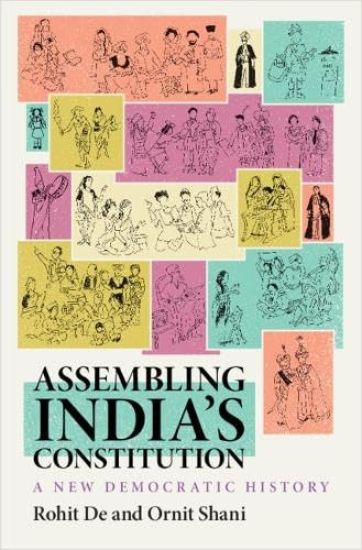
In this paradigm-shifting history, two leading historians of India re-examine the making of the Indian constitution from the perspective of the country's people. In a departure from dominant approaches that foreground the framing of the text within the Constituent Assembly, Ornit Shani and Rohit De instead demonstrate how it was shaped by diverse publics across India and beyond. They reveal multiple, parallel constitution-making processes underway across the subcontinent, highlighting how individuals and groups transformed constitutionalism into a medium of struggle and a tool for transformation. De and Shani argue that the deep sense of ownership the public assumed over the constitution became pivotal to the formation, legitimacy and endurance of India's democracy against arduous challenges and many odds. In highlighting the Indian case as a model for thinking through constitution making in plural societies, this is a vital contribution to constitutional and democratic history.
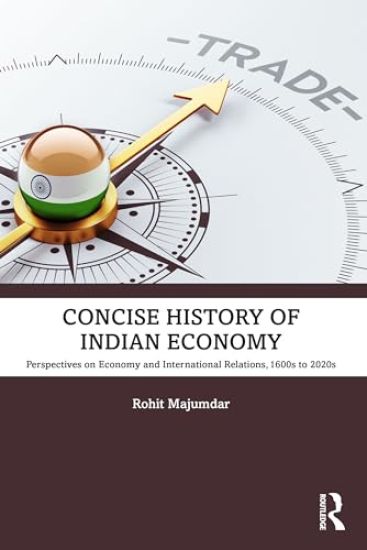
This book presents a concise economic history of India from 1600 to the mobile economy of the twenty-first century. It examines political events, social history, and economic developments across the world through the years to showcase how India has navigated its economic past, present, and future, and shaped events that for years controlled the Indian economy.This volume covers a range of important themes, which include:Medieval fiscal systems, and the European surge in IndiaThe impact of the British Industrial Revolution on India; English interventionism and policies; the imperialistic economy and its impactIndian economy and nationalist movement in the nineteenth and early-twentieth century; the Great Depression and its global consequencesGandhiism and ‘mass nationalism’; Independence and Partition; the impact of the World Wars; the inter-war economy; the rise of the dollar, and other key global trendsThe Cold War and IndiaConstitutional remedies, nation-building and industrial policies; food security, the Green Revolution, and the power politics of 1970sLiberalization, privatization, and globalization in the 1990s; andThe economy of war and peace, India–China relations, and current trends in political economyThe book offers a lucid and insightful narrative of how the economy unfolded in India. It will interest readers of Indian history, economic history, and South Asian history and other general readers.
Mapping Innovation in India’s Creative Industries
Rohit K Dasgupta; Jennie Jordan; Graham Hitchen; Kishalay Bhattacharjee; Diviani Chaudhuri; Deepa D; Adrija Roychowdhury
TAYLOR FRANCIS LTD
2023
sidottu
The first in-depth study of the Indian creative industries, this book provides a comprehensive mapping of the Indian creative industries and its policy landscape, developing and defining key concepts and terms and offering detailed case studies of specific sectors, geographic regions and governance structures.Using an ecosystem framework, this book focuses on strategy/policy; tangible and intangible infrastructure; and funding and investment to understand the main drivers and barriers across nine sub-sector value chains. With investment from global brands into many sectors, it tracks how Indian creative industries are fostering innovation and design for social and ecological sustainability. It also delves into India’s informal economy to share key policy insights.The volume will be of great interest to scholars and researchers of public policy, business studies and South Asian studies. It will also be a key document for foreign investors willing to invest in one of the fastest-growing and stable economies in the world.
This book presents a concise economic history of India from 1600 to the mobile economy of the twenty-first century. It examines political events, social history, and economic developments across the world through the years to showcase how India has navigated its economic past, present, and future, and shaped events that for years controlled the Indian economy.This volume covers a range of important themes, which include:Medieval fiscal systems, and the European surge in IndiaThe impact of the British Industrial Revolution on India; English interventionism and policies; the imperialistic economy and its impactIndian economy and nationalist movement in the nineteenth and early-twentieth century; the Great Depression and its global consequencesGandhiism and ‘mass nationalism’; Independence and Partition; the impact of the World Wars; the inter-war economy; the rise of the dollar, and other key global trendsThe Cold War and IndiaConstitutional remedies, nation-building and industrial policies; food security, the Green Revolution, and the power politics of 1970sLiberalization, privatization, and globalization in the 1990s; andThe economy of war and peace, India–China relations, and current trends in political economyThe book offers a lucid and insightful narrative of how the economy unfolded in India. It will interest readers of Indian history, economic history, and South Asian history and other general readers.
Mapping Innovation in India’s Creative Industries
Rohit K Dasgupta; Jennie Jordan; Graham Hitchen; Kishalay Bhattacharjee; Diviani Chaudhuri; Deepa D; Adrija Roychowdhury
TAYLOR FRANCIS LTD
2023
nidottu
The first in-depth study of the Indian creative industries, this book provides a comprehensive mapping of the Indian creative industries and its policy landscape, developing and defining key concepts and terms and offering detailed case studies of specific sectors, geographic regions and governance structures.Using an ecosystem framework, this book focuses on strategy/policy; tangible and intangible infrastructure; and funding and investment to understand the main drivers and barriers across nine sub-sector value chains. With investment from global brands into many sectors, it tracks how Indian creative industries are fostering innovation and design for social and ecological sustainability. It also delves into India’s informal economy to share key policy insights.The volume will be of great interest to scholars and researchers of public policy, business studies and South Asian studies. It will also be a key document for foreign investors willing to invest in one of the fastest-growing and stable economies in the world.
From algorithms that draft clinical notes in seconds to autonomous agents that triage emergency room backlogs, artificial intelligence is quietly reshaping every facet of healthcare. Generative AI: Unlocking the Next Chapter in Healthcare is the first comprehensive guide to this revolution—charting how we got here, what’s working now, and where the technology could take us next.Drawing on frontline case studies from leading health systems, biotech labs, and tech giants, the book reveals how large language models, synthetic data engines, and multi agent ecosystems are boosting diagnostic accuracy, accelerating drug discovery, and personalizing patient engagement. It also confronts the hard questions—privacy, bias, liability, and the fear of “machines taking over”—offering clear, actionable frameworks for ethical, human centered deployment.Written for clinicians, executives, innovators, and policy makers and patients alike, this definitive volume distils the expertise of industry pioneers into an accessible roadmap. You’ll explore:• The evolution from early machine learning to today’s generative powerhouses• Real world wins—ambient documentation, AI assisted radiology, virtual nursing, and more• The players shaping the landscape: Epic, Google, Microsoft, NVIDIA, Salesforce, and a wave of insurgent startups• Guardrails that preserve trust, protect privacy, and keep humans in the loop• Bold yet plausible futures—from digital twin medicine to globe spanning agent networksWhether you’re leading a hospital, building health tech solutions, a tech startup, or simply curious about the future of care, Generative AI: Unlocking the Next Chapter in Healthcare delivers the insight, inspiration, and practical guidance you need to thrive in the era where human empathy and machine intelligence work side by side.
Software-Defined Networking for IoT Systems
Rohit Kumar Das; Goutam Saha
TAYLOR FRANCIS LTD
2026
sidottu
Software-Defined Networking for IoT Systems: Architecture, Integration, and Applications is a cutting-edge guide that bridges the gap between Software-Defined Networking (SDN) and the Internet of Things (IoT). As IoT networks continue to expand, they face critical challenges such as limited scalability, rigid architectures, and vulnerability to faults. This book presents SDNs as a game-changing solution, offering centralized control, dynamic resource management, and enhanced flexibility to overcome these limitations. This comprehensive volume not only introduces the foundational concepts of SDN and IoT but also provides a deep dive into their integration. Readers will explore layer-wise architectural improvements, step-by-step implementation strategies, and real-world applications across domains like smart cities, industrial automation, healthcare, and smart grids. The book also includes detailed system models, illustrative diagrams, and practical use cases to support hands-on learning and experimentation. Key Features: Thorough exploration of SDN and IoT integration techniques and enhanced SDN-based IoT architecture tailored for diverse sectors Replete with real-world case studies and system-level illustrations in areas such as smart cities, healthcare, logistics, energy management, and industrial automation Suitable as a reference or a supplementary book for researchers, advanced undergraduate and postgraduate students as well as professionals seeking to upskill. To fully benefit from this book, readers should have a foundational understanding of computer networks (OSI model, IP addressing, TCP/IP protocols), programming languages, basic IoT concepts (architecture, protocols, data transmission). Some familiarity with simulation tools and SDN controllers is a plus.
Software-Defined Networking for IoT Systems
Rohit Kumar Das; Goutam Saha
TAYLOR FRANCIS LTD
2026
nidottu
Software-Defined Networking for IoT Systems: Architecture, Integration, and Applications is a cutting-edge guide that bridges the gap between Software-Defined Networking (SDN) and the Internet of Things (IoT). As IoT networks continue to expand, they face critical challenges such as limited scalability, rigid architectures, and vulnerability to faults. This book presents SDNs as a game-changing solution, offering centralized control, dynamic resource management, and enhanced flexibility to overcome these limitations. This comprehensive volume not only introduces the foundational concepts of SDN and IoT but also provides a deep dive into their integration. Readers will explore layer-wise architectural improvements, step-by-step implementation strategies, and real-world applications across domains like smart cities, industrial automation, healthcare, and smart grids. The book also includes detailed system models, illustrative diagrams, and practical use cases to support hands-on learning and experimentation. Key Features: Thorough exploration of SDN and IoT integration techniques and enhanced SDN-based IoT architecture tailored for diverse sectors Replete with real-world case studies and system-level illustrations in areas such as smart cities, healthcare, logistics, energy management, and industrial automation Suitable as a reference or a supplementary book for researchers, advanced undergraduate and postgraduate students as well as professionals seeking to upskill. To fully benefit from this book, readers should have a foundational understanding of computer networks (OSI model, IP addressing, TCP/IP protocols), programming languages, basic IoT concepts (architecture, protocols, data transmission). Some familiarity with simulation tools and SDN controllers is a plus.
"Before Leaving My Childhood" is a collection of poems about Childhood. This book is a tribute to the cherished and treasured memories of life. The poems contained within are original and range from rhymed verse to free verse, with a few sonnets for good measure.
Follow little Kayan as he visits the Caribbean Island of Aruba Where does he go ? What does he see ? What does he love about the island ?This is the first in a children's series of travel books in which Kayan shares his experiences to help kids learn about Aruba or get excited about traveling to Aruba