

Kirjahaku
Etsi kirjoja tekijän nimen, kirjan nimen tai ISBN:n perusteella.
1000 tulosta hakusanalla Rolf Bennett

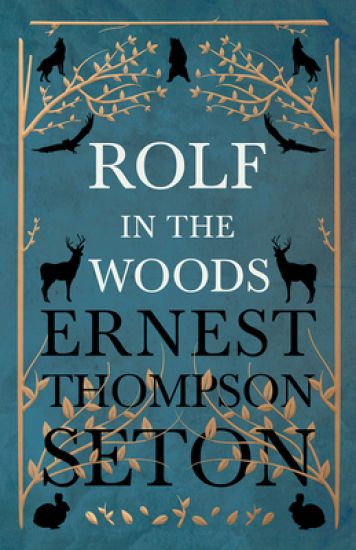
First published in 1911, "Rolf in the Woods" is a classic adventure story by Ernest Thompson Seton. It tells the tale of Rolf, a young teenage orphan with nothing to speak of. He works tirelessly on his authoritarian uncle's farm until one day he meets a Native American called Quonab. They become friends and Rolf learns many great life lessons from him, including outdoors survival and self-defence. However, it's not all fun and adventure in this moving coming-of-age novel. Considered to be among the 100 greatest stories ever written, "Rolf in the Woods" is not to be missed by any fiction lover or collector of Seton's seminal work. Ernest Thompson Seton (1860 - 1946) was an English-born Canadian author and wildlife artist who founded the Woodcraft Indians in 1902. He was also among the founding members of the Boy Scouts of America, established in 1910. He wrote profusely on this subject, the most notable of his scouting literature including "The Birch Bark Roll" and the "Boy Scout Handbook". Many vintage books such as this are becoming increasingly scarce and expensive. We are republishing this book now in an affordable, modern, high-quality edition complete with a specially-commissioned new biography of the author.

Rolf the moose who thought he was a mouse
Anita Hager
Createspace Independent Publishing Platform
2016
nidottu
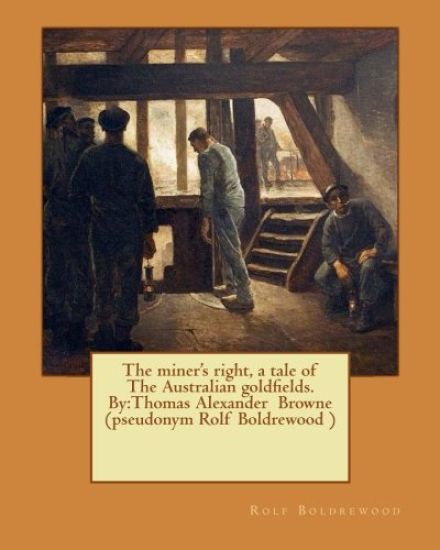
The miner's right, a tale of The Australian goldfields. By: Thomas Alexander Browne (pseudonym Rolf Boldrewood )
Rolf Boldrewood
Createspace Independent Publishing Platform
2016
nidottu
Thomas Alexander Browne (6 August 1826 - 11 March 1915) was an author, who sometimes published under the pseudonym Rolf Boldrewood. He is best known for his novel Robbery Under Arms.Browne was born in London, the eldest child of Captain Sylvester John Brown, a shipmaster formerly of the East India Company, and his wife Elizabeth Angell, n e Alexander. His mother was his "earliest admirer and most indulgent critic . . . to whom is chiefly due whatever meed of praise my readers may hereafter vouchsafe" (Dedication Old Melbourne Memories). (Thomas added the 'e' to his surname in the 1860s). After his father's barque Proteus had delivered a cargo of convicts in Hobart, the family settled in Sydney in 1831. Sylvester Brown took up whaling and built a stone mansion, Enmore, which gave its name to the suburb of Sydney. 1] Thomas Browne was sent to W. T. Cape's school at Sydney, and afterwards to Sydney College, when Cape became its headmaster. One of Browne's closest school friends was a son of Colonel John George Nathaniel Gibbes, MLC, the Collector of Customs for New South Wales, and according to the Dulhunty Papers, Browne spent carefree holidays staying with the Gibbes family at their grand waterside residence on Sydney's Point Piper. When his father moved to Melbourne in 1839, Browne remained at Sydney College as a boarder until 1841 and then was taught by Rev. David Boyd in Melbourne. In 1843, though only 17 years old, Browne took up land near Port Fairy which he named Squattlesamere and was there until 1856. He visited England in 1860 and in 1862-3 had a property, Murrabit run at Lake Boga near Swan Hill, followed by Bundidgaree station on the Murrumbidgee River near Narrandera in the Riverina in 1864. However, bad seasons in 1866 and 1868 compelled Browne to give up squatting, and in 1871 he became a police magistrate and goldfields commissioner. After living in Sydney a short time, in April 1871 he was appointed a police magistrate at Gulgong and gold commissioner in 1872. Browne was an experienced justice of the peace, having acted as chairman of the bench of justices at Narrandera, but in his first years at Gulgong, then one of the richest and largest goldfields in New South Wales, his ignorance of mining and the complicated regulations drew criticism of his competence as commissioner. He was persistently attacked by the Gulgong Guardian And District Mining Record until in 1873 it published an anonymous letter accusing him of bias and corruption. Its editor was thereupon convicted in Sydney of criminal libel and sentenced to six months gaol. The charges against Browne were disproved, and he won favour with the miners by magnanimously interceding with the judge for a light punishment of his libeller. In 1881 Browne was transferred as magistrate and mining warden to Dubbo and to Armidale in 1884. He moved to Albury as chairman of the Land Licensing Board in 1885, serving there as magistrate and warden from 1887-1895 until retiring to Melbourne. He died on 11 March 1915 and was buried in Brighton Cemetery.
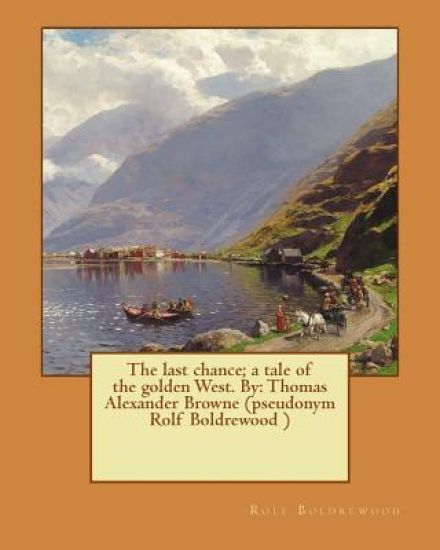
The last chance; a tale of the golden West. By: Thomas Alexander Browne (pseudonym Rolf Boldrewood )
Rolf Boldrewood
Createspace Independent Publishing Platform
2016
nidottu
Thomas Alexander Browne (6 August 1826 - 11 March 1915) was an author, who sometimes published under the pseudonym Rolf Boldrewood. He is best known for his novel Robbery Under Arms.Browne was born in London, the eldest child of Captain Sylvester John Brown, a shipmaster formerly of the East India Company, and his wife Elizabeth Angell, n e Alexander. His mother was his "earliest admirer and most indulgent critic . . . to whom is chiefly due whatever meed of praise my readers may hereafter vouchsafe" (Dedication Old Melbourne Memories). (Thomas added the 'e' to his surname in the 1860s). After his father's barque Proteus had delivered a cargo of convicts in Hobart, the family settled in Sydney in 1831. Sylvester Brown took up whaling and built a stone mansion, Enmore, which gave its name to the suburb of Sydney. 1] Thomas Browne was sent to W. T. Cape's school at Sydney, and afterwards to Sydney College, when Cape became its headmaster. One of Browne's closest school friends was a son of Colonel John George Nathaniel Gibbes, MLC, the Collector of Customs for New South Wales, and according to the Dulhunty Papers, Browne spent carefree holidays staying with the Gibbes family at their grand waterside residence on Sydney's Point Piper. When his father moved to Melbourne in 1839, Browne remained at Sydney College as a boarder until 1841 and then was taught by Rev. David Boyd in Melbourne. In 1843, though only 17 years old, Browne took up land near Port Fairy which he named Squattlesamere and was there until 1856. He visited England in 1860 and in 1862-3 had a property, Murrabit run at Lake Boga near Swan Hill, followed by Bundidgaree station on the Murrumbidgee River near Narrandera in the Riverina in 1864. However, bad seasons in 1866 and 1868 compelled Browne to give up squatting, and in 1871 he became a police magistrate and goldfields commissioner. After living in Sydney a short time, in April 1871 he was appointed a police magistrate at Gulgong and gold commissioner in 1872. Browne was an experienced justice of the peace, having acted as chairman of the bench of justices at Narrandera, but in his first years at Gulgong, then one of the richest and largest goldfields in New South Wales, his ignorance of mining and the complicated regulations drew criticism of his competence as commissioner. He was persistently attacked by the Gulgong Guardian And District Mining Record until in 1873 it published an anonymous letter accusing him of bias and corruption. Its editor was thereupon convicted in Sydney of criminal libel and sentenced to six months gaol. The charges against Browne were disproved, and he won favour with the miners by magnanimously interceding with the judge for a light punishment of his libeller. In 1881 Browne was transferred as magistrate and mining warden to Dubbo and to Armidale in 1884. He moved to Albury as chairman of the Land Licensing Board in 1885, serving there as magistrate and warden from 1887-1895 until retiring to Melbourne. He died on 11 March 1915 and was buried in Brighton Cemetery.
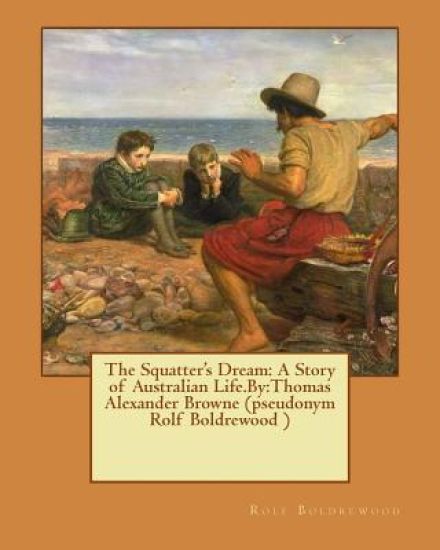
The Squatter's Dream: A Story of Australian Life.By: Thomas Alexander Browne (pseudonym Rolf Boldrewood )
Rolf Boldrewood
Createspace Independent Publishing Platform
2016
nidottu
Thomas Alexander Browne (6 August 1826 - 11 March 1915) was an author, who sometimes published under the pseudonym Rolf Boldrewood. He is best known for his novel Robbery Under Arms.Browne was born in London, the eldest child of Captain Sylvester John Brown, a shipmaster formerly of the East India Company, and his wife Elizabeth Angell, n e Alexander. His mother was his "earliest admirer and most indulgent critic . . . to whom is chiefly due whatever meed of praise my readers may hereafter vouchsafe" (Dedication Old Melbourne Memories). (Thomas added the 'e' to his surname in the 1860s). After his father's barque Proteus had delivered a cargo of convicts in Hobart, the family settled in Sydney in 1831. Sylvester Brown took up whaling and built a stone mansion, Enmore, which gave its name to the suburb of Sydney. 1] Thomas Browne was sent to W. T. Cape's school at Sydney, and afterwards to Sydney College, when Cape became its headmaster. One of Browne's closest school friends was a son of Colonel John George Nathaniel Gibbes, MLC, the Collector of Customs for New South Wales, and according to the Dulhunty Papers, Browne spent carefree holidays staying with the Gibbes family at their grand waterside residence on Sydney's Point Piper. When his father moved to Melbourne in 1839, Browne remained at Sydney College as a boarder until 1841 and then was taught by Rev. David Boyd in Melbourne. In 1843, though only 17 years old, Browne took up land near Port Fairy which he named Squattlesamere and was there until 1856. He visited England in 1860 and in 1862-3 had a property, Murrabit run at Lake Boga near Swan Hill, followed by Bundidgaree station on the Murrumbidgee River near Narrandera in the Riverina in 1864. However, bad seasons in 1866 and 1868 compelled Browne to give up squatting, and in 1871 he became a police magistrate and goldfields commissioner. After living in Sydney a short time, in April 1871 he was appointed a police magistrate at Gulgong and gold commissioner in 1872. Browne was an experienced justice of the peace, having acted as chairman of the bench of justices at Narrandera, but in his first years at Gulgong, then one of the richest and largest goldfields in New South Wales, his ignorance of mining and the complicated regulations drew criticism of his competence as commissioner. He was persistently attacked by the Gulgong Guardian And District Mining Record until in 1873 it published an anonymous letter accusing him of bias and corruption. Its editor was thereupon convicted in Sydney of criminal libel and sentenced to six months gaol. The charges against Browne were disproved, and he won favour with the miners by magnanimously interceding with the judge for a light punishment of his libeller. In 1881 Browne was transferred as magistrate and mining warden to Dubbo and to Armidale in 1884. He moved to Albury as chairman of the Land Licensing Board in 1885, serving there as magistrate and warden from 1887-1895 until retiring to Melbourne. He died on 11 March 1915 and was buried in Brighton Cemetery.
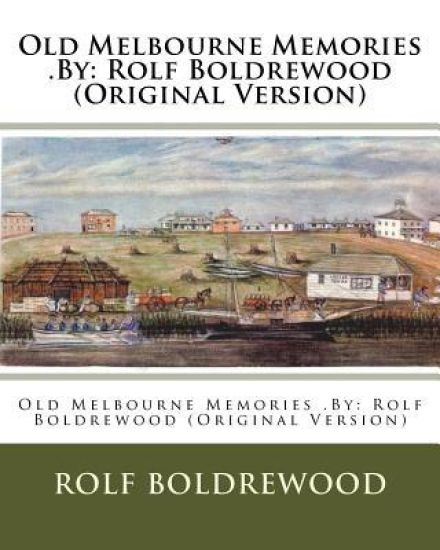
Old Melbourne Memories .By: Rolf Boldrewood (Original Version)
Rolf Boldrewood
Createspace Independent Publishing Platform
2016
nidottu
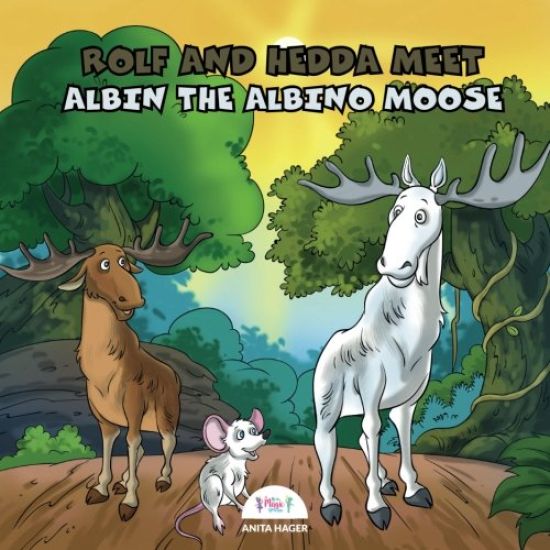
Rolf and Hedda meet Albin the Albino Moose
Anita Hager
Createspace Independent Publishing Platform
2017
nidottu

Rolf de Maré : art collector, ballet director, museum creator
Erik Näslund
Bokförlaget Langenskiöld
2009
sidottu
Rolf de Maré is the Swede who meant the most for international modern art and dance. He founded the Swedish Ballet in Paris in the 1920s, was one of the first who collected modern artists such as Picasso, made research trips throughout the world and founded the Dance Museum in Stockholm. But Rolf also lived an exciting life. He loved fast cars, bullfights, beautiful men and elegant parties. And he never denied his homosexuality and this at a time when it was forbidden by law. Rolf de Maré made a unique contribution by filming and documenting dance cultures, especially in Indonesia, which has then disappeared. He ran variety shows and launched superstars like Josephine Baker, founded the world's first magazine for men's fashion, Monsieur, and ran for many years a coffee farm in Africa. He opened the Dance Museum 1952 in Stockholm, the world's first and only museum of dance. He died in 1964 in Barcelona. His great fortune he bequeathed to the Museum of Dance and the main works of his art collection he donated to The Modern Museum in Stockholm. The book is written by Erik Näslund, author, critic, researcher and for many years the director of the Dance Museum in Stockholm. He has also received great acclaim for his biographies of Birgit Cullberg, Nils Dardel, Carina Ari and Carl Milles.
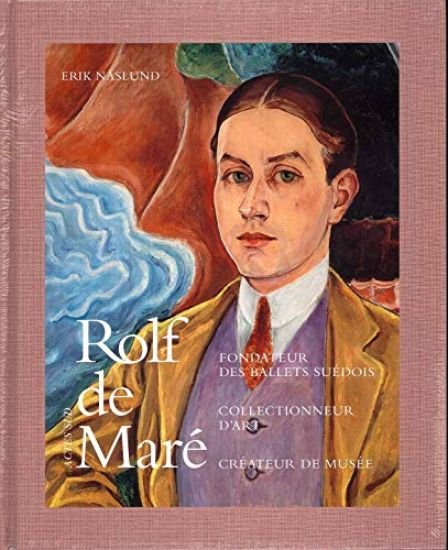
Rolf de Maré : fondateur des Ballets Suédois collectionneur d'art créateur
Erik Näslund
Bokförlaget Langenskiöld
2009
sidottu
Rolf de Maré est le Suédois qui signifie le plus pour l'art moderne international et de la danse. Il a fondé le Ballet de Suède à Paris dans les années 1920, a été l'un des premiers qui a rassemblé des artistes modernes comme Picasso, ont fait des voyages de recherche dans le monde entier et a fondé le Musée Danse à Stockholm. Mais Rolf a aussi vécu une vie passionnante. Il aimait les voitures rapides, des corridas, des hommes beaux et élégants partis. Et il n'a jamais nié son homosexualité et ce à une époque où il était interdit par la loi. Rolf de Maré apporté une contribution unique en filmant et en documentant les cultures de danse, en particulier en Indonésie, qui a ensuite disparu. Il a couru des spectacles de variétés et lancé des superstars comme Joséphine Baker, fondé le premier magazine au monde pour la mode masculine, monsieur et a couru pendant de nombreuses années une ferme de café en Afrique. Il a ouvert le Musée de danse 1952 à Stockholm, premier musée et le seul au monde de la danse. Il est mort en 1964 à Barcelone. Sa grande fortune qu'il légua au Musée de la Danse et les principaux ouvrages de sa collection d'art, il fait don au Musée Moderne de Stockholm. Le livre est écrit par Erik Naslund, auteur, critique, chercheur et directeur du Musée de la Danse à Stockholm. Il a également reçu avec grand succès pour ses biographies de Birgit Cullberg, Nils Dardel, Carina Ari et Carl Milles.

In diesem Lehrbuch werden zunächst ausführlich die Differentialrechnung von Funktionen mehrerer Veränderlicher sowie wichtige Anwendungen wie zum Beispiel Minimierungsprobleme behandelt. Anschließend wird das Integral für Funktionen mehrerer Veränderlicher im Lebesgueschen Sinne umfassend diskutiert. Ergänzende Kapitel über Lebesgue-Räume und Topologie bieten weitere Aspekte, z.B. über Mittelwertsätze, die Gammafunktion und den Abbildungsgrad in der Ebene. Das Lehrbuch enthält zahlreiche Beispiele, Übungsaufgaben und grafischen Darstellungen. Aus dem Inhalt: Differentialrechnung mehrerer Veränderlicher Integralrechnung mehrerer Veränderlicher Umkehrung differenzierbarer Abbildungen Ergänzungen zur Analysis Ergänzungen zur Topologie
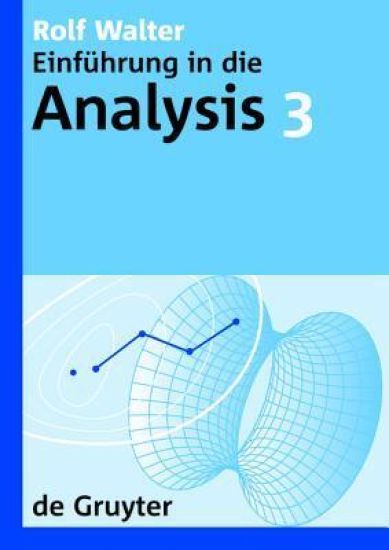
Dieses Lehrbuch zur gleichnamigen Grundvorlesung behandelt ausgewählte Themen der mehrdimensionalen Analysis. Es führt außerdem in die Theorie der gewöhnlichen Differentialgleichungen ein, und die für die Anwendungen in der Bildverarbeitung und Akustik wichtige Fouriertheorie wird ebenfalls vorgestellt. Themen: Fixpunktsätze, gewöhnliche Differentialgleichungen, Theorie der Fourierreihen, Mannigfaltigkeiten und Differentialformen. Die ausführliche Darstellung der Themen erleichtert das Verständnis. Mit zahlreichen grafischen Illustrationen und Übungsaufgaben.
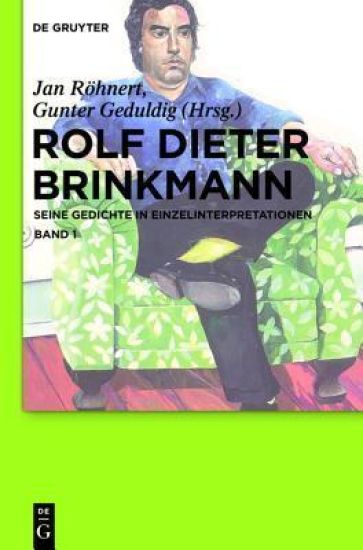
Rolf Dieter Brinkmann
de Gruyter
2015
sidottu
Since the 1970s Rolf Dieter Brinkmann (1940 1975) has been considered to be one of the most innovative German poets. In recognition of his importance as a modern classic, many of his poems presented and interpreted individually have been made accessible here for the first time in a critical text edition. Writers and literary scholars, among them a number of renowned Brinkmann experts, provide a comprehensive and reliable overview of the current knowledge on Brinkmann. Even for readers unfamiliar with the poet s work, this book offers a fascinating insight into his poems."
Reproduction of the original. The publishing house Megali specialises in reproducing historical works in large print to make reading easier for people with impaired vision.