Kirjojen hintavertailu. Mukana 11 244 527 kirjaa ja 12 kauppaa.

Kirjahaku

Etsi kirjoja tekijän nimen, kirjan nimen tai ISBN:n perusteella.

1000 tulosta hakusanalla Ronald E. Clements

The Commentaries of Origen and Jerome on St. Paul's Epistle to the Ephesians
This important study provides the first English translation of both the surviving fragments of Origen's Commentary on Ephesians and of the complete text of Jerome's Commentary on Ephesians. The two translations are placed parallel to one another where they treat the same texts in Ephesians thus showing Jerome's extensive dependence on Origen's commentary. By using collateral texts from other works of Origen, Jerome, and Rufinus, the author is able to show Jerome's dependence on Origen in numerous passages in his commentary where the Greek text of Origen's commentary is lost. The translation is accompanied by Heine's illuminating commentary and a substantial introduction sets the works in their historical context. The book makes a significant contribution not only to scholarship on Origen and Jerome, but also to the wider question of the interpretation of scripture in the early Christian centuries.
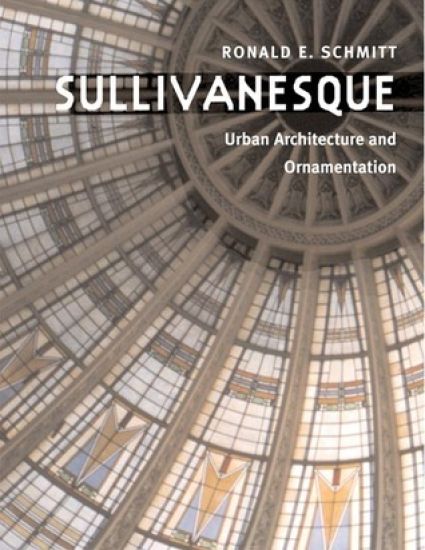
Sullivanesque

Sullivanesque

Ronald E. Schmitt

University of Illinois Press
2007
nidottu
Sullivanesque offers a visual and historical tour of a unique but often overlooked facet of modern American architecture derived from Louis Sullivan.Highly regarded in architecture for inspiring the Chicago School and the Prairie School, Sullivan was an unwilling instigator of the method of facade composition--later influenced by Frank Lloyd Wright, William Gray Purcell, and George G. Elmslie--that came to be known as Sullivanesque. Decorative enhancements with botanical and animal themes, Sullivan's distinctive ornamentation mitigated the hard geometries of the large buildings he designed, coinciding with his "form follows function" aesthetic.Sullivan's designs offered solutions to problems presented by new types and scales of buildings. Widely popular, they were also widely copied, and the style proliferated due to a number of Chicago-based interests, including the Radford Architectural Company and several decorative plaster and terra-cotta companies. Stock replicas of Sullivan's designs manufactured by the Midland Terra Cotta Company and others gave distinction and focus to utilitarian buildings in Chicago's commercial strips and other confined areas, such as the downtown districts of smaller towns. Mass-produced Sullivanesque terra cotta endured as a result of its combined economic and aesthetic appeal, blending the sophistication of high architectural art with the pragmatic functionality of building design.Masterfully framed by the author's photographs of Sullivanesque buildings in Chicago and throughout the Midwest, Ronald E. Schmitt's in-depth exploration of the Sullivanesque tells the story of its evolution from Sullivan's intellectual and aesthetic foundations to its place as a form of commercial vernacular. The book also includes an inventory of Sullivanesque buildings.Honorable Mention recipient of the 2002 PSP Awards for Excellence in Professional/Scholarly Publishing
Documentarity

Documentarity

Ronald E. Day

MIT Press
2019
pokkari
A historical-conceptual account of the different genres, technologies, modes of inscription, and innate powers of expression by which something becomes evident.In this book, Ronald Day offers a historical-conceptual account of how something becomes evident. Crossing philosophical ontology with documentary ontology, Day investigates the different genres, technologies, modes of inscription, and innate powers of expression by which something comes into presence and makes itself evident. He calls this philosophy of evidence documentarity, and it is through this theoretical lens that he examines documentary evidence (and documentation) within the tradition of Western philosophy, largely understood as representational in its epistemology, ontology, aesthetics, and politics.Day discusses the expression of beings or entities as evidence of what exists through a range of categories and modes, from Plato's notion that ideas are universal types expressed in evidential particulars to the representation of powerful particulars in social media and machine learning algorithms. He considers, among other topics, the contrast between positivist and anthropological documentation traditions; the ontological and epistemological importance of the documentary index; the nineteenth-century French novel's documentary realism and the avant-garde's critique of representation; performative literary genres; expression as a form of self evidence; and the "post-documentation" technologies of social media and machine learning, described as a posteriori, real-time technologies of documentation. Ultimately, the representational means are not only information and knowledge technologies but technologies of judgment, judging entities both descriptively and prescriptively.
An Econometric Approach to a Marketing Decision Model

An Econometric Approach to a Marketing Decision Model

Ronald E. Frank; William F. Massy

MIT Press
1971
pokkari
This book describes the creation of a simulation model that is designed to serve as an artificial test market. The market is sufficiently realistic to permit it to be used for experimenting with a wide range of alternative marketing programs for a manufacturer of a branded, frequently purchased food product. The simulator includes characterizations by brand and size of: (1) the rates of retailer promotions (such as retail price discounts, newspaper advertising, displays, signs and banners, special offers, and premiums) as a function of the promotional allowances offered by competing manufacturers; (2) the response of costumers in terms of sales volume to the aforementioned retailer's promotional activities; and (3) the transformation of these volume movement figures into estimates of manufacturer profitability. The simulation model is designed to take advantage of modern time-sharing computation facilities and permit virtually instantaneous assessment of alternatives, and to encourage the combining of executive judgments on current market conditions and probable retailer responses with historical data. In order to develop the component of the stimulator which relates retailer promotional activities to consumer volume movement, econometric methods are used to analyze a remarkably complete set of data in such a way that the reader may follow the author's thought processes as they work through complex quantitative techniques. The econometric model that they develop is a multiple-equation model. The use of this type of model is relatively new in marketing, although econometricians have been familiar with these techniques for a number of years. The present study develops and discusses the special statistical methods required to estimate the parameters of such a model and postulates a specific model linking the demand for a given brand and size to the promotional activities of all the brand-size combinations present in the marketplace for the product in question.
Sartre on Violence

Sartre on Violence

Ronald E. Santoni

Pennsylvania State University Press
2003
pokkari
From "Materialism and Revolution" (1946) through Hope Now (1980), Jean-Paul Sartre was deeply engaged with questions about the meaning and justifiability of violence. In the first comprehensive treatment of Sartre’s views on the subject, Ronald Santoni begins by tracing the full trajectory of Sartre’s evolving thought on violence and shows how the "curious ambiguity" of freedom affirming itself against freedom in his earliest writings about violence developed into his "curiously ambivalent" position through his later writings.
Wood Hicks and Bark Peelers

Wood Hicks and Bark Peelers

Ronald E. Ostman; Harry Littell

Pennsylvania State University Press
2016
sidottu
In Wood Hicks and Bark Peelers, Ronald E. Ostman and Harry Littell draw on the stunning documentary photography of William T. Clarke to tell the story of Pennsylvania’s lumber heyday, a time when loggers serving the needs of a rapidly growing and globalizing country forever altered the dense forests of the state’s northern tier.Discovered in a shed in upstate New York and a barn in Pennsylvania after decades of obscurity, Clarke’s photographs offer an unprecedented view of the logging, lumbering, and wood industries during the late nineteenth and early twentieth centuries. They show the great forests in the process of coming down and the trains that hauled away the felled trees and trimmed logs. And they show the workers—cruisers, jobbers, skidders, teamsters, carpenters, swampers, wood hicks, and bark peelers—their camps and workplaces, their families, their communities. The work was demanding and dangerous; the work sites and housing were unsanitary and unsavory. The changes the newly industrialized logging business wrought were immensely important to the nation’s growth at the same time that they were fantastically—and tragically—transformative of the landscape. An extraordinary look at a little-known photographer’s work and the people and industry he documented, this book reveals, in sharp detail, the history of the third phase of lumber in America.
Subsistence and Economic Development

Subsistence and Economic Development

Ronald E. Seavoy

Praeger Publishers Inc
2000
sidottu
Seavoy insists that development economics is a failed discipline because it does not recognize the revolutionary difference between subsistence and commercial social values. Seavoy demonstrates that commercial labor norms are essential for producing assured food surpluses in all crop years and an assured food surplus is essential for sustaining the development process.The commercialization of food production is a political process, as in the term political economy. If peasants have a choice, they will not voluntarily perform commercial labor norms. Central governments must overcome peasant resistance to performing commercial labor norms by various forms of coercion. The most historically effective coercions are deprivation of peasant control of land use by foreclosure and eviction for excessive subsistence debts. Landless peasants are forced to become supervised paid laborers. Coercion is most effective when it is linked to money rewards for peasants who voluntarily transform themselves into yeomen cultivators or farmers. These commercially motivated cultivators and storekeepers become the resident commercializing agents in peasant villages who administer the central government's coercive and inducement policies. Based on extensive examples and field observation, this book is designed for use in courses that explore problems of economic development. Scholars and government policy makers will find the analysis equally provocative.
Subsistence and Economic Development

Subsistence and Economic Development

Ronald E. Seavoy

Praeger Publishers Inc
2000
nidottu
Seavoy insists that development economics is a failed discipline because it does not recognize the revolutionary difference between subsistence and commercial social values. Seavoy demonstrates that commercial labor norms are essential for producing assured food surpluses in all crop years and an assured food surplus is essential for sustaining the development process.The commercialization of food production is a political process, as in the term political economy. If peasants have a choice, they will not voluntarily perform commercial labor norms. Central governments must overcome peasant resistance to performing commercial labor norms by various forms of coercion. The most historically effective coercions are deprivation of peasant control of land use by foreclosure and eviction for excessive subsistence debts. Landless peasants are forced to become supervised paid laborers. Coercion is most effective when it is linked to money rewards for peasants who voluntarily transform themselves into yeomen cultivators or farmers. These commercially motivated cultivators and storekeepers become the resident commercializing agents in peasant villages who administer the central government's coercive and inducement policies. Based on extensive examples and field observation, this book is designed for use in courses that explore problems of economic development. Scholars and government policy makers will find the analysis equally provocative.
Origins and Growth of the Global Economy

Origins and Growth of the Global Economy

Ronald E. Seavoy

Praeger Publishers Inc
2003
sidottu
The global market of the 21st century came into existence to produce products and services for mass consumption. Its purpose is to create consumer cultures in nations that fully participate in its benefits. It is the product of cooperation among industrial nations following World War II. Seavoy traces out the evolution of the global market from its foundations in imperial commercial rivalries of the mid-15th century to the present.The global economy rests on the foundation of imperial commercial rivalries that began when Columbus sailed west to America and da Gama sailed east to India. Thereafter, Spanish and Portuguese global commerce was challenged by the Dutch, English, and French. During the 19th century these nations rapidly expanded into the political vacuum of Africa and elsewhere because industrialization gave them—and Germany, Japan, and Russia—the power to intrude into subsistence cultures worldwide. After World War II the political leaders of the United States and Western Europe were determined to end the imperial commercial rivalries that had contributed to World War I and World War II. Imperial commercial rivalries would be replaced by cooperative commercial politics among the principal industrial nations. Behind the shield of NATO, Western European nations and the United States devised rules and institutionalized them in the World Trade Organization, International Monetary Fund, European Union, and NAFTA that rapidly increased the volume of global trade. As Seavoy points out, increasing trade had three purposes, full employment in industrial nations which, in turn, would create the political stability needed for democratic governance, and the production of an abundance of products so that the citizens of participating nations could enjoy the benefits of consumer cultures.The creation of consumer cultures required the dissolution of obsolete empires and concentrating production on products for export among industrial nations. Nations that failed to fully participate rapidly fell behind in acquiring the technologies and management skills necessary to produce the abundance of products that could create consumer cultures. The global market and its derivative, consumer cultures, could only have come into existence during the peace following World War II. In Seavoy's analysis the absence of world wars results in a world where global economy and peace are synonymous terms. This is a sweeping synthesis that will be of interest to scholars, students, and the reading public interested in economic development and world economic history.
Famine in Peasant Societies

Famine in Peasant Societies

Ronald E. Seavoy

Praeger Publishers Inc
1986
sidottu
In this controversial study, Seavoy offers a new approach to the problem of periodic peacetime famine based on the actual behavior of peasants. He maintains that it is possible to increase per capita food production without massive and inappropriate technological inputs. Seavoy shifts the focus from modern development economics to a cultural and historical analysis of subsistence agriculture in Western Europe (England and Ireland), Indonesia, and India. From his survey of peasant civilization practices in these countries, he generalizes on the social values that create what he terms the subsistence compromise. In all of the ages and culture, Seavoy finds a consistent social organization of agriculture that produces identical results: seasonal hunger in poor crop years and famine conditions in consecutive poor crop years. He argues that economic policies have failed to increase per capita food production because economists and government planners try to apply market-oriented policies to populations that are not commercially motivated. Once they understand the subsistence compromise, policy-makers can take appropriate political action.
Famine in East Africa

Famine in East Africa

Ronald E. Seavoy

Praeger Publishers Inc
1989
sidottu
Efforts to commercialize agriculture in peasant societies through investments in technology and various pricing strategies have failed to create the food surpluses needed to forestall famine and support industrialization in East Africa. Seavoy explores this problem, basing his study on the case of Tanzania, a country that experiences recurrent peacetime famines associated with failures in subsistence agriculture. Providing an analysis of East African subsistence culture, he investigates the failures of national agricultural policies and defines strategies for inducing subsistence farmers to shift to commercial production.Seavoy looks at various development initiatives involving technological inputs, political pressure, taxation, and land tenure provisions and their effects on the political economy of subsistence agriculture. He presents a detailed survey of subsistence culture, its agricultural and pastoral practices, and such variables as labor, topography, rainfall, and population density. The shaping of the East African political economy under colonial rule is discussed, together with the economic, social, and political legacy that has persisted to the present day. Seavoy examines Tanzanian agricultural policy, which has aimed at facilitating the transition to commercial agriculture. He finds that the country is a long way from achieving the assured food surpluses that would enable the nation to support an urban industrial workforce. Among the underlying causes he notes the continuing population explosion, the farmers' objections to commercialized agriculture, and deficiencies in the physical infrastructure, trained personnel, and political institutions. He argues that surpluses will not be created until political leaders use the power of national government to enforce the shift to commercial production. A noteworthy and original contribution to development literature, this work is relevant to studies in modern political economy, Third World development, agricultural economy, and related disciplines.
The American Peasantry

The American Peasantry

Ronald E. Seavoy

Praeger Publishers Inc
1998
sidottu
A sweeping overview of the American peasantry: the largely sharecrop cultivators who, in Seavoy's analysis, rejected the labor norms of commercial agriculture. About equal numbers of black and white sharecroppers chose to practice subsistence cultivation in order to minimize agricultural labor. The study begins with pre-Civil War slave plantations and the landless white peasants who migrated to North America to escape full-time paid labor in Britain. Seavoy then describes and analyzes the operation of the postbellum sharecrop system and related Back Caste System; the different origins of southern and northern Populism; the massive displacement of southern peasants (after 1950) when cotton cultivation was fully mechanized, and how the voluntary joblessness of the urban underclass has been perpetuated by the welfare entitlements of the Great Society.
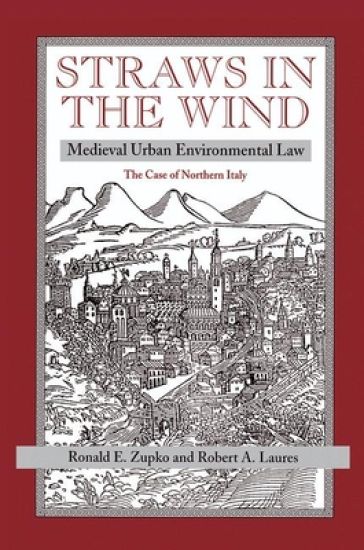
Straws In The Wind

Straws In The Wind

Ronald E Zupko; Robert A Laures

Routledge
2019
sidottu
The quest to create a decent world, to maintain a clean environment, and to nurture a self-renewing inheritance to pass on to future generations is not unique to the twentieth-century. Rather, as Ronald Zupko and Robert Laures show in this fascinating study of medieval environmental attitudes and regulations, it has been the recurring dream of men
Introduction to Industrial/Organizational Psychology

Introduction to Industrial/Organizational Psychology

Ronald E. Riggio; Stefanie K Johnson

TAYLOR FRANCIS LTD
2022
sidottu
Introduction to Industrial/Organizational Psychology provides a complete overview of the psychological study of the world of work. Written with the student in mind, the book presents classic theory and research in the field alongside examples from real-world work situations to provide deeper insight. This edition has been thoroughly updated to include the latest research on each key topic, and now features:A spotlight on diversity, equity, and inclusion throughout, including coverage of LGBTQIA+ inclusion and racial justiceExpanded coverage of ethics in I/O psychology practiceIncreased emphasis on cross-cultural and international issuesCoverage of the changing nature of work, post-pandemic, including remote working, worker stress, and burnoutA new focus on technologies related to I/O such as virtual reality and computer adaptive testingNew figures, illustrations, and charts to grab the reader’s attention and facilitate learningAccompanied by extensive student and instructor resources, it is a must read for all students on I/O psychology courses and courses in work psychology and organizational behavior, and for practicing managers who want a comprehensive overview of the psychology of work.
The Historiography of Contemporary Science, Technology, and Medicine
As historians of science increasingly turn to work on recent (post 1945) science, the historiographical and methodological problems associated with the history of contemporary science are debated with growing frequency and urgency. Bringing together authorities on the history, historiography and methodology of recent and contemporary science, this book reviews the problems facing historians of technology, contemporary science and medicine, and explores new ways forward. With contributions from key researchers in the field, the text covers topics that will be of ever increasing interest to historians of post-war science, including the difficulties of accessing and using secret archival material, the interactions between archivists, historians and scientists, and the politics of evidence and historical accounts.