Kirjojen hintavertailu. Mukana 11 244 527 kirjaa ja 12 kauppaa.

Kirjahaku

Etsi kirjoja tekijän nimen, kirjan nimen tai ISBN:n perusteella.

1000 tulosta hakusanalla Rudolf Dietsch

Rudolf Nureyev

Rudolf Nureyev

Julie Kavanagh

Penguin Books Ltd
2019
pokkari
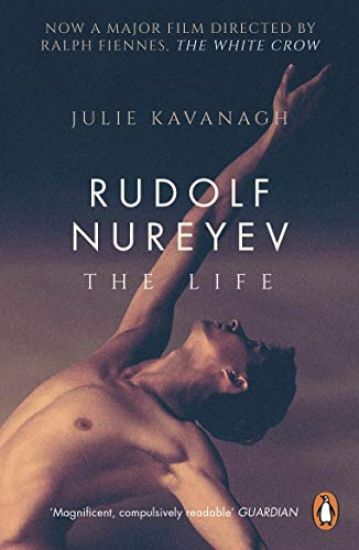
NOW A MAJOR FILM BY RALPH FIENNES, THE WHITE CROW'A gripping account of an extraordinary life' Daily Telegraph Born on a train in Stalin's Russia, Rudolf Nureyev was ballet's first pop icon. No other dancer of our time has generated the same excitement - both on and off stage.Nureyev's achievements and conquests became legendary: he rose out of Tatar peasant poverty to become the Kirov's thrilling maverick star; slept with his beloved mentor's wife; defected to the West in 1961; sparked Rudimania across the globe; established the most rhapsodic partnership in dance history with the middle-aged Margot Fonteyn; reinvented male technique; gatecrashed modern dance; moulded new stars; and staged Russia's unknown ballet masterpieces in the West. He and his life were simply astonishing.'Magnificent, a triumph. Captures every facet of this extraordinary man' Mail on Sunday'The definitive study of a man who, in his combination of aesthetic grace and psychological grime, can truly be called a sacred monster' Observer'Undoubtedly the definitive biography' Sunday Telegraph
Rudolf Friml

Rudolf Friml

William Everett

University of Illinois Press
2008
sidottu
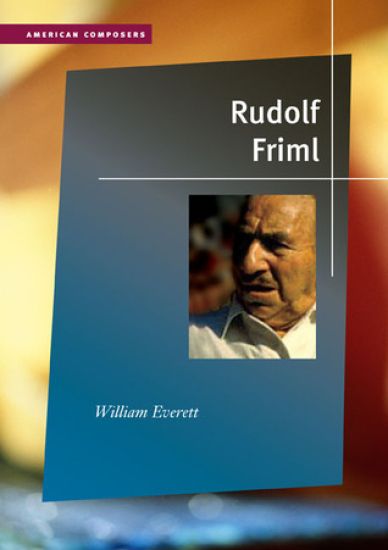
Rudolf Friml (1879-1972) is best remembered for his romantic 1920s operettas. Born in Prague, where he studied with Dvorak, Friml moved to the United States in 1906 and pursued a career as a concert pianist and composer. Beginning in 1912, he wrote music in different styles for Broadway, and in 1914, he joined Irving Berlin and Victor Herbert as charter members of the American Society of Composers, Authors and Publishers (ASCAP). William Everett examines Friml's wide-ranging career within the larger historical contexts of the American operetta, the Indianist movement, Francophilia, Orientalism, and romantic nostalgia. Friml's gift for evoking faraway times and places led to works like Rose Marie, with its Canadian setting, while his use of formulaic Native American motifs produced "Totem Tom Tom" and the popular (and oft-parodied) "Indian Love Call." Friml also created music for films, often based on his popular musicals. Parallel to this stage and screen activity, he composed piano concertos, orchestral works, and piano pieces and songs.
Rudolf Arnheim

Rudolf Arnheim

The University of Michigan Press
1998
sidottu
Rudolf Arnheim is one of this century's most influential thinkers in the visual arts, and perhaps the most lucid and accessible writer on the arts today. From his now-classic book on film theory to his definitive texts on visual perception, from his seminal treatment of Picasso's Guernica to his primary research on the psychology of the creative process; from his lasting influence as a professor at Harvard to the overcrowded lectures at the University of Michigan in the final decade of his teaching career, Arnheim has shaped the discourse of the visual arts like no other individual in this century. The collection reflects on the scope, direction, and impact of Arnheim's work, through his own words as well as those of the contemporaries he influenced. The book includes an impressive array of essays, interviews, and tributes by internationally recognized artists, architects, and scholars, including art historian Vincent Scully, graphic artist Paul Rand, architect Daniel Libeskind, and writers and artists such as Gyorgy Kepes, Dore Ashton, and Sir Ernst Gombrich. The collection is enhanced by visual material from Arnheim's personal collection, which forms a further narrative strand. This volume cuts across a series of disciplines including art history, psychology, architecture, and studio art. Rudolf Arnheim: Revealing Vision will find an appreciative audience among scholars and specialists whose thinking has been influenced by Arnheim, as well as among general readers interested in the visual arts. "This imaginatively conceived and executed collection is a fine tribute to one of the major thinkers of modernism of the twentieth century--someone whose work has deeply influenced generations of artists, art historians, psychologists, and historians and critics of film." --Donald Preziosi, University of California, Los Angeles
Rudolf Steiner on Leonardo's Last Supper

Rudolf Steiner on Leonardo's Last Supper

Adrian Anderson

Threshold Publishing
2017
pokkari
Written by independent authority on Steiner's teachings, Dr. Adrian Anderson, author of 18 books including the Rudolf Steiner Handbook.Leonardo's masterpiece decayed and fell into ruin by about 1550, but the "Idea" that it embodied was inspired from a high spiritual source, and contains deep truths of esoteric Christianity, especially in regard to the link between the zodiac and the Logos, the cosmic Christ, Jesus himself and his 12 Disciples. Rudolf Steiner taught that the Idea behind the painting is what is of value, and his approach to Leonardo's masterpiece was to make use of the superb copy painted by Giampetrino, who was himself a student of Leonardo.Over several years, Dr. Anderson used his expertise in re-freshing damaged artworks of an esoteric nature, to re-create as far as possible, what Leonardo's Last Supper looked like, some 500 years ago; a task that was primarily based on the Giampetrino copy. He then accessed and translated an unpublished Archive document, which records Rudolf Steiner's astonishing comments about the Zodiac in relation to the Last Supper and the Disciples.Using the notes of Rudolf Steiner's archive document, and his expertise in anthroposophy together with his scholarship in the Greek of the New Testament, Adrian reveals the various esoteric meanings alluded to in the painting.The especially re-created version of the Last Supper used in this book is available as an art print.- Rudolf Steiner's comments of the life of Lazaros - The author of John's Gospel and its esoteric nature - The initiatory Last Supper: the ancient Mysteries and the Christian Mysteries - The role of Lazaros-John in the Last Supper events - The 12 Disciples and the 12 Zodiac signs - The Dieciples and the 12 Bodhisattvas in an Italian Renaissance painting95 pages in near A4 size, with 17 pages of graphics.
Rudolf Steiner on Leonardo's Last Supper

Rudolf Steiner on Leonardo's Last Supper

Adrian Anderson

Threshold Publishing
2017
sidottu
Written by independent authority on Steiner's teachings, Dr. Adrian Anderson, author of 18 books including the Rudolf Steiner Handbook.Leonardo's masterpiece decayed and fell into ruin by about 1550, but the "Idea" that it embodied was inspired from a high spiritual source, and contains deep truths of esoteric Christianity, especially in regard to the link between the zodiac and the Logos, the cosmic Christ, Jesus himself and his 12 Disciples. Rudolf Steiner taught that the Idea behind the painting is what is of value, and his approach to Leonardo's masterpiece was to make use of the superb copy painted by Giampetrino, who was himself a student of Leonardo.Over several years, Dr. Anderson used his expertise in re-freshing damaged artworks of an esoteric nature, to re-create as far as possible, what Leonardo's Last Supper looked like, some 500 years ago; a task that was primarily based on the Giampetrino copy. He then accessed and translated an unpublished Archive document, which records Rudolf Steiner's astonishing comments about the Zodiac in relation to the Last Supper and the Disciples.Using the notes of Rudolf Steiner's archive document, and his expertise in anthroposophy together with his scholarship in the Greek of the New Testament, Adrian reveals the various esoteric meanings alluded to in the painting.The especially re-created version of the Last Supper used in this book is available as an art print.- Rudolf Steiner's comments of the life of Lazaros - The author of John's Gospel and its esoteric nature - The initiatory Last Supper: the ancient Mysteries and the Christian Mysteries - The role of Lazaros-John in the Last Supper events - The 12 Disciples and the 12 Zodiac signs - The Dieciples and the 12 Bodhisattvas in an Italian Renaissance painting95 pages in near A4 size, with 17 pages of graphics.
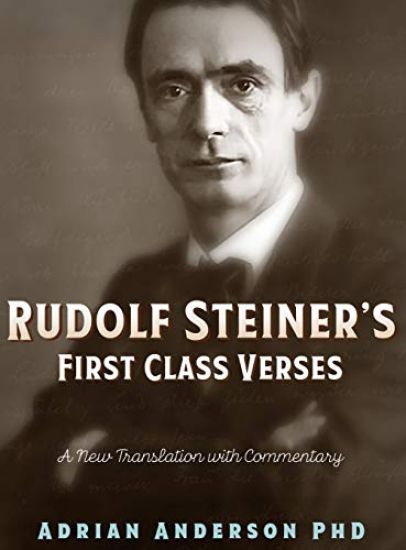
Rudolf Steiner's First Class Verses

Rudolf Steiner's First Class Verses

Adrian Anderson

Threshold Publishing
2019
pokkari
In 1924, Rudolf Steiner gave a series of esoteric lessons which became known as the First Class. Meditative verses were included in the 19 lessons, intended to assist students of anthroposophical wisdom in spiritual development. A working knowledge of anthroposophy is well-advised for the use of these verses.
Rudolf Steiner's First Class Verses

Rudolf Steiner's First Class Verses

Adrian Anderson

Threshold Publishing
2019
sidottu
In 1924, Rudolf Steiner gave a series of esoteric lessons which became known as the First Class. Meditative verses were included in the 19 lessons, intended to assist students of anthroposophical wisdom in spiritual development. A working knowledge of anthroposophy is well-advised for the use of these verses.
Rudolf Bultmann

Rudolf Bultmann

Augsburg Fortress
1991
nidottu
Bultmann's pioneering study of the New Testament initiated a new era in biblical studies in the Twentieth Century. Together with Karl Barth, Bultmann broke with liberal theology, but his often misunderstood program of demythologization took him in a radically different direction from Barth. In many respects Bultmann set the agenda for biblical theology in the decades following World War II. This volume concentrates on the key texts and ideas in Bultmann's thought. It presents the essential Bultmann for students and the general reader. Roger Johnson's introductory essay and notes on the selected texts set Bultmann in his historical context, chart the development of his thought, and indicate the significance of his theology in the development of Christian theology as a whole. Substantial selections from Bultmann's work illustrate key themes: God as "Wholly Other" Jesus and the Eschatological Kingdom Existentialist interpretation Kerygma Faith and Modernity in conflict Demythologizing: controversial slogan and theological focus
Rudolf Diesel

Rudolf Diesel

Wilson Charles Morrow

UNIVERSITY OF OKLAHOMA PRESS
1965
nidottu
On February 17, 1894, the Diesel engine was operated successfully for the first time. Since then it has been a prime mover for civilization, and today much of the world depends on it as a source of power. Nowhere, perhaps, is it in more widespread use than in America, where the word ""diesel"" is a part of our language.Rudolf Diesel: Pioneer of the Age of Power is the first English-language publication of Rudolph Diesel's biography. Authors W. Robert Nitske and Charles Morrow Wilson offer a warm and moving account of Diesel from the time of his birth in Paris in 1858 to his mysterious death in 1913. They present Diesel as he was - a man who lived, worked, and invented so far ahead of his time that the world is only now beginning to catch up to him.
Rudolf Otto

Rudolf Otto

Almond Philip C.

The University of North Carolina Press
2011
nidottu
Almond places Otto's theory of religion within the context of his life (1869-1937), looking closely at the significant influences on Otto's thought, among them thinkers as different as Kant and the German Pietists. Elements of Otto's theories are shown to be closely related to the social and intellectual milieu of Germany both before and after World War I. Almond examines Otto's conception of the Holy, of rational and nonrational elements of religion, and compares his views with those of his contemporaries.A UNC Press Enduring Edition -- UNC Press Enduring Editions use the latest in digital technology to make available again books from our distinguished backlist that were previously out of print. These editions are published unaltered from the original, and are presented in affordable paperback formats, bringing readers both historical and cultural value.
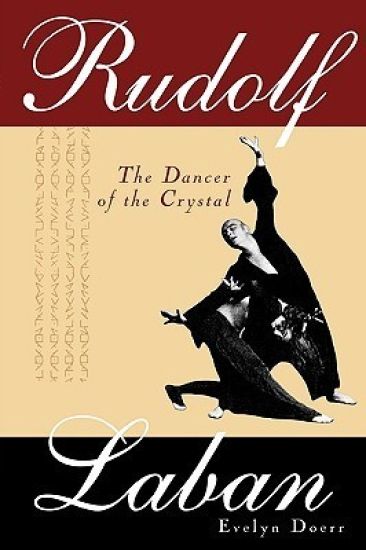
Rudolf Laban

Rudolf Laban

Evelyn Doerr

Scarecrow Press
2007
nidottu
Rudolf Laban, the famed dancer-choreographer and 'founding father' of modern dance, also had experience as a painter, sculptor, and architect, and allowed those skills to influence his innovative choreographic techniques. His important works and his creation of one of the most significant forms of dance notation make him an essential component of dance history. Rudolf Laban: The Dancer of the Crystal examines Laban's training, his teaching experiences, and the discovery and development of his principles of form and movement, paying special attention to his choreographic and philosophical work. Author Evelyn Doerr presents intriguing tidbits of the artist's experience, such as Laban's ambivalent position as the 'dance organizer' of the Nazi party in Germany, embedded in a historical and philosophical context, offering insights to his choreographic processes and the events that shaped his life. The book presents the different stages and elements of Laban's choreography discussing, for example, Laban's "dance-sound-word" instructional approach, his concept of the "movement choir" and examples of its realization, the concepts of eukinetics and choreutics, and a description of how these subjects were taught in Laban's school. Doerr also analyzes important elements in Laban's theories of spatial harmony and of effort, and she investigates his various early systems of dance notation, leading to a detailed explanation of kinetography, Laban's final notational system. A complete bibliography and an appendix of works choreographed between 1897 and 1936 help make this book an important contribution to Laban scholarship and to the dance, theater, and cultural history of Europe in the first half of the 20th century.
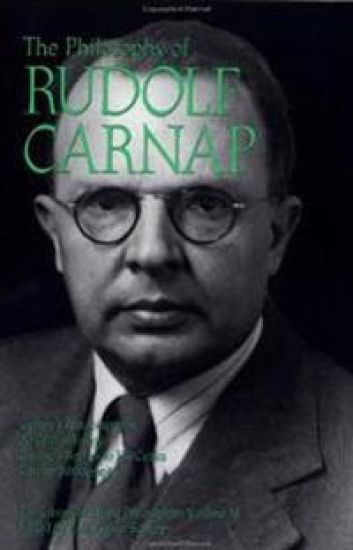
The Philosophy of Rudolf Carnap, Volume 11

The Philosophy of Rudolf Carnap, Volume 11

Rudolf Carnap; Paul Arthur Schilpp

Open Court Publishing Co ,U.S.
1999
pokkari
The first volume of the Library of Living Philosophers (LLP) appeared in 1939, the brainchild of the late Professor Paul A. Schilpp. Schilpp saw that it would help to eliminate confusion and endless sterile disputes over interpretation if great philosophers could be confronted by their capable philosophical peers and asked to reply. As well as a number of critical essays with the chosen philosopher's replies to each essay, each volume would include an intellectual autobiography and an up-to-date bibliography The LLP series has exceeded even Schilpp's expectations, enabling great philosophers to do more than clarify by extending and elaborating their thoughts. A volume in the Library of Living Philosophers is not merely a commentary on a philosopher's work; it is a critical part of that work.
Rudolf Laban

Rudolf Laban

Karen Bradley

CRC Press Inc
2018
sidottu
Rudolf Laban was one of the leading dance theorists of the twentieth century. His work on dance analysis and notation raised the status of dance as both an art form and a scholarly discipline. This is the first book to combine: an overview of Laban’s life, work and in?uences an exploration of his key ideas, including the revolutionary "Laban Movement Analysis" system analysis of his works Die Grünen Clowns and The Mastery of Movement and their relevance to dance theater from the 1920s onwards a detailed exercise-based breakdown of Laban’s key teachings.As a first step towards critical understanding, and as an initial exploration before going on to further, primary research, Routledge Performance Practitioners are unbeatable value for today’s student.
Rudolf Laban

Rudolf Laban

Karen Bradley

CRC Press Inc
2018
nidottu
Rudolf Laban was one of the leading dance theorists of the twentieth century. His work on dance analysis and notation raised the status of dance as both an art form and a scholarly discipline. This is the first book to combine: an overview of Laban’s life, work and in?uences an exploration of his key ideas, including the revolutionary "Laban Movement Analysis" system analysis of his works Die Grünen Clowns and The Mastery of Movement and their relevance to dance theater from the 1920s onwards a detailed exercise-based breakdown of Laban’s key teachings.As a first step towards critical understanding, and as an initial exploration before going on to further, primary research, Routledge Performance Practitioners are unbeatable value for today’s student.