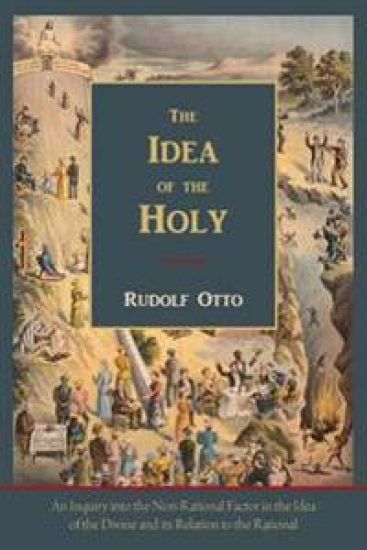
Since the English translation first appeared in 1923, Rudolf Otto's volume has established itself as a classic in the field of religious philosophy. It offers an in-depth inquiry into the non-rational factor in the idea of the divine and its relation to the rational.
Edited With An Introduction By Rev. W. D. Morrison. This book, "Naturalism And Religion", by Rudolf Otto, is a replication of a book originally published before 1907. It has been restored by human beings, page by page, so that you may enjoy it in a form as close to the original as possible. This book was created using print-on-demand technology. Thank you for supporting classic literature.
""Naturalism and Religion"" is a philosophical work by Rudolf Otto that explores the relationship between naturalism and religion. Otto argues that naturalism, which is the belief that everything in the world can be explained by natural causes and laws, is incompatible with religion. He contends that religion is based on a sense of the supernatural, which cannot be explained by naturalistic means. Otto also examines the concept of religious experience, arguing that it is a unique and distinct phenomenon that cannot be reduced to naturalistic explanations. The book is a thought-provoking exploration of the intersection of science, philosophy, and religion, and offers a compelling argument for the existence of the supernatural.This Is A New Release Of The Original 1907 Edition.This scarce antiquarian book is a facsimile reprint of the old original and may contain some imperfections such as library marks and notations. Because we believe this work is culturally important, we have made it available as part of our commitment for protecting, preserving, and promoting the world's literature in affordable, high quality, modern editions, that are true to their original work.
This book is considered a classic in the field of religious philosophy. Its timeless message explores the idea of what we mean by what is holy and what is God. It was Otto who coined the term "numinous" in this book by attempting to define the first-hand experience of our deepest, non-rational moments of awe in the presence of God. When one has a direct confrontation with transcendent powers, it creates a starting point for the numinous experience. Otto presents all of the different ways in which one may experien ce the numinous. The book is primarily grounded in philosophy and Christian theology, but presents the same general framework in other religions, as well. Many consider this work to be challenging, primarily because it succeeds in defining something that is beyond words. For this, the world is grateful--and has therefore made Otto's book accessible throughout the years to those who hunger for its powerful and mysterious message.
Dr. Rudolf Otto, who died in 1937, was one of the most distinguished German theologians of this century. Perhaps his best-known book was Das Heilige, which ran through ten editions in Germany before being published in an English translation in 1924 under the title, The Idea of the Holy. The present work, entitled in German Reichgottes und Menschensohn, created an even greater impression, and has had to be reckoned with in all subsequent studies of the person and work of Jesus Christ, particularly on the point of his ""Messianic self-consciousness."" The English translation was first published in 1938. This is a reprint of the substantially revised edition of 1943.
This work has been selected by scholars as being culturally important, and is part of the knowledge base of civilization as we know it. This work was reproduced from the original artifact, and remains as true to the original work as possible. Therefore, you will see the original copyright references, library stamps (as most of these works have been housed in our most important libraries around the world), and other notations in the work. This work is in the public domain in the United States of America, and possibly other nations. Within the United States, you may freely copy and distribute this work, as no entity (individual or corporate) has a copyright on the body of the work.As a reproduction of a historical artifact, this work may contain missing or blurred pages, poor pictures, errant marks, etc. Scholars believe, and we concur, that this work is important enough to be preserved, reproduced, and made generally available to the public. We appreciate your support of the preservation process, and thank you for being an important part of keeping this knowledge alive and relevant.