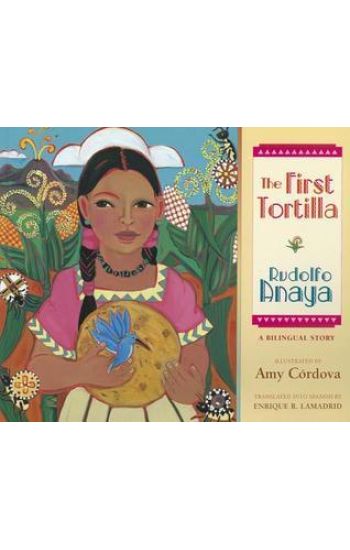
Jade is a young girl who lives in a village next to a towering volcano. On its peak lives a Mountain Spirit who makes his presence known by rumbling the earth, filling the sky with smoke, and pouring lava down the mountainside. Angered by those who forget to honor him for providing their harvest, the Mountain Spirit has stopped sending rain to Jade’s village and the people are faced with the possibility of having to abandon their homes and land. As Jade collects water from the near-dry lake, a blue hummingbird—a messenger from the Mountain Spirit—tells Jade she must take a gift to the Mountain Spirit and ask for rain. Guided by the hummingbird, Jade presents her food offering to the Mountain Spirit. Pleased, the spirit offers the brave girl corn kernels that she takes back to her village and uses to create the first tortilla.
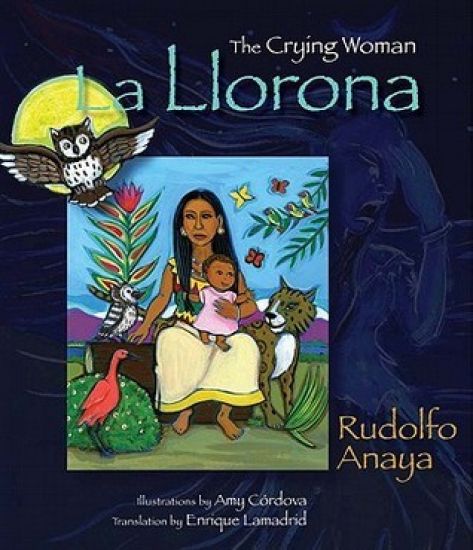
La Llorona, the Crying Woman, is the legendary creature who haunts rivers, lakes, and lonely roads. Said to seek out children who disobey their parents, she has become a ""boogeyman,"" terrorizing the imaginations of New Mexican children and inspiring them to behave. But there are other lessons her tragic history can demonstrate for children. In Rudolfo Anaya's version Maya, a young woman in ancient Mexico, loses her children to Father Time's cunning. This tragic and informative story serves as an accessible message of mortality for children. La Llorona, deftly translated by Enrique Lamadrid, is familiar and newly informative, while Amy Córdova's rich illustrations illuminate the story. The legend as retold by Anaya, a man as integral to southwest tradition as La Llorona herself, is storytelling anchored in a very human experience. His book helps parents explain to children the reality of death and the loss of loved ones.
This third installment of Rudolfo Anaya's ""Sonny Baca"" mystery series has the private detective confined to a wheelchair. Brutal battles with his nemesis Raven have taken their toll and Baca is struggling to regain his health. Nights of fitful sleep and intermittent dreams introduce Owl Woman, one of Sonny's ancestors and the sixteenth-century daughter of a shaman. As Sonny sleeps, Raven abducts Owl Woman and soon, one by one, each of Sonny's forebears begin to disappear. Immobilizing Sonny physically was Raven's first goal; now he wants to destroy Sonny's soul by erasing his history.
"When a woman dies after falling from a hot-air balloon at Albuquerque's world-famous balloon fiesta, private investigator Sonny Baca's intuition tells him it's murder. His intuition also tells him that the murder is the work of the Raven, the leader of a violent cult that murdered Sonny's cousin, and a man Sonny thought he'd killed. The murder jeopardizes the millions of tourist dollars connected with the fiesta, but Sonny knows the Raven has more on his mind than simple mayhem. This is a completely entertaining mystery novel, but Anaya actually offers two parallel lands of enchantment. One is temporal New Mexico; the other is Nuevo Mexicano, a land of santos, milagros, spirits, visions, and even brujas (witches). It's a land of old ways, old values, and old wisdom. And it's a land where small farms and multigenerational families are fast being wiped out by modernity."--Booklist
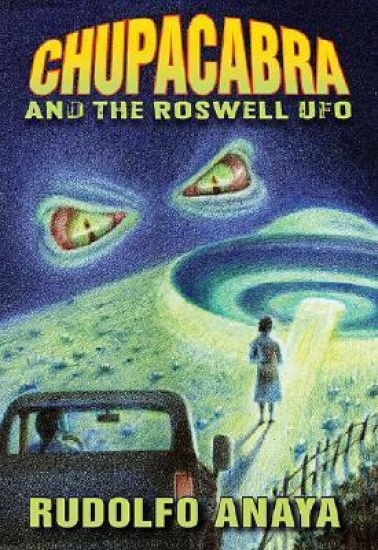
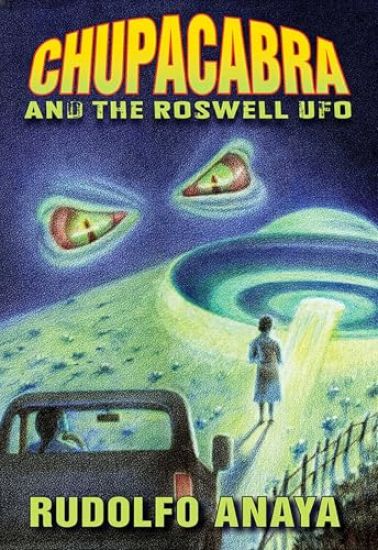
In this second ""ChupaCabra"" mystery, Professor Rosa Medina has just arrived in Santa Fe where she meets Nadine, a mysterious sixteen-year-old who insists that the two of them travel to Roswell, New Mexico. Nadine is convinced that C-Force, a secret government agency, has decoded the DNA of ChupaCabra and an extraterrestrial. If the two genomes are combined, a new and horrific life form will be created.In this fast-paced mystery, Anaya expands the ChupaCabra folklore into a metaphor that deals with the new powers inherent in science. Is ChupaCabra a beast in Latino folktales, used to frighten children, or a lost species being manipulated by C-Force? Rosa's life hangs in the balance as she and her young accomplice try to find a way to stop C-Force before its mad scientists create a monster.
p>"[Rudolfo Anaya] continues to shine brightest with his trademark alchemy: blending Spanish, Mexican and Indian cultures to evoke the distinctively fecund spiritual terrain of his part of the Southwest. Here Sonny Baca, a 30-year-old fledgling PI, investigates the murder of his . . . cousin [Gloria] who many years before had introduced him to love. Gloria's husband is worried most about the effect of the gruesome death (Gloria's body is found drained of blood, with a zia sun sign carved on her stomach) on his mayoral campaign in Albuquerque. Sonny believes Gloria's spirit calls to him for vengeance and pursues the case throughout New Mexico's South Valley, from the cocktail-party circuit of the arts community and the company of monied business developers to an assemblage of witches in an environmentalist commune in the mountains. . . ."--Publisher's Weekly". . . a compelling thriller. . . . Though satisfying purely as a mystery, the novel sacrifices none of Anaya's trademark spirituality--a connectedness to the earth and a deep-seated respect for the traditions of a people and a culture. . . . Read this multidimensional novel for its rich language and full-bodied characters. Anaya is one of our greatest storytellers, and Zia Summer is muy caliente!"--Booklist
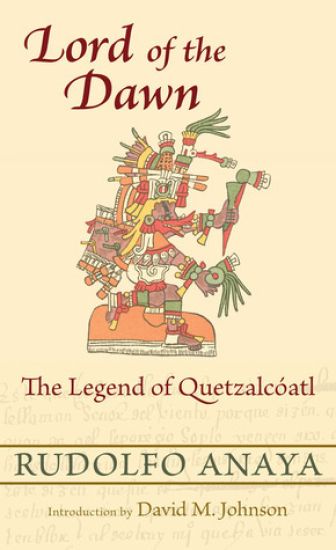
The legend of Quetzalcóatl is the enduring epic myth of Mesoamerica. The gods create the universe, but man must carefully tend to the harmony of the world. Without spiritual attention to harmony, chaos may reign, destroying the universe and civilisation.The ancient Mexicans, like other peoples throughout the world, wrestled with ideas and metaphors by which to know the Godhead and developed their own concepts about their relationship to the universe. Quetzalcóatl came to the Toltecs to teach them art, agriculture, peace, and knowledge. He was a redeemer god, and his story inspires, instructs, and entertains, as do all the great myths of the world.Now available in paperback, Lord of the Dawn is Anaya's exploration of the cosmology and the rich and complex spiritual thought of his Native American ancestors. The story depicts the daily world of man, the struggle between the peacemakers and the warmongers, and the world of the gods and their role in the life of mankind.
New Mexico cultural envoy Juan Estevan Arellano, to whom this work is dedicated, writes that querencia "is that which gives us a sense of place, that which anchors us to the land, that which makes us a unique people, for it implies a deeply rooted knowledge of place, and for that reason we respect it as our home."This sentiment is echoed in the foreword by Rudolfo Anaya, in which he writes that "querencia is love of home, love of place." This collection of both deeply personal reflections and carefully researched studies explores the New Mexico homeland through the experiences and perspectives of Chicanx and indigenous/Genízaro writers and scholars from across the state. The importance of querencia for each contributor is apparent in their work and their ongoing studies, which have roots in the culture, history, literature, and popular media of New Mexico. Be inspired and enlightened by these essays and discover the history and belonging that is querencia.
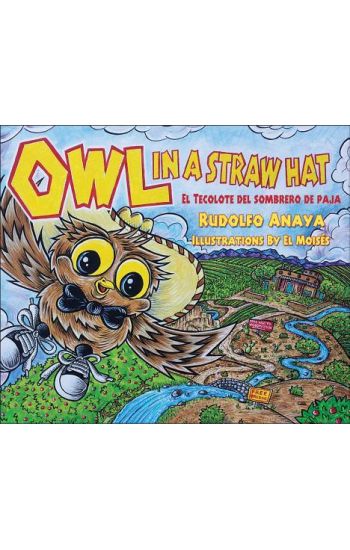
This masterfully written childrens book by New Mexicos favourite storyteller is a delightful tale about a young owl named Ollie who lives in an orchard with his parents in northern New Mexico. Ollie is supposed to attend school but prefers to hang out with his friends Raven and Crow instead. Ollies parents discover he cannot read and they send Ollie off to see his grandmother, Nana, a teacher and farmer in Chimayo. Along the way, Ollies illiteracy causes mischief as he meets up with some shady characters on the path including Gloria La Zorra (a fox), Trickster Coyote, and a hungry wolf named Luis Lobo who has sold some bad house plans to the Three Little Pigs. When Ollie finally arrives at Nanas, his cousin Randy Roadrunner drives up in his lowrider and asks Ollie why hes so blue. Im starting school, and theres too much to learn, and I cant read Ollie says. I cant do it. Randy explains that he did not think he could learn to read either, but he persevered, earned a business degree, and now owns the best lowrider shop in Espanola! Ollie finally decides he is ready to learn to read. The characters and the northern New Mexico landscape come to life wonderfully in original illustrations by New Mexico artist El Moises.
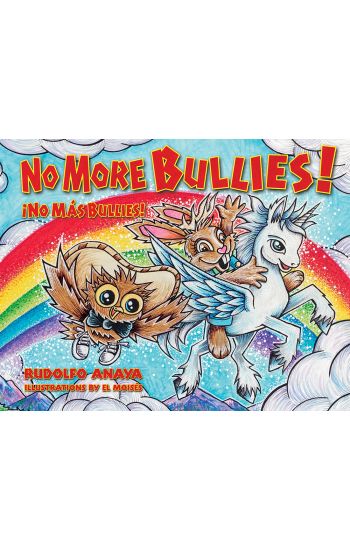
The adventures and lessons continue in this second book featuring "Owl in a Straw Hat" (Ollie Tecolote). This book tackles the subject of bullying of classmates for being different. Jackie Jackalope is missing from school and the teacher (Ollie's grandmother) gets to the bottom of it. The kids have been teasing Jackie about her horns and she has run away to her parents in Pot of Gold Land. A contrite Ollie along with Uno the Unicorn (both guilty of teasing) volunteer to find and bring Jackie back to school. Their journey to Jackie's home leads to encounters with three guardians of the Dark Forest (NM monsters/legends): La Llorona, El Kooko ee, and Skeleton Woman; and the Golden Carp who allows them to cross Rainbow Bridge. They reach Jackie and apologize and take her back to Wisdom School. Rudolfo Anaya's magical characters are brought to life by illustrator El Mois s.
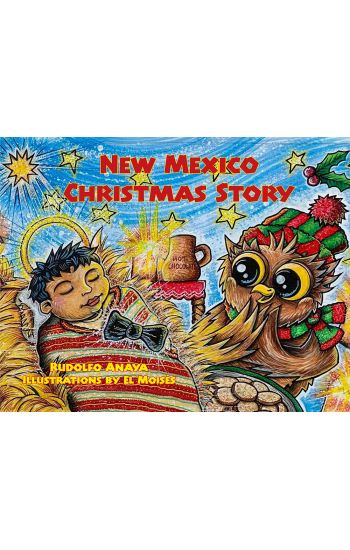
Acclaimed New Mexico author Rudolfo Anaya presents a northern New Mexico Christmas tale in this third volume from his Owl in a Straw Hat series featuring the loveable Ollie Tecolote and his Wisdom School classmates Uno the Unicorn, Jackie Jackalope, Bessie Beaver, Sally Skunk, Robbie Rabbit, and Ninja Raccoon. The story begins on Christmas Eve morning in Chimay and the students play in the snow and decorate a Christmas tree for the classroom. They are looking forward to the evening's activities. Nana, their teacher, is making posole and chile colorado and has invited some special guests to join them for dinner. After that Nana says they'll walk to El Santuario to visit the Santo Ni o and promises hot chocolate and biscochitos afterward Along the way, they will act the parts of the shepherds in Los pastores, the Shepherds' Play, which is about shepherds visiting the newborn baby Jesus and bringing him gifts. At the end of their journey, they too will visit the Nativity and bring their own gifts on this magical night.
This fast-paced mystery expands the ChupaCabra folklore into a metaphor that deals with the new powers inherent in science. In this second ChupaCabra mystery, Professor Rosa Medina has just arrived in Santa Fe where she meets Nadine, a mysterious sixteen-year-old who insists that the two of them travel to Roswell, New Mexico. Nadine is convinced that C-Force, a secret government agency, has decoded the DNA of ChupaCabra and an extraterrestrial. If the two genomes are combined, a new and horrific life form will be created. In this fast-paced mystery, Anaya expands the ChupaCabra folklore into a metaphor that deals with the new powers inherent in science. Is ChupaCabra a beast in Latino folktales, used to frighten children, or a lost species being manipulated by C-Force? Rosa's life hangs in the balance as she and her young accomplice try to find a way to stop C-Force before its mad scientists create a monster.
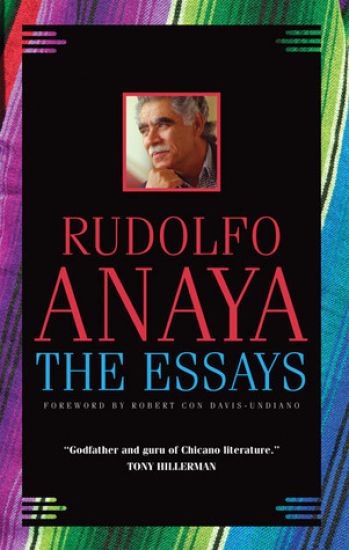
The storyteller's gift is my inheritance,"" writes Rudolfo Anaya in his essay ""Shaman of Words."" Although he is best known for Bless Me, Ultima and other novels, his writing also takes the form of nonfiction, and in these 52 essays he draws on both his heritage as a Mexican American and his gift for storytelling. Besides tackling issues such as censorship, racism, education, and sexual politics, Anaya explores the tragedies and triumphs of his own life.Collected here are Anaya's published essays. Despite his wide acclaim as the founder of Chicano literature, no previous volume has attempted to gather Anaya's nonfiction into one edition. A companion to The Man Who Could Fly and Other Stories, the collection of Anaya's short stories, The Essays is an essential anthology for followers of Anaya and those interested in Chicano literature.Pieces such as ""Requiem for a Lowrider,"" ""La Llorona, El Kookoóee, and Sexuality,"" and ""An American Chicano in King Arthur's Court"" take the reader from the llano of eastern New Mexico, where Anaya grew up, to the barrios of Albuquerque, and from the devastating diving accident that nearly ended his life at sixteen to the career he has made as an author and teacher. The point is not autobiography, although a life story is told, nor is it advocacy, although Anaya argues persuasively for cultural change. Instead, the author provides shrewd commentary on modern America in all its complexity. All the while, he employs the elegant, poetic voice and the interweaving of myth and folklore that inspire his fiction. ""Stories reveal our human nature and thus become powerful tools for insight and revelation,"" writes Anaya. This collection of prose offers abundant new insight and revelation.
While award-winning author Rudolfo Anaya is known primarily as a novelist, his genius is also evident in dramatic works performed regularly in his native New Mexico and throughout the world. Billy the Kid and Other Plays collects seven of these works and offers them together for the first time. Like his novels, many of Anaya's plays are built from the folklore of the Southwest. This volume opens with The Season of La Llorona, in which Anaya fuses the Mexican legend of the dreaded ""crying woman"" with that of La Malinche, mistress and adviser to Hernán Cortés. Southwestern lore also shapes the title play, which provides a Mexican American perspective on the Kid - or Bilito, as he is known inNew Mexico - along with keen insight into the slipperiness of history. The Farolitos of Christmas and Matachines uncover both the sweet and the sinister in stories behind seasonal New Mexican rituals. Other plays here address loss of the old ways - farming, connection to the land, the primacy of family - while showing the power of change. The mystery Who Killed Don José? uses the murder of a wealthy sheep rancher to look at political corruption and modernization. Ay, Compadre! and Angie address aging and death, though with refreshing humor and optimism. Elegant and poetic, intense and funny, these are the plays Anaya considers his best. The author tells how each originated, while Cecilia J. Aragón and Robert Con Davis- Undiano offer critical analysis and performance history. Both Anaya fans and readers new to his work will find this collection a rich trove, as will community theaters and scholars in Chicano literature and drama.
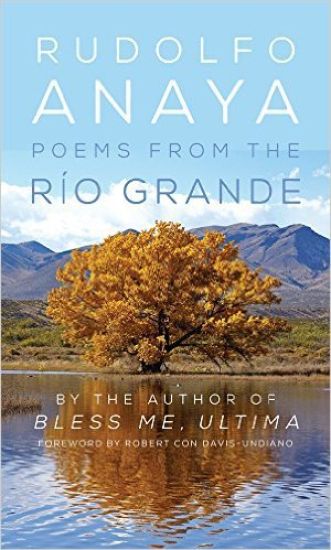
Readers of Rudolfo Anaya's fiction know the lyricism of his prose, but most do not know him as a poet. In this, his first collection of poetry, Anaya presents twenty-eight of his best poems, most of which have never before been published. Featuring works written in English and Spanish over the course of three decades, Poems from the Río Grande offers readers a full body of work showcasing Anaya's literary and poetic imagination. Although the poems gathered here take a variety of forms - haiku, elegy, epic - all are imbued with the same lyrical and satirical styles that underlie Anaya's fiction. Together they make a fascinating complement to the novels, stories, and plays for which he is well known. In verse, Anaya explores every aspect of Chicano identity, beginning with memories of his childhood in a small New Mexico village and ending with mature reflections on being a Chicano who considers himself connected to all peoples. The collection articulates the themes at the heart of all Anaya's work: nostalgia for the landscape and customs of his boyhood in rural New Mexico, a deep connection to the Río Grande, the politics of Chicanismo and satire aimed at it, and the use of myth and history as metaphor. Anaya also illustrates his familiarity with world traditions of poetry, invoking Walt Whitman, Homer, and the Bible. The poem to Isis that concludes the collection honors Anaya's wife, Patricia, and reflects his increasing identification with spiritual traditions across the globe. Both profeta and vato, seer and homeboy, Anaya as author is a citizen of the world. Poems from the Río Grande offers readers a glimpse into his development as a poet and as one of the most celebrated Chicano authors of our time.
“The storyteller’s gift is my inheritance,” writes Rudolfo Anaya in his essay “Shaman of Words.” Although he is best known for Bless Me, Ultima and other novels, his writing also takes the form of nonfiction, and in these 52 essays he draws on both his heritage as a Mexican American and his gift for storytelling. Besides tackling issues such as censorship, racism, education, and sexual politics, Anaya explores the tragedies and triumphs of his own life.Collected here are Anaya’s published essays. Despite his wide acclaim as the founder of Chicano literature, no previous volume has attempted to gather Anaya’s nonfiction into one edition. A companion to The Man Who Could Fly and Other Stories, the collection of Anaya’s short stories, The Essays is an essential anthology for followers of Anaya and those interested in Chicano literature.Pieces such as “Requiem for a Lowrider,” “La Llorona, El KookoÓee, and Sexuality,” and “An American Chicano in King Arthur’s Court” take the reader from the llano of eastern New Mexico, where Anaya grew up, to the barrios of Albuquerque, and from the devastating diving accident that nearly ended his life at sixteen to the career he has made as an author and teacher. The point is not autobiography, although a life story is told, nor is it advocacy, although Anaya argues persuasively for cultural change. Instead, the author provides shrewd commentary on modern America in all its complexity. All the while, he employs the elegant, poetic voice and the interweaving of myth and folklore that inspire his fiction. “Stories reveal our human nature and thus become powerful tools for insight and revelation,” writes Anaya. This collection of prose offers abundant new insight and revelation.
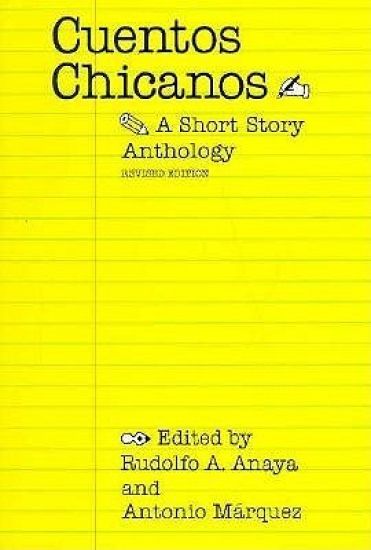
The twenty-one stories in this collection typify the phenomenal growth Chicano literature has undergone during the past two decades. The stories range from those complex narratives, from depictions of a childlike innocence to world-weary knowledge, from accounts of migrant life to middle-class anxieties, and from celebrations of the family to explorations of the supernatural. No central theme or point of view unites the stories; rather there emerges in each a personal aesthetic vision.Students of literature and creative writing as well as specialists in contemporary politics and social change will find this anthology especially rich reading. Included are such established authors as Rudolfo A. Anaya, E. A. Mares, and Bruce-Novoa along with the best of the emerging new writers including Denise Chavez and Mario Suarez.
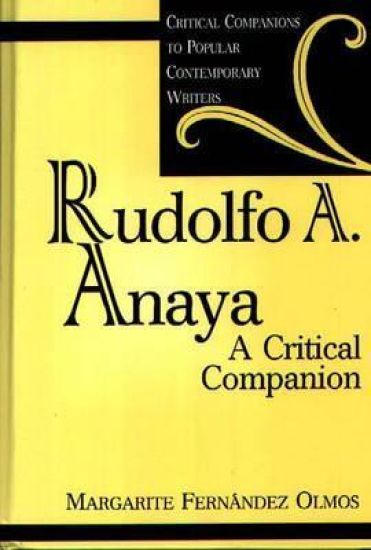
Rudolfo A. Anaya's seven novels can all be viewed in terms of the Chicano literary tradition though their rich texts have earned Anaya a place of respect in mainstream modern American literature. Fern^D'andez Olmos guides the reader through Anaya's literary world with clear signposts, illuminating the mythical, cultural, and linguistic complexities of his astounding stories. From his coming of age masterpiece Bless Me, Ultima (1972) to his most recent work Shaman Winter (1999) Anaya's writing with its rich spiritual symbolism is brought down to earth and made accessible to the student reader by Fern^D'andez Olmos insightful analyses. This work devotes a chapter to each novel, enabling Fern^D'andez Olmos to guide the reader through each, showing both the patterns and variations of literary devices in Anaya's works, while offering interesting alternative interpretations of Anaya's writing. Fern^D'andez Olmos presents a well-researched chapter on the life of Rudolfo Anaya, familiarizing readers with his Hispanic cultural background which figures so prominently in his writing. A chapter on Anaya and the Chicano literary tradition deepens the reader's understanding and appreciation of the writer's tremendous contributions. Fernández Olmos then devotes a full chapter to each of the novels, Bless Me, Ultima, Heart of Aztlán, Tortuga, and Alberqueque; his detective novels, Zia Summer and Rio Grande Fall; and his modern-day parable Jalamanta: A Message from the Desert. Student readers and researchers will find the bibliography which includes reviews, criticisms, and other secondary sources to be very helpful.