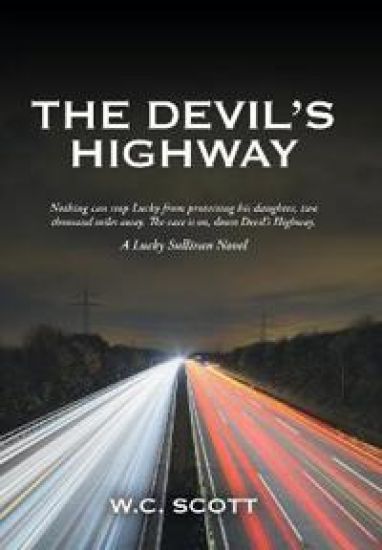
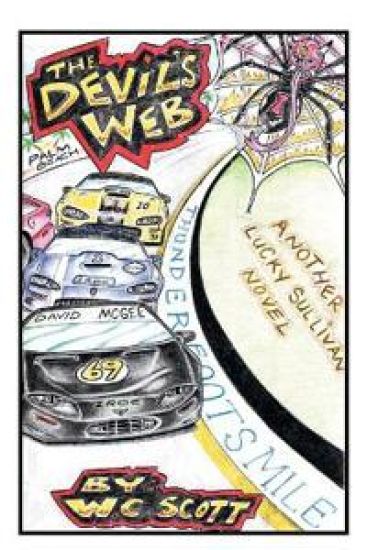
Revenge turns deadly after a cocaine shipment hidden inside a load of Corvettes disappears . . . Super salesman Lucky Sullivan and Lt. Frank Brooks with the NH State Police play a dangerous game of cat and mouse. Things really heat up when Lucky gets fired from City Corvette for seducing a lawyers wife into buying the whole package. After a high-speed chase turns deadly, the old man and his associates, the Northern Kings, up the ante on Luckys head. Guns are drawn and bodies fly while ten cherry Corvettes come missing in the middle of the night Lieutenant Brooks turns up the heat trying to figure out what Lucky knows about the old mans operations. Without his help, he cant build a case. Nothing can stop Lucky from protecting his daughter, two thousand miles away. The race is on, down at Devils Highway.
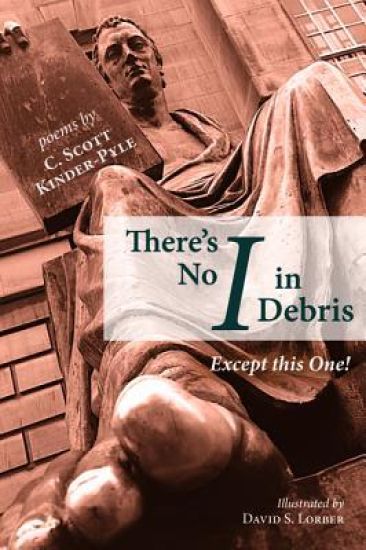
There Is No I in Debris is a walking and talking contradiction. Of course, as a matter of fact, the English letter is plain to see. If, however, the reader would care to acknowledge the fluid nature of that self who processes experience with images and words, the effect of these poems will be to expose the mysterious vulnerability of that authentic person who so often hides behind various familial and societal roles. The poet here posits a crisis, especially for clergy and various leaders of the institutional church in the twenty-first century. We are now entering a postmodern field of debris, in which the fragments of one's identity must be confronted amid the mere artifice of Christendom. ""Scott Kinder-Pyle's collection of poems is a fierce and tender engagement with the world we know, the worlds we yearn for, and the worlds we hesitate to see and to name. With a philosopher's eye and a pastor's heart, he probes the many pieces and identities of a preacher's life, finding wisdom in places none of us thought to look. These are poems to make us ponder, wonder, wrestle, and even laugh--at ourselves, most of all. Kinder-Pyle is the kind of colleague you want alongside you, for the long haul."" --Anna Carter Florence, Peter Marshall Professor of Preaching, Columbia Theological Seminary ""Not everyone can put words together in such a way that a reader's mind is filled with beautiful, sharp imagery. In Scott Kinder-Pyle's There's No I in Debris, we learn of the genuine struggles and hopes of a clergyman. Lay people and faith leaders alike will find themselves relating to and enjoying this poetry."" --Tracy Simmons, Editor, Spokane Faith and Values ""'Existence is a stealthy pathogen, ' a Sasquatch tenders here. Scott Kinder-Pyle's poems are like that--fiercely honest and articulate about frustrations and desolation, about passing indignities and enduring sorrows. But the poems' faithful laments only make their empathy, grace, and humanity all the more trustworthy and powerful."" --Jonathan Johnson, author of May is an Island C. Scott Kinder-Pyle loiters near Spokane, Washington--loving his adventurous spouse, his incorrigible adult children, and his untrainable dogs. He is also known as a teacher of philosophy, literature, and religion courses at Gonzaga and Eastern Washington universities. Originally, however, Scott blended into the crowd of obnoxious Philadelphia sports fans of the 1970s and '80s. Ordained as a minister of the Word and Sacrament in the Presbyterian Church (USA) in 1988, he continues to serve in that penultimate role as the Titanic lists to the side, and more icebergs loom . . . Alas, nothing satisfies, a condition of the soul which has prompted degrees (of glory) from Princeton Theological Seminary, Columbia Theological Seminary, and finally a Master of Fine Arts from Eastern Washington in 2013.
There Is No I in Debris is a walking and talking contradiction. Of course, as a matter of fact, the English letter is plain to see. If, however, the reader would care to acknowledge the fluid nature of that self who processes experience with images and words, the effect of these poems will be to expose the mysterious vulnerability of that authentic person who so often hides behind various familial and societal roles. The poet here posits a crisis, especially for clergy and various leaders of the institutional church in the twenty-first century. We are now entering a postmodern field of debris, in which the fragments of one's identity must be confronted amid the mere artifice of Christendom. ""Scott Kinder-Pyle's collection of poems is a fierce and tender engagement with the world we know, the worlds we yearn for, and the worlds we hesitate to see and to name. With a philosopher's eye and a pastor's heart, he probes the many pieces and identities of a preacher's life, finding wisdom in places none of us thought to look. These are poems to make us ponder, wonder, wrestle, and even laugh--at ourselves, most of all. Kinder-Pyle is the kind of colleague you want alongside you, for the long haul."" --Anna Carter Florence, Peter Marshall Professor of Preaching, Columbia Theological Seminary ""Not everyone can put words together in such a way that a reader's mind is filled with beautiful, sharp imagery. In Scott Kinder-Pyle's There's No I in Debris, we learn of the genuine struggles and hopes of a clergyman. Lay people and faith leaders alike will find themselves relating to and enjoying this poetry."" --Tracy Simmons, Editor, Spokane Faith and Values ""'Existence is a stealthy pathogen, ' a Sasquatch tenders here. Scott Kinder-Pyle's poems are like that--fiercely honest and articulate about frustrations and desolation, about passing indignities and enduring sorrows. But the poems' faithful laments only make their empathy, grace, and humanity all the more trustworthy and powerful."" --Jonathan Johnson, author of May is an Island C. Scott Kinder-Pyle loiters near Spokane, Washington--loving his adventurous spouse, his incorrigible adult children, and his untrainable dogs. He is also known as a teacher of philosophy, literature, and religion courses at Gonzaga and Eastern Washington universities. Originally, however, Scott blended into the crowd of obnoxious Philadelphia sports fans of the 1970s and '80s. Ordained as a minister of the Word and Sacrament in the Presbyterian Church (USA) in 1988, he continues to serve in that penultimate role as the Titanic lists to the side, and more icebergs loom . . . Alas, nothing satisfies, a condition of the soul which has prompted degrees (of glory) from Princeton Theological Seminary, Columbia Theological Seminary, and finally a Master of Fine Arts from Eastern Washington in 2013.
Kozmo is a fun and adventurous dog that lives on a small farm. He plans to celebrate his first birthday by showing other pets how to live the Great Life - just like him. Kozmo shares his tips on living the Great Life, but he expects the whole day to be a celebration of his birthday with his human family. When Kozmo's family leaves for work and school just like any ordinary day, he continues offering his advice to live the Great Life, but chaos ensues. Can Kozmo really be living the Great Life if his family completely forgets his birthday? Find out in this fun and heartwarming adventure told from the canine perspective.
What if husbands had a guidebook relatively simple to understand and apply? A husband of over 28 years offers humorous observations and sound tactics, essentially a field guide, on how to survive a marriage and most importantly to avoid being "dumped on" by your wife for your many real and perceived shortcomings as a husband.Tens of millions of unsuspecting husbands walk around without a clue as to what to do, what just happened, and why am I in the doghouse again with my wife? This book will teach husbands the hidden pathway to a happy, successful marriage.This book offers practical strategies and solutions to a variety of sources of marital friction: relatives, children, pets, budgets, household chores, sex drive, etc. At the most fundamental level, a husband want a wife who is a life-time companion, soul mate, and best friend who will more than occasionally have sex with him. This book will help a husband achieve this success. If the husband won't read the book, then his wife can read it to him while he's watching the MLB Network.
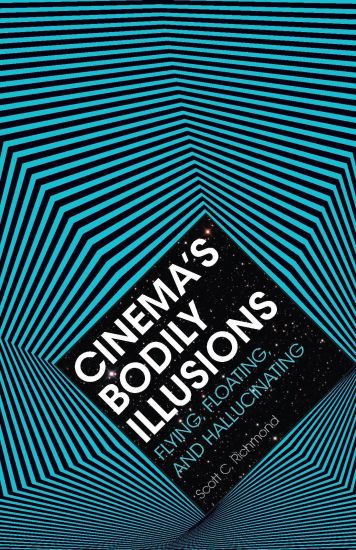
Do contemporary big-budget blockbuster films like Gravity move something in us that is fundamentally the same as what avant-garde and experimental films have done for more than a century? In a powerful challenge to mainstream film theory, Cinemas Bodily Illusions demonstrates that this is the case. Scott C. Richmond bridges genres and periods by focusing, most palpably, on cinemas power to evoke illusions: feeling like youre flying through space, experiencing 3D without glasses, or even hallucinating. He argues that cinema is, first and foremost, a technology to modulate perception. He presents a theory of cinema as a proprioceptive technology: cinema becomes art by modulating viewers embodied sense of space. It works primarily not at the level of the intellect but at the level of the body. Richmond develops his theory through examples of direct perceptual illusion in cinema: hallucinatory flicker phenomena in Tony Conrads The Flicker, eerie depth effects in Marcel Duchamps Ane9mic Cine9ma, the illusion of bodily movement through onscreen space in Stanley Kubricks 2001, Godfrey Reggios Koyaanisqatsi, and Alfonso Cuarf3ns Gravity. In doing so he combines insights from Maurice Merleau-Pontys phenomenology of perception and James J. Gibsons ecological approach to perception. The result is his distinctive ecological phenomenology, which allows us to refocus on the cinemas perceptual, rather than representational, power. Arguing against modernist habits of mind in film theory and aesthetics, and the attendant proclamations of cinemas death or irrelevance, Richmond demonstrates that cinemas proprioceptive aesthetics make it an urgent site of contemporary inquiry.
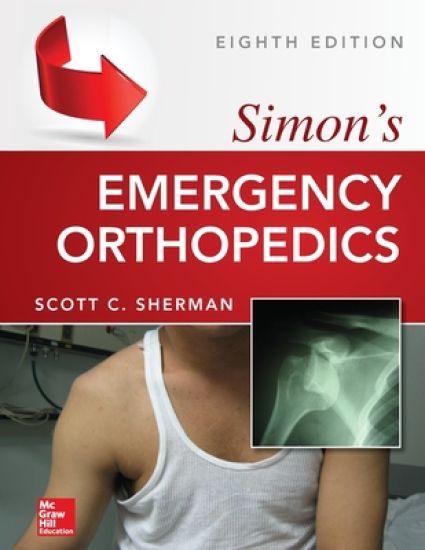
The emergency physician's most trusted reference for handling orthopedic injuries and disorders in the EDA Doody’s Core Title for 2022! Written by and for emergency physicians, Simon’s Emergency Orthopedics is the leading reference for handling all types of musculoskeletal emergencies. This heavily illustrated, full-color resource focuses on radiographic diagnosis, acute management, and discharge of the patient with a pulled muscle, torn ligament, fracture, or other skeletal trauma. The format represents the ideal integration of text and images, allowing clinicians to actually see what they are reading about. The concise text tells readers everything they need to know about the mechanisms of action along with recommended imaging studies, treatment guidelines, and possible complications.FEATURES:Online videos demonstrate injections, arthrocentesis, reduction techniques, and moreProvides authoritative, evidence-based information in a practical, clinically relevant mannerThe text is logically organized into four parts: Orthopedic Principles and Management, The Spine, Upper Extremities, and Lower ExtremitiesEnhanced by more than 1,400 illustrations, including new photographs and radiographsFractures are categorized according to degree of complexity, treatment modality, and prognosisThe only fracture index of its kind helps clinicians rapidly navigate the text to find pertinent informationAxioms throughout provide best practices for emergency careThe Appendix describes and illustrates the steps involved in placing a particular type of splint
The mysterious bookstore introduced in "....A Thousand Words"has a new customer: college student Hannah Newton. Her research on serial killers becomes hands on, as she is transported back in time to take the place of a twisted serial killer...and that serial killer has taken Hannah's place in the current day.
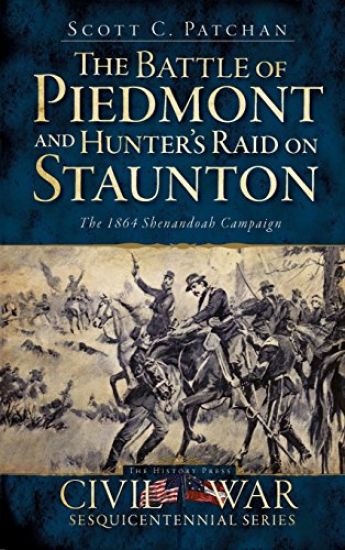
In 1864, General Grant tasked General David Hunter with raiding the breadbasket of the Shenandoah Valley and destroying the Confederate factories and supply lines. General Lee dispatched General William E. "Grumble" Jones, and the forces collided up the fertile fields of eastern Augusta County. It was a bloody day--the Battle of Piedmont saw more men killed and wounded than in any of Stonewall Jackson's 1862 Valley encounters. Sweeping on to victory, Federal forces then occupied Staunton and laid waste to the railroad and Confederate workshops. Join Civil War historian Scott C. Patchan as he chronicles the campaign and sheds light on its place in the war.