

Kirjahaku
Etsi kirjoja tekijän nimen, kirjan nimen tai ISBN:n perusteella.
1000 tulosta hakusanalla S. Alexander Reed
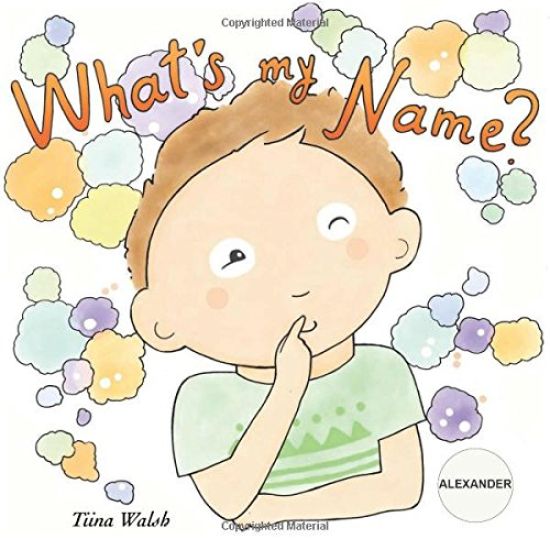
A personalised storybook for boys called ALEXANDER. The story is based on the letters of the child's own name. All books are different from one another. The boy wakes up but can't remember his name. Magic Mouse knows how to solve the problem. Magic Mouse takes him on a wonderful adventure in his Magic Bus Translated and adapted by the author from the Top-Selling Finnish language personalised children's namebook series "Tytt /Poika, joka unohti nimens ". Looking for a namebook "What's my name?" but couldn't find the right name for your child? Please don't hesitate to contact me with your name request -Tiina Walsh Author fb.me/whatsmynamestorybooks for more details about the storybooks
Briefwechsel Alexander von Humboldt's mit Heinrich Berghaus
Heinrich Berghaus; Alexander Von Humboldt
Hansebooks
2016
pokkari

Brill's Companion to the Campaigns of Philip II and Alexander the Great
BRILL
2024
sidottu
This Companion whose contributions come from an outstanding array of experts deals exclusively with the military campaigns of Philip II and his son Alexander the Great and the forces that fought in them. In addition to discussions of the strategy and tactics of the two commanders, the Companion examines those elements that went into the determination of these strategies and tactics. Chapters will be devoted to the logistics of these campaigns, military recruitment and training, the care of diseased and injured soldiers, military organization and equipment, and much more. While no study can ever be truly complete, this Companion comes far closer that any such previous attempt.
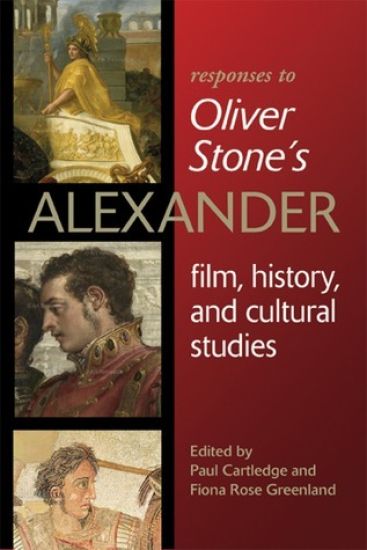
The charismatic Alexander the Great of Macedon (356-323 B.C.E.) was one of the most successful military commanders in history, conquering Asia Minor, Egypt, Persia, central Asia, and the lands beyond as far as Pakistan and India. Alexander has been, over the course of two millennia since his death at the age of thirty-two, the central figure in histories, legends, songs, novels, biographies, and, most recently, films. In 2004 director Oliver Stone's epic film ""Alexander"" generated a renewed interest in Alexander the Great and his companions, surroundings, and accomplishments, but the critical response to the film offers a fascinating lesson in the contentious dialogue between historiography and modern entertainment. This volume brings together an intriguing mix of leading scholars in Macedonian and Greek history, Persian culture, film studies, classical literature, and archaeology - including some who were advisors for the film - and includes an afterword by Oliver Stone discussing the challenges he faced in putting Alexander's life on the big screen. The contributors scrutinize Stone's project from its inception and design to its production and reception, considering such questions as: Can a film about Alexander (and similar figures from history) be both entertaining and historically sound? How do the goals of screenwriters and directors differ from those of historians? How do Alexander's personal relationships - with his mother Olympias, his wife Roxane, his lover Hephaistion, and others - affect modern perceptions of Alexander? Several of the contributors also explore reasons behind the film's tepid response at the box office and subsequent controversies.
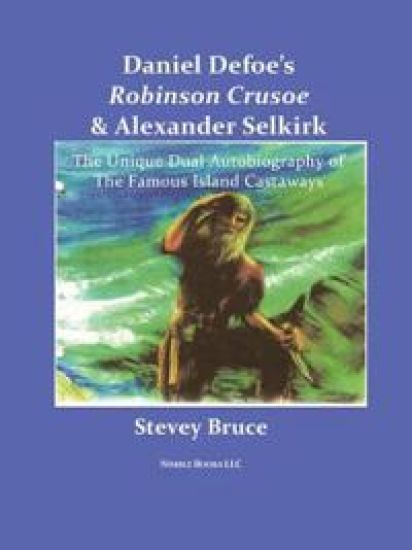
Daniel Defoe's Robinson Crusoe and Alexander Selkirk
Stevey Bruce; Daniel Defoe; Stu Bruce
Nimble Books
2007
pokkari


Alexander's Little Black Book: The Perfect Dating Companion for a Handsome Man Named Alexander. A secret place for names, phone numbers, and addresse
Wingman Publishing
Independently Published
2019
nidottu
Keep a record of all the girls that catch your eye
The Wars of the Diadochi: The Battle for Alexander the Great's Legacy
In60learning
Independently Published
2019
nidottu
Untersuchungen Uber Americka's Bevolkerung Aus Dem Alten Kontinente Dem Herrn Kammerherran Alexander Von Humboldt (1810)
Johann Severin Vater
KESSINGER PUBLISHING, LLC
2009
pokkari
Whittington's Feast; A New Parody on Alexander's Feast. Written by a College Wag. the Overture, Songs, &C. with All the Grand Chorusses, New Composed, by Thomas Augustine Arne, ...
Thomas Augustine Arne
Gale Ecco, Print Editions
2010
pokkari
![A Young Artist's Life. [By Alexander D. R. W. C. B. Cochrane, Baron Lamington.]](/covers/9781241401160.jpg)
A Young Artist's Life. [By Alexander D. R. W. C. B. Cochrane, Baron Lamington.]
Baron Lamington Cochrane; Alexander Dundas Ross
British Library, Historical Print Editions
2011
pokkari
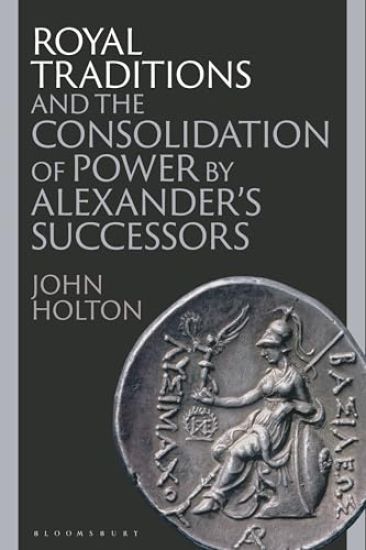
Royal Traditions and the Consolidation of Power by Alexander’s Successors
John Holton
BLOOMSBURY PUBLISHING PLC
2025
sidottu
In the wake of Alexander the Great's death, his ambitious Successors sought to solidify their positions as kings and establish a framework of new royal traditions. John Holton delves into the interconnected strategies employed by Antigonus, Demetrius, Ptolemy, Seleucus, Lysimachus and Cassander, as well as their heirs, as they consolidated their royal power between 323 and 276 BC. Through a wide-ranging examination of royal ideology and its formative impact, a set of studies explores the significance of discursive power in the new kings’ toolkits, the wide spectrum of god–king relations that were developed to project royal status, the innovative development of father–son joint kingship as a successional mechanism, and the symbolic means for supporting the translation of power to a second generation of kings.Set against the backdrop of a rapidly evolving political landscape in the early Hellenistic world, this volume offers invaluable insights into the transition from Alexander’s single empire to a multipolar world of competing royal dynasties. This period was in turn foundational for the longer-term institution of Hellenistic kingship, which played a pivotal role in in the history of ancient Greece and the near east. By bringing the Successors into a single discussion, with a comparative perspective and detailed studies of diverse evidence, Holton provides a fuller picture of the origins of Hellenistic royal practice.
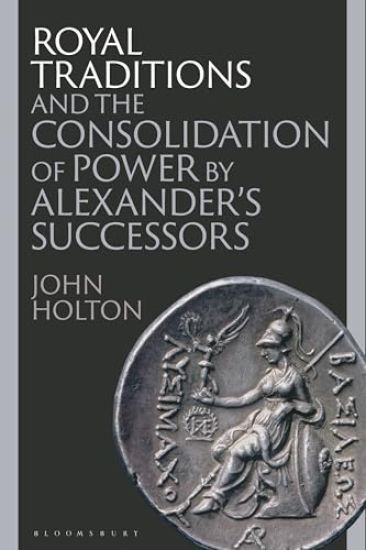
Royal Traditions and the Consolidation of Power by Alexander’s Successors
John Holton
BLOOMSBURY PUBLISHING PLC
2025
nidottu
Examining the period of political consolidation after Alexander the Great’s death, John Holton reconstructs how the successors used new frameworks of royal ideology to create long-term kingships. There is a particular focus on the deeper manoeuvres within the inter-generational impact raging from the influence of religion and family relations, to succession-planning and royal funerals. In this innovative book, Holton expertly reveals how powerful elites either succeeded or failed in creating lasting dynastic power. From the chaos of a collapsing empire to the solidification of a new model for autocratic power, the consolidation of the institution of Hellenistic kingship across the generation of Alexander’s successors (323-276 BC) is comprehensively investigated. With a comparative perspective and detailed studies of diverse evidence, this is the first dedicated study of the consolidation of Hellenistic kingship and the first to put these beginnings in an international context.
Whittington's Feast; a new Parody on Alexander's Feast. Written by a College wag. The Overture, Songs, &c. With all the Grand Chorusses, new Composed, by Thomas Augustine Arne,
Thomas Augustine Arne
Gale Ecco, Print Editions
2018
sidottu
The 18th century was a wealth of knowledge, exploration and rapidly growing technology and expanding record-keeping made possible by advances in the printing press. In its determination to preserve the century of revolution, Gale initiated a revolution of its own: digitization of epic proportions to preserve these invaluable works in the largest archive of its kind. Now for the first time these high-quality digital copies of original 18th century manuscripts are available in print, making them highly accessible to libraries, undergraduate students, and independent scholars.Western literary study flows out of eighteenth-century works by Alexander Pope, Daniel Defoe, Henry Fielding, Frances Burney, Denis Diderot, Johann Gottfried Herder, Johann Wolfgang von Goethe, and others. Experience the birth of the modern novel, or compare the development of language using dictionaries and grammar discourses. ++++The below data was compiled from various identification fields in the bibliographic record of this title. This data is provided as an additional tool in helping to insure edition identification: ++++Bodleian Library (Oxford)T193987A parody on Dryden's 'Alexander's feast'. Libretto also by Arne.London: printed for the author, 1776?]. v, 1],17, 1]p.; 4

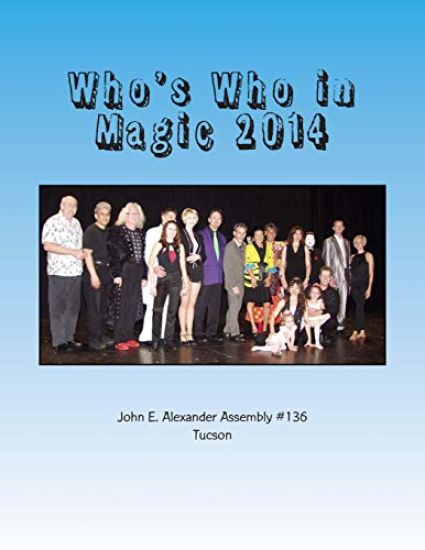
Who's Who in Magic 2014: John E. Alexander Assembly #136
Gary J. Husson
Createspace Independent Publishing Platform
2014
nidottu