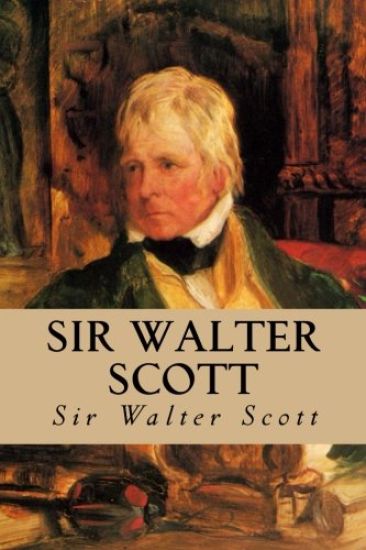
Sir Walter Scott's own 'autobiographic fragment, ' printed in Lockhart's first volume, has made other accounts of his youth mostly superfluous, even to a day which persists in knowing better about everything and everybody than it or they knew about themselves. No one ever recorded his genealogy more minutely, with greater pride, or with a more saving sense of humour than Sir Walter. He was connected, though remotely, with gentle families on both sides. That is to say, his great-grandfather was son of the Laird of Raeburn, who was grandson of Walter Scott of Harden and the 'Flower of Yarrow.' Sir Walter Scott, 1st Baronet, FRSE (15 August 1771 - 21 September 1832) was a Scottish historical novelist, playwright, poet and historian. Many of his works remain classics of both English-language literature and of Scottish literature. Famous titles include Ivanhoe, Rob Roy, Old Mortality, The Lady of the Lake, Waverley, The Heart of Midlothian and The Bride of Lammermoor. Although primarily remembered for his extensive literary works and his political engagement, Scott was an advocate, judge and legal administrator by profession, and throughout his career combined his writing and editing work with his daily occupation as Clerk of Session and Sheriff-Depute of Selkirkshire. A prominent member of the Tory establishment in Edinburgh, Scott was an active member of the Highland Society and served a long term as President of the Royal Society of Edinburgh (1820-32). Walter Scott was born on 15 August 1771. He was the ninth child of Walter Scott, a Writer to the Signet (solicitor), and Anne Rutherford. His father was a member of a cadet branch of the Scotts Clan, and his mother descended from the Haliburton family, the descent from whom granted Walter's family the hereditary right of burial in Dryburgh Abbey. Via the Haliburton family, Walter (b.1771) was a cousin of the pre-eminent contemporaneous property developer James Burton, who was a Haliburton who had shortened his surname, and of his son, the architect Decimus Burton. Walter subsequently became a member of the Clarence Club, of which the Burtons were also members. Five of Walter's siblings died in infancy, and a sixth died when he was five months of age. Walter was born in a third-floor flat on College Wynd in the Old Town of Edinburgh, a narrow alleyway leading from the Cowgate to the gates of the University of Edinburgh (Old College). He survived a childhood bout of polio in 1773 that left him lame, a condition that was to have a significant effect on his life and writing. To cure his lameness he was sent in 1773 to live in the rural Scottish Borders at his paternal grandparents' farm at Sandyknowe, adjacent to the ruin of Smailholm Tower, the earlier family home. Here he was taught to read by his aunt Jenny, and learned from her the speech patterns and many of the tales and legends that characterised much of his work. In January 1775 he returned to Edinburgh, and that summer went with his aunt Jenny to take spa treatment at Bath in England, where they lived at 6 South Parade. In the winter of 1776 he went back to Sandyknowe, with another attempt at a water cure at Prestonpans during the following summer
Excerpt from Sir Walter Scott: A Lecture at the Sorbonne, May 22, 1919, in the Series of Conf rences Louis Liard As to the truth of Stendhal's opinion about the vogue of Scott's novels and his place as chief of the romantics, there is no end to the list of witnesses who might be summoned. Perhaps it may be enough to remember how the young Balzac was carried away by the novels as they came fresh from the translator, almost immedi ately after their first appearance at home. About the Publisher Forgotten Books publishes hundreds of thousands of rare and classic books. Find more at www.forgottenbooks.com This book is a reproduction of an important historical work. Forgotten Books uses state-of-the-art technology to digitally reconstruct the work, preserving the original format whilst repairing imperfections present in the aged copy. In rare cases, an imperfection in the original, such as a blemish or missing page, may be replicated in our edition. We do, however, repair the vast majority of imperfections successfully; any imperfections that remain are intentionally left to preserve the state of such historical works.
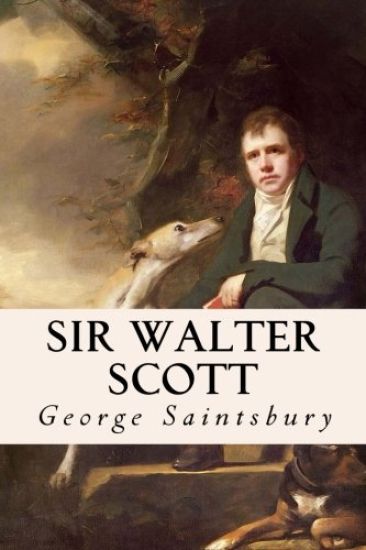
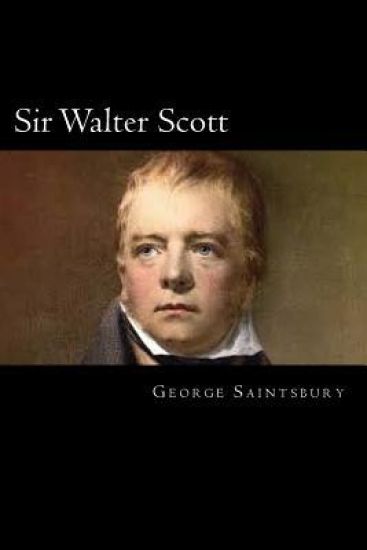
Famous Scots Series is presented here in a high quality paperback edition. This popular classic work by George Saintsbury is in the English language, and may not include graphics or images from the original edition. If you enjoy the works of George Saintsbury then we highly recommend this publication for your book collection.
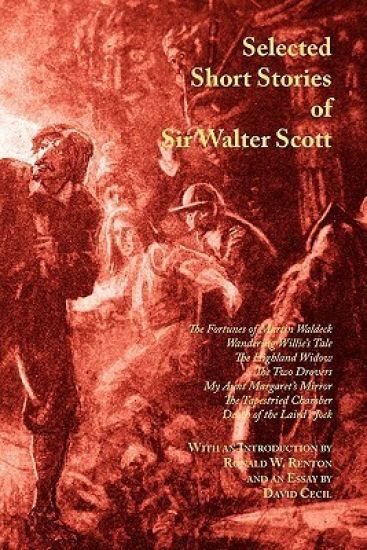
His Waverley novels brought Sir Walter Scott (1771-1832) great international fame in his own day. Many modern readers, however, find them too daunting, perhaps because of their considerable length. The aim of this volume is to introduce the general reader to Scott's prose fiction through his highly accessible short stories. These include the "straightforward" horror stories My Aunt Margaret's Mirror and The Tapestried Chamber and the masterly Wandering Willie's Tale with its weird expedition to Hell, told in broad Scots. The Highland Widow and The Two Drovers mirror the themes of some of Scott's great novels. The former deals with friction and misunderstanding between generations in a Highland family - with fatal consequences. The latter examines ideas of justice and honour when Highlander and Englishman collide - again with fatal consequences.Also included are The Fortunes of Martin Waldeck and Death of the Laird's Jock. With an Introduction by Ronald W. Renton and an Essay by David Cecil.
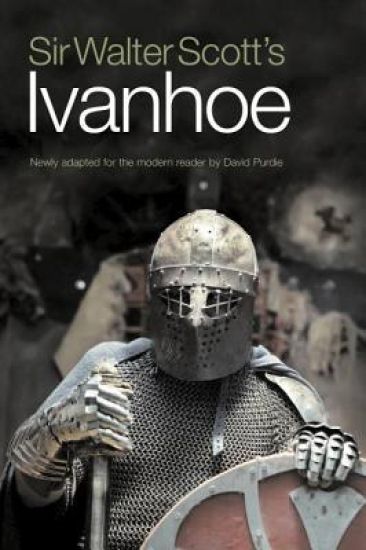
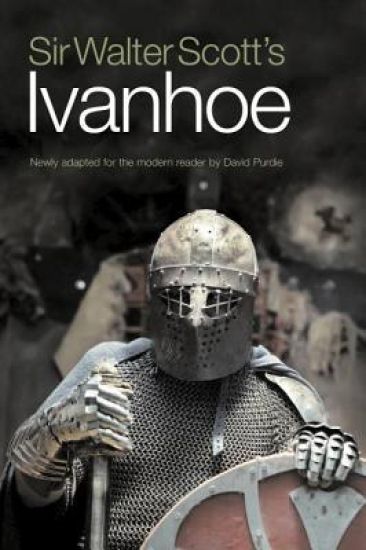
Ivanhoe follows Wilfred of Ivanhoe, part of one of the few Saxon families at a time when English nobility was dominated by the Normans, who is out of favour with his father for his allegiance to the Norman king, Richard the Lionheart. The gripping storyline beautifully captures the 12th century tensions between Saxons and Normans, Nobility and Commonality and Jews and Gentiles, with a whole host of well-known characters from Robin Hood to Friar Tuck.
A special hardback edition of David Purdie's controversial adaptation of Scott's classic historical novel.Ivanhoe follows Wilfred of Ivanhoe, part of one of the few Saxon families at a time when English nobility was dominated by the Normans, who is out of favour with his father for his allegiance to the Norman king, Richard the Lionheart. The gripping storyline beautifully captures the 12th century tensions between Saxons and Normans, Nobility and Commonality and Jews and Gentiles, with a whole host of well-known characters from Robin Hood to Friar Tuck.
New and controversial abridged edition of Walter Scottâ??s The Heart of Midlothian, set in Edinburgh in the mid-eighteenth century, featuring one of Scott's most well-loved heroines, Jeanie Deans.
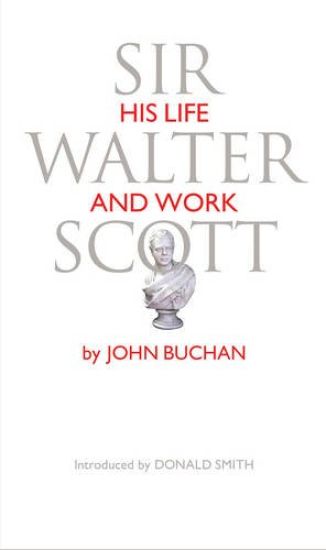
In the bicentenary year of the publication of Sir Walter Scott’s first novel Waverley, this is a timely republication of Buchan’s work The Man and the Book, originally published in 1925.Buchan’s treatment is sympathetic but perceptive, and at points critical. Whilst acknowledging Scott’s weaknesses, the book also touches upon the creative pulse of his great predecessor’s achievement. Interspersed with superb extracts exhibiting Scott’s narrative arts, as a short introduction to and sampling of Scott, John Buchan’s work has never been bettered. To this day, this book remains the ideal advocate and guide to the great Sir Walter Scott.