DISCOVER:: FUN on the lake. This body of water is a true gem. Now you can work your way through the majestic shores that make this lake so special. Fun for all ages. Share the gift of Lake Fun with someone you love today. ***Limited Time Discount Offer *** ***Regular Price $12.99*** - -***Plus, As a Special Thank-you for buying this Book Today, You Will Receive FREE puzzles and games inside the book*** - -Do you want to see a side of the lake a child rarely gets to see? Do you or a child you love need to express their creative side while enjoying a fun cultural experience? Read on to find out more about how this book can solve your problem... Buy:: The one and only Lake Fun Coloring Book Here's a preview of what you'll find inside this book: - -Fisherman First Aid Kit Tent Sleeping Bag Beach Towell Fish Net Flippers Boat Paddle Hat Visor Swim Trunks Bikini Radio Playing Music Life jacket Rafts Knee Board Tubes Friends Fire Wood Camp Fire Grill Sun Screen Lotion Money Drinks Goggles Wake board Ski Rope Anchor Bug repellent Beach Chairs Binoculars Book Playing Cards Cooler Coozie Camera Snacks Tackle Box Fishing Rod Worms Cricket Water Shoes Skipping Rocks Water bottle Floaties Swim Noodle Dry Clothes Phone Trash Bag Toilet Paper Paper Towels Watermelon Lantern Flash light Boat light Ski rope Bobber Fishing Hook Catfish Bluegill Turtle Minnow Crickett Water Snake Duck Pelican Seagull Frog Large Mouth Bass Small Mouth Bass Trout Laptop Computer Tablet Swim Cap Nose plug Fish food Bag of ice Dog Pop sickle Marshmallows Chocolate Graham crackers Smores Canoe Kayak Paddlebaord Flip flops Lake Map Swim Noodle And much, much more Want to Know More? Scroll to the top of the page and select the "BUY" button for instant purchase. Buy Your Copy Right Now
Vivid characters on a coastal Texas ranch weave a suspense filled taleAs a child, Sabine Nadine Cole, had nothing to compare her life to. Even as a toddler, she wandered down the county road, picking flowers and communicating with birds, squirrels, and sometimes a distant bobcat. She liked her freedom, away from the quarrels between her mother Josephine, and Marvin, a man who Josephine said was Sabine's father. Too much alcohol and free time had not only deteriorated relationships but had also caused the neglect of the three-story family homestead on the Dunn Ranch. In a massive house with spirits of past generations, Sabine can hear the voices and sometimes catch a glimpse of her grandparents and great grandparents. By the time she's in elementary school, Sabine knows her family is not normal, and the Dunn house is full of secrets. In a coming-of-age saga, set on a coastal Texas ranch, Sabine discovers that family can be created if the one she was born to fails her. However, nothing is as it seems and secrets and lies multiply. Just when all is well, something else rocks Sabine's world. In a series of character-driven stories, the family legacy may be altered if the youngest among them can unlock the mystery and cope with the twists confronting her at every turn.Josephine was a murderer drug abuser, alcoholic, formerly promiscuous teenager, and mentally ill; she was also a mother charged with the responsibility of a child and before that child, six others. This would be the child who felt responsibility for the parent, a desire to keep her mother safe. This child has a constant yearning to know who she is. This child would have a gift and a knowing-the Indigo child, Sabine.Sabine is the first novel of four in a series. "Like Kya in Where the Crawdads Sing, Sabine forges her way through family dysfunction, deprivation, and abuse, and we root for her indomitable resilience and resourceful spirit at every turn." With a scattering of magical realism in the style of Alice Hoffman, this series explores the relationship of our spiritual ancestors with the real world, an historic house, and how we create families to get through the rough times.
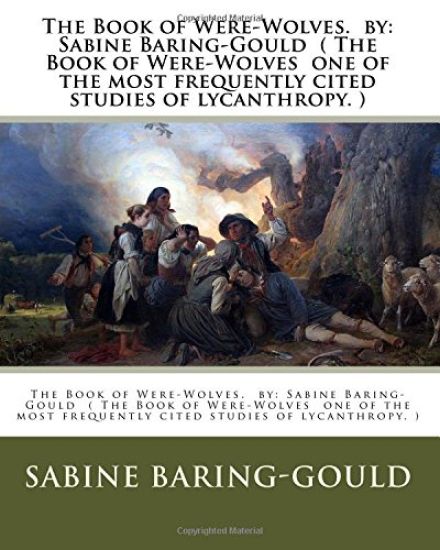
Rev. Sabine Baring-Gould (28 January 1834 - 2 January 1924) of Lew Trenchard in Devon, England, was an Anglican priest, hagiographer, antiquarian, novelist and eclectic scholar. His bibliography consists of more than 1240 publications, though this list continues to grow. His family home, the manor house of Lew Trenchard, near Okehampton, Devon, has been preserved as he had it rebuilt and is now a hotel. He is remembered particularly as a writer of hymns, the best-known being "Onward, Christian Soldiers" and "Now the Day Is Over". He also translated the carol "Gabriel's Message" from the Basque language to English The Book of Were-Wolves (1865), one of the most frequently cited studies of lycanthropy. He habitually wrote while standing, and his desk can be seen in the manor. With the shocking histories of 10 famous cases, this classic blends science, superstition, and fiction to tell the full story of the werewolves among us. The first serious academic study of lycanthropy and "blood-lust" written in English, this book draws upon a vast body of observation, myth, and lore.
Rev. Sabine Baring-Gould (28 January 1834 - 2 January 1924) of Lew Trenchard in Devon, England, was an Anglican priest, hagiographer, antiquarian, novelist and eclectic scholar. His bibliography consists of more than 1240 publications, though this list continues to grow. His family home, the manor house of Lew Trenchard, near Okehampton, Devon, has been preserved as he had it rebuilt and is now a hotel. He is remembered particularly as a writer of hymns, the best-known being "Onward, Christian Soldiers" and "Now the Day Is Over". He also translated the carol "Gabriel's Message" from the Basque language to English.
Rev. Sabine Baring-Gould (28 January 1834 - 2 January 1924) of Lew Trenchard in Devon, England, was an Anglican priest, hagiographer, antiquarian, novelist and eclectic scholar. His bibliography consists of more than 1240 publications, though this list continues to grow. His family home, the manor house of Lew Trenchard, near Okehampton, Devon, has been preserved as he had it rebuilt and is now a hotel. He is remembered particularly as a writer of hymns, the best-known being "Onward, Christian Soldiers" and "Now the Day Is Over". He also translated the carol "Gabriel's Message" from the Basque language to English.
The Reverend Sabine Baring-Gould (28 January 1834 - 2 January 1924) of Lew Trenchard in Devon, England, was an Anglican priest, hagiographer, antiquarian, novelist, folk song collector and eclectic scholar. His bibliography consists of more than 1240 publications, though this list continues to grow. His family home, the manor house of Lew Trenchard, near Okehampton, Devon, has been preserved as he had it rebuilt and is now a hotel. He is remembered particularly as a writer of hymns, the best-known being "Onward, Christian Soldiers" and "Now the Day Is Over". He also translated the carol "Gabriel's Message" from the Basque language to English. CAREER: Because the family spent much of his childhood travelling round Europe, most of his education was by private tutors. He only spent about two years in formal schooling, first at King's College School in London (then located in Somerset House) and then, for a few months, at Warwick Grammar School (now Warwick School). Here his time was ended by a bronchial disease of the kind that was to plague him throughout his long life. His father considered his ill-health as a good reason for another European tour. In 1852 he was admitted to Cambridge University, earning the degrees of Bachelor of Arts in 1857, then Master of Arts in 1860 from Clare College, Cambridge.In September 1853 he informed Nathaniel Woodard of his desire to be ordained. He taught for only ten days at one of Woodard's boys' boarding schools in Sussex, Lancing College, but then moved to another, Hurstpierpoint College, where he stayed from 1857 to 1864.While there he was responsible for several subjects, especially languages and science, and he also designed the ironwork of the bookcases in the boys' library, as well as painting the window jambs with scenes from the "Canterbury Tales" and the "Faery Queen". He took Holy Orders in 1864, and became the curate at Horbury Bridge, West Riding of Yorkshire. It was while acting as a curate that he met Grace Taylor, the daughter of a mill hand, then aged fourteen. In the next few years they fell in love. His vicar, John Sharp, arranged for Grace to live for two years with relatives in York to learn middle-class manners. Baring-Gould, meanwhile, relocated to become perpetual curate at Dalton, near Thirsk. He and Grace were married in 1868 at Wakefield.Their marriage lasted until her death 48 years later, and the couple had 15 children, all but one of whom lived to adulthood. When he buried his wife in 1916 he had carved on her tombstone the Latin motto Dimidium Animae Meae ("Half my Soul"). Baring-Gould became the rector of East Mersea in Essex in 1871 and spent ten years there. In 1872 his father died and he inherited the 3,000-acre (12 km2) family estates of Lew Trenchard in Devon, which included the gift of the living of Lew Trenchard parish. When the living became vacant in 1881, he was able to appoint himself to it, becoming parson as well as squire. He did a great deal of work restoring St Peter's Church, Lew Trenchard, and (from 1883 to 1914) thoroughly remodelled his home, Lew Trenchard Manor..................
The Reverend Sabine Baring-Gould (28 January 1834 - 2 January 1924) of Lew Trenchard in Devon, England, was an Anglican priest, hagiographer, antiquarian, novelist, folk song collector and eclectic scholar. His bibliography consists of more than 1240 publications, though this list continues to grow. His family home, the manor house of Lew Trenchard, near Okehampton, Devon, has been preserved as he had it rebuilt and is now a hotel. He is remembered particularly as a writer of hymns, the best-known being "Onward, Christian Soldiers" and "Now the Day Is Over". He also translated the carol "Gabriel's Message" from the Basque language to English. CAREER: Because the family spent much of his childhood travelling round Europe, most of his education was by private tutors. He only spent about two years in formal schooling, first at King's College School in London (then located in Somerset House) and then, for a few months, at Warwick Grammar School (now Warwick School). Here his time was ended by a bronchial disease of the kind that was to plague him throughout his long life. His father considered his ill-health as a good reason for another European tour. In 1852 he was admitted to Cambridge University, earning the degrees of Bachelor of Arts in 1857, then Master of Arts in 1860 from Clare College, Cambridge.In September 1853 he informed Nathaniel Woodard of his desire to be ordained. He taught for only ten days at one of Woodard's boys' boarding schools in Sussex, Lancing College, but then moved to another, Hurstpierpoint College, where he stayed from 1857 to 1864.While there he was responsible for several subjects, especially languages and science, and he also designed the ironwork of the bookcases in the boys' library, as well as painting the window jambs with scenes from the "Canterbury Tales" and the "Faery Queen". He took Holy Orders in 1864, and became the curate at Horbury Bridge, West Riding of Yorkshire. It was while acting as a curate that he met Grace Taylor, the daughter of a mill hand, then aged fourteen. In the next few years they fell in love. His vicar, John Sharp, arranged for Grace to live for two years with relatives in York to learn middle-class manners. Baring-Gould, meanwhile, relocated to become perpetual curate at Dalton, near Thirsk. He and Grace were married in 1868 at Wakefield.Their marriage lasted until her death 48 years later, and the couple had 15 children, all but one of whom lived to adulthood. When he buried his wife in 1916 he had carved on her tombstone the Latin motto Dimidium Animae Meae ("Half my Soul"). Baring-Gould became the rector of East Mersea in Essex in 1871 and spent ten years there. In 1872 his father died and he inherited the 3,000-acre (12 km2) family estates of Lew Trenchard in Devon, which included the gift of the living of Lew Trenchard parish. When the living became vacant in 1881, he was able to appoint himself to it, becoming parson as well as squire. He did a great deal of work restoring St Peter's Church, Lew Trenchard, and (from 1883 to 1914) thoroughly remodelled his home, Lew Trenchard Manor.
The Reverend Sabine Baring-Gould (28 January 1834 - 2 January 1924) of Lew Trenchard in Devon, England, was an Anglican priest, hagiographer, antiquarian, novelist, folk song collector and eclectic scholar. His bibliography consists of more than 1240 publications, though this list continues to grow. His family home, the manor house of Lew Trenchard, near Okehampton, Devon, has been preserved as he had it rebuilt and is now a hotel. He is remembered particularly as a writer of hymns, the best-known being "Onward, Christian Soldiers" and "Now the Day Is Over". He also translated the carol "Gabriel's Message" from the Basque language to English. CAREER: Because the family spent much of his childhood travelling round Europe, most of his education was by private tutors. He only spent about two years in formal schooling, first at King's College School in London (then located in Somerset House) and then, for a few months, at Warwick Grammar School (now Warwick School). Here his time was ended by a bronchial disease of the kind that was to plague him throughout his long life. His father considered his ill-health as a good reason for another European tour. In 1852 he was admitted to Cambridge University, earning the degrees of Bachelor of Arts in 1857, then Master of Arts in 1860 from Clare College, Cambridge.In September 1853 he informed Nathaniel Woodard of his desire to be ordained. He taught for only ten days at one of Woodard's boys' boarding schools in Sussex, Lancing College, but then moved to another, Hurstpierpoint College, where he stayed from 1857 to 1864.While there he was responsible for several subjects, especially languages and science, and he also designed the ironwork of the bookcases in the boys' library, as well as painting the window jambs with scenes from the "Canterbury Tales" and the "Faery Queen". He took Holy Orders in 1864, and became the curate at Horbury Bridge, West Riding of Yorkshire. It was while acting as a curate that he met Grace Taylor, the daughter of a mill hand, then aged fourteen. In the next few years they fell in love. His vicar, John Sharp, arranged for Grace to live for two years with relatives in York to learn middle-class manners. Baring-Gould, meanwhile, relocated to become perpetual curate at Dalton, near Thirsk. He and Grace were married in 1868 at Wakefield.Their marriage lasted until her death 48 years later, and the couple had 15 children, all but one of whom lived to adulthood. When he buried his wife in 1916 he had carved on her tombstone the Latin motto Dimidium Animae Meae ("Half my Soul"). Baring-Gould became the rector of East Mersea in Essex in 1871 and spent ten years there. In 1872 his father died and he inherited the 3,000-acre (12 km2) family estates of Lew Trenchard in Devon, which included the gift of the living of Lew Trenchard parish. When the living became vacant in 1881, he was able to appoint himself to it, becoming parson as well as squire. He did a great deal of work restoring St Peter's Church, Lew Trenchard, and (from 1883 to 1914) thoroughly remodelled his home, Lew Trenchard Manor...................
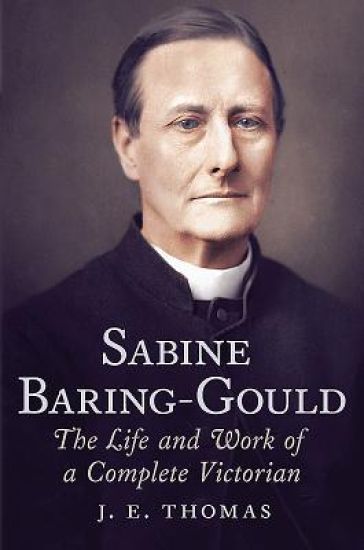
Sabine Baring-Gould was one of the most remarkable Englishmen of the Victorian Age. Born as the heir to an estate in Devon, he received an erratic education travelling on the continent. Eventually he became a clergyman, and when thirty he married an eighteen year old mill girl, and act which attracted national interest and comment.Over the next sixty years he became famous as a pioneer archaeologist, the first collector of West Country folk music, composer of hymns, a writer on theology-he was extremely critical of his Church-and one of the most popular novelists of the day. As well as this staggering output, he ran his large estate with compassion, and as if to cement his Victorian credentials he and Grace had fifteen children. He died in 1924 aged eighty nine. This biography analyses in detail his extraordinary life and work, especially his literary output, and draws a picture of a great character. It is high time we were reminded of a major figure in Victorian England.

![The Gaverocks; A Tale of the Cornish Coast. by the Author of John Herring, Etc. [I.E. Sabine Baring Gould].](/covers/9781240896554.jpg)
![The Gaverocks; A Tale of the Cornish Coast. by the Author of "John Herring," Etc. [I.E. Sabine Baring Gould].](/covers/9781241486808.jpg)