

Kirjahaku
Etsi kirjoja tekijän nimen, kirjan nimen tai ISBN:n perusteella.
1000 tulosta hakusanalla Sam Frank


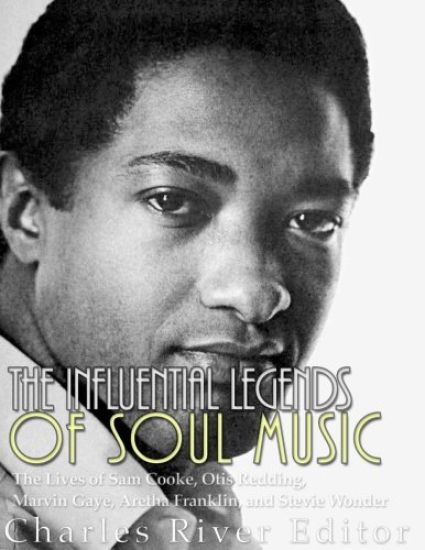
The Influential Legends of Soul Music: The Lives of Sam Cooke, Otis Redding, Marvin Gaye, Aretha Franklin, and Stevie Wonder
Charles River
Createspace Independent Publishing Platform
2016
nidottu
The Influential Legends of Soul Music: The Lives of Sam Cooke, Otis Redding, Marvin Gaye, Aretha Franklin, and Stevie Wonder
Charles River
Createspace Independent Publishing Platform
2018
nidottu
*Includes pictures *Includes the artists' quotes about their lives and careers *Includes online resources and a bibliography for further reading *Includes a table of contents If Sam Cooke, one of the greatest African-American soul singers in the genre's history, had been Irish, he might have kept company with the likes of the great balladeer and classical tenor John McCormack. If he had been born Italian, he might have starred in the refined, lyrical Mozart opera roles usually reserved for those with an extreme musical sensitivity. Such was the level of excellence in Cooke's inner understanding of his own voice, which was capable of exquisite classical precision and a finesse in phrasing that lay far beyond the norm. He could have prospered and attained greatness in any genre of his choice, but considering the timing of the American audience, and his African-American heritage, Sam Cooke instead pioneered a new genre and became its greatest practitioner by blending black musical traditions that incorporated all the refinement and beauty of European classical genres yet still spoke from the heart of his rural American roots. To some, the Stax Records model may have lagged behind Motown in terms of modernity, with its adherence to older musical and technological modes, but in actuality, Otis Redding and his musical circle represented a preservation movement of sorts, and "exemplified to many listeners the power of Southern 'deep soul' - hoarse, gritty vocals, brassy arrangements, and an emotional way with both party tunes and aching ballads." Such was the perfect conduit for an artist like Otis Redding, who felt compelled by the lifelong urge to sing, years before his dreams of a professional life would ever be realized. And, as the edifice of soul broke further into sub-styles, Redding seemed able to succeed in every one of them. Among the many stars gathered by Berry Gordy's Motown Records during the latter half of the 20th century, one of the most famous and successful was Marvin Gaye, even though the rigidity of the studio's operating procedures constantly collided with his capacity for stubbornness and insistence that he be given the independence to pursue his own artistic vision. Of course, it's easy to see it from both sides; despite the ceaseless thread of masterpieces emerging from Motown studio artists (many of them performed and recorded by Gaye), it might also be said in his defense that as part of the record company's mission statement, Motown operated in a state of near artistic lockdown where creative input by the artist was concerned. A certain inevitability characterizes the rise to fame of Aretha Franklin. Indeed, while it is true that neither of her parents were pop singers, they were each talented vocalists-Aretha's father, C.L., was a particularly famous preacher, with a voice so melodic that his sermons effectively doubled as musical performances. Moreover, in an age in which economic opportunities were particularly limited for African-Americans, Aretha was fortunate enough to grow up in a household of relative comfort. Not only was she exposed to music on a daily basis in her household, but her father was a savvy enough businessman to orchestrate her career during its nascent stages, helping her navigate the challenges of entering the music industry. To be certain, in many respects, Aretha Franklin was from an early age the beneficiary of opportunities that are simply unavailable to most aspiring vocalists. Among the most innovative and independent artists to come out of Motown in the latter half of the 20th century, along with colleagues Marvin Gaye, Isaac Hayes, and Michael Jackson, Stevie Wonder was said by many to possess three distinct obstacles to fulfillment in the music industry. He was poor, and worse, he was black and blind. Wonder, however, refused to shrink from or acknowledge any of these realities as barriers, asserting that he had not been in any way disadvantaged.





Frank O'Hara's New York School and Mid-Century Mannerism
Sam Ladkin
Oxford University Press
2024
sidottu
Frank O'Hara's New York School and Mid-Century Mannerism offers a ground-breaking account of the poet Frank O'Hara and the extraordinary cultural blossoming O'Hara catalysed, namely the mid-century experimental and multi-disciplinary arts scene, the New York School. Fresh accounts of canonical figures (Jackson Pollock, Willem de Kooning, George Balanchine, Fred Astaire) and original work on those too little discussed (Edwin Denby, Elaine de Kooning) resound with analysis of queer iconology from Michelangelo's David to James Dean. Sam Ladkin argues that O'Hara and the New York School revive Mannerism. Turning away from interpretations of O'Hara's Transcendentalism, Romanticism, or pastoralism, 'mid-century Mannerism' helps explain O'Hara's self-conscious style, its play with sweet and grand grace, contortion of conventional measure, risks with affectation, conceits, nonchalance, and scrambling of high/low culture. Mannerism clarifies the sociability implicit in the formal innovations of the New York School. The work also studies the kinship between art mediums by retooling rhetoric and recovering a perennial manneristic tendency beyond period style. Genealogies of grace, the figura serpentinata, sprezzatura, ornatus, and the marvellous exemplify qualities exhibited by O'Hara's New York School. Ladkin relates the essential role of dance in the New York School. O'Hara's reception has been tied to painting, predominantly Abstract Expressionism. He was also, however, a balletomane, a fan, for whom ballet was 'made up exclusively of qualities which other arts only aspire to in order to be truly modern.' Relaying ballet's Mannerist origins and aesthetics, and demonstrating its influence alongside Broadway and Hollywood musical-dance on art and poetry, completes the portrait of mid-century modernity.

In a 2012 opinion piece bemoaning the state of the US Senate, Washington Post columnist Dana Milbank cited a 'leading theory: There are no giants in the chamber today.' Among the respected members who once walked the Senate floor, admired for their expertise and with a stature that went beyond party, Milbank counted Sam Nunn (D-GA).Nunn served in the Senate for four terms beginning in 1972, at a moment when domestic politics and foreign policy were undergoing far-reaching changes. As a member and then chairman of the Senate Armed Services Committee, he had a vital impact on most of the crucial national security and defense issues of the Cold War era and the 'new world order' that followed - issues that included the revitalization of the North Atlantic Treaty Organization's military capability, US-Soviet relations, national defense reorganization and reform, the Persian Gulf conflict, and nuclear arms control. In this first full account of Nunn's senatorial career, Frank Leith Jones reveals how, as a congressional leader and 'shadow secretary of defense,' Nunn helped win the Cold War, constructing the foundation for the defense and foreign policies of the 1970s and 1980s that secured the United States and its allies from the Soviet threat.At a time of bitter political polarization and partisanship, Nunn's reputation remains that of a statesman with a record of bipartisanship and a dedication to US national interests above all. His career, as recounted in Sam Nunn: Statesman of the Nuclear Age, provides both a valuable lesson in the relationships among the US government, foreign powers, and societies and a welcome reminder of the capacity of Congress, even a lone senator, to promote and enact policies that can make the country, and the world, a better and safer place.

In a 2012 opinion piece bemoaning the state of the US Senate, Washington Post columnist Dana Milbank cited a “leading theory: There are no giants in the chamber today.” Among the respected members who once walked the Senate floor, admired for their expertise and with a stature that went beyond party, Milbank counted Sam Nunn (D-GA).Nunn served in the Senate for four terms beginning in 1972, at a moment when domestic politics and foreign policy were undergoing far-reaching changes. As a member and then chairman of the Senate Armed Services Committee, he had a vital impact on most of the crucial national security and defense issues of the Cold War era and the “new world order” that followed—issues that included the revitalization of the North Atlantic Treaty Organization's military capability, US-Soviet relations, national defense reorganization and reform, the Persian Gulf conflict, and nuclear arms control. In this first full account of Nunn’s senatorial career, Frank Leith Jones reveals how, as a congressional leader and “shadow secretary of defense,” Nunn helped win the Cold War, constructing the foundation for the defense and foreign policies of the 1970s and 1980s that secured the United States and its allies from the Soviet threat.At a time of bitter political polarization and partisanship, Nunn’s reputation remains that of a statesman with a record of bipartisanship and a dedication to US national interests above all. His career, as recounted in Sam Nunn: Statesman of the Nuclear Age, provides both a valuable lesson in the relationships among the US government, foreign powers, and societies and a welcome reminder of the capacity of Congress, even a lone senator, to promote and enact policies that can make the country, and the world, a better and safer place.

Frank Bowling (b.1934, Bartica, Guyana) is attracting ever-growing international recognition as an abstract painter. This is the first publication to examine Bowling’s art and ideas in relation to sculpture. Lavishly illustrated, it features an extended essay by curator Sam Cornish charting Bowling’s interactions with sculpture since the 1960s. The book asks how seeing Bowling’s sculpture, and thinking about sculpture more broadly, may extend our understanding of his pictorial language. Considering this relationship also highlights the importance of sculpture to High Modernism, from within which Bowling’s mature art emerged. Also included are an in-conversation between Allie Biswas and sculptor Thomas J. Price, and a poem dedicated to Bowling by sculptor and author Barbara Chase-Riboud.

Manchester Through the Lens of Frank Kelly
Sam Kelly Theodosopoulos; John Clayton; Jeffrey Barraclough
Arcadia Publishing (SC)
2025
nidottu
Frank Kelly was a prominent Manchester photographer in the mid-20th century, owning and operating Frank Kelly Studios for over 49 years. Together with his wife, Eleanor, he captured the essence of Manchester through portraits of its people, businesses, and iconic landmarks. This book showcases his remarkable body of work, including rare images of local businesses and notable events, such as multiple presidential visits to the Queen City. Additionally, Frank Kelly was a well-respected portrait and wedding photographer who took great pride in photographing generations of Manchester families. Sam Kelly Theodosopoulos, grandson of Frank Kelly, is a committee member of the Manchester Historic Association. A Manchester Central High School graduate, he holds a bachelor of arts in political science from George Washington University. John Clayton, a longtime local historian, is the former executive director of the Manchester Historic Association. With 25 years as a reporter and columnist for the New Hampshire Union Leader, he is also the author of seven books exploring Manchester and New Hampshire history.


Marvel's Sam Wilson: Captain America flies into action in this action-packed Little Golden Book Meet Marvel's Sam Wilson: Captain America Sam Wilson is ready for action when he puts on his flight suit to become the Falcon, setting him on a path toward becoming an Avenger and the next Captain America. Boys and girls ages 2 to 5 will love this action-packed Little Golden Book as they learn about Sam Wilson: Captain America and his powers as well as his friends and foes.


Sam Steele’s Adventures on Land and Sea (1906) is a novel by L. Frank Baum. Although he is more widely known as the author of the Land of Oz series, Baum also used several pseudonyms to make forays into more conventional fiction for young adults. Sam Steele’s Adventures on Land and Sea, written under the pen name “Capt. Hugh Fitzgerald,” is a story of discovery, betrayal, fortune, and adventure. “An orphan, now, and alone in the world. This father whom the angry seas had engulfed was the only relative I had known since my sweet little mother wearied of the world and sought refuge in Heaven, years and years ago.” Having already lost his mother as a boy, sixteen year old Sam Steele faces tragedy once more. His father’s ship, the Saracen, was lost at sea near the Lucayan Archipelago, leaving just one sailor alive. All that remains of Captain Steele are his watch, his ring, and a son who never had the chance to say goodbye. Soon, Sam is cut off from his rightful inheritance by Mrs. Ranck, his guardian. Alone in the world, without a penny to his name, Sam reconnects with his maternal uncle Naboth, a sea captain preparing to sail from San Francisco to join the Klondike Gold Rush. Together, they journey into the vast Pacific, where fortune and danger await. While Sam Steele’s Adventures on Land and Sea is far from the fantasy and fairy tale style most of Baum’s readers adore him for, it remains an entertaining work of adventure fiction for devoted fans of the Oz series and newcomers alike. With a beautifully designed cover and professionally typeset manuscript, this edition of L. Frank Baum’s Sam Steele’s Adventures on Land and Sea is a classic of American literature reimagined for modern readers.

Sam Steele’s Adventures on Land and Sea (1906) is a novel by L. Frank Baum. Although he is more widely known as the author of the Land of Oz series, Baum also used several pseudonyms to make forays into more conventional fiction for young adults. Sam Steele’s Adventures on Land and Sea, written under the pen name “Capt. Hugh Fitzgerald,” is a story of discovery, betrayal, fortune, and adventure. “An orphan, now, and alone in the world. This father whom the angry seas had engulfed was the only relative I had known since my sweet little mother wearied of the world and sought refuge in Heaven, years and years ago.” Having already lost his mother as a boy, sixteen year old Sam Steele faces tragedy once more. His father’s ship, the Saracen, was lost at sea near the Lucayan Archipelago, leaving just one sailor alive. All that remains of Captain Steele are his watch, his ring, and a son who never had the chance to say goodbye. Soon, Sam is cut off from his rightful inheritance by Mrs. Ranck, his guardian. Alone in the world, without a penny to his name, Sam reconnects with his maternal uncle Naboth, a sea captain preparing to sail from San Francisco to join the Klondike Gold Rush. Together, they journey into the vast Pacific, where fortune and danger await. While Sam Steele’s Adventures on Land and Sea is far from the fantasy and fairy tale style most of Baum’s readers adore him for, it remains an entertaining work of adventure fiction for devoted fans of the Oz series and newcomers alike. With a beautifully designed cover and professionally typeset manuscript, this edition of L. Frank Baum’s Sam Steele’s Adventures on Land and Sea is a classic of American literature reimagined for modern readers.

Egypt - that mysterious land of ancient kings and pyramids - and fabulous treasure - gold, pearls, precious gems - all buried beneath the eternal sands of ancient Egypt. Men will do anything to get their hands on such riches. They'll steal, lie, betray, and even murder. Come with Sam Steele and friends on a thrilling and dangerous quest to find an ancient Egyptian treasure of unimagined wealth. Struggling against all odds-pits filled with scorpions, traitorous allies, murdering desert tribes, mad camels, even the Egyptian government - the crew of the good ship Seagull finds what scores of searchers have failed to locate for more than two thousand years, the hiding place of the legendary treasure of Karnak. But will the treasure still be there when they reach the hiding place? And how can they stop anyone else from discovering the secret?Available again for the first time in a hundred years, we are pleased to announce our much-anticipated new edition of L. Frank Baum's rare adventure novel The Treasure of Karnak. Our Pawprint Edition includes all three original half-tone plates by Emile A. Nelson, plus new decorations by Eric Shanower and an expert Foreword by Egyptologist and Baum scholar David Moyer.Bonus: Read all about L. Frank Baum's own trip to Egypt Included is the complete excerpt from In Other Lands Than Ours, the personal travelogue written on the spot by Baum's wife Maud during their extensive tour of Egypt and the Nile in 1906. Rare photos taken by L. Frank Baum himself - some never before published - accompany this detailed account of the trip that inspired the story of Sam Steele's Egyptian adventure.