Prolonged violence in the Horn of Africa, the northeastern corner of the continent, has led growing numbers of Ethiopians, Eritreans, and Somalis to flee to the United States. Despite the enmity created by centuries of conflict, they often find themselves living as neighbors in their adopted cities, with their children as class-mates in school. In many ways, they are successfully navigating life in their new home; however, they continue to struggle to bridge old ethnic divisions and find salaam, or peace, with one another. News from home fuels historical grievances and perpetuates tensions within their communities, delaying acculturation, undermining attempts at reconciliation, and sabotaging the opportunity to reach the American Dream.In conversations with forty East African immigrants living in Seattle, Washington, and Portland, Oregon, Sandra Chait captures the immigrants' struggle for identity in the face of competing stories and documents how some individuals have been able to transcend the ghosts from the past and extend a tentative hand to their former enemies.
Prolonged violence in the Horn of Africa, the northeastern corner of the continent, has led growing numbers of Ethiopians, Eritreans, and Somalis to flee to the United States. Despite the enmity created by centuries of conflict, they often find themselves living as neighbors in their adopted cities, with their children as class-mates in school. In many ways, they are successfully navigating life in their new home; however, they continue to struggle to bridge old ethnic divisions and find salaam, or peace, with one another. News from home fuels historical grievances and perpetuates tensions within their communities, delaying acculturation, undermining attempts at reconciliation, and sabotaging the opportunity to reach the American Dream.In conversations with forty East African immigrants living in Seattle, Washington, and Portland, Oregon, Sandra Chait captures the immigrants' struggle for identity in the face of competing stories and documents how some individuals have been able to transcend the ghosts from the past and extend a tentative hand to their former enemies.
The first book in a landmark three-volume work that brings feminist theory to bear on modern literature in English. Focusing on both male and female writers, Gilbert and Gubar here survey social, literary, and linguistic conflicts between the sexes as revealed in texts by nineteenth- and twentieth-century writers from Tennyson to Woolf, from Hemingway to Plath."An exciting and ground-breaking work."—Carolyn Heilbrun, Columbia University"Fast, funny, profound in its theoretical assertions, and deliciously irreverent in its asides. Male readers and critics will ignore it at their own peril."—Joyce Carol Oates"Should be welcomed both by contemporary women readers and by anyone who has had the experience of modernism but wondered about its meanings."—Christine Froula, New York Times Book Review"No Man’s Land will surely rewrite the history of modernism."—Maureen Corrigan, Village Voice"No Man’s Land promises to be as crucial for our understanding of 20th-century literature as The Madwoman in the Attic has been for our understanding of 19th-century literature."—Clare Hanson, Times Higher Education Supplement
What might sex be, and what could sex roles be, in the midst of a war between men and women? What is a "woman," a "man," an "androgyne"? Such questions haunt the works Gilbert and Gubar study in Sexchanges, the second volume of their landmark trilogy No Man's Land. Investigating the connections between the feminine and the modern made by writers from Rider Haggard, Olive Schreiner, and Kate Chopin to Edith Wharton, Willa Cather, D.H. Lawrence, Virginia Woolf, T.S. Eliot, and Caryl Churchill, they show that the "no man's land" of the Great War became a metaphor for a crisis of masculinity—a crisis that was already associated with the decline of imperialism and the rise of the femme fatale at the fin de siecle, with the newly visible lesbian literary community that was formed in those years and with what many thinkers increasingly understood to be the artifice of gender. Throughout this century, the therefore argue, images of sexchanges—explored in fictions about transvestism and transsexualism—constituted a set of striking tropes through which male and female writers sought to combat one another's conceptions of the relation between anatomy and destiny.
How do writers and their readers imagine the future in a turbulent time of sex war and sex change? And how have transformations of gender and genre affected literary representations of "woman," "man," "family," and "society"?This final volume in Gilbert and Gubar's landmark three-part No Man's Land: The Place of the Woman Writer in the Twentieth Century argues that throughout the twentieth century women of letters have found themselves on a confusing cultural front and that most, increasingly aware of the artifice of gender, have dispatched missives recording some form of the "future shock" associated with profound changes in the roles and rules governing sexuality.Divided into two parts, Letters from the Front is chronological in organization, with the first section focusing on such writers of the modernist period as Virginia Woolf, Zora Neale Hurston, Edna St. Vincent Millay, Marianne Moore, and H.D., and the second devoted to authors who came to prominence after the Second World War, including Gwendolyn Brooks, Sylvia Plath, Margaret Atwood, Toni Morrison, and A.S. Byatt.Embroiled in the sex antagonism that Gilbert and Gubar traced in The War of the Words and in the sexual experimentations that they studied in Sexchanges, all these artists struggled to envision the inscription of hitherto untold stories on what H.D. called "the blank pages/of the unwritten volume of the new." Through the works of the first group, Gilbert and Gubar focus in particular on the demise of any single normative definition of the feminine and the rise of masquerades of "femininity" amounting to "female female impersonation." In the writings of the second group, the critics pay special attention to proliferating revisions of the family romance—revisions significantly inflected by differences in race, class, and ethnicity—and to the rise of masquerades of masculinity, or "male male impersonation."Throughout, Gilbert and Gubar discuss the impact on literature of such crucial historical events as the Harlem Renaissance, the Second World War, and the "sexual revolution" of the sixties. What kind of future might such a past engender? Their book concludes with a fantasia on "The Further Adventures of Snow White" in which their bravura retellings of the Grimm fairy tale illustrate ways in which future writing about gender might develop.
"A feminist classic."—Judith Shulevitz, New York Times Book Review“A pivotal book, one of those after which we will never think the same again.”—Carolyn G. Heilbrun, Washington Post Book World A pathbreaking book of literary criticism is now reissued with a new introduction by Lisa Appignanesi that speaks to how The Madwoman in the Attic set the groundwork for subsequent generations of scholars writing about women writers, and why the book still feels fresh some four decades later.
"We think back through our mothers if we are women," wrote Virginia Woolf. In this groundbreaking series of essays, Sandra M. Gilbert explores how our literary mothers have influenced us in our writing and in life. She considers the effects of these literary mothers by examining her own history and the work of such luminaries as Charlotte Brontë, Emily Dickinson, and Sylvia Plath. In the course of the book, she charts her own development as a feminist, demonstrates ways of understanding the dynamics of gender and genre, and traces the redefinitions of maternity reflected in texts by authors such as Elizabeth Barrett Browning and George Eliot. Throughout, Gilbert asks major questions about feminism in the twentieth century: Why and how did its ideas become so necessary to women in the sixties and seventies? What have those feminist concepts come to mean in the new century? And above all, how have our intellectual mothers shaped our thoughts today?
It seems that everyone today is fascinated by food. Literature and popular culture prove it. We face an ever-expanding pantry of culinary poems, memoirs, histories and travelogues, not to mention polemics debating the politics of the table, analysing the medical rights and wrongs of eating, and investigating the morality of the contemporary food chain. Visual artists have long focused on still lifes of food; now films and television programmes glamourise cooks, cooking and eating. In The Culinary Imagination, the revered scholar Sandra M. Gilbert traces our gastronomic ideas through myths and memoirs, novels, poems, television "soup operas", food blogs, paintings and films. The Culinary Imagination is a wide ranging, erudite survey of the ways in which our culture’s artists have represented food in a range of genres.
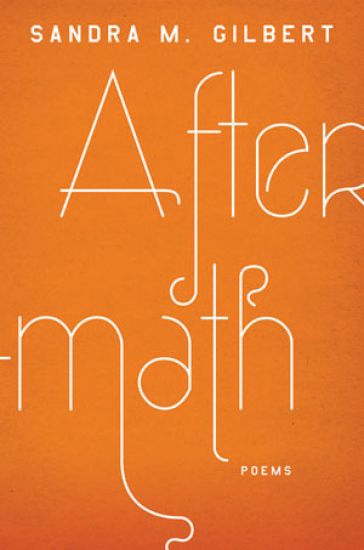
The title of this collection at times mournful, sardonic, and joyous refers to the grief in the wake of loss. Yet these poems aren't just about the consequences of loss but also about the complex experiences of endurance, acquiescence, and rebirth that, with luck, mark the aftermath of sorrow. from "Aftermath: Kite" But the thought is only paper after all, a soul that clings to a stick, tears open, shreds as if it's flung to the ground in a final shiny fall, and at last the line goes limp, the climbing ends. Beyond the rush & sweep, an arc of silence though a mind imagined this flight, & proved it once."
What is the daily bread of women? In these splendid poems, Sandra Gilbert imagines spiritual regeneration through the tradition pioneered by the two Emilys--Emily Dickinson and Emily Brontë--who are her emblematic foremothers. At the same time, she sees the perils as well as the possibilities of change. The "loved walls" might fall, some "animal goddess in her skull" might destroy what is cherished along with what is oppressive. Tracing the anxieties of history, this book captures the female "daguerreotypes" that persist today and the "still lives" of many women. In so doing, the poet has created a wide variety of voices, including confessional accounts of her own experiences and visionary encounters: little vials of mother's blood in a bureau, a refrigerator that hums blessings like a "complicitous mother," a dressmaker's dummy sailing forward into a mirror--images that invoke vivid, revealing meditations on myth and domesticity. Yet these poems also celebrate the joys that should endure: love and friendship, "haloes of desire," a piece of Emily Dickinson's black cake. Of this book, Frank Bidart has said, "These are poems of self-definition that heal rather than exacerbate the dramas of gender none of us can escape. They reflect Sandra Gilbert's characteristic subtlety, freshness of invention and insight, generosity of spirit. I enthusiastically recommend this book."
The range of this new collection is exciting. Gilbert travels along the shifting boundaries of past and present with wonderful deftness, making Jackson Heights into a magic kingdom. I love this rich ethnic mix.--Maxine Kumin
"Widow's Walk," the book's centerpiece, charts the poet's journey through the stages of grief, from bleak moments of desolation to tenuous instants of acceptance. Gilbert seeks both to elegize her husband and to understand his death in public, political, and philosophical contexts. Ghost Volcano is a tender, courageous, loving, and ultimately universal account of how we endure grief.
On February 10, 1991, Elliot Gilbert, a sixty-year-old professor of English, checked into a major medical center for routine prostate surgery. Twenty-four hours later, he was pronounced dead in the recovery room. To this day, no one from the hospital has told his family how or why he died. In Wrongful Death his widow has produced a searingly frank account of one family's experience with a kind of medical disaster that occurs surprisingly often but is all-too-rarely discussed in a political arena dominated by concerns about the escalating costs of malpractice insurance. As her story unfolds, Sandra Gilbert describes the numbing shock into which she and her children were plunged by her husband's inexplicable death as well as the stages of grief they endured as they struggled to come to terms with their loss. But her major focus is on the process of discovery through which, with the help of friends and lawyers, they began to learn something about what had happened to Elliot. What are the implications of such a medical tragedy for the deceased and for his survivors? How does it feel to confront the possibility that a loved one has suffered what the law calls a "wrongful death"? As she examines the bewildering complexity of the legal, social, and medical questions surrounding "adverse events" like the one that killed her husband, Gilbert shows how vulnerable we all are to the power of the health-care establishment.
This stunning new collection, winner of the American Book Award, documents some thirty years of Sandra Gilbert's career as a poet, from her sometimes fearful, sometimes exuberant early visions, through her feminist awakenings and the explorations of memory and desire, to a range of recent poems mapping the many meanings of grief, survival, and even regeneration.
Belongings as possessions, as the history and furnishings of a life, and as the places in which life itself happens are the preoccupations at the heart of this affecting collection. Moving from memories of a childhood apartment to mourning for the poet's mother, Belongings explores the question: "Where, how, and to what do you belong?
Prominent critic, poet, and memoirist Sandra M. Gilbert explores our relationship to death though literature, history, poetry, and societal practices. Does death change--and if it does, how has it changed in the last century? And how have our experiences and expressions of grief changed? Did the traumas of Hiroshima and the Holocaust transform our thinking about mortality? More recently, did the catastrophe of 9/11 alter our modes of mourning? And are there at the same time aspects of grief that barely change from age to age? Seneca wrote, "Anyone can stop a man's life but no one his death; a thousand doors open on to it." This inevitability has left varying marks on all human cultures. Exploring expressions of faith, burial customs, photographs, poems, and memoirs, acclaimed author Sandra M. Gilbert brings to the topic of death the critical skill that won her fame for The Madwoman in the Attic and other books, as she examines both the changelessness of grief and the changing customs that mark contemporary mourning.
The title of this collection--at times mournful, sardonic, and joyous--refers to the grief in the wake of loss. Yet these poems aren't just about the consequences of loss but also about the complex experiences of endurance, acquiescence, and rebirth that, with luck, mark the aftermath of sorrow. from Aftermath: Kite But the thought is only paper after all, a soul that clings to a stick, tears open, shreds as if it's flung to the ground in a final shiny fall, and at last the line goes limp, the climbing ends. Beyond the rush & sweep, an arc of silence-- though a mind imagined this flight, & proved it once.
In this rapacious world, we eat or are eaten--so poet-critic Sandra M. Gilbert suggests throughout Judgment Day, her tenth collection of poems. Tracing this theme through the range of histories that make us who we are--private, public, religious, artistic, even culinary--Gilbert meditates on recent events as well as the sacred turnings of time, great works of graphic art, and the personal crises that continually reshape our lives.
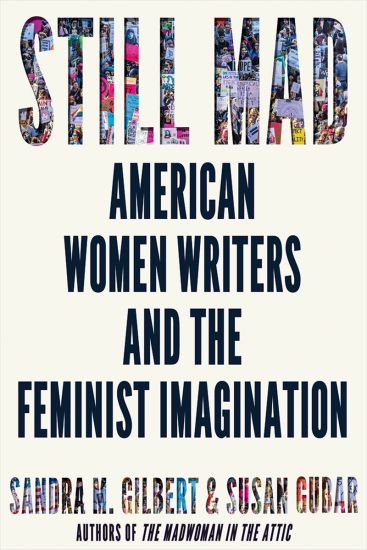
Forty years after their first groundbreaking work of feminist literary theory, The Madwoman in the Attic, award-winning collaborators Sandra M. Gilbert and Susan Gubar map the literary history of feminism’s second wave. In Still Mad, they offer lively readings of major works by such writers as Sylvia Plath, Lorraine Hansberry, Adrienne Rich, Ursula K. Le Guin, Maxine Hong Kingston, Gloria Anzaldúa and Toni Morrison. To address shifting social attitudes over seven decades, they discuss polemics by thinkers from Kate Millett and Susan Sontag to Audre Lorde, Andrea Dworkin and Judith Butler. As Gilbert and Gubar chart feminist gains—including creative new forms of protests and changing attitudes toward gender and sexuality—they show how the legacies of second wave feminists, and the misogynistic culture they fought, extend to the present. In doing so, they celebrate the diversity and urgency of women who have turned passionate rage into powerful writing.