Kirjojen hintavertailu. Mukana 12 390 323 kirjaa ja 12 kauppaa.

Kirjahaku

Etsi kirjoja tekijän nimen, kirjan nimen tai ISBN:n perusteella.

1000 tulosta hakusanalla Sanja Matas

Architecture and the Image at the Turn of the 21st Century
This book examines architecture, image, and media relationships as productive for architecture and architectural discourses. By arguing that the relationships between architecture and media cannot be dismissed via linear criticism of architecture and media or image, these relations are instead seen as a part of a sphere (a mediasphere) of complex relationships. In lieu of anything like a consensus on the contemporary condition of architecture (referring to the late twentieth and the twenty-first centuries), the starting point of this book is that the relationships between architecture, media, and images continue to multiply, owing to continuous technological advancements.Contemporary architecture considered in this book is related to the selected circumstances of high visibility, where architectural images are propelled into visibility and conflated with non-architectural images. This takes architecture outside of architectural-only discourse and into the public realm. By granting higher visibility to both the architectural images and architecture in the public realm, architecture can also be influenced by the various perceptions of the general public and can enter public consciousness via non-architectural media. With increased visibility, architecture’s far-reaching presence calls for more structured analysis of its nature and potential. As the analysed architecture in this book is associated with the discourses outside of architecture (some of which relate to terrorism, natural disaster, and branding and consumption), the limits of contemporary architectural discipline are questioned and extended.This book is written for academics and students in architectural history, theory, and criticism, particularly those interested in visual and media studies.
Crime and Punishment in the Future Internet
Crime and Punishment in the Future Internet is an examination of the development and impact of digital frontier technologies (DFTs) such as Artificial Intelligence, the Internet of things, autonomous mobile robots, and blockchain on offending, crime control, the criminal justice system, and the discipline of criminology. It poses criminological, legal, ethical, and policy questions linked to such development and anticipates the impact of DFTs on crime and offending. It forestalls their wide-ranging consequences, including the proliferation of new types of vulnerability, policing and other mechanisms of social control, and the threat of pervasive and intrusive surveillance.Two key concerns lie at the heart of this volume. First, the book investigates the origins and development of emerging DFTs and their interactions with criminal behaviour, crime prevention, victimisation, and crime control. It also investigates the future advances and likely impact of such processes on a range of social actors: citizens, non-citizens, offenders, victims of crime, judiciary and law enforcement, media, NGOs. This book does not adopt technological determinism that suggests technology alone drives social development. Yet, while it is impossible to know where the emerging technologies are taking us, there is no doubt that DFTs will shape the way we engage with and experience criminal behaviour in the twenty-first century. As such, this book starts the conversation about a range of essential topics that this expansion brings to social sciences, and begins to decipher challenges we will be facing in the future.An accessible and compelling read, this book will appeal to those engaged with criminology, sociology, politics, policymaking, and all those interested in the impact of DFTs on the criminal justice system.
Crime and Punishment in the Future Internet
Crime and Punishment in the Future Internet is an examination of the development and impact of digital frontier technologies (DFTs) such as Artificial Intelligence, the Internet of things, autonomous mobile robots, and blockchain on offending, crime control, the criminal justice system, and the discipline of criminology. It poses criminological, legal, ethical, and policy questions linked to such development and anticipates the impact of DFTs on crime and offending. It forestalls their wide-ranging consequences, including the proliferation of new types of vulnerability, policing and other mechanisms of social control, and the threat of pervasive and intrusive surveillance.Two key concerns lie at the heart of this volume. First, the book investigates the origins and development of emerging DFTs and their interactions with criminal behaviour, crime prevention, victimisation, and crime control. It also investigates the future advances and likely impact of such processes on a range of social actors: citizens, non-citizens, offenders, victims of crime, judiciary and law enforcement, media, NGOs. This book does not adopt technological determinism that suggests technology alone drives social development. Yet, while it is impossible to know where the emerging technologies are taking us, there is no doubt that DFTs will shape the way we engage with and experience criminal behaviour in the twenty-first century. As such, this book starts the conversation about a range of essential topics that this expansion brings to social sciences, and begins to decipher challenges we will be facing in the future.An accessible and compelling read, this book will appeal to those engaged with criminology, sociology, politics, policymaking, and all those interested in the impact of DFTs on the criminal justice system.
Police Integrity in South Africa

Police Integrity in South Africa

Sanja Kutnjak Ivkovich; Adri Sauerman; Andrew Faull; Michael E. Meyer; Gareth Newham

Routledge
2021
nidottu
Policing in South Africa has gained notoriety through its extensive history of oppressive law enforcement. In 1994, as the country’s apartheid system was replaced with a democratic order, the new government faced the significant challenge of transforming the South African police force into a democratic police agency—the South African Police Service (SAPS)—that would provide unbiased policing to all the country’s people. More than two decades since the initiation of the reforms, it appears that the SAPS has rapidly developed a reputation as a police agency beset by challenges to its integrity.This book offers a unique perspective by providing in-depth analyses of police integrity in South Africa. It is a case study that systematically and empirically explores the contours of police integrity in a young democracy. Using the organizational theory of police integrity, the book analyzes the complex set of historical, legal, political, social, and economic circumstances shaping police integrity. A discussion of the theoretical framework is accompanied by the results of a nationwide survey of nearly 900 SAPS officers, probing their familiarity with official rules, their expectations of discipline within the SAPS, and their willingness to report misconduct. The book also examines the influence of the respondents’ race, gender, and supervisory status on police integrity. Written in a clear and direct style, this book will appeal to students and scholars of criminology, policing, sociology, political science, as well as to police administrators interested in expanding their knowledge about police integrity and enhancing it in their organizations.
'Doing Nation' in a Digital Age

'Doing Nation' in a Digital Age

Sanja Vico

TAYLOR FRANCIS LTD
2024
sidottu
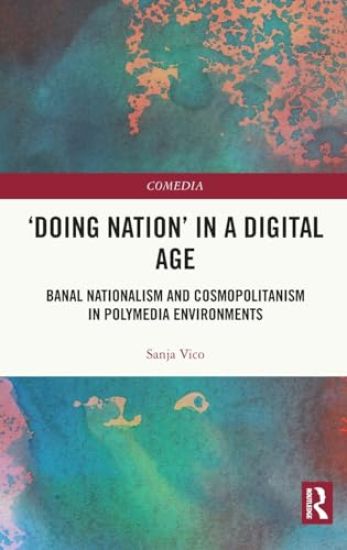
This book introduces a new theory of national identity, arguing that the nation does not only represent an abstract “imagined community” but also represents embodied cultural and discursive practices.Drawing upon a detailed case study of Serbian Londoners, this truly interdisciplinary study positions media as constitutive of national identities. The author contends that nations come into being and are sustained through everyday interpersonal communication practices that have increasingly become mediated, especially for migrants. She develops the concept of "doing nation" to argue that we should think of the nation as a dynamic process. Situated first within a particular migration context, the concept is then applied more broadly as everyday communication practices are becoming increasingly mediated worldwide.Covering a breadth of key theories and concepts in this field, including diaspora, ethnicity, nationalism, cosmopolitanism, social media affordances and polymedia, this book will appeal to scholars and students researching digital media, migration, identities, nationalism and cosmopolitanism in the social science disciplines.
Border Policing and Security Technologies
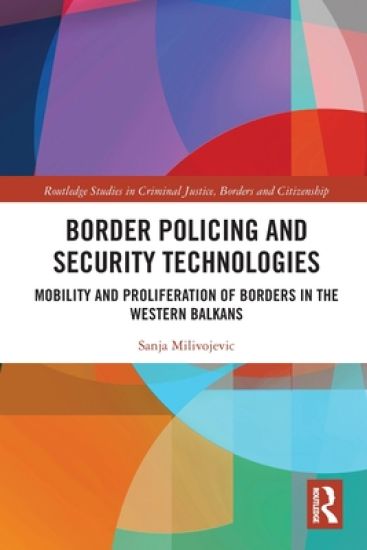
This book is a unique and original examination of borders and bordering practices in the Western Balkans prior to, during, and after the migrant "crisis" of the 2010s. Based on extensive, mixed-method, exploratory research in Serbia, Croatia, FYR Macedonia, and Kosovo, the book charts technological and human interventions deployed in this region that simultaneously enable and hinder the mobility projects of border crossers. Within the rich historical context of the Balkan Wars and subsequent displacement of many people from the region and beyond, this book discusses the types and locations of borders as well as their development, transformation, and impact on people on the move. These border crossers fall into three distinct categories: people from the Middle East, Africa, and Asia transiting the region; citizens of the Western Balkans seeking asylum and access to labour markets in the EU; and women border crossers. This book also maps border struggles that follow these processes, analyses the creation of labour "reserves" in the region, and examines the role that technology – in particular smartphones and social media - play in regulating mobility and creating social change. This volume also explores the role of the EU in, and the impact of the aforementioned processes on nation-states of the Western Balkans, their European future, and mobility in the region.Whilst the book focusses on a particular region in Southeast Europe, its findings can be easily applied to other social contexts and settings. It will be particularly useful to academics and postgraduate students studying social sciences such as criminology, sociology, legal studies, law, international relations, political science, and gender studies. It will also be useful for legal practitioners, NGO activists, and government officials.
Environmental Finance and Development

Environmental Finance and Development

Sanja Tišma; Ana Maria Boromisa; Ana Pavicic Kaselj

Routledge
2012
sidottu
This book focuses on environmental financing in the process of alignment with the EU.Based on comparative analysis of national environmental strategies and financial needs, and their links with strategic development documents in five selected countries (Bulgaria, Romania, Slovenia, Croatia, Turkey) the book identifies main achievements and remaining challenges in the main areas of environmental regulation: nature protection, water, waste, air and climate change. For each area the same concept is applied: current situation is presented, followed by an overview of institutional and legal frameworks. Division of competences between actors at the same or at different levels is addressed. Costs of implementation are estimated and possible sources of financing identified.
Children in New Religious Movements

Children in New Religious Movements

Sanja Nilsson

Cambridge University Press
2024
pokkari
New Religious Movements have arisen not only in the present but have also developed in the past. While they differ in ideology and practice, they generally seem to live in high tension with mainstream society, especially when it comes to child-rearing. This Element examines several aspects of children growing up in new religions. It relies upon literature from different groups concerning child upbringing, the function of children in the groups considering the religious ideologies, and parental perspectives and parental styles. It also utilizes accounts from young adults growing up in these groups, both those who chose to stay and who chose to leave their groups as adults. A range of topics, such as socialization, education, health care, and relations to surrounding society are explored. In addition, this Element considers issues of physical and emotional abuse, state interventions, and the impact of second- and third generations of children in new religions.
Children in New Religious Movements

Children in New Religious Movements

Sanja Nilsson

Cambridge University Press
2024
sidottu
New Religious Movements have arisen not only in the present but have also developed in the past. While they differ in ideology and practice, they generally seem to live in high tension with mainstream society, especially when it comes to child-rearing. This Element examines several aspects of children growing up in new religions. It relies upon literature from different groups concerning child upbringing, the function of children in the groups considering the religious ideologies, and parental perspectives and parental styles. It also utilizes accounts from young adults growing up in these groups, both those who chose to stay and who chose to leave their groups as adults. A range of topics, such as socialization, education, health care, and relations to surrounding society are explored. In addition, this Element considers issues of physical and emotional abuse, state interventions, and the impact of second- and third generations of children in new religions.
Economics, Ecology, and Policy for the Bioeconomy

Economics, Ecology, and Policy for the Bioeconomy

Sanja Tišma; Anamarija Farkaš; Anamarija Pisarovic; Marina Funduk; Iva Tolic

TAYLOR FRANCIS LTD
2022
sidottu
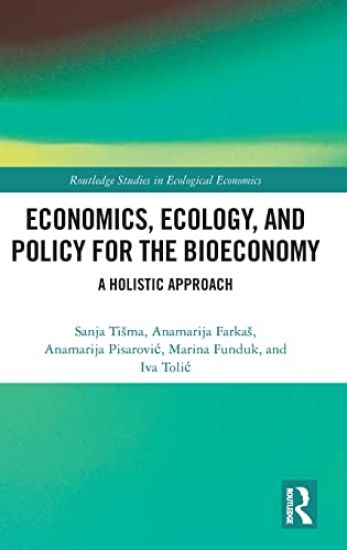
This book demonstrates that a holistic approach to the bioeconomy is essential if it is to achieve its full potential in driving economic growth while simultaneously providing ecological, social and technological benefits.Definitions of the ‘bioeconomy’ vary but in general it incorporates the ways in which societies manage and distribute their primary or secondary biological resources for further use in everyday life (e.g. food, materials, and energy). The classical sectors related to the bioeconomy have therefore been agriculture, forestry and aquaculture, now extended to include bioenergy, biofuels, biochemicals, and other processing and service industries. There are also related new concepts such us the blue economy, the green economy, and the circular economy. This book integrates these definitions, sectoral analyses and new concepts into a fully rounded study of the bioeconomy. It is argued that the key aims in the coming years have to be the harmonization of public policies between different sectors, regulation of legislative framework for the bioeconomy, and clear communication of these issues. In particular, the book argues that a strengthening of the monitoring and evaluation of the impacts of the bioeconomy on society is an essential starting point. For this to be effective, appropriate indicators need to be established and defined for the monitoring of the effects of these resilient policies related to bioeconomy and their impact on local and regional development and quality of life. This book will be essential reading for anyone interested in the bioeconomy including students and scholars of ecological economics, environmental economics, sustainability, innovation, and regional development.
Economics, Ecology, and Policy for the Bioeconomy

Economics, Ecology, and Policy for the Bioeconomy

Sanja Tišma; Anamarija Farkaš; Anamarija Pisarovic; Marina Funduk; Iva Tolic

TAYLOR FRANCIS LTD
2024
nidottu
This book demonstrates that a holistic approach to the bioeconomy is essential if it is to achieve its full potential in driving economic growth while simultaneously providing ecological, social and technological benefits.Definitions of the ‘bioeconomy’ vary but in general it incorporates the ways in which societies manage and distribute their primary or secondary biological resources for further use in everyday life (e.g. food, materials, and energy). The classical sectors related to the bioeconomy have therefore been agriculture, forestry and aquaculture, now extended to include bioenergy, biofuels, biochemicals, and other processing and service industries. There are also related new concepts such us the blue economy, the green economy, and the circular economy. This book integrates these definitions, sectoral analyses and new concepts into a fully rounded study of the bioeconomy. It is argued that the key aims in the coming years have to be the harmonization of public policies between different sectors, regulation of legislative framework for the bioeconomy, and clear communication of these issues. In particular, the book argues that a strengthening of the monitoring and evaluation of the impacts of the bioeconomy on society is an essential starting point. For this to be effective, appropriate indicators need to be established and defined for the monitoring of the effects of these resilient policies related to bioeconomy and their impact on local and regional development and quality of life. This book will be essential reading for anyone interested in the bioeconomy including students and scholars of ecological economics, environmental economics, sustainability, innovation, and regional development.
Policing the Pandemic

Policing the Pandemic

Sanja Kutnjak Ivkovic; Jon Maskály; Christopher M. Donner; Peter Neyroud; John Roch

TAYLOR FRANCIS LTD
2024
nidottu
Policing the Pandemic explores how police agencies in United Kingdom and the United States have adjusted to their changing environments, both during the peak of the COVID-19 pandemic and later, when the restrictions have been relaxed and the societies have begun to develop their new normal.Combining interviews and surveys of police officers and police administrators from the United Kingdom and the United States, this book provides a systematic and empirically based account of these changes and elaborates on the lessons for the future. The book offers insight into organizational and operational changes brought on by the pandemic, including the changes in their workload, enforcement activities, and administrative changes. It examines police perceptions of, and compliance with, pandemic-related changes, any potential COVID-19-related training, and the frequency with which they used various responses when observing violations of COVID-19 regulations and laws. It also focuses on police officers’ own fear of contracting COVID-19, whether they had been diagnosed with COVID-19, and how the pandemic affected their own health, stress, and general well-being.This book is an essential reading for scholars, policymakers, and police administrators tackling issues such as procedural justice, organizational change, and police officer well-being, as well as those more widely engaged with societal and legal consequences of the pandemic, be it the COVID-19 pandemic or any future pandemics.
Policing the Pandemic

Policing the Pandemic

Sanja Kutnjak Ivkovic; Jon Maskály; Christopher M. Donner; Peter Neyroud; John Roch

TAYLOR FRANCIS LTD
2024
sidottu
Policing the Pandemic explores how police agencies in United Kingdom and the United States have adjusted to their changing environments, both during the peak of the COVID-19 pandemic and later, when the restrictions have been relaxed and the societies have begun to develop their new normal.Combining interviews and surveys of police officers and police administrators from the United Kingdom and the United States, this book provides a systematic and empirically based account of these changes and elaborates on the lessons for the future. The book offers insight into organizational and operational changes brought on by the pandemic, including the changes in their workload, enforcement activities, and administrative changes. It examines police perceptions of, and compliance with, pandemic-related changes, any potential COVID-19-related training, and the frequency with which they used various responses when observing violations of COVID-19 regulations and laws. It also focuses on police officers’ own fear of contracting COVID-19, whether they had been diagnosed with COVID-19, and how the pandemic affected their own health, stress, and general well-being.This book is an essential reading for scholars, policymakers, and police administrators tackling issues such as procedural justice, organizational change, and police officer well-being, as well as those more widely engaged with societal and legal consequences of the pandemic, be it the COVID-19 pandemic or any future pandemics.
Philosophy of Mental Disorder

Philosophy of Mental Disorder

Sanja Dembic

TAYLOR FRANCIS LTD
2023
sidottu
This book offers an ability-based view of mental disorders. It develops a detailed analysis of the concept of inability that is relevant in the psychiatric and psychotherapeutic context by drawing on the most recent literature on the concepts of ability, reasons, and harm.What is it to have a mental disorder? This book contends that an individual has a mental disorder if and only if (1) they are·in the relevant sense·unable to respond adequately to their available (apparent) reasons in their thinking, feeling, or acting, and (2) they are harmed by the condition underlying or resulting from that inability. The author calls this the “Rehability View.” This view can account for what is “mental” about mental disorders: it is the rational relations among an individual’s attitudes and actions that are “disordered,” and the relevant norms are the norms of reasons. This view is compatible with explanations of mental disorders in terms of biological dysfunctions, without reducing the former to the latter. The aim is not to offer just another conception of mental disorder, but to develop a systematic approach that incorporates insights from the philosophy of psychiatry and adjacent philosophical disciplines.Philosophy of Mental Disorder will be of interest to scholars and advanced students working in philosophy of psychiatry, philosophy of mind, philosophy of action, ethics, and mental health.
Philosophy of Mental Disorder

Philosophy of Mental Disorder

Sanja Dembic

TAYLOR FRANCIS LTD
2025
nidottu
This book offers an ability-based view of mental disorders. It develops a detailed analysis of the concept of inability that is relevant in the psychiatric and psychotherapeutic context by drawing on the most recent literature on the concepts of ability, reasons, and harm.What is it to have a mental disorder? This book contends that an individual has a mental disorder if and only if (1) they are·in the relevant sense·unable to respond adequately to their available (apparent) reasons in their thinking, feeling, or acting, and (2) they are harmed by the condition underlying or resulting from that inability. The author calls this the “Rehability View.” This view can account for what is “mental” about mental disorders: it is the rational relations among an individual’s attitudes and actions that are “disordered,” and the relevant norms are the norms of reasons. This view is compatible with explanations of mental disorders in terms of biological dysfunctions, without reducing the former to the latter. The aim is not to offer just another conception of mental disorder, but to develop a systematic approach that incorporates insights from the philosophy of psychiatry and adjacent philosophical disciplines.Philosophy of Mental Disorder will be of interest to scholars and advanced students working in philosophy of psychiatry, philosophy of mind, philosophy of action, ethics, and mental health.
The Calendar in Revolutionary France

The Calendar in Revolutionary France

Sanja Perovic

Cambridge University Press
2012
sidottu
One of the most unusual decisions of the leaders of the French Revolution - and one that had immense practical as well as symbolic impact - was to abandon customarily-accepted ways of calculating date and time to create a Revolutionary calendar. The experiment lasted from 1793 to 1805, and prompted all sorts of questions about the nature of time, ways of measuring it and its relationship to individual, community, communication and creative life. This study traces the course of the Revolutionary Calendar, from its cultural origins to its decline and fall. Tracing the parallel stories of the calendar and the literary genius of its creator, Sylvain Maréchal, from the Enlightenment to the Napoleonic era, Sanja Perovic reconsiders the status of the French Revolution as the purported 'origin' of modernity, the modern experience of time, and the relationship between the imagination and political action.
The Calendar in Revolutionary France

The Calendar in Revolutionary France

Sanja Perovic

Cambridge University Press
2015
pokkari
One of the most unusual decisions of the leaders of the French Revolution - and one that had immense practical as well as symbolic impact - was to abandon customarily-accepted ways of calculating date and time to create a Revolutionary calendar. The experiment lasted from 1793 to 1805, and prompted all sorts of questions about the nature of time, ways of measuring it and its relationship to individual, community, communication and creative life. This study traces the course of the Revolutionary Calendar, from its cultural origins to its decline and fall. Tracing the parallel stories of the calendar and the literary genius of its creator, Sylvain Maréchal, from the Enlightenment to the Napoleonic era, Sanja Perovic reconsiders the status of the French Revolution as the purported 'origin' of modernity, the modern experience of time, and the relationship between the imagination and political action.
European Identity and Citizenship

European Identity and Citizenship

Sanja Ivic

Palgrave Macmillan
2016
sidottu
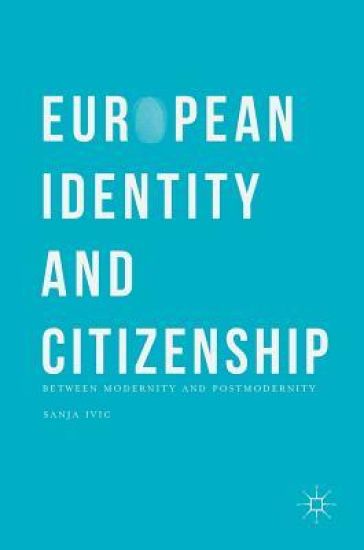
This book uses a theoretical and empirical approach to explore the philosophies of European citizenship and European identity. The author applies a focused analytical framework to argue that European identity and citizenship should be perceived as postmodern categories which are multi-layered, dynamic and fluid.The book offers a detailed review of political and legal studies which do not comprehend or explain postmodernist concepts of citizenship and identity. In the theoretical part of the book various philosophical models of citizenship and identity (from antiquity to the postmodern era) are portrayed, and the author's own theory and analytical framework is developed. The empirical part of the book discusses a variety of case studies illustrating how European Union policies apply to this framework.
Environmental Finance and Development

Environmental Finance and Development

Sanja Tišma; Ana Maria Boromisa; Ana Pavicic Kaselj

Routledge
2016
nidottu
This book focuses on environmental financing in the process of alignment with the EU.Based on comparative analysis of national environmental strategies and financial needs, and their links with strategic development documents in five selected countries (Bulgaria, Romania, Slovenia, Croatia, Turkey) the book identifies main achievements and remaining challenges in the main areas of environmental regulation: nature protection, water, waste, air and climate change. For each area the same concept is applied: current situation is presented, followed by an overview of institutional and legal frameworks. Division of competences between actors at the same or at different levels is addressed. Costs of implementation are estimated and possible sources of financing identified.