

Kirjahaku
Etsi kirjoja tekijän nimen, kirjan nimen tai ISBN:n perusteella.
1000 tulosta hakusanalla Saskia Nazet

It made your mouth water when you saw it on your feed. Now, it’s time to get it on your plate! Get ready to finally tackle all those recipes you’ve saved on your phone but never made! You’ll Love This brings the internet’s most-shared and most-loved recipes into one delicious, fail-proof collection. From TikTok-famous scrambled oats to spicy pickled garlic, these are the dishes that broke the internet—tested, perfected, and ready to impress. Every recipe is crafted for maximum flavour and impact, no matter your skill level. Whether it’s breakfast, a quick snack, or a show-stopping main, there’s something here that’ll make you say, “I could totally make that!” Get a taste of what’s inside: The ‘Bear' Eggs – Inspired by the hit TV show, complete with Boursin cheese and crispy chives. Cornflake Chicken Caesar Wrap – A crunchy twist on the classic wrap that’s all over your feed. Smashed Potato Salad – Crisp, golden smashed potatoes meet the creamy goodness of potato salad. The La Scala Salad – As loved by the Kardashians, with a spicy twist! Hot 'Feel Better' Pastina – Italian comfort food at its finest, for when you need a bowl of pure coziness With You’ll Love This, you’re not just making dinner; you’re recreating the internet’s most crave-worthy hits. Accessible, delicious, and always satisfying—these are the recipes that’ll keep you cooking and sharing. So, stop scrolling and start cooking!

Following diamonds from African mines to the necklines of high society women, this international history shows why Jews were central to the transatlantic gem trade and its growth into a global industry. During the late nineteenth century, tens of thousands of diggers, prospectors, merchants, and dealers extracted and shipped over 50 million carats of diamonds from South Africa to London. The primary supplier to the world, South Africa's diamond fields became one of the formative sites of modern capitalist production. At each stage of the diamond's route through the British empire and beyond-from Cape Town to London, from Amsterdam to New York City-carbon gems were primarily mined, processed, appraised, and sold by Jews. In A Brilliant Commodity, historian Saskia Coenen Snyder traces how once-peripheral Jewish populations became the central architects of a new, global exchange of diamonds that connected African sites of supply, European manufacturing centers, American retailers, and western consumers. Centuries of restrictions had limited Jews to trade and finance, businesses that often heavily relied on internal networks. Jews were well-positioned to become key players in the earliest stage of the diamond trade and its growth into a global industry, a development fueled by technological advancements, a dramatic rise in the demand of luxury goods, and an abundance of rough stones. Relying on mercantile and familial ties across continents, Jews created a highly successful commodity chain that included buyers, brokers, cutters, factory owners, financiers, and retailers. Working within a diasporic ethnic community that bridged city and countryside, metropole and colony, Jews helped build a flourishing diamond industry, notably Hatton Garden in London and the Diamond District of New York City, and a place for themselves in the modern world.

In recent decades, women's political empowerment has become an important foreign policy and assistance objective. Every year, donor governments and multilateral organizations partner with hundreds of civil society groups around the world to train women to run for office, support women legislators, campaign for gender quotas, and bolster women's networks in political parties and parliaments. What ideas about gender, power, and political change guide these aid programs? What have practitioners and advocates learned about their strengths and weaknesses, and how might they improve their work going forward? Drawing on extensive interviews with aid officials, women's rights advocates, and women politicians in Western donor countries and across Kenya, Morocco, Myanmar, and Nepal, Aiding Empowerment investigates how democracy aid actors promote gender equality in politics. Saskia Brechenmacher and Katherine Mann argue that international assistance for women's political empowerment has evolved significantly over the last three decades, from a first generation of aid programs aimed at integrating women into nascent democratic institutions to a second generation focused on transforming the broader political ecosystem hindering women's equal political influence. However, this evolution is still unfolding, and changes in thinking have outstripped changes in aid practice. Several challenges threaten future progress, from the persistence of patriarchal norms to rising concerns about democratic erosion and backlash. In the face of these hurdles, the book presents practical recommendations for policymakers, practitioners, and advocates fighting for women's political empowerment globally.
In recent decades, women's political empowerment has become an important foreign policy and assistance objective. Every year, donor governments and multilateral organizations partner with hundreds of civil society groups around the world to train women to run for office, support women legislators, campaign for gender quotas, and bolster women's networks in political parties and parliaments. What ideas about gender, power, and political change guide these aid programs? What have practitioners and advocates learned about their strengths and weaknesses, and how might they improve their work going forward? Drawing on extensive interviews with aid officials, women's rights advocates, and women politicians in Western donor countries and across Kenya, Morocco, Myanmar, and Nepal, Aiding Empowerment investigates how democracy aid actors promote gender equality in politics. Saskia Brechenmacher and Katherine Mann argue that international assistance for women's political empowerment has evolved significantly over the last three decades, from a first generation of aid programs aimed at integrating women into nascent democratic institutions to a second generation focused on transforming the broader political ecosystem hindering women's equal political influence. However, this evolution is still unfolding, and changes in thinking have outstripped changes in aid practice. Several challenges threaten future progress, from the persistence of patriarchal norms to rising concerns about democratic erosion and backlash. In the face of these hurdles, the book presents practical recommendations for policymakers, practitioners, and advocates fighting for women's political empowerment globally.
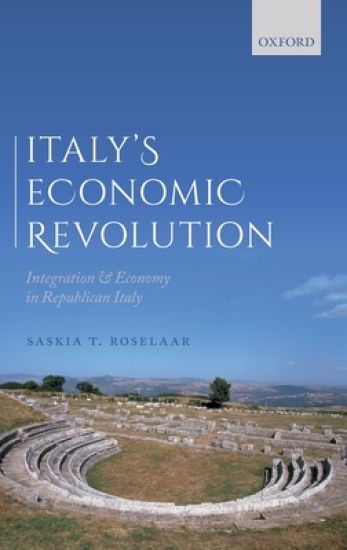
The Roman conquest of Italy in the Republican period (from c. 400 to 50 BC) led to widespread economic changes in which the conquered Italians played an important role. Italy's Economic Revolution analyses the integration of Italy during this period and explores the interplay between economic activities and unification in its civic, legal, social, and cultural senses. On one hand, it investigates whether Italy became more integrated economically following the Roman conquest and traces the widely varying local reactions to the globalization of the Italian economy; on the other, it examines whether and how economic activities carried out by Italians contributed to the integration of the Italian peoples into the Roman framework. Throughout the Republican period, Italians were able to profit from the expansion of the Roman dominion in the Mediterranean and the new economic opportunities it afforded, which led to gradual changes in institutions, culture, and language: through overseas trade and commercial agriculture they had gained significant wealth, which they invested in the Italian landscape, and they were often ahead of Romans when it came to engagement with Hellenistic culture. However, their economic prosperity and cultural sophistication did not lead to civic equality, nor to equal opportunities to exploit the territories the Italians had conquered under Rome's lead. Eventually the Italians rose in rebellion against Rome in the Social War of 91-88 BC, after which they were finally granted Roman citizenship. This volume investigates not only whether and how economic interaction played a role in this civic integration, but also highlights the importance of Roman citizenship as an instrument of further economic, political, social, and cultural integration between Romans and Italians.

The common law action for breach of promise of marriage originated in the mid-seventeenth century, but it was not until the nineteenth century that it rose to prominence and became a regular feature in law courts and gossip columns. By 1940 the action was defunct, it was inconceivable for a respectable woman to bring such a case before the courts. What accounts for this dramatic rise and fall? This book ties the story of the action's prominence and decline between 1800 and 1940 to changes in the prevalent conception of woman, her ideal role in society, sexual relations, and the family. It argues that the idiosyncratic breach-of-promise suit and Victorian notions of ideal femininity were inextricably, and fatally, entwined. It presents the nineteenth-century breach-of-promise action as a codification of the Victorian ideal of true womanhood and explores the longer-term implications of this infusion of mythologized femininity for the law, in particular for the position of plaintiffs. Surveying three consecutive time periods - the early nineteenth century, the high Victorian and the post-Victorian periods - and adopting an interdisciplinary approach that combines the perspectives of legal history, social history, and literary analysis, it argues that the feminizing process, by shaping a cause of action in accordance with an ideal at odds with the very notion of women going to law, imported a fatal structural inconsistency that at first remained obscured, but ultimately vulgarized and undid the cause of action. Alongside more than two hundred and fifty real-life breach-of-promise cases, the book examines literary and cinematic renditions of the breach-of-promise theme, by artists ranging from Charles Dickens to P.G. Wodehouse, to expose the subtle yet unmistakable ways in which what happened (and what changed) in the breach-of-promise courtroom influenced the changing representation of the breach-of-promise plaintiff in nineteenth- and early twentieth-century literature and film.
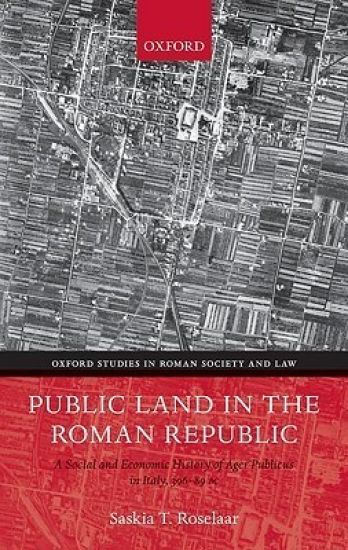
In the first volume in this new series on Roman society and law, Saskia T. Roselaar traces the social and economic history of the ager publicus, or public land. As the Romans conquered Italy during the fourth to first centuries BC, they usually took land away from their defeated enemies and declared this to be the property of the Roman state. This land could be distributed to Roman citizens, but it could also remain in the hands of the state, in which case it was available for general public use. However, in the third and second centuries BC growth in the population of Italy led to an increased demand for land among both commercial producers and small farmers. This in turn led to the gradual privatization of the state-owned land, as those who held it wanted to safeguard their rights to it. Roselaar traces the currents in Roman economy and demography which led to these developments.

What determines the flow of labor and capital in this new global information economy? Who has the capacity to coordinate this new system, to create some measure of order? What happens to territoriality and sovereignty, two fundamental principles of the modern state? And who gains rights and who loses rights? Losing Control? examines the rise of private transnational legal codes and supranational institutions, such as the World Trade Organization and universal human rights covenants, and shows that though sovereignty remains an important feature of the international system, it is no longer confined to the nation-state. Other actors gain rights and a kind of sovereignty by setting some of the rules that used to be within the exclusive domain of states. Saskia Sassen tracks the emergence and the making of the transformations that mark our world today, among which is the partial denationalizing of national territory. Two arenas in particular stand out in the new spatial and economic order by their capacity to set their own rules: the global capital market and the series of codes and institutions that have mushroomed into an international human rights regime. As Sassen shows, these two quasi-legal realms now have the power and legitimacy to demand action and accountability from national governments, with the ironic twist that both depend upon the state to enforce their goals. From the economic policy shifts forced by the Mexico debt crisis to the recurring battles over immigration and refugees around the world, Losing Control? incisively analyzes the events that have radically altered the landscape of governance in an era of increasing globalization.

What determines the flow of labor and capital in this new global information economy? Who has the capacity to coordinate this new system, to create some measure of order? What happens to territoriality and sovereignty, two fundamental principles of the modern state? And who gains rights and who loses rights? Losing Control? examines the rise of private transnational legal codes and supranational institutions, such as the World Trade Organization and universal human rights covenants, and shows that though sovereignty remains an important feature of the international system, it is no longer confined to the nation-state. Other actors gain rights and a kind of sovereignty by setting some of the rules that used to be within the exclusive domain of states. Saskia Sassen tracks the emergence and the making of the transformations that mark our world today, among which is the partial denationalizing of national territory. Two arenas in particular stand out in the new spatial and economic order by their capacity to set their own rules: the global capital market and the series of codes and institutions that have mushroomed into an international human rights regime. As Sassen shows, these two quasi-legal realms now have the power and legitimacy to demand action and accountability from national governments, with the ironic twist that both depend upon the state to enforce their goals. From the economic policy shifts forced by the Mexico debt crisis to the recurring battles over immigration and refugees around the world, Losing Control? incisively analyzes the events that have radically altered the landscape of governance in an era of increasing globalization.


Framing the Global explores new and interdisciplinary approaches to the study of global issues. Essays are framed around the entry points or key concepts that have emerged in each contributor's engagement with global studies in the course of empirical research, offering a conceptual toolkit for global research in the 21st century.
Framing the Global explores new and interdisciplinary approaches to the study of global issues. Essays are framed around the entry points or key concepts that have emerged in each contributor's engagement with global studies in the course of empirical research, offering a conceptual toolkit for global research in the 21st century.
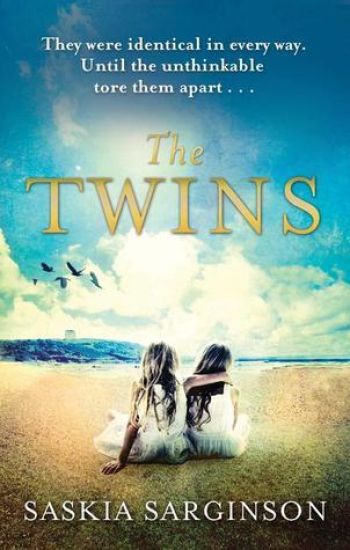
They were inseparable until an innocent mistake tore them apart. Growing up, Viola and Issy clung to each other in the wake of their mother's eccentricity, as she dragged them from a commune to a tiny Welsh village. They thought the three of them would be together forever. But an innocent mistake one summer set them on drastically different paths. Now in their twenties, Issy is trying to hold together a life as a magazine art director, while Viola is slowly destroying herself, consumed with guilt over the events they unknowingly set into motion as children. When it seems that Viola might never recover, Issy returns to the town they haven't seen in a decade, to face her own demons and see what answers, if any, she can find. A deeply moving, gripping debut, this is a novel about the secrets we carry, and the bonds between twins.
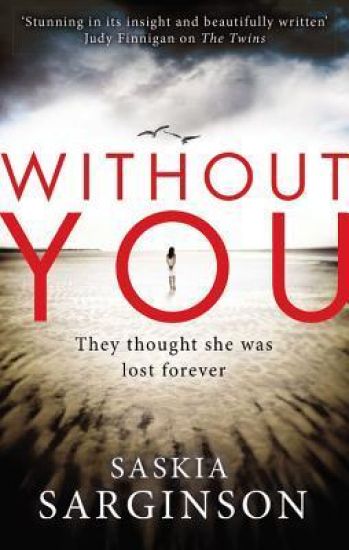
1984 -- Suffolk, England. When 17-year-old Eva goes missing at sea, everyone presumes that she drowned. Her parents' relationship is falling apart, undermined by guilt and grief. But her younger sister, Faith, refuses to consider a life without Eva; she's determined to find her sister and bring her home alive. Close to the shore looms the shape of an island -- out of bounds, mysterious, and dotted with windowless concrete huts. What nobody knows is that inside one of the huts Eva is being held captive. That she is fighting to survive -- and return home. . .

A deeply moving and daring new novel from the Richard and Judy bestselling writer Saskia Sarginson, author of The Twins, Without You and The Other Me.
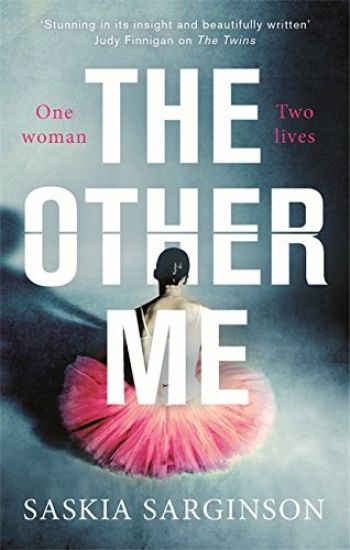
A story about hidden identities, by the RichardJudy-bestselling author of The Twins

'Gripping, emotional, utterly engrossing' Lisa Ballantyne'Stunning writing and wonderful nuanced characterisation. I was hooked' Rosamund LuptonA sweeping and turbulent drama about the anxieties of post-war Britain, where one strong and inspirational young woman looks to find her place, no matter the cost... Perfect for fans of Maggie O'Farrell, Celeste Ng and Anne Tyler.1957: Within a year of arriving at an American airbase in Suffolk, the loving, law-abiding Delaney family is destroyed. Did they know something they weren't allowed to know? Did they find something they weren't supposed to find? Only one girl has the courage to question what really went on behind closed doors . . . Hedy's journey to the truth leads her to read a manuscript that her talented twin brother had started months before he died, a story inspired by an experience in the forest surrounding the airbase perimeter. Only through deciding to finish what her brother started does Hedy begin to piece together what happened to her family.But would she have continued if she'd known then what she knows now? Sometimes, it's safer not to finish what you've started...Praise for Saskia Sarginson:'An engrossing read with endearing characters thrust into traumatic circumstances. It stayed with me long after the last page' Lisa Ballantyne on How It Ends'Outstandingly good. Part thriller, part love story, I guarantee you will not be able to put it down' Sun on The Twins 'Atmospheric, readable, beautifully evoked' Sunday Mirror on Without You 'Stunning in its insight and beautifully written' Judy Finnigan on The Twins'This enthralling read will keep you up long into the night' Ruth Ware on The Other Me'A stunning writer with deep insight into people, their thoughts and behaviour' NZ Women's Weekly

RICHARD AND JUDY BESTSELLING AUTHOR'Gripping, emotional, utterly engrossing' Lisa Ballantyne'Stunning writing and wonderful nuanced characterisation. I was hooked' Rosamund LuptonFor fans of Maggie O'Farrell and Celeste Ng, How It Ends is a sweeping and turbulent drama about the anxieties of post-war Britain, where one strong and inspirational young woman looks to find her place, no matter the cost... 1957: Within a year of arriving at an American airbase in Suffolk, the loving, law-abiding Delaney family is destroyed. Did they know something they weren't allowed to know? Did they find something they weren't supposed to find? Only one girl has the courage to question what really went on behind closed doors . . . Hedy's journey to the truth leads her to read a manuscript that her talented twin brother had started months before he died, a story inspired by an experience in the forest surrounding the airbase perimeter. Only through deciding to finish what her brother started does Hedy begin to piece together what happened to her family.But would she have continued if she'd known then what she knows now? Sometimes, it's safer not to finish what you've started...Praise for Saskia Sarginson:'An intense and brooding read, with a brilliantly claustrophobic sense of place' Sunday Mirror on How it Ends'An engrossing read with endearing characters thrust into traumatic circumstances. It stayed with me long after the last page' Lisa Ballantyne on How It Ends'Outstandingly good. Part thriller, part love story, I guarantee you will not be able to put it down' Sun on The Twins 'Atmospheric, readable, beautifully evoked' Sunday Mirror on Without You 'Stunning in its insight and beautifully written' Judy Finnigan on The Twins'This enthralling read will keep you up long into the night' Ruth Ware on The Other Me'Inspirational and compelling' Candis Review on How it Ends 'A stunning writer with deep insight into people, their thoughts and behaviour' NZ Women's Weekly
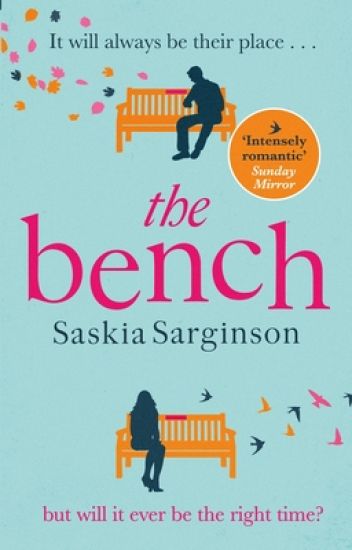
'With echoes of David Nicholls's One Day, this romance has just the right mix of heart-melting moments and heart-rending near misses' GOOD HOUSEKEEPING'Intensely romantic' SUNDAY MIRROR'Wonderful, heart-tugging' PRIMA'Timeless and moving' HOLLY MILLERPerfect for fans of ONE DAY and ME BEFORE YOU, this is a heartbreaking love story spanning three decades that starts and ends on a bench, by the Richard & Judy Book Club bestselling author.__________________________________________It begins at the end.It begins on a bench, on a heath, where a woman waits for a man. Ten years ago, they made a pact: On this bench, on this day, they will end a love affair that's spanned three decades, or start again.They should never have met. They should never have fallen in love.But they did, until a lie separated them for a lifetime.Can they fix the mistake, forgive the lie, erase the years in-between?Can what was lost ever truly be found?__________________________________________Readers are falling in LOVE with The Bench . . . 'I loved this book from beginning to end' ***** Reader review'A raw, emotional book about love in all its guises' Sun'I cried at the end, they were happy tears!' ***** Reader review'Heartbreaking' Bella'What an epic love story, I loved this so much' ***** Reader review'Irresistible' Jemma Wayne'Beautiful, painful, heart-breaking' ***** Reader review 'Honest, tender' Emma Rous'Poignant and heart-wrenching' Mary Chamberlain'I absolutely loved it' ***** Reader review'Beautiful' Cecilia Ekbäck'I fell head over heels in love with it' Fiona Mitchell'Wonderful storytelling' ***** Reader review'Wonderful' Lisa Ballantyne*THE NEW LOVE STORY FROM SASKIA SARGINSON, SEVEN MONTHS OF SUMMER, IS OUT NOW*