Kirjojen hintavertailu. Mukana 11 342 296 kirjaa ja 12 kauppaa.

Kirjahaku

Etsi kirjoja tekijän nimen, kirjan nimen tai ISBN:n perusteella.

1000 tulosta hakusanalla Scott B. Vickers

European Destiny, Atlantic Transformations
With the fall of its centuries-old empire in 1974-1975, Portugal embarked on a transitional period that reconciled a long tradition of acting out national interests overseas with the need to integrate itself into Western Europe. The result has been a deemphasis on various Atlantic and colonial linkages and the forging of a new and highly successful European identity within the framework of the European Community. In European Destiny, Atlantic Transformations Scott B. MacDonald offers a comprehensive analysis of Portugal's foreign policy and its highly successful venture in economic and political transformation.Although Portugal is firm in its committment to a European destiny, it has not turned its back on relations with the United States and its former colonies hi Africa and Asia. MacDonald traces the evolution of U.S.-Portuguese cooperation along economic, cultural, and military lines and shows how NATO has played a pivotal role in the process. This was most recently underscored when the U.S. made extensive use of the Azores during the Gulf War against Iraq. Likewise, in its ties with the Lusophone countries formerly under its control - Cape Verde, Guinea-Bissau, S - o Tom" and Princip" - Portugal has sought to improve political relations and act as a peacemaker in regional conflicts such as those in East Timor, Angola, and Mozambique.The scope of MacDonald's work takes in issues posed to Portugal by new foreign policy concerns that range from the breakup of the Soviet Union to the rise of Islamic fundamentalism in North Africa and the Middle East. He points out that in a world of rapidly shifting political and economic alignments, Portugal provides a representative model of a relatively small nation that has undergone succesful economic reform while deepening its committment to its new democratic system. As such, the Portuguese model is instructive for newly emerging democracies of Eastern Europe and Latin America. European Destiny, Atlantic Transformations is an important addition to the literature on post-Cold War politics. It will be read by historians, economists, and foreign policy specialists.
When Small Countries Crash

When Small Countries Crash

Scott B. MacDonald; Andrew Novo

Routledge
2017
nidottu
The public is fascinated with financial crashes. Historians portray the roar of an angry mob toppling presidents or prime ministers and destroying the property of those who are regarded as malefactors. And certainly, financial crisis is often a factor in political change. It is often overlooked, but nonetheless significant that one of the major causes for the French Revolution was the poor state of finances, with the nation coming to bankruptcy.Large systemic financial crises create history. Various actors, big and small, become caught in the drama, contributing to it in their own special way. When Small Countries Crash seeks to capture some of the drama of financial collapses and their impact on small countries, which the authors define as populations under 10 million, generally 5-6 million. MacDonald and Novo have selected countries that have had a financial crisis in the national economy; that included key actors; and where access to reliable data is available.As the authors demonstrate, the story of small countries suffering the costs of financial missteps is long and painful. They argue that smaller economies tend to be more vulnerable to economic shocks, many of which are externally generated. Small economies confront particular challenges in terms of economies of scale, diversification, and depth of expertise and workforce. The chapters in this absorbing book focus on Iceland, Latvia, Ireland, the Caribbean, Scotland, Finland, and Albania. This in-depth study is unique in its close look at financial disasters in countries that have, until now, been overlooked.
Separating Fools from Their Money

Separating Fools from Their Money

Scott B. MacDonald

Routledge
2017
sidottu
What do Michael Milken and Martha Stewart have in common? What was the most outrageous party thrown by a financial baron of the twentieth century? Which US war hero president became party to, and victim of, an unabashed con man known as the Napoleon of Wall Street?These questions and more are discussed in Separating Fools from Their Money. The authors trace the history of financial scandals beginning with young republic days through the Enron/WorldCom debacle of modern times. Informative and entertaining, this book reveals human nature in all of its dubious shades of grey. It also exposes themes common to all financial scandals, which remain astonishingly unchanged over time greed, hubris, media connections, self-interested politicians, and booms-gone-bust, to name a few.This second edition features a new preface and introduction, plus three new chapters, which address the financial panic of 2008, post-panic scandals, and the "princes of Ponzi." This book's accessible writing will interest the casual business reader as well as the seasoned investor.
From COBRA to the Seine, August 1944: A Microcosm of the Operational Art
This study is an attempt to provide a contextual example of many of the concepts and terms of the operational art as demonstrated by the Allies in France during August 1944. The action from Operation COBRA to the Seine River crossings is first described, highlighting key operational concepts and terms. Then these concepts are discussed, defined, sketched, mapped and redefined where appropriate, all in an effort to present a more complete understanding of the terms and concepts on which AirLand Battle and FM 100-5 are built. The following terms and concepts are addressed: Theater Strategic Objectives, Sequenced Activities, Branches and Sequels, Center of Gravity, Culminating Point, Decisive Terrain, Lines of Operation, and Operational Maneuver. The study reveals at least two areas where perhaps FM 100-5 needs more thought. These are center of gravity and defensive culminating point. This work has been selected by scholars as being culturally important, and is part of the knowledge base of civilization as we know it. This work was reproduced from the original artifact, and remains as true to the original work as possible. Therefore, you will see the original copyright references, library stamps (as most of these works have been housed in our most important libraries around the world), and other notations in the work. This work is in the public domain in the United States of America, and possibly other nations. Within the United States, you may freely copy and distribute this work, as no entity (individual or corporate) has a copyright on the body of the work. As a reproduction of a historical artifact, this work may contain missing or blurred pages, poor pictures, errant marks, etc. Scholars believe, and we concur, that this work is important enough to be preserved, reproduced, and made generally available to the public. We appreciate your support of the preservation process, and thank you for being an important part of keeping this knowledge alive and relevant.
Separating Fools from Their Money

Separating Fools from Their Money

Scott B. MacDonald

AldineTransaction
2009
nidottu
What do Michael Milken and Martha Stewart have in common? (Answer: Both became public scapegoats for an outrageous era of greed and excess.) What was the most outrageous party thrown by a financial baron of the twentieth century? (Answer: Tough call, but either Michael Milken's Predators Ball in 1985, or Dennis Kozlowski's Sardinian birthday bash in 2001, with its vodka-spouting sculpture.) Which U.S. war hero president became party to, and victim of, an unabashed con man known as the Napoleon of Wall Street? (Answer: Ulysses S. Grant, but it's a long story.)These questions and more are discussed in Scott MacDonald and Jane Hughes' Separating Fools from Their Money. The authors trace the history of financial scandals from the early days of the young republic through the Enron/WorldCom debacle of modern times. A host of colorful characters inhabit the pages of this history, revealing human nature in all of its dubious shades of gray. At the same time, the book exposes themes common to all financial scandals, which remain astonishingly unchanged over more than two centuries--greed, hubris, media connections, self-interested politicians, and booms-gone-bust, to name a few.Informative and entertaining, Separating Fools should engage the interest of investors and casual business readers, as well as economists interested in supplemental reading for their students.A new introduction focuses on trends since publication of the original, with a postscript on the financial panic of 2008.
When Small Countries Crash

When Small Countries Crash

Scott B. MacDonald; Andrew Novo

AldineTransaction
2011
sidottu
The public is fascinated with financial crashes. Historians portray the roar of an angry mob toppling presidents or prime ministers and destroying the property of those who are regarded as malefactors. And certainly, financial crisis is often a factor in political change. It is often overlooked, but nonetheless significant that one of the major causes for the French Revolution was the poor state of finances, with the nation coming to bankruptcy.Large systemic financial crises create history. Various actors, big and small, become caught in the drama, contributing to it in their own special way. When Small Countries Crash seeks to capture some of the drama of financial collapses and their impact on small countries, which the authors define as populations under 10 million, generally 5-6 million. MacDonald and Novo have selected countries that have had a financial crisis in the national economy; that included key actors; and where access to reliable data is available.As the authors demonstrate, the story of small countries suffering the costs of financial missteps is long and painful. They argue that smaller economies tend to be more vulnerable to economic shocks, many of which are externally generated. Small economies confront particular challenges in terms of economies of scale, diversification, and depth of expertise and workforce. The chapters in this absorbing book focus on Iceland, Latvia, Ireland, the Caribbean, Scotland, Finland, and Albania. This in-depth study is unique in its close look at financial disasters in countries that have, until now, been overlooked.
Separating Fools from Their Money

Separating Fools from Their Money

Scott B. MacDonald

AldineTransaction
2015
nidottu
What do Michael Milken and Martha Stewart have in common? What was the most outrageous party thrown by a financial baron of the twentieth century? Which US war hero president became party to, and victim of, an unabashed con man known as the Napoleon of Wall Street?These questions and more are discussed in Separating Fools from Their Money. The authors trace the history of financial scandals beginning with young republic days through the Enron/WorldCom debacle of modern times. Informative and entertaining, this book reveals human nature in all of its dubious shades of grey. It also exposes themes common to all financial scandals, which remain astonishingly unchanged over time—greed, hubris, media connections, self-interested politicians, and booms-gone-bust, to name a few.This second edition features a new preface and introduction, plus three new chapters, which address the financial panic of 2008, post-panic scandals, and the "princes of Ponzi." This book's accessible writing will interest the casual business reader as well as the seasoned investor.
Taipei In A Day Includes: Taiwan From A To Z, First Edition
Taipei In A Day is the most comprehensive, up-to-date guide to thoroughly enjoy Taiwan. Discover relics and know where to stay and play by using the included maps, complete Taipei dining, hotel, museum, night market, parks, temple and pub guides. Active globe trekkers will appreciate the detailed Taipei Guide to Mountain Climbing. For a soothing spot of tea, find serenity at Tea Station. Names and addresses are also listed in Chinese, along with local phone numbers, so major attractions and interesting out-of-the-way locales around the island are readily found. Helpful communication tips, important vocabulary and useful phrases are at your fingertips. The encompassing "Taiwan From A To Z" section introduces local cues, customs and important cultural information so readers can be travelers rather than tourists. After reading Taipei In A Day you should be prepared for your visit, whether it spans a month, week, or weekend.
Clinical Applications of MR Diffusion and Perfusion Imaging, An Issue of Magnetic Resonance Imaging Clinics
Diffusion-weighted MR Imaging, Perfusion MR Imaging, and Diffusion Tensor Imaging provide information that is present in no other imaging modality. With Guest Editor Scott Reeder focusing on the body and Guest Editor Pratik Mukerjee exploring the neurological aspects of these three imaging modalities, this is a must-have resource for any radiologist involved in MR Imaging. It explores such subjects as: Diffusion weighted MR imaging in musculoskeletal radiology, Arterial Spin Labeled Perfusion Imaging, and Diffusion Tensor Imaging of Neurodegenerative Diseases.
Evaluation and Management of Obstructive Sleep Apnea, An Issue of Oral and Maxillofacial Surgery Clinics
An important review on obstructive sleep apnea for the oral and maxillofacial surgeon! Topics include epidemiology, pathophysiology and clinical features of obstructive sleep apnea; systematic evaluation of the OSA patient; upper airway imaging in the evaluation and surgical management of OSA; management of OSA by continuous positive airway pressure; oral appliances in the treatment of OSA; algorithms for surgical management of obstructive sleep apnea; surgery of the palate, tonsils and tongue; treatment of OSA by distraction osteogenesis; surgical management of OSA in the pediatric patient; anesthetic and postoperative management of the OSA patient, and much more!
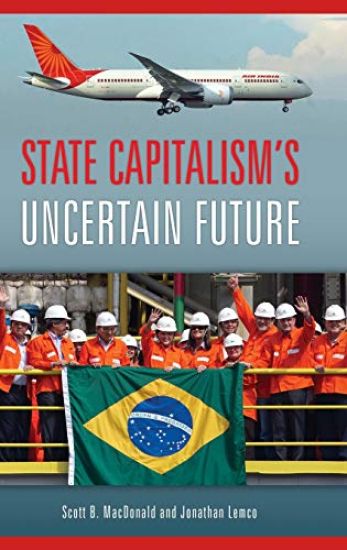
State Capitalism's Uncertain Future

State Capitalism's Uncertain Future

Scott B. MacDonald; Jonathan Lemco

Praeger Publishers Inc
2015
sidottu
A provocative and timely look at the current state of global economics, particularly how the state-owned companies of Russia, China, Latin America, and other emerging markets are influencing how people work, how they consume, and how they prosper.The global economy is changing: experts are noting slow growth in the advanced economies, greater volatility in international markets, and the emergence of state-owned companies in the competitive marketplace. This forward-looking reference explores the role that state capitalism plays within the political structures of countries throughout the world. The text begins with an introduction to state capitalism, moves into an in-depth examination of several countries and regions, and concludes with a discussion on the future of state capitalism in the next decade. Coauthors Scott B. MacDonald and Jonathan Lemco examine the challenges that state-owned companies face in the global economy, including a weak legal and commercial infrastructure, a conflict of interest between politics and business, and massive corruption in local and regional governments. A close review of the perils of state capitalism based on meritocracy devolving into crony capitalism invites debate on the longevity of this economic system versus a free market economy.