

Kirjahaku
Etsi kirjoja tekijän nimen, kirjan nimen tai ISBN:n perusteella.
1000 tulosta hakusanalla Scott M. Baker

Eight months have passed since vampires released the Revenant Virus on mankind, nearly wiping out both species. For Mike Robson, the situation could be far worse. He has joined up with a small band of humans and the last coven of vampires who are riding out the zombie apocalypse in an old fort along the coast of southern Maine. The uneasy alliance between humans and vampires is strained with the arrival of the creator of the Revenant Virus. Compton claims to have a vaccine that will make humans immune to the virus and allow mankind to take civilization back from the living dead. However, the vaccine is located in a secure underground facility five hundred miles away. To retrieve the vaccine, Robson leads a raiding party of humans and vampires down the East Coast, which has been devastated by the outbreak and overrun by zombies and rape gangs. None of the horrors he deals with on the road can prepare him for what his team will find in Pennsylvania. Once inside the underground facility, Robson encounters the greatest threat his group has faced to date, not only from zombies but from betrayal within their own ranks. "With Rotter World, Scott M. Baker pulls out all the stops in a zombie thriller that is brutal, violent and terrifying. Definitely not for the faint-hearted."-New York Times bestseller Jonathan Maberry, author of Patient Zero "Think there are no new or original zombie authors? Think again. Scott M. Baker provides an exciting voice and fresh outlook on the undead. Fun, compulsive reading."-Brian Keene, author of The Rising and City of the Dead "Scott M. Baker writes in the tradition of J.L. Bourne and Joe McKinney. Fans of thriller writers like Brad Thor will also find powerful, welcome similarities in Rotter World."-Scott Kenemore, author of Zen of Zombie" Scott M. Baker has managed to bring together the best of what I love about end of the world, vampire and zombie tales in one glorious story. If you think zombie and vampire stories are overdone and there is not anything new you can do with them, Rotter World proves that theory wrong."-Peter Schwotzer of Famous Monsters of Filmland

Do Jason and Sasha have any chance for happiness? Jason and the Demon Hunters are exhausted. After traveling halfway around the world and battling so many Demon Spawn, they face their worst challenge yet -- closing an interdimensional portal that opened inside a melted-down nuclear reactor and that is protected by demons far more deadly and terrifying than any they have encountered before. Jason and Sasha finally have a chance to be together even though every day could be their last. Complicating matters is Enipsigos, the only demon to survive the closing of the Shenyang portal, who harbors a dark secret about the couple that could impact their future as well as the future of the world. What will kill the Demon Hunters first, the radiation from the melted reactor or the Demon Spawn guarding it? NOTE: The first three novels in the Shattered World series were originally published as the Hell Gate saga under the pseudo Josh Matthews. Shattered World IV: Japan is a new novel that has never been previously published.



In Calvin's Company of Pastors, Scott Manetsch examines the pastoral theology and practical ministry activities of Geneva's reformed ministers from the time of Calvin's arrival in Geneva until the beginning of the seventeenth century. During these seven decades, more than 130 men were enrolled in Geneva's Venerable Company of Pastors (as it was called), including notable reformed leaders such as Pierre Viret, Theodore Beza, Simon Goulart, Lambert Daneau, and Jean Diodati. Aside from these better-known epigones, Geneva's pastors from this period remain hidden from view, cloaked in Calvin's long shadow, even though they played a strategic role in preserving and reshaping Calvin's pastoral legacy. Making extensive use of archival materials, published sermons, catechisms, prayer books, personal correspondence, and theological writings, Manetsch offers an engaging and vivid portrait of pastoral life in sixteenth- and early seventeenth-century Geneva, exploring the manner in which Geneva's ministers conceived of their pastoral office and performed their daily responsibilities of preaching, public worship, moral discipline, catechesis, administering the sacraments, and pastoral care. Manetsch demonstrates that Calvin and his colleagues were much more than ivory tower theologians or "quasi-agents of the state," concerned primarily with dispensing theological information to their congregations or enforcing magisterial authority. Rather, they saw themselves as spiritual shepherds of Christ's Church, and this self-understanding shaped to a significant degree their daily work as pastors and preachers.
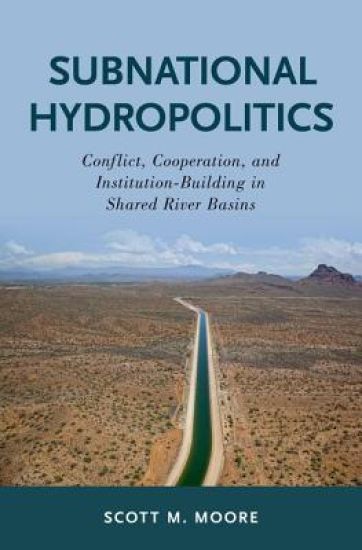
The prospect of international conflict over water has long been the subject of academic and popular concern, but subnational political conflict is considerably more common, and almost certainly imposes greater economic and environmental costs. Indeed, subnational hydropolitics are an important feature of several large countries, including the United States, India, and China. Moreover, disputes between water users in shared river basins have often persisted despite repeated attempts by central governments to resolve them through both persuasion and coercion. Yet despite the growing threat of water scarcity around the world, little research exists on subnational politics of shared water resources. This book attempts to fill the gap by explaining how and why hydropolitics play out within countries, as well as between them. Subnational Hydropolitics re-examines the issue of water conflict by examining conflicts at the subnational rather than international level. By examining several in-depth case studies of both conflict and cooperation, Scott Moore argues that increasing subnational water conflict is driven by two inter-linked forces, identity politics, which gives subnational politicians a reason to compete over shared water resources; and political decentralization, which provides them with the tools to do so. To understand politics at the subnational level, the book blends insights from both the environmental governance and comparative politics literatures. By examining the challenges many countries face in achieving cooperation over shared water resources, the book helps to shed light on different mechanisms and processes for solving cooperation problems at the regional scale lessons relevant to tackling a wide range of transboundary environmental problems, including air pollution, urbanization, and ecosystem protection. But at its core, this book promises a definitive contribution to the growing sub-field of environmental politics, centered on understanding how different countries attempt to solve the problems inherent in governing water resources in shared river basins.

From solar panels to synthetic biology, an accessible-yet-authoritative overview of how climate change, the global Covid-19 pandemic, and emerging technologies are changing China's relationship with the world, and what it means for governments, companies, and organizations across the globe. Ever since China began its ascendancy to great-power status in the 1980s, observers have focused on its growing economic, military, and diplomatic power. But in recent years, Chinese officials, businesses, and institutions have increased their visibility and influence on every major global issue, from climate change and artificial intelligence to biotechnology and the global Covid-19 pandemic. How have these newer issues changed China's relationship with the world? And, importantly, how can we prepare for a future increasingly shaped by China? In China's Next Act, Scott M. Moore re-envisions China's role in the world, with a focus on sustainability and technology. Moore argues that these increasingly pressing, shared global challenges are reshaping China's economy and foreign policy, and consequently, cannot be tackled without China. Yet sustainability and technology present opportunities for intensified economic, geopolitical, and ideological competition--a reality that Beijing recognizes. The US and other countries must do the same if they are to meet ecological and technological challenges in the decades ahead. In some areas, like clean technology development, competition can be good for the planet. But in others, it could be catastrophic--only cooperation can lower the risks of artificial intelligence and other disruptive new technologies. In this clearly written and accessible overview, Moore examines how countries like the US must balance cooperation and competition with China in response to shared challenges. With an emphasis on opportunities as well as threats, Moore addresses not only key developments in sustainability and technology within China, but also their implications for foreign countries, companies, and other organizations. China's influence on sustainability and technology is both global and granular--and twenty-first century China itself looks more like a network than a nation-state. Featuring original interviews and an in-depth look at Chinese government policy, China's Next Act provides a unique--and uniquely balanced--window into these new dimensions of China's global ascension.

On October 28, 1917, just days after the Bolsheviks seized power, the great Council of the Russian Orthodox Church voted to restore the patriarchate, which had been abolished by Peter the Great two centuries earlier. The Council chose Tikhon (Bellavin), the son of a humble village parish priest, to be head of Russia's largest religious confession. At the time, the majority of Orthodox Christians were devoutly religious. Tikhon's vision of the Church, which he began putting into practice during his years as the Orthodox bishop of North America (1898-1907), was that of an organic body which welcomed the participation of all believers. The Bolsheviks had other ideas. They aimed to create a revolution that would be carried out by the state on behalf of the people. And they sought to eradicate religion as “superstition” and not only to disestablish the Church, but to destroy it altogether. Although the alternate Russia which Tikhon represented would be crushed by the superior force of the Bolsheviks, he helped navigate the Church through immense challenges so that, in the end, the Orthodox Church outlived the Soviet experiment. The People's Patriarch tells the story of the clash of visions for the new Russia in 1917 through the lens of the humble man chosen to lead the Church, whose life exemplifies the transformations within the Orthodox Church in late Imperial Russia and its fate during the Revolution. The People's Patriarch is the first critical biography of one of the twentieth century's most important Orthodox Christian leaders, based on an exhaustive use of previously untapped primary sources, including Tikhon's letters and encyclicals, previously classified documents from the top Bolshevik leadership and Soviet secret police, and materials from a dozen archives in five countries.
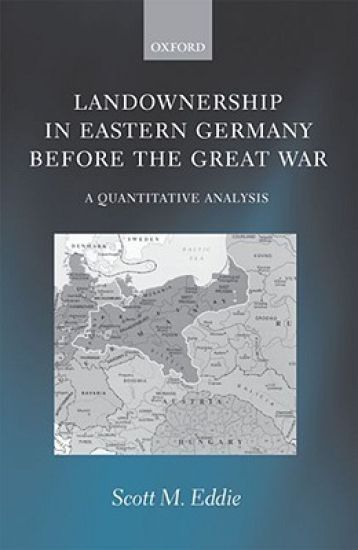
Landownership in Eastern Germany Before the Great War
Scott M. Eddie
Oxford University Press
2008
sidottu
The big landlords of eastern Germany have loomed large in the country's history, but the absence of official statistics on landownership has left their position and identity confined to folklore, without satisfactory quantification. This study, making extensive use of primary sources from the seven 'core provinces' of eastern Germany-the so-called 'East Elbian' region-establishes answers to questions pivotal to our understanding of pre-war Germany: who were the biggest landowners, both by area and by the tax assessment of their land? Which social groups held land? How much land did they own and where? How did this change, especially during the last decades before the Great War? Professor Eddie demonstrates that most of the inroads into landownership by the bourgeoisie had already been made by the mid-1850s, perhaps even before the mid-1830s. However, one of the most interesting findings in this study is that, despite rapid industrialization after 1880, there was a net exodus of the nouveaux riches from the ranks of large land owners. On the eve of war, the largest landowners were the Prussian state, the royalty, and the higher nobility. Meticulously researched and thoroughly documented, this book will be the benchmark for all future work in this area.

Political Liberalism and the Rise of American Romanticism
Scott M. Reznick
Oxford University Press
2024
sidottu
Political Liberalism and the Rise of American Romanticism explores how American Romanticism developed in response to pervasive conflicts over democracy's moral dimensions in the early republic and antebellum eras. By recovering the long-under-examined tradition of political liberalism for literary studies, it traces how US writers reacted to ongoing moral and political conflict by engaging with liberal thinkers and ideas as they endeavored to understand how individuals beholden to a divergent array of moral convictions might nevertheless share a stable and just political world--the very dilemma at the core of political liberalism. This study demonstrates how those philosophical engagements sparked Romanticism's rise and eventual flourishing as US writers increasingly embraced Romantic literary modes emphasizing the imagination's capacity for creative synthesis and the role it plays in shoring up the habits of mind and feeling that are vital to a meaningful democratic culture. It offers revisionary readings of works by Charles Brockden Brown, Robert Montgomery Bird, James Fenimore Cooper, Harriet Beecher Stowe, Frederick Douglass, and Nathaniel Hawthorne to show how these Romantic writers were preoccupied with how individuals come to embrace their deepest convictions and what happens when they encounter others who see the world differently.

In this groundbreaking book, Dr. Fishman shows how communicating better with patients about their pain can help physicians create safer and more effective treatment strategies. Listening to Pain offers physicians a wealth of practical guidance about asking the right questions and assessing patient responses, including: -What questions to ask pain patients when they first present with pain -Using functional goals as outcome measures -Educating patients about the risks and benefits of treatment -Documenting patient consent and compliance with treatment regimens -How to manage difficult patients

Voyages of Discovery is the first major synthesis of island archaeological research worldwide. The work brings together experts in the field who are concerned with analyzing islands and island societies from a variety of different archaeological and anthropological perspectives. Major topics include interaction spheres, exchange, human impacts, and theoretical models. Over the past few decades there has been an increased interest in the archaeology of islands. Archaeological approaches to studying islands and island societies have often mirrored those of biologists because islands are relatively isolated, contain unique species or remnant populations, have an impoverished terrestrial ecology, provide opportunities to investigate the effects of animals (e.g., humans) on ecosystems, lend themselves to manipulative experiments, and have implications for helping us understand environmental and social changes on a global level from a microcosmic view. Although islands can be considered somewhat unique compared to mainland environments, environmental and cultural factors played important roles in how islands and islanders developed over time. The field of island archaeology contributes to understanding the fluid boundaries (both physical and mental) that existed for islanders prehistorically and how they adapted to their island world. This book explores a wide range of issues including the impacts humans have had on island ecosystems, the intentional movement of goods, resources, and animals across vast distances, and ways in which archaeologists analyze islands and island societies methodologically and theoretically.
With easy access to sermons on the Internet, plus pressure to deliver the next sermon with little time to prepare, no wonder some pastors have resorted to plagiarizing other people’s sermons, passing them off as their own. This growing epidemic has received coverage in the Wall Street Journal, on National Public Radio, and elsewhere. Some pastors have been caught in the act and dismissed from their churches. Is this fair? Is this stealing? How can you recognize it? How can it be prevented? This book not only helps explain the problem, but it also explores the ethical implications and gives advice on how to avoid it or deal with it if the problem surfaces in your church. It includes study questions at the end of chapters and a concluding case study.
This is a comprehensive yet practical guide for job seekers looking for green career opportunities.Green Collar Jobs: Environmental Careers for the 21st Century is a simple, easy-to-reference guide that will help students, recent graduates, job seekers, and career changers at all levels find the latest information and job resources in this burgeoning new field.This exceptionally timely book examines all aspects of green careers, beginning with an overview discussing green jobs from environmental, economic, and political perspectives. The core of the book is comprised of chapters that describe specific types of green jobs and career paths. These include jobs related to alternative energy, water resources, green marketing, green business, green building, and environmental law. For those willing to leave home, there is a chapter on global environmental jobs, and there is information on niche green careers such as ecotourism and green interior design. Each chapter includes job sources, education and training resources, and a listing of companies involved in the particular business.Provides original insights and advice from professionals in green career fieldsIncludes web addresses for associations, discussion groups, job boards, and companies in each chapterLists relevant job sites and online references
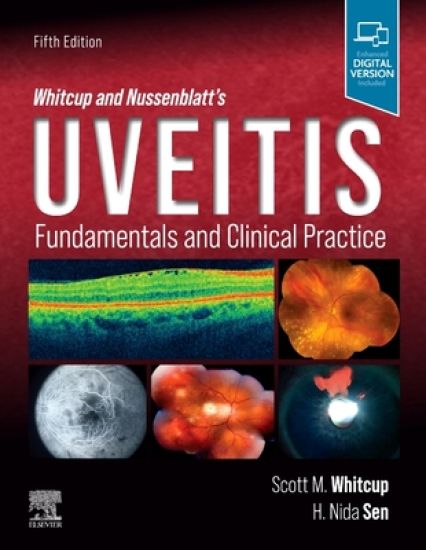
Whitcup and Nussenblatt's Uveitis
Scott M. Whitcup; H. Nida Sen
Elsevier - Health Sciences Division
2021
sidottu
Comprehensive and readable, Whitcup and Nussenblatt's Uveitis, 5th Edition, covers every aspect of this complex subspecialty in a single convenient volume. This clinically relevant guide covers the medical, pharmacological, and surgical treatment of uveitis in a visually rich, full-color format, offering a complete overview for today's clinicians. New and updated case studies, key points boxes, and more than 400 images and graphics highlight major clinical points and provide insight into real situations that you can apply in practice. Features multiple chapters on diagnostic approach to help you meet the challenge of making accurate diagnoses. Reflects advancements and new developments on all aspects of uveitis including new medical and surgical treatments. Covers key topics such as the use of PCR in diagnostic testing, cataract surgery in patients with uveitis, the use of OCT in diagnosis and treatment, new infectious causes of uveitis (including Zika and Ebola), and novel treatments for inflammatory eye disease. Includes new clinical photographs, illustrations, and OCT images throughout. Reviews new randomized clinical trials of new uveitis therapy, as well as the approach to patients with HIV and HIV-associated ocular diseases including CMV retinitis and immune recovery uveitis. Provides expanded information on masquerade syndromes with important tips on diagnosis and management of intraocular lymphoma. Enhanced eBook version included with purchase. Your enhanced eBook allows you to access all of the text, figures, and references from the book on a variety of devices.
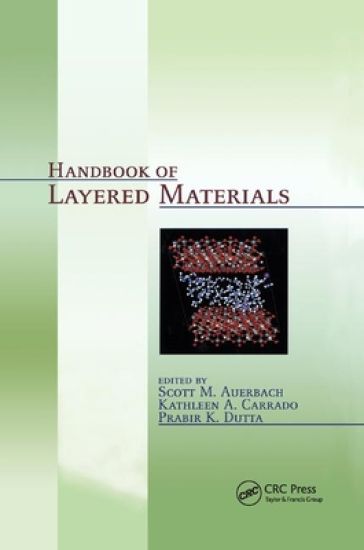
Handbook of Layered Materials
Scott M. Auerbach; Kathleen A. Carrado; Prabir K. Dutta
CRC Press
2019
nidottu
Focusing on layered compounds at the core of materials intercalation chemistry, this reference comprehensively explores clays and other classes of materials exhibiting the ability to pillar, or establish permanent intracrystalline porosity within layers. It offers an authoritative presentation of their fundamental properties as well as summaries of cutting-edge research results.Outlines modern usages of clays and other layered materials, including catalytic and photocatalytic applications. With chapters that explain basic concepts first before delving into more scientifically complex topics, the Handbook of Layered MaterialsExamines chemistry of clays, pillared clays, and pillared clay heterostructures Scrutinizes layered zirconium phosphates and phosphonates, double hydroxides, manganese oxides, metal chalcogenides, and polysilicates Offers clear descriptions of clay-organic interactions and devotes one chapter specifically to nitroaromatic compound sorption Covers findings in photochemistry and the molecular modeling of surface chemistry Reports recent developments in synthesis, characterization, and host-guest chemistry Contains over 2300 current references, formatting many into expedient tablesThe companion publication to the lauded Handbook of Zeolite Science and Technology (Marcel Dekker, Inc.) from the same expert editors, this reference is ideal for materials chemists and engineers; chemical engineers; and graduate-level students in these disciplines.

Serious Games in Personalized Learning
Scott M. Martin; James R. Casey; Stephanie Kane
Routledge
2021
sidottu
Serious Games in Personalized Learning investigates game-based teaching and learning at a time when learning and training systems are increasingly integrating serious games, machine-learning artificial intelligence models, and adaptive technologies. Game-based education provides rare data for measuring, assessing, and evaluating not just a game’s effectiveness but the acquisition of information and knowledge that a student may gain through playing a learning game. This book synthesizes contemporary research, frameworks, and models centered on the design and delivery of serious games that truly personalize the learning experience. Scholars of educational technology, instructional design, human performance, and more will find a comprehensive guide to the history, practical implications, and data-collection potential inherent to these fast-evolving tools.

Serious Games in Personalized Learning
Scott M. Martin; James R. Casey; Stephanie Kane
Routledge
2021
nidottu
Serious Games in Personalized Learning investigates game-based teaching and learning at a time when learning and training systems are increasingly integrating serious games, machine-learning artificial intelligence models, and adaptive technologies. Game-based education provides rare data for measuring, assessing, and evaluating not just a game’s effectiveness but the acquisition of information and knowledge that a student may gain through playing a learning game. This book synthesizes contemporary research, frameworks, and models centered on the design and delivery of serious games that truly personalize the learning experience. Scholars of educational technology, instructional design, human performance, and more will find a comprehensive guide to the history, practical implications, and data-collection potential inherent to these fast-evolving tools.

Introduction to Applied Bayesian Statistics and Estimation for Social Scientists
Scott M. Lynch
Springer-Verlag New York Inc.
2007
sidottu
"Introduction to Applied Bayesian Statistics and Estimation for Social Scientists" covers the complete process of Bayesian statistical analysis in great detail from the development of a model through the process of making statistical inference. The key feature of this book is that it covers models that are most commonly used in social science research - including the linear regression model, generalized linear models, hierarchical models, and multivariate regression models - and it thoroughly develops each real-data example in painstaking detail. The first part of the book provides a detailed introduction to mathematical statistics and the Bayesian approach to statistics, as well as a thorough explanation of the rationale for using simulation methods to construct summaries of posterior distributions. Markov chain Monte Carlo (MCMC) methods - including the Gibbs sampler and the Metropolis-Hastings algorithm - are then introduced as general methods for simulating samples from distributions. Extensive discussion of programming MCMC algorithms, monitoring their performance, and improving them is provided before turning to the larger examples involving real social science models and data.