This workbook is designed to provide a good grounding of the most commonly used analytic approaches in the health sciences, using the Statistical Package for the Social Sciences (SPSS). Topics covered include creation of a database, aggregation of data, data transformations, scale development, t-tests, cross tabulations, ANOVA, logistic regression, correlation and regression. Notes and slides are included in each Chapter that describe the essentials of each analytic approach. As well, data from the Canadian Community Health Survey are analyzed to illustrate the application of each approach. SPSS output is included, with the most important elements for a research paper highlighted and interpreted.
Megan Brandt was a shy, lonely teenager secretly in love with a boy in school who didn't even know she existed. It's a common scenario that many young girls face and the resolution is typically something simple, like a makeover. Megan's solution, however, was a little less prosaic than that. She chose to enter into a contract to have her wish fulfilled magically by a bitter and alcoholic 132yr. old Gypsy fortuneteller with a lot of unresolved anger issues. A makeover would've been so much easier. Years later, long after the wish had been made, the time had finally come for the people involved to seek out each other and understand the truth of what really happened on that one miraculous night.
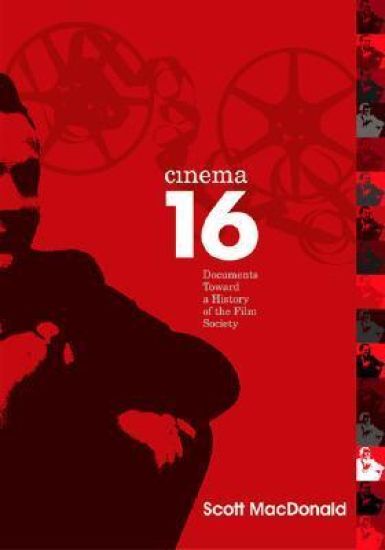
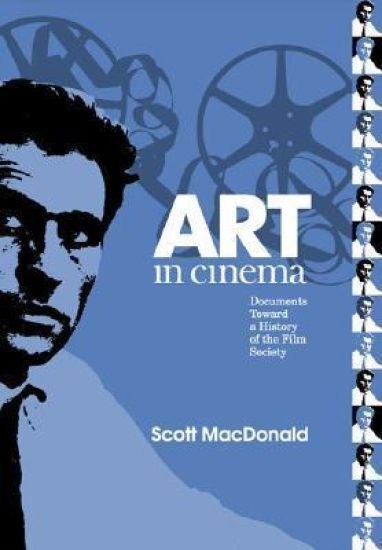
As the most successful and influential film society in American history, Cinema 16 was a crucial organization for the creation of a public space for the full range of cinema achievement in the years following World War II. A precursor of the New York Film Festival, Cinema 16 screenings became a gathering place for New Yorkers interested not only in cinema, but in the use of media in the development of a more complete, effective democracy. For seventeen years, many of the leading intellectuals and artists of the time came together as part of a membership society of thousands to experience the creative programming of Cinema 16 director, Amos Vogel. What audiences saw at Cinema 16 changed their lives and had an enduring impact not only on the New York City cultural scene, but nationwide. Vogel's distribution of landmark documentary and avant-garde films helped make a place for many films that could never have had commercial release, given the pressures of commercialism and censorship during the postwar era.Vogel's commitment to the broadest range of cinema practice led him to develop a programming strategy, inherited from the European cine-club movement, that involved confronting audiences with such a wide range of cinematic forms that viewers left the theater considering not only the often remarkable films Vogel showed, but the place of Cinema itself in modern life.Cinema 16: Documents Toward a History of the Film Society is the first book on Cinema 16. Scott MacDonald provides a sense of the life and work of the society, using the complete Cinema 16 program announcements, selected letters between Vogel and the filmmakers whose films he showed; selections from the program notes that accompanied Cinema 16 screenings, theoretical essays by Vogel on curating independent cinema; conversations between MacDonald and Cinema 16 members; photographs and stills; and a variety of other documents.
As the most successful and influential film society in American history, Cinema 16 was a crucial organization for the creation of a public space for the full range of cinema achievement in the years following World War II. A precursor of the New York Film Festival, Cinema 16 screenings became a gathering place for New Yorkers interested not only in cinema, but in the use of media in the development of a more complete, effective democracy. For seventeen years, many of the leading intellectuals and artists of the time came together as part of a membership society of thousands to experience the creative programming of Cinema 16 director, Amos Vogel. What audiences saw at Cinema 16 changed their lives and had an enduring impact not only on the New York City cultural scene, but nationwide. Vogel's distribution of landmark documentary and avant-garde films helped make a place for many films that could never have had commercial release, given the pressures of commercialism and censorship during the postwar era. Vogel's commitment to the broadest range of cinema practice led him to develop a programming strategy, inherited from the European cine-club movement, that involved confronting audiences with such a wide range of cinematic forms that viewers left the theater considering not only the often remarkable films Vogel showed, but the place of Cinema itself in modern life. Cinema 16: Documents Toward a History of the Film Society is the first book on Cinema 16. Scott MacDonald provides a sense of the life and work of the society, using the complete Cinema 16 program announcements, selected letters between Vogel and the filmmakers whose films he showed; selections from the program notes that accompanied Cinema 16 screenings, theoretical essays by Vogel on curating independent cinema; conversations between MacDonald and Cinema 16 members; photographs and stills; and a variety of other documents.
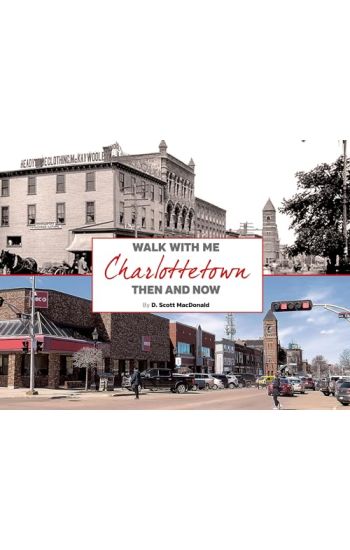
D. Scott MacDonald's father, W. Blair MacDonald had a keen interest in the changing landscape of Charlottetown, and documented a number of these changes with his slide camera. Instilled with a keen sense of history at an early age, Scott and his family have always treasured the work that their father did to preserve Charlottetown's history. So, over 60 years later, Scott has now retraced his father's steps to record how the city has changed over that time. Standing in the exact spot where his father stood, Scott has captured how the streets and buildings of Charlotttown have changed and remained the same. Scott has also researched the history of the buildings he protrays, both back to his father's time and much earlier. The result is a fascinating glimpse into why and how even a small city can change so much. Ten years later, in this new edition, Scott has gathered new photos and insightful information about this beautiful city in Prince Edward Island.
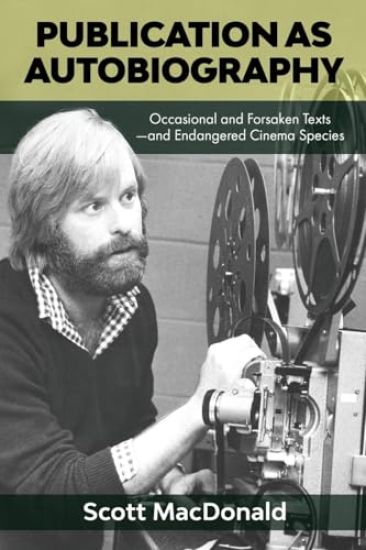
The goal of virtually all my writing has been to bring attention to cinematic (and, early on, literary) accomplishments that have not received the careful attention, or the audiences, they deserve. I'm hoping that this new collection might create awareness of cultural achievements that have remained underserved or are in danger of fading from cultural memory. Collecting essays for Publication as Autobiography, which is organized chronologically, has allowed me to consider how successive decades have transformed my writing and how recent developments are transforming the field of cinema and media studies.The subjects of the essays collected here include the betrayal of a canonical Hemingway short story, Erskine Caldwell's experiments with dialogue; and a range of films by Larry Gottheim, J.J. Murphy, Peter Watkins, Trinh T. Minh-ha, Robert Nelson, Taka Iimura, Shiho Kano, James Benning, Gustav Deutsch, Peter Hutton, and the team of Yervant Gianikian and Angela Ricci Lucchi-along with multi-media works by Patrick Clancy and Robert Huot. Also included: the catalogue essay for "Frames of Mind," a breakthrough 1986 Munson show of filmic and photographic works by Central New York artists (Hollis Frampton, Marion Faller, Bill Brand, Alan Berliner, John Knecht...); a survey of North American pilgrimage sites where generations of cine-devotees accessed independent cinema; explorations of books by Fluxus artist Emmett Williams and subversive-cinema curator/writer Amos Vogel, and of the remarkable one-season television series, My So-Called Life-plus an interview with media scholar, Max Tohline, focusing on the recent emergence of the video essay and the "supercut."Scott MacDonald
The goal of virtually all my writing has been to bring attention to cinematic (and, early on, literary) accomplishments that have not received the careful attention, or the audiences, they deserve. I'm hoping that this new collection might create awareness of cultural achievements that have remained underserved or are in danger of fading from cultural memory. Collecting essays for Publication as Autobiography, which is organized chronologically, has allowed me to consider how successive decades have transformed my writing and how recent developments are transforming the field of cinema and media studies.The subjects of the essays collected here include the betrayal of a canonical Hemingway short story, Erskine Caldwell's experiments with dialog; and a range of films by Larry Gottheim, J.J. Murphy, Peter Watkins, Trinh T. Minh-ha, Robert Nelson, Taka Iimura, Shiho Kano, James Benning, Gustav Deutsch, Peter Hutton, and the team of Yervant Gianikian and Angela Ricci Lucchi-along with multi-media works by Patrick Clancy and Robert Huot. Also included: the catalogue essay for "Frames of Mind," a breakthrough 1986 Munson show of filmic and photographic works by Central New York artists (Hollis Frampton, Marion Faller, Bill Brand, Alan Berliner, John Knecht...); a survey of North American pilgrimage sites where generations of cine-devotees accessed independent cinema; explorations of books by Fluxus artist Emmett Williams and subversive-cinema curator/writer Amos Vogel, and of the remarkable one-season television series, My So-Called Life-plus an interview with media scholar, Max Tohline, focusing on the recent emergence of the video essay and the "supercut."Scott MacDonald
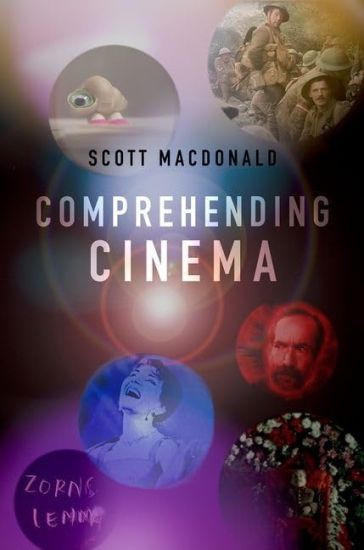
Comprehending Cinema is a collection of in-depth interviews and panoramic essays that models a generalist approach to modern audiovisual media, prioritizing remarkable cinematic accomplishments that can get lost within our overwhelming modern mediascape. The 18 interviewees featured in this publication include Oscar-winning documentarians Daniel Lindsay and TJ Martin; Dean Fleischer Camp, whose Marcel the Shell with Shoes On was an internet smash, then an Oscar nominee; canonical filmmakers Guy Maddin and Su Friedrich, still building on remarkable careers; renowned poet (and cineaste) John Ashbery; Irish independent Tadhg O'Sullivan who is entranced by the moon; indefatigable cine-historian, Paul Cronin; LA artist Jennifer West, who collaborated with 11,500 visitors on New York City's High Line to produce a new kind of City Symphony; Penny Lane, whose documentary films continually surprise; a collaborative filmmaking team who provide an immersive motion study of a crowd taking selfies with the Mona Lisa; cine-explorers Lucien Castaing-Taylor and Véréna Paravel; master of the cine-archive Bill Morrison; cine-scientist Erin Espelie; video-essayist Chloé Galibert-Laîné; and the Alloy Orchestra, who entertained silent-film audiences for three decades. Comprehending Cinema combines engaging conversations with accomplished filmmakers and essayistic explorations of recent contributions to modern media-making by filmmakers creating a tradition of "cine-nocturnes," and by filmmakers exploring archival representations of World War 1. The book offers a reading adventure dedicated to opening the door to exciting new kinds of film experience.
This international handbook is the first to analyze the status of drug control efforts around the world in so comprehensive a manner with up-to-date information. A series of experts provide a systematic overview of this major world problem in the 1980s and the 1990s, point to 10 major trends in current developments and to 3 probable shocks in the immediate future, and assess targets and networks for combatting the drug trade in the next decade. This handbook is a convenient reference for academicians, professionals, policymakers, and all who are concerned with this scourge on modern-day society. This valuable survey of the major consumers and suppliers of drugs and of national and international responses and enforcement measures opens with an introduction that gives an overview of efforts to control the international drug problem. Money laundering and asset forfeiture problems and policies are described in some detail. Country and regional studies follow with analyses about the history and structure of the industry/trade, governmental and societal responses, international controls and networks. The work of the United Nations and regional organizations is summarized as well. Appendixes offer comparative data about drug consumption, production, and trade and about international legislature's legal efforts to control the drug trade. Bibliographies at the ends of chapters and an essay at the end of the book offer suggestions for further research. A full index makes the reference an accessible one for researchers with different needs and perspectives.
In Panama 1524, a plot was hatched by Spanish conquistadors to relieve a South American empire of its wealth. Three men had become aware of letters which described a civilisation of enormous riches in the inaccessible, undiscovered south. This epic journey of discovery eventually led to the founding of Lima and the country of Peru. Jack Stone, a former archaeology student and ex-member of the armed services specialises in finding lost artefacts, normally on behalf of the wealthy business classes. A telephone call from an old friend plunges Jack into a race to find an enormous hoard which the Spanish conquistadors had plundered and subsequently hidden. This unfathomable wealth has been hidden for nearly five hundred years and is all but forgotten. Deus Victum Totus are a sect of the Roman Catholic Church headed up by Gianfranco Alberto. Gianfranco is working with shady global business "elites" to discover the hoard and secure massive wealth. This wealth coupled with the globalists ambitions of population reduction and control will give the elitists enough wealth to control world governments, and to subjugate and cull the global population. Two opposed teams trying to out-manoeuvre each other in unravelling an age old mystery. Can Jack Stone solve the mystery to prevent the influential cult from promoting its sinister plans?
When we began to consider the scope of this book, we envisaged a catalogue supplying at least one abstract definition for any finitely generated group that the reader might propose. But we soon realized that more or less arbitrary restrictions are necessary, because interesting groups are so numerous. For permutation groups of degree 8 or less (i. e., subgroups of e ), the reader cannot do better than consult the 8 tables of JosEPHINE BuRNS (1915), while keeping an eye open for misprints. Our own tables (on pages 134-143) deal with groups of low order, finiteandinfinite groups of congruent transformations, symmetric and alternating groups, linear fractional groups, and groups generated by reflections in real Euclidean space of any number of dimensions. The best substitute foramoreextensive catalogue is the description (in Chapter 2) of a method whereby the reader can easily work out his own abstract definition for almost any given finite group. This method is sufficiently mechanical for the use of an electronic computer. There is also a topological method (Chapter 3), suitable not only for groups of low order but also for some infinite groups. This involves choosing a set of generators, constructing a certain graph (the Cayley diagram or DEHNsehe Gruppenbild), and embedding the graph into a surface. Cases in which the surface is a sphere or a plane are described in Chapter 4, where we obtain algebraically, and verify topologically, an abstract definition for each of the 17 space groups of two-dimensional crystallography.
This latest of many Grenadian-inspired books provides a useful supplement to the exclusively Grenadian-oriented volumes of recent years. Six of the articles represent conflicting interpretations of Maurice Bishop's New Jewel Movement and the US invasion of 1983. . . Formats and foci for the other Caribbean pieces vary, but they establish clearly that domestic, not external forces are what shape political development in the Caribbean, making arguments regarding Grenada's (or Cuba's) threat to the region less credible. . . . . [The] editors put the events in Grenada in perspective, a task that has long been overdue. For all levels. ChoiceThe Caribbean After Grenada examines the major political and economic developments in the Caribbean since the events of October 1983 in Grenada. The contributors represent a range of ideological viewpoints--from neo-Marxist to conservative--and thus offer an unusually balanced and informed discussion of the lessons of Grenada and the problems of revolution, conflict, and democracy faced by contemporary Caribbean societies. Coverage is extremely broad in scope and encompasses all geographic regions, from the islands furthest out in Atlantic to the Central American Republics, all major regime types, and all cultural/linguistic areas. An ideal supplemental text for courses on comparative politics, the Caribbean, and economic development, this volume brings a much needed historical perspective to the study of events since the Grenada crisis.
This is the inspiring story of The Flaherty, one of the oldest continuously running nonprofit media arts institutions in the world, which has shaped the development of independent film, video, and emerging forms in the United States over the past 60 years. Combining the words of legendary independent filmmakers with a detailed history of The Flaherty, Patricia R. Zimmermann and Scott MacDonald showcase its history and legacy, amply demonstrating how the relationships created at the annual Flaherty seminar have been instrumental in transforming American media history. Moving through the decades, each chapter opens with a detailed history of the organization by Zimmermann, who traces the evolution of The Flaherty from a private gathering of filmmakers to a small annual convening, to today's ever-growing nexus of filmmakers, scholars, librarians, producers, funders, distributors, and others associated with international independent cinema. MacDonald expands each chapter by giving voice to the major figures in the evolution of independent media through transcriptions of key discussions galvanized by films shown at The Flaherty. The discussions feature Frances Flaherty, Robert Gardner, Fred Wiseman, Willard Van Dyke, Jim McBride, Michael Snow, Hollis Frampton, Erik Barnouw, Barbara Kopple, Ed Pincus, Trinh T. Minh-ha, Bruce Conner, Peter Watkins, Su Friedrich, Marlon Riggs, William Greaves, Ken Jacobs, Kazuo Hara, Mani Kaul, Craig Baldwin, Bahman Ghobadi, Eyal Sivan, and many others.
Growing global interdependence made the 1970s and 1980s a volatile period in the sugar trade at a time when Caribbean countries, while not the major world producers of sugar, were economically dependent on their sugar exports. Since then, government farm supports and quotas on imported sugar in the United States, overproduction in developing countries, and the emergence of a highly protected European Community sugar industry have all served to make the sugar trade a highly political global issue. This study focuses on the evolution of the U.S.--Caribbean Basin sugar trade in the 1980s and its impact on political relations between the countries involved. According to the authors, the sugar trade was not driven by laws of supply and demand, but by various political agendas. Economic protectionism, government subsidies for inefficient elements of the sugar industry, as well as corruption and mismanagement have contributed to the Byzantine politics of the sugar trade. Now the United States needs to determine how lifting quotas and terminating subsides will affect this complex relationship. By providing an in-depth look at the development of current policies in the sugar trade, this book offers the necessary background for making informed policy decisions.After examining the U.S. sugar policy from 1974 to 1989, the book provides a broader Latin American perspective of U.S. and European Community sugar policies. It also offers subregional and country analyses covering the Commonwealth Caribbean, Central America, Cuba, the Dominican Republic, Haiti, and Panama. Despite the difficulty of competing against the United States and Europe, Caribbean and Central American countries are likely to continue to depend on sugar cane. Climactic and ecological factors make agricultural diversification extremely difficult. Some Caribbean and Central American producers have considered making ethanol automobile fuel from sugar, but here too they face protectionist pressure from U.S. producers of corn. Given current political realignments, the authors predict that the influence of the United States and the Soviet Union will diminish in the 1990s. The European Community, on the other hand, is likely to have greater influence on the inter-American sugar trade. Students of Latin American politics and international relationships, as well as those involved in the sugar industry or the policies affecting it, will find this book a valuable resource for future decisions.
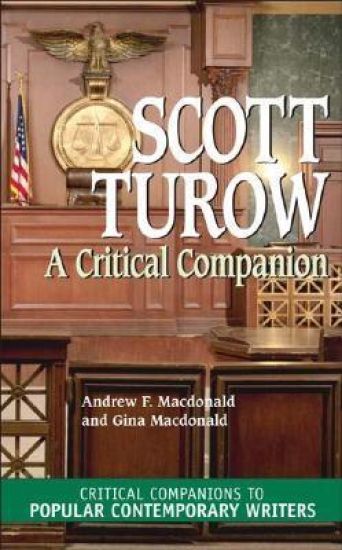
Scott Turow is a novelist, lawyer, and humanist who has fused his two passions, writing and the law, to create challenging novels that raise significant legal issues and test the justice of present laws. In all of his books, Turow reveals the moral ambiguities that afflict both accuser and accused, and challenges his readers to reconsider their preconceived notions of justice. Beginning with One-L, his first published work about the first-year law school experience, Turow continues to capture his readers' imaginations with books such as Presumed Innocent and Burden of Proof.