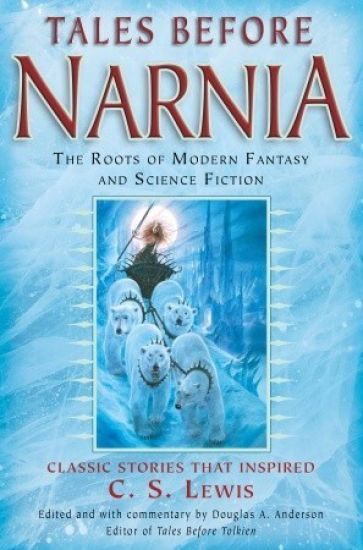
In his acclaimed collection Tales Before Tolkien, Douglas A. Anderson illuminated the sources, inspirations, and influences that fired J.R.R. Tolkien's genius. Now Anderson turns his attention to Tolkien's colleague and friend C. S. Lewis, whose influence on modern fantasy, through his beloved Narnia books, is second only to Tolkien's own. In many ways, Lewis's influence has been even wider than Tolkien's. For in addition to the Narnia series, Lewis wrote groundbreaking works of science fiction, urban fantasy, and religious allegory, and he came to be regarded as among the most important Christian writers of the twentieth century. It will come as no surprise, then, that such a wide-ranging talent drew inspiration from a variety of sources. Here are twenty of the tributaries that fed Lewis's unique talent, among them: "The Wood That Time Forgot: The Enchanted Wood," taken from a never-before-published fantasy by Lewis's biographer and friend, Roger Lancelyn Green, that directly inspired The Lion, the Witch, and the Wardrobe; E. Nesbit's charming "The Aunt and Amabel," in which a young girl enters another world by means of a wardrobe; "The Snow Queen," by Hans Christian Andersen, featuring the abduction of a young boy by a woman as cruel as she is beautiful; and many more, including works by Charles Dickens, Kenneth Grahame, G. K. Chesterton, and George MacDonald, of whom Lewis would write, "I have never concealed the fact that I regarded him as my master." Full of fascinating insights into Lewis's life and fiction, Tales Before Narnia is the kind of book that will be treasured by children and adults alike and passed down lovingly from generation to generation. INCLUDING SEVENTEEN MORE WORKS BY THE PROGENITORS OF MODERN FANTASY AND SCIENCE FICTION: "Tegn r's Drapa" by Henry Wadsworth Longfellow "The Magic Mirror" by George MacDonald "Undine" by Friedrich de la Motte Fouqu "Letters from Hell: Letter III" by Valdemar Thisted "Fastosus and Avaro" by John Macgowan "The Tapestried Chamber; or, The Lady in the Sacque" by Sir Walter Scott "The Story of the Goblins Who Stole a Sexton" by Charles Dickens "The Child and the Giant" by Owen Barfield "A King's Lesson" by William Morris "The Waif Woman: A Cue--From a Saga" by Robert Louis Stevenson "First Whisper of The Wind in the Willows" by Kenneth Grahame "The Wish House" by Rudyard Kipling "Et in Sempiternum Pereant" by Charles Williams "The Dragon's Visit" by J.R.R. Tolkien "The Coloured Lands" by G. K. Chesterton "The Man Who Lived Backwards" by Charles F. Hall "The Dream Dust Factory" by William Lindsay Gresham
L. Ron Hubbard; Orson Scott Card; Nina Kirki Hoffman; Brian C. Hailes; Larry Niven; Thomas R. Eggenberger; Dorothy de Kok; Michael T. Kuester; Elina Kumra; Mark McWaters; Brenda Posey; Zach Poulter; Kathleen Powell; Joseph Sidari; Thomas K. Slee; S. J. Stevenson; Mike Strickland
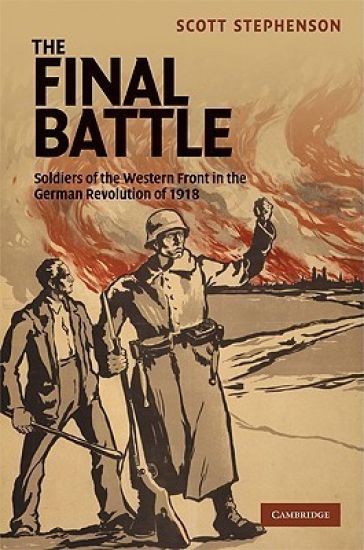
In many ways the German soldiers who marched back from the Western Front at the end of World War I held the key to the future of the newly-created republic that replaced the Kaiser's collapsed monarchy. To the radical Left, the orderly columns of front-line troops appeared to be the forces of the counterrevolution while to the conservative elements of society they seemed to be the Fatherland's salvation. However, in their efforts to get home as soon as possible, most soldiers were indifferent to the political struggles within the Reich, while the remnant that remained under arms proved powerless to defend the republic from its enemies. This book considers why these soldiers' response to the revolution was so different from the rest of the army and the implications this would have for the course of the German Revolution and, ultimately, for the fate of the Weimar Republic itself.
In many ways the German soldiers who marched back from the Western Front at the end of World War I held the key to the future of the newly-created republic that replaced the Kaiser's collapsed monarchy. To the radical Left, the orderly columns of front-line troops appeared to be the forces of the counterrevolution while to the conservative elements of society they seemed to be the Fatherland's salvation. However, in their efforts to get home as soon as possible, most soldiers were indifferent to the political struggles within the Reich, while the remnant that remained under arms proved powerless to defend the republic from its enemies. This book considers why these soldiers' response to the revolution was so different from the rest of the army and the implications this would have for the course of the German Revolution and, ultimately, for the fate of the Weimar Republic itself.
#3 Amazon Bestseller (Japan)#4 Amazon Bestseller (UK)#9 Amazon Bestseller (Germany)#14 Amazon Bestseller (USA)#23 Amazon Bestseller (Canada) "Scott Stevens knows how to write a thriller and keep you moving on to the next page." - Amazon Review"This book sucked me so much I really did not see the end coming in a million years. It is just pure genius." - Amazon Review"Scott Stevens is not going to be a 'new author' for long, as he's going to be up there with the greats really soon." - Amazon Review"The prison and courtroom descriptions make you never want to be in either, providing insights that I haven't read in other novels." -- Amazon Review"This is the first time in ages that I had no idea what was going to happen. Think you have it figured out? Read it to the end. You don't " - Amazon ReviewJohn Kinkaid and Tammy Marx meet under the most unusual of circumstances and their lives are forever changed. Tammy, a devoted housewife, lived a quiet life raising her two children. That is until her husband cheated on her and began to abuse her. Tammy had a plan to get out of the marriage, but things didn't go as she had hoped. John Kinkaid, a former United States Marine, is a member of Detroit's top SWAT unit. After being with the unit for many years he is getting ready to retire from the force. His past relationships have failed miserably and it can be mostly attributed to his love of alcohol. He carried his self-destructive ways into the workplace and decided one night to take the law into his own hands. This led to a world of trouble that he never dreamed he would be in. When John and Tammy's lives cross paths it starts them down a trail of twists and turns neither would have ever imagined. Tammy finds herself doing things outside the box, completely out of character for her. John finds himself with feelings he never had but is it enough to change his old ways? Along the way, each of them will learn more about irony than they ever expected. The story takes place over several days and it gives you incredible insight into what a man goes through when he crosses over from cop to criminal. The novel contains courtroom and prison insights and descriptions that are so authentic you feel like you are there.
#1 Amazon Bestseller (Germany)#7 Amazon Bestseller (USA)#13 Amazon Bestseller (UK)#14 Amazon Bestseller (Japan)"Wow, what a great book. Great characters. Great plot. Loved it." - Amazon Review"Breathtaking. Did not want to put it down. Almost makes you scream." - Amazon Review"Had me holding my breath, crying and cursing all at the same time. A must read." - Amazon Review"Scott Stevens has shown beautifully how a town in such a dilemma copes with the traumas of such devastation." - Amazon Review"Twister Town is a finely crafted attention grabber that places you nicely on the edge of your seat, that you find yourself firmly gripped to, as you lose yourself in its fantastic story." - Amazon ReviewEmma Green is the local meteorologist for the small town of Tolland, Kansas. The town has a lucky history of never suffering a direct hit from a tornado, but Emma has information that suggests this lucky streak is about to come to an end. Her boss disagrees with her forecast and will not allow her to air her predictions. With her job being threatened and her ability to save lives severely limited, what will she do when facing the dilemma of a lifetime? Set in a small town over the course of several days, this book brings to life exactly what it's like to live in a small mid-western town during the height of tornado season. It sheds an important light on the false sense of security that some towns live in. This story is said to be one of the best releases of 2017 and is the most authentic tornado novel to come along in years.
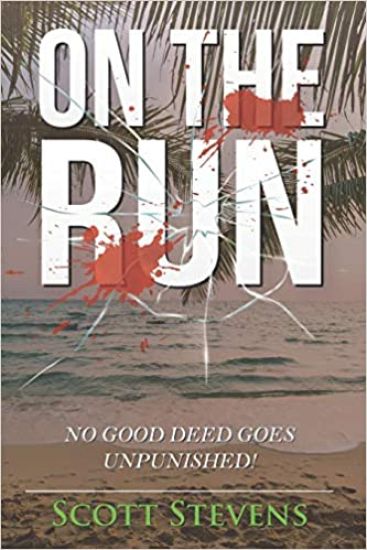
#5 Amazon Bestseller (USA)#15 Amazon Bestseller (UK)#27 Amazon Bestseller (Canada) "This is a book you can't put down. Find time in your busy schedule to read this Once you start reading, you will not want to stop until the story is concluded. And, don't try to guess the ending; you will not. It was entertainment at its finest. If you love mysteries and suspense, this book needs to be your next read." - Amazon Review "Finally - something worth reading I Liked this a lot and so will you. Great story, good characters and super ending." - Amazon Review" "This is one of those books that keeps you going. It draws you in quick and keeps you turning the pages to see what's next. Never a dull moment." - Amazon Review "So many unexpected twist and turns. I must warn you this book is almost impossible to put down. I read it at one sitting, staying up till 2AM because of this. It really is a must read " - Amazon Review "Great story. Could not have possibly guessed the ending of this book. Brilliant twist at the end... Absolutely loved it. Deserves 5 stars." - Amazon Review Have you ever done a good deed for someone and things didn't turn out quite as you planned? You'll be pulled in by this thriller because you HAVE done a good deed before, but not had to face the danger that Dwight faces from one kind act. Just by being a nice guy Dwight Cobb, unfortunately, finds himself right smack in the middle of a major drug deal gone bad. He's forced to go on the run for his life from a Cuban drug cartel. While on the run he meets some new friends, reconnects with an old acquaintance, and in the midst of all the chaos, his wife, Colleen, mysteriously disappears. Where could she have gone and why? Does Dwight ultimately survive the cartel hit squad sent to kill him? Set across the country over the course of several days, the book takes you on a journey into what it's like when a good deed goes bad. It brings you from Miami to Cabo San Lucas and puts you right into the mindset of what it's like to be chased by a Cuban drug cartel. Said to be one of the best releases of 2018, you are sure to be entertained... and scared
Even though concern about and interest in technology transfer have existed since the 1950s, it has become of increasing importance to lesser-developed and developing countries since the 1970s. The transfer of technology in general, and in particular the transfer of technical knowledge, lies at the heart of the North-South debate. There is an abundance of literature on technology transfer in almost every field of interest--policy, practice, applied case studies, and general recommendations--but little, if any, of the information is integrated. It remains widely distributed throughout the fields of economics, business, rural sociology, and anthropology. The same may be said for various studies of consultants as change agents. On the other hand, studies of counterparts--host country professionals--have been almost entirely neglected, with the exception of their implied roles as innovators or acceptors. There have been few attempts to tie practice to theory, theory to research, or research to practice. This volume attempts to provide the link between theory, research, and practice. Based upon research conducted at two large-scale water resource development projects in Indonesia, it focuses upon the problems and solutions encountered by two primary sets of people involved in the transfer of technical knowledge--foreign consultants and host country counterparts. Dr. Scott-Stevens presents a unified and applied approach to many of the cross-cultural theories, issues, and problems common to the transfer of technical knowledge across cultures.
This book focuses upon the problems and solutions encountered by two primary sets of people involved in the transfer of technical knowledge: foreign consultants and host country counterparts. It presents an approach to many of the cross-cultural theories common to the transfer of knowledge. .