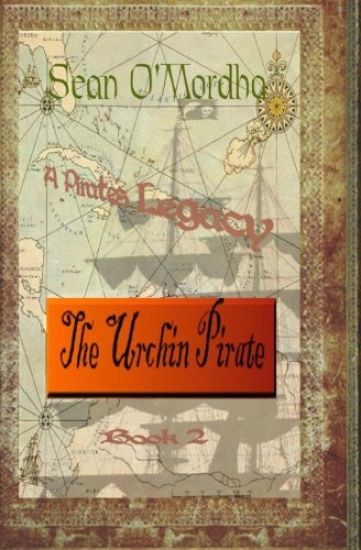
The year 1592 marks 100 years since Columbus made passage to a new world. Changes occur, but not for many. At the age of six, Fran ois is an orphan struggling to survive alone on the streets of St. Nazaire, France with a murderous army sergeant trying to kill him until he is rescued by an old pirate and a mysterious man who could only have been an angel. For the next eight years, he apprentices aboard pirate ships until thrown up on El Hierro, a tiny island in the Canary archipelago. There begins his journey leading two lives - one as a successful plantation owner, the other as a notorious pirate. As long as the secret is kept, it is a good life until making a fatal mistake that will deny him eternal rest for the next 400 years. Sean O'Mordha continues the legacy of a pirate, blending historical fact and fiction into a captivating story of adventure and love.
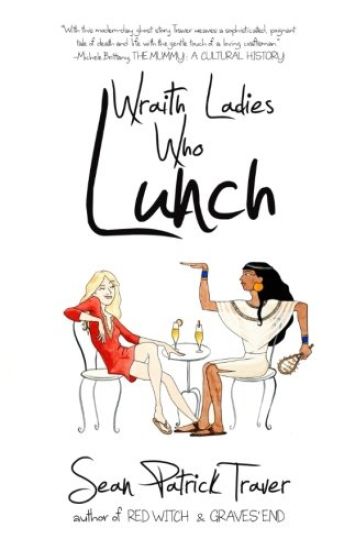
Christabel is a Victorian phantom with a tragic past, attached to a piece of antique mourning jewelry. Ta-senet-net-hor (her name means 'Sister of Neith and Horus') is a three-thousand-year-old Egyptian, attached to a mummy on display at the Los Angeles County Museum of Art. Neither of them knows another ghost who's anything more than an emotional echo, nor do they understand why they linger on when others fade away. They meet up at a restaurant near the museum now and then, to speculate about the nature of their afterlife and pretend to have a few drinks. Until the day Derren Gray arrives in their midst. The brand-new ghost of an elderly architect provides them with answers they've sought for centuries, but the things they learn mean the afterlife won't ever be the same, not for any of them. Join the WRAITH LADIES WHO LUNCH as they address eternal questions both large and small with surreal humor, historical depth, and a hint of mystical intrigue.
While Irish historical writing has long been in thrall to the perceived sectarian character of the legal system, this collection is the first to concentrate attention on the actual relationship that existed between the Irish population and the state under which they lived from the War of the Two Kings (1689-1691) to the Great Famine (1845-1849). Particular attention is paid to an understanding of the legal character of the state and the reach of the rule of law, with contributors addressing such themes as: how law was made and put into effect; how ordinary people experienced the law and social regulations; how Catholics related to the legal institutions of the Protestant confessional state; and how popular notions of legitimacy were developed. These themes contribute to a wider understanding of the nature of the state in the long eighteenth century and will therefore help to situate the study of Irish society into the mainstream of English and European social history.
When Declan Keenan begins to clean out his family's house after his father's death, he makes an unexpected discovery. His father, a former RCMP Security Service agent, left a videotape message that drops responsibility for resolving an old case into his son's lap. Unable to refuse his father's dying wish, Declan begins his search for answers in an attempt to satisfy justice. In the process, the motive, means, and opportunities that led to the 1973 bombing of BOAC Flight 281 are revealed; but so too are the agendas to have the case buried. Solving this thirty-year-old case with its inherent obstacles and challenges is frustratingly elusive, especially when compounded by present-day tragedy and official cover-ups. Despite threats, destruction of evidence, and murder, Declan perseveres, knowing that he must do his utmost to reveal his father's secret and expose a long hidden truth. This entertaining thriller resonates with the themes of justice and injustice, reconciliation and alienation, and duty and denial-together representing both the admirable and dishonourable aspects of the Canadian national identity.
When Declan Keenan begins to clean out his family's house after his father's death, he makes an unexpected discovery. His father, a former RCMP Security Service agent, left a videotape message that drops responsibility for resolving an old case into his son's lap. Unable to refuse his father's dying wish, Declan begins his search for answers in an attempt to satisfy justice. In the process, the motive, means, and opportunities that led to the 1973 bombing of BOAC Flight 281 are revealed; but so too are the agendas to have the case buried. Solving this thirty-year-old case with its inherent obstacles and challenges is frustratingly elusive, especially when compounded by present-day tragedy and official cover-ups. Despite threats, destruction of evidence, and murder, Declan perseveres, knowing that he must do his utmost to reveal his father's secret and expose a long hidden truth. This entertaining thriller resonates with the themes of justice and injustice, reconciliation and alienation, and duty and denial-together representing both the admirable and dishonourable aspects of the Canadian national identity.
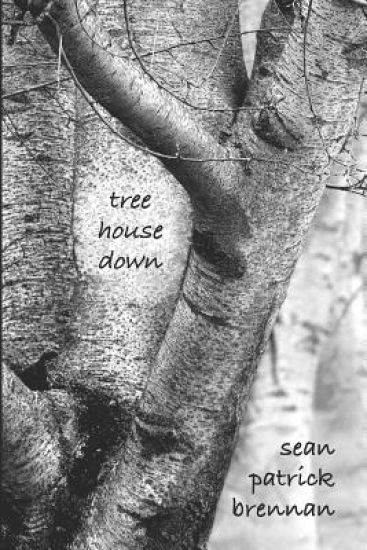
Seventeen years after a young girl was found murdered, her accused killer has returned to the scene of the crime: the cute, one-traffic-light village of Ludlow in the Green Mountains of Vermont. A "multigenerational family saga with a murder-mystery twist" (Newsday), "Tree House Down" explores how this singular event has affected the accused and his family over time, and the moral implications involved for those who know much more than they've ever let on. A small tree house takes center stage, and seems to hold the secrets to solving the mystery of Kerry Ann Jefferson's death once and for all. Oozing suspense, the pace quickens throughout the book, as shamanic drum circles, a near-death experience, and spirits of the terrible past pepper an often-otherworldly plot that dares you to ever stop reading. Adding another layer of fascinating nuance to the story, the nine main characters are based on the nine personality types of the Enneagram.
A dark comedy about human nature and rehabilitation. A tale of two friends who struggle to find themselves while battling an addiction to killing people.
The emergence of coal-based fuel economy over the course of the nineteenth century was one of the most significant features of America’s Industrial Revolution, but the transition from wood to mineral energy sources was a gradual one that transpired over a number of decades. The documents in these volumes recreate the institutional history of the American coal industry in the nineteenth century — providing a first-hand perspective on the developments in regard to political economy, business structure and competition, the rise of formal trade unions, and the creation of a national coal trade. Although the collection strives to be wide-ranging in region and theme, the Pennsylvania anthracite coal trade forms the thematic backbone as it became the most important American mineral resource to see successful development throughout the nineteenth century. Consequently it saw unprecedented levels of intervention by the federal government. The texts for this collection were selected for their accessibility to modern readers as well as their relationship to a series of common themes across the nineteenth century American coal industry — with headnotes and annotations provided to explain their context and the reasons for their inclusion.In this first volume, covering the period 1790-1835, the selected documents seek to reconcile the optimism surrounding the early American coal industry with the difficulties in actually realising its growth. It presents voices that capture the optimism and frustration of the Rhode Island and Virginia colliers, before focusing on the rise of Pennsylvania’s anthracite region — tracing the false-starts and ideological hostility that accompanied the early coal trade.
The emergence of coal-based fuel economy over the course of the nineteenth century was one of the most significant features of America’s Industrial Revolution, but the transition from wood to mineral energy sources was a gradual one that transpired over a number of decades. The documents in these volumes recreate the institutional history of the American coal industry in the nineteenth century — providing a first-hand perspective on the developments in regard to political economy, business structure and competition, the rise of formal trade unions, and the creation of a national coal trade. Although the collection strives to be wide-ranging in region and theme, the Pennsylvania anthracite coal trade forms the thematic backbone as it became the most important American mineral resource to see successful development throughout the nineteenth century. Consequently it saw unprecedented levels of intervention by the federal government. The texts for this collection were selected for their accessibility to modern readers as well as their relationship to a series of common themes across the nineteenth century American coal industry — with headnotes and annotations provided to explain their context and the reasons for their inclusion.The second volume, following on from the first, traces the continuation of the anthracite boom and also introduces new concerns for the coal industry. Overall the period from 1835-1875 saw the American coal trade expand from a hit-or-miss business dominated by risk-taking proprietary firms to a well-funded industry that employed the resources of state governments, large mining corporations and powerful railroads in order to keep a steady stream of mineral fuel flowing to the growing industrial and commercial heating markets of the United States. The transformation generated many conflicts — which are illustrated by the documents in this volume.
The emergence of coal-based fuel economy over the course of the nineteenth century was one of the most significant contributions the America’s Industrial Revolution, but the transition from wood to mineral energy sources was a gradual one that transpired over a number of decades. The documents in these volumes recreate the institutional history of the American coal industry in the nineteenth century; in doing so they provide a first-hand perspective on the developments in regard to political economy, business structure and competition, the rise of formal trade unions, and the creation of a national coal trade. Although the collection strives to be wide-ranging in region and theme, the Pennsylvania anthracite coal trade forms the thematic backbone as it became the most important American mineral resource to see successful development throughout the nineteenth century and consequently saw unprecedented levels of intervention by the federal government. The texts for this collection were selected for their accessibility to modern readers as well as their relationship to a series of common themes across the nineteenth century American coal industry — with headnotes and annotations provided to explain their context and the reasons for their inclusion.The third volume in this set traces the three decades following the American Civil War, during which time the use of coal for manufacturing, locomotives and domestic heating helped build a dynamic industrial economy in the United States. Mineral fuel growth powered the growth of the nation and by 1885 coal became the single most important source of American energy. Coal mining spread to nearly every corner of the nation in the half-century following the civil war. By the time of the Great Anthracite Strike in 1902, the American coal industry was a truly national phenomenon. The rise of large and well-funded mining and railroad corporations, the national unions, and the inroads by state governments into mine safety all suggest a significant reshaping had occurred.
While Irish historical writing has long been in thrall to the perceived sectarian character of the legal system, this collection is the first to concentrate attention on the actual relationship that existed between the Irish population and the state under which they lived from the War of the Two Kings (1689-1691) to the Great Famine (1845-1849). Particular attention is paid to an understanding of the legal character of the state and the reach of the rule of law, with contributors addressing such themes as: how law was made and put into effect; how ordinary people experienced the law and social regulations; how Catholics related to the legal institutions of the Protestant confessional state; and how popular notions of legitimacy were developed. These themes contribute to a wider understanding of the nature of the state in the long eighteenth century and will therefore help to situate the study of Irish society into the mainstream of English and European social history.
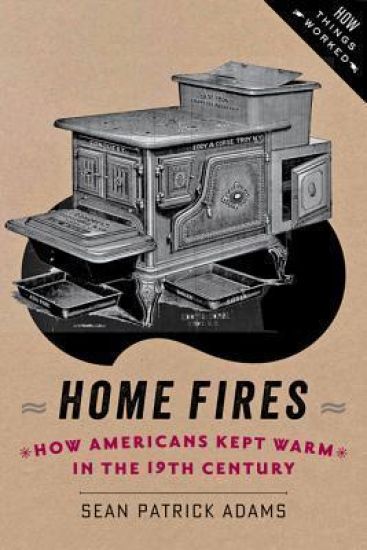
Home Fires tells the fascinating story of how changes in home heating over the nineteenth century spurred the growth of networks that helped remake American society. Sean Patrick Adams reconstructs the ways in which the "industrial hearth" appeared in American cities, the methods that entrepreneurs in home heating markets used to convince consumers that their product designs and fuel choices were superior, and how elite, middle-class, and poor Americans responded to these overtures. Adams depicts the problem of dwindling supplies of firewood and the search for alternatives; the hazards of cutting, digging, and drilling in the name of home heating; the trouble and expense of moving materials from place to place; the rise of steam power; the growth of an industrial economy; and questions of economic efficiency, at both the individual household and the regional level. Home Fires makes it clear that debates over energy sources, energy policy, and company profit margins have been around a long time. The challenge of staying warm in the industrializing North becomes a window into the complex world of energy transitions, economic change, and emerging consumerism. Readers will understand the struggles of urban families as they sought to adapt to the ever-changing nineteenth-century industrial landscape. This perspective allows a unique view of the development of an industrial society not just from the ground up but from the hearth up.
Home Fires tells the fascinating story of how changes in home heating over the nineteenth century spurred the growth of networks that helped remake American society. Sean Patrick Adams reconstructs the ways in which the "industrial hearth" appeared in American cities, the methods that entrepreneurs in home heating markets used to convince consumers that their product designs and fuel choices were superior, and how elite, middle-class, and poor Americans responded to these overtures. Adams depicts the problem of dwindling supplies of firewood and the search for alternatives; the hazards of cutting, digging, and drilling in the name of home heating; the trouble and expense of moving materials from place to place; the rise of steam power; the growth of an industrial economy; and questions of economic efficiency, at both the individual household and the regional level. Home Fires makes it clear that debates over energy sources, energy policy, and company profit margins have been around a long time. The challenge of staying warm in the industrializing North becomes a window into the complex world of energy transitions, economic change, and emerging consumerism. Readers will understand the struggles of urban families as they sought to adapt to the ever-changing nineteenth-century industrial landscape. This perspective allows a unique view of the development of an industrial society not just from the ground up but from the hearth up.
A spiritual adventure story like no other, The Papal Visitor expertly answers the question, "What would happen if Heaven just revealed itself to Earth once and for all?" Travel from Heaven and Hell to New York, Rome, Moscow, London, Maui, and all across the planet as the truth spreads and the shocking ramifications unfold. All eyes are on the pope, who seems to be getting some bad advice from a most unholy source.Excerpt: Halfway across the large room, he was stopped as the man appeared before him from thin air. "I'm not here to hurt you," he said. "I come with tidings of great joy." Mustering all the energy he could, he created a circle of light around himself. As the pope fell to his knees and bowed before him, the visitor smiled. This will be easier than I thought. "Stand, Your Holiness," he said, helping the pope to his feet. The pontiff looked into the eyes of the being before him, the halo of light now dimming quickly. The man was dressed in a slick, dark blue suit with a stripe of black running down the middle of each side. A thin red tie knotted perfectly capped the bright white dress shirt, and his eyes were-friendly. The pope was in awe of his visitor, but scared, too. "Pope Thomas, God needs your help. We all do. Change is coming to Planet Earth, and you are going to help us win the hearts of many." "Of course," the pontiff told him with a smile. "I'll do whatever God requires of me." "That's a good boy," the visitor said softly. "We will be bringing more change to Earth in the days and weeks ahead than you can even imagine, but we're going to need your help to get our message out to the people. This planet has fallen into wickedness, Your Holiness, and it will be your job to bring the faithful back in line. The Bible has long been forgotten and misused, and we need you to help people see how much truth there is waiting to be rediscovered. Will you help us, Thomas?" The pope smiled earnestly and nodded, and then shook the open hand offered him by the visitor. There was no way he could have known he was making a deal with Hell, no hint to the kinds of evil the pope would soon bring to the world in God's holy name.