Kirjojen hintavertailu. Mukana 11 244 527 kirjaa ja 12 kauppaa.

Kirjahaku

Etsi kirjoja tekijän nimen, kirjan nimen tai ISBN:n perusteella.

948 tulosta hakusanalla Shanthi

Transnational Student-Migrants and the State

Transnational Student-Migrants and the State

Shanthi Robertson

Palgrave Macmillan
2013
nidottu
International students are often engaged not just in education, but in high stakes towards gaining permanent migration status. This book unpacks the consequences of this education-migration nexus, analyzing migration policies and providing a vivid picture of student-migrants' lived experiences.
Strategic Investment Funds

Strategic Investment Funds

Shanthi Divakaran; Håvard Halland; Gianni Lorenzato; Paul Rose; Sebastian Sarmiento-Saher

WORLD BANK PUBLICATIONS
2023
nidottu
This book provides a reference for policy makers who are creating or strengthening the operations of SIFs, particularly as governments examine the value of such funds as a policy instrument in the aftermath of the COVID-19 pandemic.
High Frequency Continuous Time Filters in Digital CMOS Processes

High Frequency Continuous Time Filters in Digital CMOS Processes

Shanthi Pavan; Yannis Tsividis

Springer-Verlag New York Inc.
2013
nidottu
There is an ever increasing trend towards putting entire systems on a single chip. This means that analog circuits will have to coexist on the same substrate along with massive digital systems. Since technologies are optimized with these digital systems in mind, designers will have to make do with standard CMOS processes in the years to come. We address analog filter design from this perspective. Filters form important blocks in applications ranging from computer disc-drive chips to radio transceivers. In this book, we develop the theory and techniques necessary for the implementation of high frequency (hundreds of megahertz) programmable continuous time filters in standard CMOS processes. Since high density poly-poly capacitors are not available in these technologies, alternative capacitor structures have to be found. Met- metal capacitors have low specific capacitance. An alternative is to use the (inherently nonlinear) capacitance formed by MOSFET gates. In Chapter 2, we focus on the use of MOS capacitors as integrating elements. A physics-based model which predicts distortion accurately is presented for a two-terminal MOS structure in accumulation. Distortion in these capacitors as a function of signal swing and bias voltage is computed. Chapter 3 reviews continuous-time filter architectures in the light of bias-dependent integrating capacitors. We also discuss the merits and demerits of various CMOS transconductance elements. The problems encountered in designing high frequency programmable filters are discussed in detail.
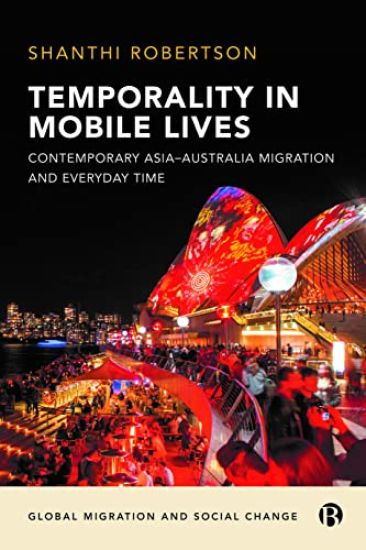
Temporality in Mobile Lives

Temporality in Mobile Lives

Shanthi Robertson

Bristol University Press
2021
sidottu
Shanthi Robertson provides fresh perspectives on 21st-century migratory experiences in this innovative study of young Asian migrants’ lives in Australia. Exploring the aspirations and realities of transnational mobility, the book shows how migration has reshaped lived experiences of time for middle-class young people moving between Asia and the West for work, study and lifestyle opportunities. Through a new conceptual framework of ‘chronomobilities,’ which looks at 'time-regimes' and 'time-logics', Robertson demonstrates how migratory pathways have become far more complex than leaving one country for another, and can profoundly affect the temporalities of everyday life, from career pathways to intimate relationships. Drawing on extensive ethnographic material, Robertson deepens our understanding of the multifaceted relationship between migration and time.
Temporality in Mobile Lives

Temporality in Mobile Lives

Shanthi Robertson

Bristol University Press
2022
nidottu
Shanthi Robertson provides fresh perspectives on 21st-century migratory experiences in this innovative study of young Asian migrants’ lives in Australia. Exploring the aspirations and realities of transnational mobility, the book shows how migration has reshaped lived experiences of time for middle-class young people moving between Asia and the West for work, study and lifestyle opportunities. Through a new conceptual framework of ‘chronomobilities,’ which looks at 'time-regimes' and 'time-logics', Robertson demonstrates how migratory pathways have become far more complex than leaving one country for another, and can profoundly affect the temporalities of everyday life, from career pathways to intimate relationships. Drawing on extensive ethnographic material, Robertson deepens our understanding of the multifaceted relationship between migration and time.
Understanding Stroke in a Global Context

Understanding Stroke in a Global Context

Shanthi Mendis

Bentham Science Publishers
2017
nidottu
Stroke is one of the most debilitating diseases. Increasing exposure to behavioural risk factors (tobacco use, unhealthy diet, physical inactivity and harmful use of alcohol) and air pollution are driving up the worldwide stroke burden. Although interventions to prevent and manage stroke have advanced considerably over the last two decades, they are not implemented worldwide. The purpose of this book is to address this serious disconnect between medical advances and their implementation at the country level. The book aims to improve the understanding of stroke and its links to the Sustainable Development Goals. The target audience includes decision-makers, policy-makers, lay people, journalists, public health practitioners, under-graduate and post-graduate students, and early career-level health professionals working in the fields of stroke, NCDs and development. All of them and others, have a role to play in prevention and control of stroke. A broader understanding of stroke by a wider audience can help to place stroke on the global development and health agenda and to strengthen country capacity to address stroke through a public health approach. The eight chapters address key questions on various aspects of stroke: causes, symptoms, signs and consequences; challenges of stroke prevention; magnitude of the stroke burden; medical and surgical interventions for managing stroke including stroke units, the links between stroke and the Sustainable Development Goals and data on the staggering economic burden of stroke. The content has been simplified, to the extent possible, to provide a better insight and understanding of stroke, particularly to a non-expert audience. It is, therefore, a "must read" for all those interested in stroke and global health. Edited by Taimur]=======================OK Stroke is one of the most debilitating diseases which poses a significant economic burden on society. Increasing exposure to behavioural risk factors for stroke (tobacco use, unhealthy diet, physical inactivity and excessive alcohol consumption) and air pollution are driving up the worldwide stroke burden. Although medical interventions to prevent and manage stroke have advanced considerably over the last two decades, they are not consistently implemented worldwide. Therefore, health outcomes of stroke treatment vary throughout the world. Understanding Stroke in a Global Context addresses this serious disconnect between advances in stroke interventions and their implementation at the national level. The book aims to improve the reader's understanding of stroke and its links to the UN Sustainable Development Goals (SDGs). Eight chapters present information about various aspects of stroke: causes, symptoms, signs and consequences, the challenges of stroke prevention, the magnitude of the stroke burden, medical and surgical interventions for managing stroke including stroke units, the links between stroke and the SDGs and, finally, the social and economic costs of stroke. Key features of this volume include: - coverage of stroke information from multidisciplinary angles - simple reader friendly format for a broad audience - information about UN SDGs relevant to stroke healthcare - data on socioeconomic burden of stroke This volume is a concise handbook for healthcare policy makers, lay people, journalists, public health practitioners, under-graduate and post-graduate students, and early career level health professionals working in the fields of stroke medicine, non-communicable disease programs and healthcare development at local and national levels.
Avatars of Lord Shiva: The Forgotten Truths

Avatars of Lord Shiva: The Forgotten Truths

Shanthi Deepti

Independently Published
2019
nidottu
Many of us know about the ten avatars of Lord Vishnu famously known as Dasavataram. Most of us wonder does Lord Shiva also have Avatars. If so, how many and what are they? Before answering this, let us first understand the meaning of Avatar.Avatar is a sanskrit word for Incarnation or Manifestation. They are the direct descendents of God himself possessing most of his qualities and powers. Few Avatars do not take birth from mother's womb but are direct manifestations based on the needs like Matsya, Kurma, Varaha and Narasimha Avatars from Dasavataram. Whereas few avatars take birth through their mother's womb again based on the need like Vamana, Parashurama, Rama and Krishna Avatars. No matter how various Avatars came into existence they possess the divine qualities of Supreme Soul. It is believed that the Avatars that are direct manifestations have superior powers compared to the Avatars that were manifested a level next to direct manifestation as they were born to Humans who are next to Supreme soul.It is true that Lord Shiva, Parvati, Ganesha also have Avatars like Lord Vishnu. They take these Avatars to uphold Dharma by removing evil forces on Earth as mentioned in Bhagavad Gita. As centuries passed these truths were lost in time. This book is just a small effort to bring back the glory and the reason behind the Avatars of Lord Shiva. Coming to the number of Avatars of Lord Shiva, they vary among various Hindu scriptures like Shivapuranam, Skandapuranam, Mahabharatam, etc. The count varies from 64, 24, 19, etc. Few scriptures also include the famous 11 Rudra Avatars of Lord Shiva. Similarly, if we trace back various Hindu scriptures, the Avatars of Lord Vishnu is not confined to number ten. The number of Vishnu Avatars also vary from 10, 25, 24, etc. However, as time passed by only the ten Avatars became famous among various Avatars of Lord Vishnu which we today know them as Dasavataram.This book mainly concentrates on the famous ten Avatras of Lord Shiva. Anyone who reads the stories related to Avatars of Lord Shiva on Mondays or Shivaratri or Kathika Pournami (Full moon day during Karthika masam) or on any other auspicious day would yield enormous grace of Lord Shiva.
Happiness The Key To Success: Twelve Meditation Steps To Uncover Your Joy, Healing and Success
"I am glad that you have answered my call to you or perhaps have answered your call to yourself, and have come here. Warm welcome I am crystallizing 38 years of practicing and 14 years of teaching Yoga-meditation, happiness and success into these pages, pages that can change lives; pages that will change your life. Most of us strive to be successful in life because we are misled into thinking that when we become successful, we'll be happy. In fact, the opposite of that is true. Only when you are happy can you be successful. Happiness is the key to success. Success is not the key to happiness. The proven 12-step formula that I help you apply in your life through this book have taken me several decades to perfect. You can now have them in just a few hours by reading this book " Shanthi Yogini
Optimized feature selection for enhancing lung cancer prediction using machine learning techniques
Lung cancer is a major cause of cancer-related deaths worldwide. Machine learning techniques have shown promising results in the early detection and prediction of lung cancer. However, high-dimensional data, such as gene expression profiles, can introduce noise and decrease the classification accuracy of machine learning models. Feature selection techniques can alleviate this issue by identifying the most relevant and informative features, leading to better model performance.Optimized feature selection techniques can enhance the prediction accuracy of lung cancer using machine learning algorithms. Support vector machines, random forest, and artificial neural networks are commonly used algorithms for lung cancer prediction. By optimizing feature selection, these models can be trained with the most informative features, reducing overfitting and improving classification accuracy.Cross-validation techniques can also be used to evaluate the performance of feature selection and machine learning algorithms. The integration of optimized feature selection with machine learning techniques can provide an accurate and reliable lung cancer prediction model, which has the potential to improve early detection and precision medicine for lung cancer patients.Overall, optimized feature selection for enhancing lung cancer prediction using machine learning techniques is a promising approach to improving patient outcomes and reducing the global burden of lung cancer.